
Economy
Foreign Manufacturers Killing Local Adire Fabric Industry—Abiodun

By Modupe Gbadeyanka
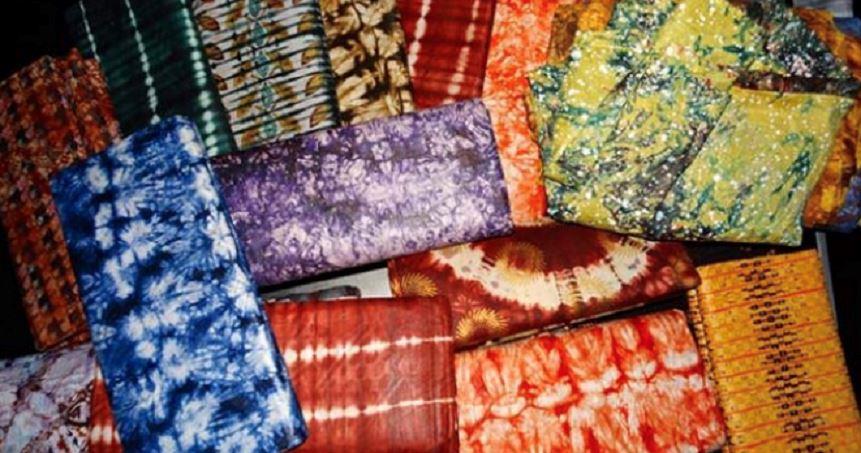
Mrs Bamidele Abiodun, the wife of Ogun State Governor, Mr Dapo Abiodun, has accused foreign manufacturers of killing the local Adire fabric industry with the support of Nigerian middlemen.
According to her, these manufacturers mass-produce the fabric to sell cheaply in the country, making it difficult for the local producers to compete with them, resulting in many people abandoning the trade.
Speaking at the just-concluded Adire Market Week which took place in Abeokuta, the state capital, she called on the relevant regulatory agencies in the country to urgently address the issue of intellectual theft bedevilling the industry, especially by those she referred to as “counterfeiters of Adire fabric” as the “unfair practice of counterfeiting is impacting the industry negatively.”
“Foreign manufacturers, aided by Nigerian middlemen, carry off original, handmade Adire designs from Nigeria, mass-produce them and then sell them cheaply to Nigerian markets around the country.
“The effect of this is that makers of authentic Adire are never able to compete with the cheap print alternatives.
“An industry that employs tens of thousands of Nigeria across the entire value chain is in dilemma. While many have cut back on production, others have considered abandoning the trade altogether, even though it has been in their families for generations,” Mrs Abiodun stated.
The Governor’s wife used the occasion to praise Ecobank Nigeria for supporting the event, which was organised by her office in conjunction with Ajose Foundation.
She explained that the Adire Market Week was meant to build on the gains of the successful launch of the adireogun.com, to promote financial inclusion for women-owned businesses, enhance the tourism potential in the state and to further help Ogun State continue to set the pace as the Adire capital of the world.
Speaking on the initiative, Managing Director, Ecobank Nigeria, Mr Bolaji Lawal, said the bank identifies Adire as a key driver of tourism, culture and the creative industry and that supporting the industry will further empower the youths, women, micro, small and medium enterprises (MSMEs) and other business communities within Ogun State.
Represented by Head of Agency Banking, Ms Nike Kolawole, the bank chief stated that Ecobank will continue to stand by the women of Ogun State and Nigeria, particularly the indigenous local women who produce Adire fabric so that they continue to flourish.
“Ecobank will stand by you and we will always be there to provide you the right support you need to succeed,” he said.
Over 100 exhibitors, as well as the works of traders, fashion designers, models and other players in the Adire industry, were on display at the fair. The event also attracted the wives of some governors, female dignitaries, fashion entrepreneurs, politicians, business leaders and corporate top shots.









By Modupe Gbadeyanka
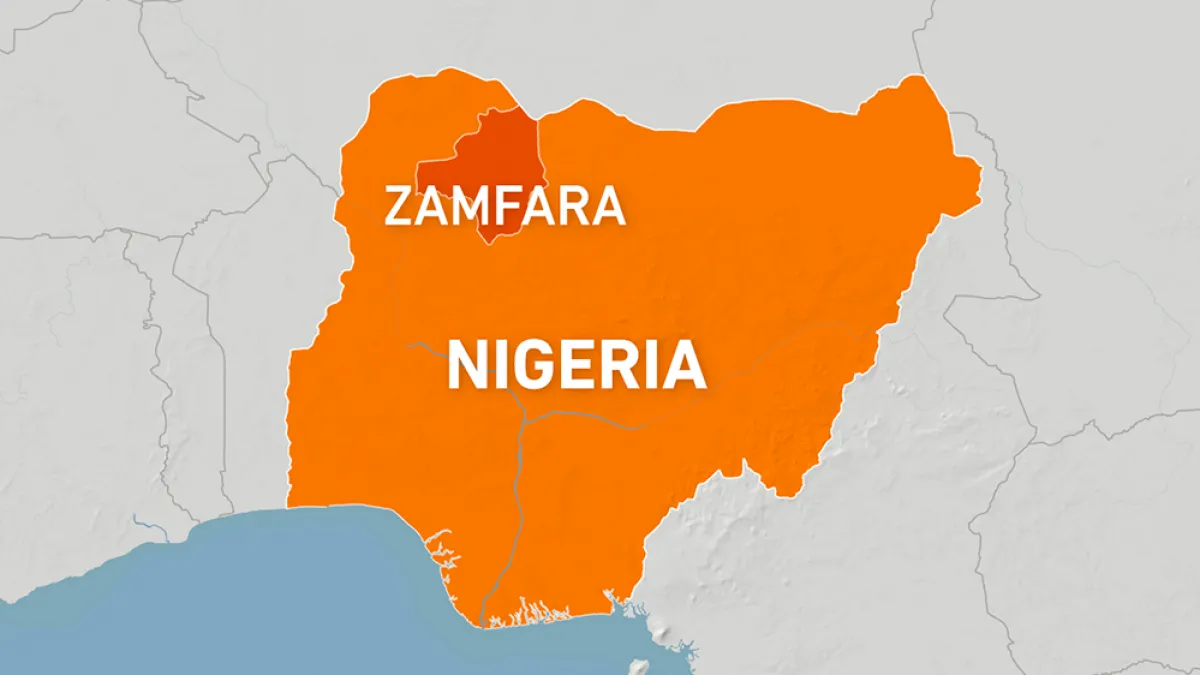
The United Nations has expressed its readiness to assist in attracting investors to Zamfara State, especially in the mining and agricultural sectors.
The Deputy Secretary General of the global body, Mrs Amina Mohammed, during a visit on Thursday, said the northern Nigerian state is now ready for business and that the UN was willing to be a genuine partner to the state.
“Investors want an enabling environment. Peace is what you need today for people to come. The Zamfara narrative focuses on conflict related to solid minerals, and this needs to change,” she was quoted as saying in a statement issued on Friday by the spokesperson for the Zamfara Governor, Mr Sulaiman Bala Idris.
The former Nigerian Minister further said, “What you show us today is first and foremost your passion for what you want us to do, and that is what investors want. They want to know what you want.
“I am happy today to be here in Zamfara, because I really want to show the world that we should pay attention to what is happening at the local level. Because this is where people are weakest, where governance is weakest, and where there are the fewest resources.
“When we visit, we give visibility to the effort that has been made and to the impact of what is happening elsewhere in the world on people who have nothing to do with what caused it in the first place.
“Zamfara State is accessible today. And it would be even more accessible because the road we travelled on is still under construction. When it is finished, it will revive the businesses and markets around it, and hopefully, by then, we will witness more peace.
“I see the mining, I see the potentials, I see the market and the demand, but I also see the leadership here who is willing to look at the institution, framework and partner to get the job done.
“There is a lot of hope and potential here. Everyone must play their role; this is not something the governor will do alone. The United Nations is willing to be a genuine partner to Zamfara State.”
On his part, Governor Dauda Lawal said Zamfara is at a turning point, with a population of 5.3 million, and the state’s economy is agriculture-driven, with 82 per cent of the population depending on agriculture.
“Zamfara’s Six-Point Rescue Agenda is a deliberate strategy to stabilise, rebuild, and transition the state toward inclusive and sustainable development,” he told his guest.

By Adedapo Adesanya
The federal government has inaugurated the Governing Board of the Nigeria Commodity Exchange (NCX) to strengthen commodity trading and accelerate Nigeria’s transition to a non-oil, export-driven economy.
The Minister of Industry, Trade and Investment, Mrs Jumoke Oduwole, who inaugurated the board on Thursday in Abuja, said it was part of efforts to modernise commodity markets and boost export competitiveness.
According to her, the initiative seeks to formalise commodity trade and unlock value in agriculture and solid minerals, supporting the government’s agenda on diversification, job creation and food security.
The minister described the development as a major step toward repositioning Nigeria in regional and global markets.
She noted that Nigeria’s vast resources and access to over 1.4 billion consumers under the African Continental Free Trade Area (AfCFTA) present significant export opportunities.
She emphasised the need to address poor traceability, informal trading systems and infrastructure gaps affecting commodity markets.
Mrs Oduwole said the reactivation of the exchange would strengthen transparency, standardise trading and improve price discovery.
She added that the NCX would attract investment into market infrastructure and help Nigerian commodities meet international export standards.
On his part, the Permanent Secretary of the ministry, Mr Chris Isokpunwu, described the inauguration as a landmark step in strengthening Nigeria’s commodity export ecosystem.
Mr Isokpunwu, represented by the Director of the Commodity Exchange Department of the ministry, Mr Obasi Edozie, urged the newly inaugurated board to discharge their duties with diligence and professionalism.
He assured the board of the ministry’s support toward achieving measurable economic outcomes.
Mr Abubakar, Chairman of the governing board, pledged the board’s commitment to repositioning the exchange as a globally competitive trading platform.
He listed priorities to include strengthening governance, upgrading warehouses and digital trading systems and building capacity for farmers and market operators.
He also emphasised the need to deepen partnerships with financial institutions and international commodity markets.
“The inauguration underscores the Federal Government’s commitment to repositioning the NCX to drive export growth, rural prosperity and sustainable economic development.”


**Revokes Trading Licences of LMB, Platinum Stockbrokers
By Aduragbemi Omiyale
A stockbroking company, Premium Capital and Stockbrokers Limited, has been fined N5 million for engaging in “unauthorised sale of its clients’ securities.”
A circular issued by the Nigerian Exchange (NGX) Regulation Limited disclosed that the trading licence of the organisation has also been revoked.
In the notice signed by the Head of Market Regulation for NGX RegCo, Chinedu Akamaka, Premium Capital violated Rule 11.9 of the Rulebook of The Exchange, 2015 (Dealing Members’ Rules), which focuses on the Prohibition of Unauthorised Sale of Securities.
Business Post reports that Premium Capital was not the only stockbroker that had its trading licence withdrawn, as it also affected others.
The licence of LMB Stockbrokers Limited was revoked by NGX RegCo for prolonged inactivity, which falls contrary to Rule 6.4: Revocation of Inactive Dealing Members’ Licences, Rulebook of The Exchange, 2015 (Dealing Members’ Rules), as amended.
The same also affected Platinum Stockbrokers Limited, which has not witnessed activity on the floor of the NGX Limited for a while.
Similarly, the authorised dealing clerkship of Mr Bernard Oluwole Ilori, was taken back with immediate effect in alignment with an earlier determination by the Securities and Exchange Commission’s (SEC) Administrative Proceedings Committee (APC), which arose from his involvement in regulatory infractions connected to Mutual Alliance Investment and Securities Limited and resulted in his 10-year ban from the Nigerian capital market since March 25, 2021.
Investors have been “strongly advised not to engage in any activity with the firms” whose trading licenses have been revoked.
-
 Feature/OPED6 years ago
Davos was Different this year
-
Travel/Tourism10 years ago
Lagos Seals Western Lodge Hotel In Ikorodu
-

 Showbiz3 years ago
Estranged Lover Releases Videos of Empress Njamah Bathing
-
 Banking8 years ago
Sort Codes of GTBank Branches in Nigeria
-

 Economy3 years ago
Subsidy Removal: CNG at N130 Per Litre Cheaper Than Petrol—IPMAN
-

 Banking3 years ago
Sort Codes of UBA Branches in Nigeria
-

 Banking3 years ago
First Bank Announces Planned Downtime
-

 Sports3 years ago
Highest Paid Nigerian Footballer – How Much Do Nigerian Footballers Earn