Economy
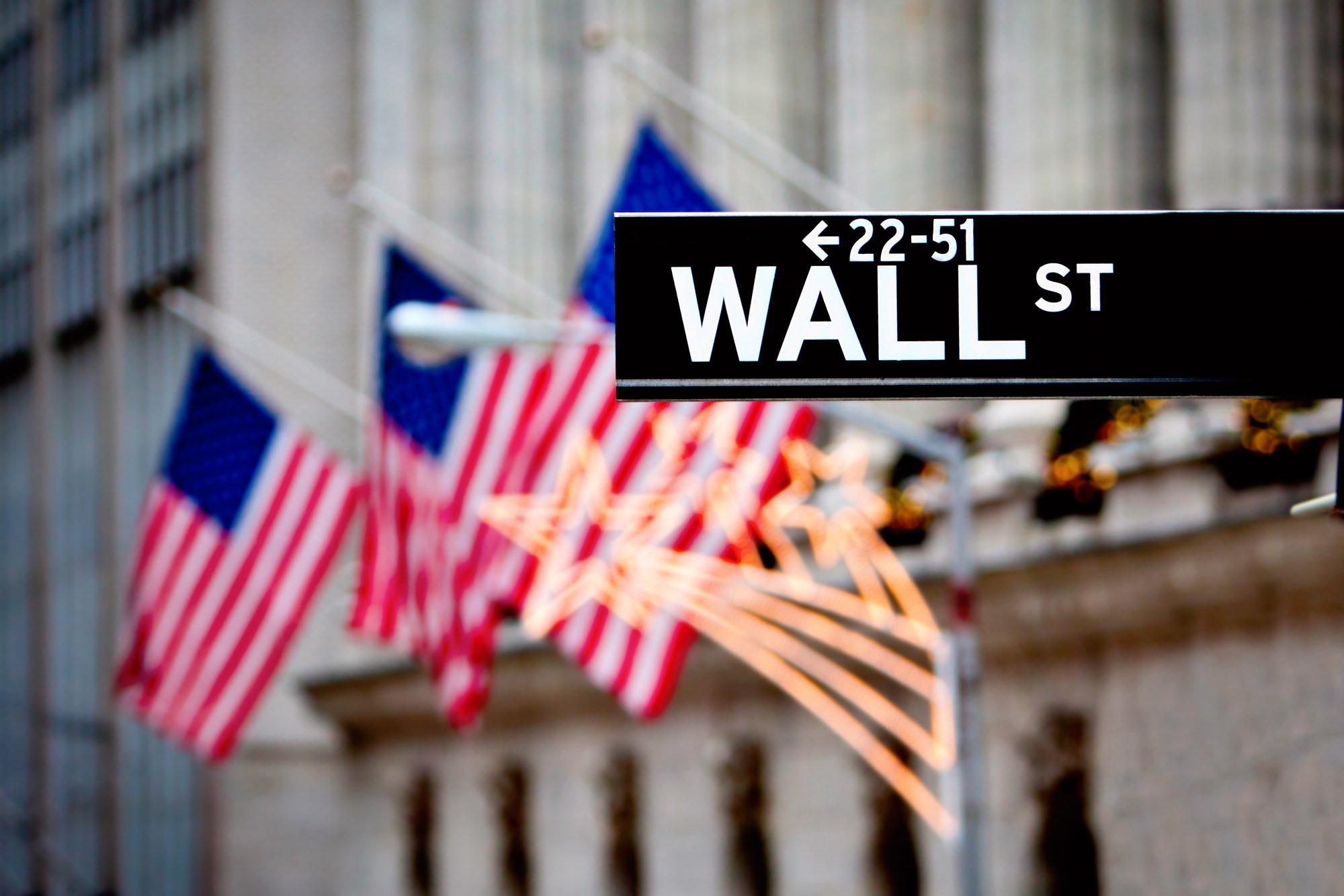
Futures Pointing to Another Mixed Performance on Wall Street

By Investors Hub
The major U.S. index futures are pointing to a mixed open on Friday, with stocks poised to move in opposite directions once again after closing mixed for two consecutive sessions. Lingering uncertainty about the near-term outlook for the markets may keep some traders on the sidelines going into the first weekend of the summer.
Stocks saw modest strength for much of the trading session on Thursday but gave back ground going into the close. The major averages pulled back near the unchanged line, with the Dow and the S&P 500 dipping into negative territory.
The major averages finished the day mixed for the second consecutive session. While the Nasdaq inched up 2.73 points or less than a tenth of a percent to 6,236.69, the Dow slipped 12.74 points or 0.1 percent to 21,397.29 and the S&P 500 edged down 1.11 points or 0.1 percent to 2,434.50.
Earlier in the day, stocks benefited from a positive reaction to the release of the details of the Senate Republican plan to repeal and replace Obamacare.
Healthcare stocks showed a strong move to the upside following the release of the draft of the bill but gave back ground along with the broader markets late in the session.
The pullback may partly have reflected uncertainty about the future of the bill after four Republican Senators said they cannot support the plan in its current form.
Senate Majority Leader Mitch McConnell, R-Ken., has little margin for error with the bill, as he can only afford to lose the support of two Republicans and still pass the legislation.
On the U.S. economic front, the Labor Department released a report before the start of trading showing a modest uptick in first-time claims for unemployment benefits in the week ended June 17th.
The report said initial jobless claims inched up to 241,000, an increase of 3,000 from the previous week’s revised level of 238,000. Economists had expected jobless claims to edge up to 240,000.
A separate report from the Conference Board showed that its index of leading economic indicators rose in line with economist estimates in the month of May.
The Conference Board said its leading economic index climbed by 0.3 percent in May after rising by a downwardly revised 0.2 percent in April.
Most of the major sectors ended the day showing only modest moves, contributing to the lackluster close by the broader markets.
Gold stocks held on to strong gains, however, with the NYSE Arca Gold Bugs Index climbing by 1.8 percent. The index continued to rebound after ending Tuesday’s trading at its lowest closing level in over a month. The strength among gold stocks came amid an increase by the price of the precious metal.
Significant strength also remained visible among pharmaceutical stocks, as reflected by the 1.7 percent gain posted by the NYSE Arca Pharmaceutical Index. With the upward move, the index reached its best closing level in ten months.
Within the pharmaceutical sector, Novartis (NVS) posted a standout gain after trial results revealed its Canakinumab reduces the risk of major adverse cardiovascular events in patients with a prior heart attack.
Steel, biotechnology, and software stocks also saw some strength on the day, while banking and tobacco stocks moved to the downside.
Economy
Shrinking Access to Credit Worries MAN as Bank Lending Drops N1.92trn
By Adedapo Adesanya
The Manufacturers of Nigeria (MAN) has warned that manufacturers are facing a disparity in access to structured credit, which is affecting the sector’s productivity.
In his analysis, the Director General of MAN, Mr Segun Ajayi-Kadir, explained that commercial bank credit to manufacturers declined by N1.92 trillion between December 2024 and December 2025 to N6.61 trillion from N8.53 trillion.
The figure, he said, represents a year-on-year contraction of 22.5 per cent, placing manufacturing among the sectors with the highest decline in credit access.
Mr Ajayi-Kadir said the development was troubling at a time when Nigeria requires increased investment in productive sectors to strengthen local production, reduce import dependence and create employment opportunities.
“Declining access to affordable finance is threatening factory expansion, employment and economic diversification, and government and regulators need to urgently reform industrial financing,” he said.
He noted that while manufacturing credit suffered a major decline, other sectors such as oil and gas and financial services continued to attract higher levels of bank financing, raising concerns about the allocation of capital towards productive activities.
The MAN DG blamed the worsening situation on a combination of high borrowing costs, restrictive monetary conditions, commercial banks’ risk-averse lending approach and delays in implementing targeted industrial support programmes.
He highlighted high interest rates as one of the biggest obstacles confronting businesses, noting that borrowing costs remain too expensive for long-term investments in factories, machinery upgrades and production expansion.
MAN stated that with lending rates reportedly above 30 per cent in many cases, manufacturers are finding it increasingly difficult to finance operations, maintain competitiveness and expand capacity.
The association also identified the high Cash Reserve Requirement (CRR) maintained by the Central Bank of Nigeria as another factor limiting the amount of funds available for lending to businesses.
According to MAN, commercial banks have become more cautious in extending credit because they bear the risks associated with intervention funds, leaving manufacturers unable to meet collateral and equity requirements demanded by lenders.
The association also cautioned that weakening domestic production could deepen inflationary pressures by increasing dependence on imported goods and putting additional pressure on foreign exchange reserves.
To reverse the trend, the MAN boss called for urgent measures, including the introduction of government-backed credit guarantees for small and medium-scale manufacturers.
Mr Ajayi-Kadir also urged the government to ensure the immediate implementation of the Manufacturing Stabilisation Fund and create a more direct financing structure capable of delivering single-digit interest loans to genuine manufacturers.
He said Nigeria’s industrial ambitions could only be achieved when manufacturers have access to affordable and sustainable financing.
The MAN boss warned that without a functional credit system supporting production, Nigeria’s goal of becoming a competitive manufacturing economy would remain difficult to achieve.
Economy
OTC Securities Market Returns to Green Territory With N30bn Gain
By Adedapo Adesanya
The NASD Over-the-Counter (OTC) Securities Exchange returned to positive territory after it chalked up 1.18 per cent on Wednesday, June 24.
The NASD Security Index (NSI) was up during the session by 50.02 points to 4,289.36 points from the previous session’s 4,239.34 points, and the market capitalisation got a N30.03 billion boost to settle at N2.574 trillion compared with Tuesday’s closing value of N2.544 trillion.
The growth witnessed yesterday was influenced by two securities, led by Central Securities Clearing System (CSCS) Plc, which improved its value by N4.68 to N79.68 per share from N75.00 per share. Food Concepts Plc grew by 25 Kobo to sell at N2.75 per unit versus the preceding day’s N2.51 per unit.
At the close of trading activities, the value of securities bought and sold by market participants went up by 1,387.1 per cent to N82.9 million from the preceding session’s N5.6 million, and the volume of securities soared by 1,162.2 per cent to 2.7 million units from the previous 211,671 units, while the number of deals was halved by 50 per cent to 19 deals from 38 deals.
Great Nigeria Insurance (GNI) Plc remained the most active stock by value on a year-to-date basis, with 3.4 billion units valued at N8.4 billion, followed by Infrastructure Credit Guarantee (Infracredit) Plc with 2.3 billion units sold for N6.5 billion, and CSCS Plc with 68.3 million units transacted for N4.7 billion.
GNI Plc also closed the session as the most traded stock by volume on a year-to-date basis, with 3.4 billion units worth N8.4 billion, followed by Infracredit Plc with 2.3 billion units exchanged for N6.5 billion, and Resourcery Plc with 1.1 billion units traded for N415.7 million.
Economy
Naira Depreciates to N1,380/$ in Official Market
By Adedapo Adesanya
The value of the Naira further depreciated by 0.72 per cent or N9.90 against the United States Dollar to N1,380.54/$1 in the Nigerian Autonomous Foreign Exchange Market (NAFEX) on Wednesday, June 24, in contrast to Tuesday’s exchange rate of N1,370.64/$1.
Equally, the local currency weakened against the Pound Sterling in the same official market yesterday by N4.88 to close at N1,815.63/£1 versus the previous session’s N1,810.75/£1, and lost N2.61 on the Euro to sell at N1,563.63/€1 compared with the preceding day’s N1,561.02/€1.
However, at the GTBank forex counter, the domestic currency maintained stability against the US Dollar during the session at N1,380/$1, and at the parallel market, it closed flat at N1,395/$1.
Rising FX payments and a strong US Dollar have generally put significant pressure on emerging-market currencies, like the Naira.
According to the data from the Central Bank of Nigeria (CBN), NFEM interbank FX turnover was relatively steady at $125.588 million across 126 deals, from $125.314 million the previous day.
Interbank FX activity among financial institutions has fluctuated amid a sharp slowdown in forex market interventions by the apex bank, with more than six weeks of no support for the local currency.
Meanwhile, Nigeria’s foreign reserves increased further to $51.142 billion, while global oil prices entered the lower $70s.
Meanwhile, in the cryptocurrency market, nearly $1 billion worth of futures positions were liquidated across crypto majors to tokenised versions of stocks such as Micron Technology Inc (MU) and Sandisk (SNDK).
The dip triggered roughly $430 million in long liquidations on Bitcoin-tracked futures, or bets on higher prices that were automatically closed as the price fell.
Thursday’s PCE inflation print, the Fed’s preferred price gauge, is the next data point that could move the market in either direction, with Dogecoin (DOGE) down by 2.4 per cent to $0.0771.
Further, Bitcoin (BTC) fell by 1.9 per cent to $61,584.02, Ethereum (ETH) shed 1.6 per cent to trade at $1,645.50, Ripple (XRP) depreciated by 1.6 per cent to $1.08, Binance Coin (BNB) slumped by 1.5 per cent to $570.95, Cardano (ADA) crashed by 1.1 per cent to $0.1495, and Solana (SOL) slipped by 1.0 per cent to $69.19.
But TRON (TRX) gained 0.1 per cent to finish at $0.3288, while the US Dollar Tether (USDT) and the US Dollar Coin (USDC) remained unchanged at $1.00 each.
-
Feature/OPED6 years agoDavos was Different this year
-
Travel/Tourism10 years ago
Lagos Seals Western Lodge Hotel In Ikorodu
-
Showbiz3 years agoEstranged Lover Releases Videos of Empress Njamah Bathing
-
Banking8 years agoSort Codes of GTBank Branches in Nigeria
-
Economy3 years agoSubsidy Removal: CNG at N130 Per Litre Cheaper Than Petrol—IPMAN
-
Banking3 years agoSort Codes of UBA Branches in Nigeria
-
Banking3 years agoFirst Bank Announces Planned Downtime
-
Sports3 years agoHighest Paid Nigerian Footballer – How Much Do Nigerian Footballers Earn