Connect with us

Economy

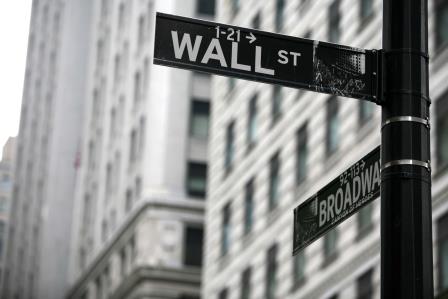
Futures Pointing To Roughly Flat Open On Wall Street

Published

on

By Modupe Gbadeyanka

The major US index futures are pointing to a roughly flat opening on Wednesday following the strength seen in the previous session.

Traders may be reluctant to make any significant moves ahead of the release of the minutes of the latest Federal Reserve meeting, which may shed some additional light on the outlook for interest rates.

After moving to the upside early in the session, stocks remained mostly positive throughout the trading day on Tuesday. With the upward move on the day, the major averages once again reached new record closing highs.

The major averages ended the day firmly in positive territory. The Dow advanced 118.95 points or 0.6 percent to 20,743.00, the Nasdaq rose 27.37 points or 0.5 percent to 5,895.95 and the S&P 500 climbed 14.22 points or 0.6 percent to 2,365.38.

Stocks continued to benefit from recent upward momentum amid optimism about more business friendly policies under President Donald Trump.

Retail giants Wal-Mart (WMT) and Home Depot (HD) both moved notably higher after reporting their quarterly financial results.

Steel stocks showed a strong move to the upside on the day, driving the NYSE Arca Steel Index up by 2.2 percent. The jumped lifted the index to its highest closing level in over two years.

Considerable strength was also visible among semiconductor stocks, as reflected by the 1.4 percent gain posted by the Philadelphia Semiconductor Index.

Housing, utilities, and commercial real estate stocks also saw notable strength, moving higher along with most of the other major sectors.

Investors Hub

Modupe Gbadeyanka is a fast-rising journalist with Business Post Nigeria. Her passion for journalism is amazing. She is willing to learn more with a view to becoming one of the best pen-pushers in Nigeria. Her role models are the duo of CNN's Richard Quest and Christiane Amanpour.

Economy

SEC Okays Migration to T+1 Settlement Cycle for Capital Market Transactions

Published

on

Investments and Securities Act 2025

By Aduragbemi Omiyale

The Securities and Exchange Commission (SEC) has approved the transition to the T+1 settlement cycle for capital market transactions from June 1, 2026.

This is coming some months after Nigeria moved from the T+3 settlement cycle to the T+2 settlement cycle.

The T+ settlement cycle is the number of working days required to complete a capital market transaction, such as the trading of securities, shares, and others, from the first day the trade was executed by an investor.

In a notice on Monday, the SEC, which is the apex capital market regulator in Nigeria, said it was authorising the new system to “promote an efficient, fair, and transparent capital market.”

Under the new arrangement, equities and commodities traded by investors at the market would be cleared and settled by the Central Securities Clearing System (CSCS) within one day.

The agency noted that the migration to a T+1 settlement cycle forms part of its ongoing market modernisation initiatives aimed at enhancing market efficiency and strengthening risk management. reducing counterparty exposure, improving liquidity, and aligning the Nigerian capital market with international standards and global best practices.

“Accordingly, all eligible trades executed in the Nigerian capital market shall settle one business day after the trade date (T+1),” a part of the statement noted.

It was stressed that “Friday, May 29, 2026, shall be the final trading day under the existing T+2 settlement cycle. Trades executed on Friday, May 29, 2026, and Monday, June 1, 2026, shall both settle on Tuesday, June 2, 2026. All trades executed from Monday, June 1, 2026, onward shall be subject to the T+1 settlement cycle.”

SEC tasked all capital market operators, securities exchanges, clearing and settlement infrastructure providers, custodians, registrars, issuers, and other relevant stakeholders to take all necessary measures to ensure full operational readiness and compliance with the new settlement framework.

“Market participants are expected to review and align their systems, processes, controls, and operational workflows ahead of the implementation date,” it further stated, promising to continue to engage stakeholders and monitor the implementation process to ensure an orderly and seamless transition.

The regulator said it remains committed to strengthening market integrity, enhancing investor confidence, and fostering the development of a modern. resilient and globally competitive Nigerian capital market.

Continue Reading

Economy

Budget Office Explains Reason for Quarterly Report Delay

Published

on

2026 budget tinubu

By Adedapo Adesanya

The Budget Office of the Federation has defended the delay in publishing three outstanding Quarterly Budget Implementation Reports, saying the situation arose from the repeal and re-enactment of the 2025 Appropriation Act and the subsequent extension of the budget’s implementation period to June 2026.

The last publication on the budget office’s website is Q3 2025, a development that breaks the Fiscal Responsibility Act amid the country’s rising borrowing costs and mounting fiscal pressure.

In a clarification statement, the DG of the Budget Office, Mr Tanimu Yakubu, said public concerns over the absence of the reports must be understood within the constitutional and fiscal framework governing public finance administration in Nigeria, stressing that a fiscal year is not strictly tied to the January–December calendar, but is instead a legislative construct defined by appropriation laws passed by the National Assembly.

“The fiscal year is not necessarily synonymous with the calendar year. The calendar year is a fixed chronological construct of twelve months running from January to December.

“The fiscal year, however, is a juridical and legislative creation whose duration, commencement, and terminal date are determined by the extant appropriation framework enacted by law,” he said.

Mr Yakubu claimed that the recent reporting delay followed the Repeal and Re-enactment of the 2025 Appropriation Act concluded in December 2025, alongside an extension of the budget’s execution period.

These changes, he said, effectively altered the operational timeline for fiscal reporting and necessitated comprehensive reconciliations before publication of the affected quarterly reports.

“In substance and in law, therefore, the fiscal year becomes not merely a chronological concept, but a legislatively sustained expenditure window,” he explained.

The Budget Office further noted that Nigeria’s fiscal practice has historically accommodated adjustments such as supplementary budgets, rollover provisions, and implementation extensions, particularly for capital projects, to ensure continuity and prevent wastage of public resources.

It added that similar practices exist in other jurisdictions, where fiscal years are defined by law rather than fixed to the calendar year.

Citing constitutional provisions, the office referenced Sections 80 and 81 of the 1999 Constitution (as amended), which require that public expenditure be backed by appropriation laws rather than a rigid annual cycle. It maintained that as long as legislative authority exists, expenditure remains valid within the approved framework.

The DG also pointed to judicial precedents underscoring the supremacy of the National Assembly in public finance matters, noting that executive spending must align with statutory approval.

He also explained that the current reconciliation process involves revenue performance reviews, cash flow adjustments, debt analysis, and inter-agency coordination to ensure accuracy and audit integrity of the outstanding reports.

Mr Yakubu then assured that the missing quarterly reports are being finalised and will be released in phases in the coming weeks, adding that reforms are underway to strengthen digital reporting systems and improve transparency and timeliness in fiscal data publication.

In his words, “Accordingly, the outstanding Quarterly Budget Implementation Reports are being finalised and will be released in phases over the coming weeks.

“In parallel, the Budget Office is strengthening its digital reporting architecture, data harmonisation systems, and institutional coordination mechanisms to support more comprehensive, timely, and analytically robust fiscal reporting in line with evolving international public finance reporting standards.”

Continue Reading

Economy

NGX Group Advances Investor Education Drive with Digital Retail Engagement Initiative

Published

on

NGX Group Shares

Nigerian Exchange Group has intensified its investor education drive through a digital engagement initiative aimed at improving financial literacy and deepening retail participation in the Nigerian capital market.

The Group recently hosted an X Space session themed Follow the Fundamentals: A Beginner’s Guide to the Stock Market, reaching over 5,000 users, largely young Nigerians, first-time investors, and retail market participants seeking to better understand investment opportunities in the capital market.

Featuring social media investment influencer Omiete Inko-Tariah, alongside representatives from Nigerian Exchange Limited and NGX Regulation Limited, the session demystified key concepts around market operations, investor protection, and safe participation. Beyond education, it served as an open forum where retail investors engaged directly with market stakeholders on issues of confidence, transparency, and accessibility.

Speaking on the initiative, Clifford Akpolo, Head, Group Communications and Partnerships at NGX Group, said: “Deepening retail participation is critical to building a more resilient, inclusive, and sustainable capital market. At NGX Group, we believe financial literacy is not just an educational responsibility; it is a strategic imperative for strengthening investor confidence, improving market accessibility, and expanding long-term wealth creation opportunities for Nigerians. Through digital platforms like this, we are leveraging innovation to connect with the next generation of investors and democratize access to market knowledge.”

The initiative forms part of NGX Group’s broader sustainability agenda under its Community pillar, which focuses on advancing financial literacy, inclusion, and economic empowerment through education-driven and stakeholder-focused programmes.

Following the success of this edition, NGX Group plans to sustain similar engagements as part of its ongoing commitment to strengthening investor confidence, deepening retail participation, and building a more resilient and inclusive investment ecosystem.

Continue Reading

Trending