Connect with us

Economy

Gas Firms to Boost Nigeria’s Daily Production by One Billion SCF

Published

on

gas flaring nigeria

By Adedapo Adesanya

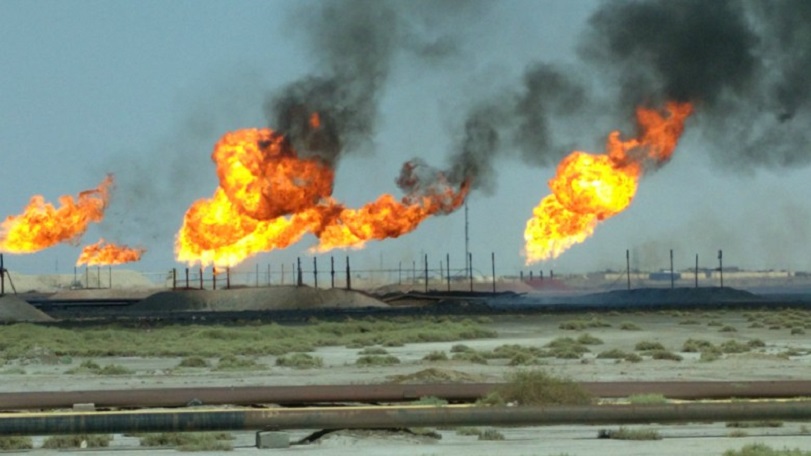
Major gas-producing companies operating in Nigeria are looking to take concrete steps to increase daily gas production by one billion standard cubic feet (bscf) per annum between 2025 and 2030 to meet the National gas production aspirations as well as bring an end to routine gas flaring.

This followed a charge from the Minister of State Petroleum Resources (Gas), Mr Ekperikpe Ekpo, during an engagement with upstream gas industry stakeholders held at the Nigerian National Petroleum Company (NNPC) Towers Abuja on Monday.

The meeting, which brought together key stakeholders in the industry, including MD/CEOs of NNPC Ltd, Shell Companies in Nigeria, Seplat Energy, Renaissance Energy, Total Energies, NAE/AENR, and Esso Exploration, saw them make a pledge to work towards unlocking Nigeria’s natural gas potential for national development.

Mr Ekpo stressed the need for accelerated growth in the sector to meet the federal government’s target of 12 billion scf of gas per day by 2030 from the current 7.3 billion scf production capacity.

“We need to grow natural gas production by at least 1 BCF annually till 2030,” Mr Ekpo said, “Nigeria must emerge among the top 10 natural gas-consuming nations by 2030. To achieve this, we must aggressively increase drilling operations in joint venture assets across all terrains, land, swamp, and offshore, and prioritise the completion of major gas processing and evacuation infrastructure projects.”

Mr Ekpo described the recent divestments by major oil companies as a pivotal moment for Nigeria’s energy sector, noting that it presented opportunities to aggressively exploit and produce both Associated Gas (AG) and Non-Associated Gas (NAG) in the country.

“Capitalizing on these divestments requires a clear strategy to accelerate project timelines, modernize existing facilities, and deploy innovative extraction and processing technologies,” he added.

The minister also stressed the importance of strengthening collaboration with international stakeholders and technical experts to ensure the successful execution of gas infrastructure projects, including the AKK and OB-3 pipelines.

He said these projects are critical to connecting gas resources to domestic and industrial markets, supporting Nigeria’s ambition to become a regional hub for natural gas.

The Gas Minister while commending the NNPC/TotalEnergies JV for ending routine gas flaring in its operations, called on other operators to emulate same in order to reduce their carbon footprints and convert the flared gas to wealth for the nation.

He also emphasized the need for accelerated timelines, enhanced resource allocation, and the exploration of public-private partnerships to overcome funding and technical challenges.

Commission Chief Executive of the Nigerian Upstream Petroleum Regulatory Commission (NUPRC), Mr Gbenga Komolafe, assured investors of a conducive environment to support the government’s targets for the gas sector and stated that the Commission has identified dedicated gas assets to be included in forthcoming bid rounds.

The Special Adviser to the President on Policy and Coordination, Mrs Hadiza Usman, represented by Mr Esege Esege, noted that President Bola Tinubu is keenly interested in the gas sector realizing its full potential and contributing to national growth and development.

Also, Executive Vice President, Gas, Power, and New Energy NNPC Ltd., Mr Olalekan Ogunleye, assured that NNPC Ltd. and its partners are working together across the gas value chain to meet the target.

“At present, every industry in the domestic gas space is receiving the gas they require due to the very productive cross-sectional collaboration,” he said, adding that efforts are being made to improve affordability.

Mr Ogunleye also provided an update on the AKK and OB-3 pipeline projects, saying both have advanced to 78 per cent and 97 per cent stages of completion, respectively.

“We are working towards the timely completion of these projects,” he assured.

Adedapo Adesanya is a journalist, polymath, and connoisseur of everything art. When he is not writing, he has his nose buried in one of the many books or articles he has bookmarked or simply listening to good music with a bottle of beer or wine. He supports the greatest club in the world, Manchester United F.C.

Economy

APM Terminals to Invest $600m in Nigeria’s Maritime Sector

Published

on

apm terminals

By Modupe Gbadeyanka

The Nigerian maritime sector may soon witness the inflow of $600 million in investment from APM Terminals.

On the sidelines of the ongoing Africa CEO Forum in Kigali, Rwanda, the Regional President of APM Terminals for Africa-Europe, Mr Igor van den Essen, informed President Bola Tinubu that his company was interested in deepening its investment in Nigeria.

According to a statement issued by the Special Adviser to the President of Information and Strategy, Mr Bayo Onanuga, the investment would be deployed in Apapa port modernisation, logistics infrastructure, and long-term private-sector investment in Nigeria’s maritime sector.

President Tinubu welcomed the investments, emphasising that Nigeria is repositioning itself for greater competitiveness through ongoing economic reforms and infrastructure modernisation.

He said the country is determined to move beyond structural bottlenecks and outdated systems, stressing the need for advanced technology, faster cargo processing, and improved operational efficiency across the nation’s ports.

He emphasised that Nigeria possesses the market scale, talent base, and economic potential to support globally competitive maritime and logistics infrastructure investments and called on other investors to take advantage of Nigeria’s reform outcomes.

Earlier, Mr Igor van den Essen lauded President Tinubu’s reform agenda and policy direction, which had strengthened investor confidence and created renewed momentum for long-term infrastructure investments.

He described Nigeria as a strategic stronghold within its African operations, referencing over 20 years of collaboration and substantial existing investments in the country’s port ecosystem.

He reaffirmed his company’s commitment to expanding investments in Nigeria and disclosed plans to support the development of world-class terminal infrastructure and technology-driven port operations.

He also commended Mr Tinubu for establishing the National Single Window (NSW), which has streamlined trade procedures, improved Customs coordination, and reduced delays in cargo clearance.

Continue Reading

Economy

Dangote Sues FG Over Fuel Import Licences

Published

on

Fifth Crude Cargo Dangote Refinery

By Adedapo Adesanya

Dangote Petroleum Refinery has filed a new lawsuit against the federal government over the fuel import licences issued to ‌marketers and the Nigerian National Petroleum Company (NNPC) Limited.

Last week, the Nigerian Midstream and Downstream Petroleum Regulatory Authority (NMDPRA) issued licences to six marketers for the importation of 720,000 metric tonnes of Premium Motor Spirit, known as petrol.

The marketers are NIPCO, AA Rano, Matrix, Shafa, Pinnacle, and Bono. The development comes amid claims by the NMDPRA that the Dangote Petroleum Refinery now supplies over 90 per cent of Nigeria’s daily petrol consumption.

Dangote said in the filing that the licences issued undermine its operations and contravene the law, which it argues allows imports only when domestic supply falls short.

Named in the suit against the country is the Attorney General and Minister of Justice, Mr Lateef Fagbemi. The federal government can only be sued via his office.

The case signals renewed tensions almost a year after Dangote withdrew an earlier lawsuit challenging similar licences. That case sought to nullify import permits issued to the NNPC and several traders.

The new filing asks the Federal High Court in Lagos to set aside import permits issued or renewed by the NMDPRA, arguing they breach an earlier order to maintain the status quo.

Dangote ⁠ended the earlier lawsuit in July 2025 without explanation, leaving unresolved questions over competition and supply in one of Africa’s largest fuel markets.

Nigeria ⁠has long relied on petrol imports due to underperforming state refineries. However, Dangote’s 650,000 barrels ⁠per day capacity refinery was touted to end that dependence.

Despite the presence of the facility, imports have continued to cover supply gaps as the refinery ramps up output.

The NMDPRA did not issue a single import licence in the first quarter of 2026 because the Dangote refinery had the capacity to meet Nigeria’s petrol demand.

Business Post gathered that only upon intervention by President Bola Tinubu were the licenses granted for the second quarter by the NMDPRA.

Continue Reading

Economy

Nigeria’s Inflation Rises to 15.69% in April as Middle East Crisis Persists

Published

on

hedge against inflation

By Adedapo Adesanya

The Nigeria Bureau of Statistics (NBS) has revealed that Nigeria’s headline inflation rate in April 2026 rose to 15.69 per cent, beating analysts’ expectations of 15.95 per cent, as the fallout from the Iran war continued to affect the global economy.

The statistical office on Friday showed the headline inflation rate for April on a month-on-month basis was 2.13 per cent, while the food inflation rate in the review month was 16.06 per cent on a year-on-year basis.

The rise in prices comes as an energy price shock stemming from the continued conflict in the Middle East, which stoked food prices and affected relative exchange rate stability.

According to the NBS, “this can be attributed to the rate of change in the average prices of the following products: Millet whole grain, yam flour, ginger (Fresh), beef, garri, tam tuber, pepper (Fresh), cray fish, cassava tuber, Beans, Irish Potatoes, tomatoes (fresh), wheat grain (Sold loose), soya beans, guinea corn, plantain, carrots (Fresh) etc.”

“The average annual rate of food inflation for the twelve months ending April 2026, relative to the previous twelve-month average, was 17.55%, which was 17.05% points lower than the average annual rate of change recorded in April 2025 (34.60%),” the NBS said.

Analysts at Coronation Research had earlier projected that the inflation rate in Nigeria would be at 15.95 per cent on a year-on-year basis in April 2026. It added that the expected inflation rate signals a return toward the underlying disinflation trajectory and could be a pivotal data point in shaping Monetary Policy Committee (MPC) deliberations at the next policy meeting.

It also expects food inflation to further ease, as food and non-alcoholic beverages remain the dominant contributor to headline CPI, accounting for about 40 per cent of the Consumer Price Index (CPI) basket.

The MPC of the Central Bank of Nigeria (CBN) will meet this month, the first since the Iran War started in late February, to review core monetary policies and possibly make adjustments.

The committee reduced the Monetary Policy Rate (MPR) by 50 basis points from 27.0 per cent to 26.5 per cent at its 304th Monetary Policy Committee (MPC) meeting in February.

Continue Reading

Trending