Connect with us

Economy

GCR Affirms AA+(NG) Rating on Dangote Cement

Published

on

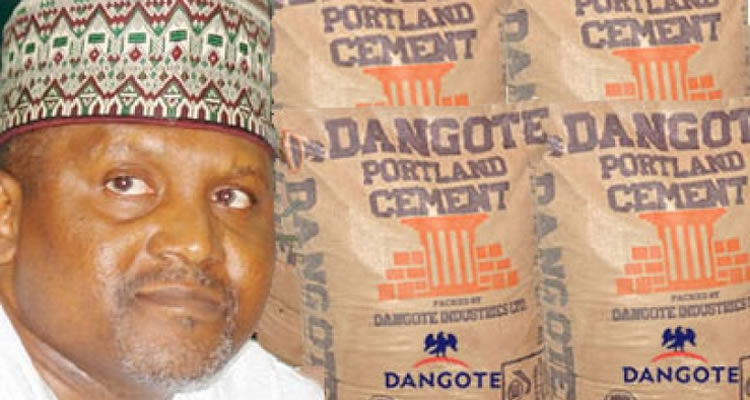
Dangote Cement distributors

By Modupe Gbadeyanka

The long term and short term national scale issuer ratings of AA+(NG) and A1+(NG) respectively have been affirmed on Dangote Cement Plc by Global Credit Ratings (GCR).

In a statement issued by the rating agency last Monday, it further said the cement company’s outlook has been accorded as stable.

Explaining why it accorded the ratings on Dangote Cement, GCR said it took cognisance the firm’s strong position as one of the world’s top 20 cement companies by installed capacity.

Management plans to revise its expansion pipeline, in view of foreign currency restrictions and unutilised capacity in Nigeria.

Medium term commitments have been limited to grinding plants in Cote d’Ivoire and Ghana, while execution of the rest of the capex plan will depend on foreign currency availability.

Nigeria remains the dominant area of operations and accounted for 69% and 90% of revenue and EBITDA respectively in FY16 (FY15: 79% and 91%).

Dangote Cement Plc is Africa’s leading integrated cement group and subsidiary of Dangote Industries Limited (DIL), a diversified multinational corporate with operations spanning building materials, packaging, logistics, real estate, food and beverages, as well as real estate.

Rapid fixed capital accumulation increased the company’s installed capacity to c.46 million tonnes per annum (mtpa) across 10 countries by 1H FY17, from just 8mtpa in 2011.

The group has secured clinker sufficiency in Nigeria, and as a low-cost producer, is well positioned to absorb exogenous shocks without incurring material earnings variability.

Its strategic vision is to remain Africa’s leading producer of cement and aims to be the leader in quality, costs and services across all operations, with a market share of at least 30% and a first or second position in each market.

The group achieved 20% CAGR in revenue in the five years under review, registering turnover of N615.1bn in FY16.

Dangote Cement’s strong top line performance was underpinned by dominance of the domestic market, which enabled it to absorb sharp price compression to secure volume traction. Some regions within Pan-African operations also reported strong sales growth in 2016. Combined with marked energy and distribution cost escalation, challenges in Tanzania and Ghana, as well as a weaker Naira, the EBITDA margin shed c.12 percentage points to 41.7% (five-year average 53.8%). Nevertheless, EBITDA eased just 2% to N256.8 billion in FY16.

Repricing in the domestic market bolstered the EBITDA margin to 49.2% in 1H FY17, while increased productivity and the bedding down of additional international capacity are expected to see it average at a strong 55% in the medium term.

Operating profit reduced by 12% to N182 billion in FY16, before increasing 67% YoY to N162.8 billion in 1H FY17 at a wider 39.5% margin (FY16: 29.6%). Dangote Cement’s margins remain well above those of its peers.

Cash generation remains sound, albeit discretionary cash flow coverage of net debt has eased to new lows in FY16 and 1H FY17 (65%; 48%), and the short term debt exposure was high at 71% of total debt at 1H FY17 (FY16: 59%). Net interest cover remains adequate (FY16: 4.3x; 1H FY17: 8.5x), and is expected to trend within range for the current ratings in the medium term.

Despite an aggressive cumulative outlay of N813.6 billion on capex in the five and a half years under review, Dangote Cement also paid out N573.2 billion in distributions, which represented 63% of cumulative net income.

This has seen total borrowings more than double from N181.2 billion at FYE13 to N432.6 billion at 1H FY17, of which 47% represented DIL (Naira denominated) loans.

In addition to proven shareholder support, note is also taken of established relationships with strong funders, N120 billion in trade finance credit lines, as well as plans to access debt capital markets to reduce reliance on shareholder loans and enhance funding flexibility and improve the debt maturity profile. International operations do provide a natural currency hedge, albeit constrained by the erratic performance trajectory in some regions.

Although net gearing and net debt to EBITDA have risen from very conservative levels reported prior to FY14, they remain aligned to the ratings, at 39% and 79% respectively as of 1H FY17 (FY16: 32%; 100%). Stressed scenarios indicate that metrics are expected to remain within range over the rating horizon, assuming a tapered capex plan (amongst other considerations).

 An upgrade will be dependent on the proven ability to sustain high capacity utilisation domestically in the medium term and the successful bedding down of international capacity enhancements translating to strong Pan-African free cash flows and sustained conservative gearing metrics for the Group.

Conversely, slower than anticipated economic growth in key territories, delays in rolling out public infrastructure projects, foreign currency scarcity, the adverse movement in foreign exchange rates, punitive regulatory changes and competitive pressures may constrain demand and/or pricing flexibility. This could adversely affect earnings and result in liquidity strain, increased gearing metrics and impede debt service, placing downward pressure on the ratings.


Modupe Gbadeyanka is a fast-rising journalist with Business Post Nigeria. Her passion for journalism is amazing. She is willing to learn more with a view to becoming one of the best pen-pushers in Nigeria. Her role models are the duo of CNN's Richard Quest and Christiane Amanpour.

Click to comment

Leave a Reply

Your email address will not be published. Required fields are marked *

Economy

Oil Prices Slip Despite Fresh Iran-Houthi Threat on Markets

Published

on

Crude Oil Prices

By Adedapo Adesanya

Oil prices settled about 1 per cent lower on Thursday ‌even as the Iran war escalated, with the Middle East oil producer asking Yemen’s Houthi movement to be prepared to close the Red Sea oil export route.

Brent crude futures fell by 72 cents or about 0.9 per cent to trade at $84.23 a barrel, while the US West Texas Intermediate (WTI) futures depreciated by ​65 cents or 0.8 per cent to close at $78.95 a barrel.

Iran has instructed Yemen’s Houthi movement to stand ready to close the Bab el-Mandeb strait, the vital gateway to the Red Sea, if the US follows through on threats to strike Iranian power infrastructure.

Market analysts warned that with the Strait of Hormuz already closed, the latest threat raises the serious risk of both of the Middle East’s primary oil export routes being disrupted at the same time.

About 7.4 million barrels of petroleum transited Bab el-Mandeb per day in June, about 7 per cent of global oil output, according to Kpler data, up ​from 4.2 million barrels per day last year.

This week, US President Donald Trump repeated oft-stated threats to strike ‌Iranian power plants and bridges.

According to senior Iranian ‌sources, the Islamic Republic’s leadership has discussed the idea with Iran’s Houthi allies, with the rebel forces now awaiting definitive orders to begin targeting maritime traffic.

In a sign of escalating tensions in the region, the Houthis fired missiles at Saudi Arabia after accusing the kingdom of bombing an airport under ​their control on Monday, breaking a four-year truce in the conflict between the kingdom and the group.

This comes as Saudi Arabia is currently evaluating a massive infrastructure expansion to permanently upgrade the capacity of its western pipeline and terminal networks.

Any additional disruptions could force international shipping firms to redirect vessels around Africa, inflating transit costs and worsening the global energy crisis.

On Wednesday, the US struck Iran’s coastal defences and missile ​sites after reimposing a naval blockade of its ports, while the two countries exchanged intensified fire on Thursday, which kept pressure on prices upward.

However, weighing on prices was Iran’s release of a US citizen, which could point toward a path to avert the resumption of all-out war.

Continue Reading

Economy

CBN Launches FX Tracker to Monitor Every BDC Dollar Purchase

Published

on

bdc operator

By Adedapo Adesanya

The Central Bank of Nigeria (CBN) has launched a new digital platform to track every foreign exchange transaction involving Bureaux De Change (BDC) operators, marking a major step in its efforts to improve transparency and strengthen oversight of the country’s retail forex market.

In an operational guidance issued on July 15 to authorised dealer banks and licensed BDCs, the apex bank introduced the FX BDC Purchase Tracker (FXBT), a centralised electronic portal designed to monitor foreign exchange purchases by BDCs from the point of request through approval, settlement and eventual sale.

The CBN said the portal will require BDCs to upload real-time or same-day data on all FX purchases made through the Nigerian Foreign Exchange Market (NFEM), giving the regulator transaction-level visibility across the retail FX market.

According to the bank, the platform is designed to prevent abuse by making it easier to detect operators attempting to exceed the weekly purchase limit of $150,000, obtain allocations from multiple banks or divert foreign exchange outside approved channels.

The launch of the tracker builds on the CBN’s February policy that restored direct access for licensed BDCs to purchase foreign exchange from authorised dealer banks through the NFEM. While that policy improved access to official FX, the new platform provides the digital infrastructure to monitor how the funds are used.

Under the new framework, authorised dealer banks must conduct comprehensive Know-Your-Customer (KYC) and customer due diligence checks before selling foreign exchange to any BDC.

The new guideline also says banks must verify beneficial ownership information, retain incorporation documents and carry out enhanced due diligence for higher-risk operators. Any BDC that fails these checks will not be allowed to access official foreign exchange.

The guidance also requires banks to acknowledge BDC purchase requests submitted through the FXBT portal within two business hours and immediately notify operators whether their requests have been approved or rejected.

To discourage speculation, the CBN directed that any forex purchased through the NFEM but left unused must be sold back into the market within 24 hours after the expiration of the utilisation period. BDCs are also required to disclose any previously unused balances when submitting fresh requests.

In addition, all foreign exchange transactions between banks, BDCs and customers must be settled through registered accounts with licensed financial institutions. Third-party transactions are prohibited, and any transfer outside a BDC’s registered settlement account will be treated as a regulatory violation.

The apex bank also said all authorised dealer banks and licensed BDCs are expected to comply with the new regulatory guidance and operational procedures with immediate effect.

Continue Reading

Economy

HBM Nigeria Eyes Stronger Market Share With Extra Output by January 2027

Published

on

HBM Nigeria

By Adedapo Adesanya

The chief executive of HBM Nigeria Plc (formerly Lafarge Africa), Mr Lolu Alade-Akinyemi, said the cement producer is expected to add 4.5 million tonnes to its production capacity by January 2027.

HBM Nigeria Plc is positioning itself for stronger long-term competitiveness, market leadership and job creation as it accelerates expansion projects.

The transition to HBM Nigeria marks a new phase of growth, driven by operational excellence, sustainability, innovation, and infrastructure development, while maintaining its long-standing commitment to Nigeria’s construction sector.

Mr Alade-Akinyemi, speaking recently in Lagos, said the ongoing expansion of the company’s Ashaka and Sagamu plants would significantly boost local production, create employment opportunities, and support businesses across its value chain.

“We recently announced the expansion of the Sagamu plant in Ogun State and the Ashaka plant in Gombe State. Hopefully, in January 2027, we will commission both plants, adding 4.5 million tonnes to our capacity. Traditionally, building a new plant takes about three years, but this is one of the benefits of belonging to the Huaxin Group,” he said.

According to him, the projects will generate employment, create opportunities for young people and women, strengthen local suppliers and contractors, and contribute further to Nigeria’s economic growth.

“There are many vacancies we are trying to fill in Sagamu and Ashaka. Beyond direct employment, we are creating opportunities for small businesses, developing suppliers and supporting local contractors. This is an exciting period because it will deliver significant benefits to Nigeria,” he said.

Mr Alade-Akinyemi noted that while the company’s corporate identity had changed following its acquisition by Huaxin Building Materials Group, its core values and commitment to customers, host communities, employees and shareholders remain unchanged.

He said HBM Nigeria traces its roots to 1959 as West African Portland Cement Company (WAPCO), with its first cement plant commencing operations in Ewekoro, Ogun State, in 1961.

Since then, he said, the company has grown into one of Nigeria’s leading building solutions providers with integrated plants in Ewekoro, Sagamu, Ashaka and Mfamosing.

He added that the company, which became publicly listed in 1979, has continued to expand through acquisitions and transformation while maintaining high product quality, innovation and responsible operations.

Highlighting the strengths of its parent company, Alade-Akinyemi described Huaxin Building Materials as a globally recognised building materials manufacturer founded in 1907 and headquartered in Wuhan, China, with operations across 16 regions in China and 14 countries worldwide.

He said Huaxin’s engineering expertise and focus on research and development would strengthen HBM Nigeria’s operations and help close engineering skills gaps in the country.

“As HBM Nigeria, we are strategically positioned for long-term competitiveness and stronger market leadership while reinforcing our commitment to supporting Nigeria’s infrastructure development and economic progress after more than six decades of industry leadership,” he said.

He also said sustainability would remain central to the company’s operations, noting that it had introduced lower-carbon products and continued to invest in environmentally friendly production processes.

Continue Reading