
Economy
Global Residency for Nigerian Entrepreneurs: Your Complete Guide to Business Expansion Beyond Borders


Nigerian entrepreneurs face mounting challenges in 2025. Inflation hit 31.7% earlier this year before moderating. Currency volatility continues to disrupt business planning. Regulatory uncertainty makes long-term strategy feel like gambling.
These aren’t just statistics. They represent real barriers to growth, profitability, and peace of mind for business owners across the country.
Many Nigerian entrepreneurs are exploring global residency options as a strategic response to these challenges. Not as an escape, but as a smart business move that opens doors to new markets, secures family futures, and provides operational flexibility.
This guide breaks down everything about obtaining global residency through investment—from understanding available programs to navigating the application process successfully.
Why Nigerian Entrepreneurs Are Looking Beyond Borders
The numbers tell a concerning story. Entrepreneurial activity dropped to 24% in 2024 from 30% in 2023 and 32% in 2022. The decline isn’t random—it’s a direct response to increasingly difficult business conditions.
Access to foreign exchange remains inconsistent. Business registration processes involve bureaucratic hurdles that drain time and resources. Infrastructure gaps, particularly unreliable electricity, add significant operational costs.
SMEs, which represent 96% of Nigerian businesses and employ 84% of the workforce, face particularly acute challenges. Tighter monetary policy has made borrowing expensive. Interest rates have climbed steadily, making capital-intensive expansion prohibitively costly for many.
Youth unemployment exceeds 33%, driving skilled professionals to seek opportunities abroad. This brain drain extends to entrepreneurs who’ve built successful businesses but see limited runway for scaling within Nigeria’s current economic environment.
The Business Case for Global Residency
Global residency isn’t about abandoning Nigeria. Most entrepreneurs who obtain second residency maintain their Nigerian operations while expanding internationally.
The strategic advantages include:
- Market access: Operating within the EU single market or other economic zones without visa restrictions
- Banking infrastructure: Access to international financial services, merchant accounts, and stable currency systems
- Regulatory clarity: Predictable business frameworks in sectors like fintech, renewable energy, and technology
- Wealth preservation: Protecting assets against currency devaluation and political uncertainty
- Family security: Educational opportunities and healthcare systems for dependents
Nigerian fintech and tech entrepreneurs have particularly strong track records internationally. The digital nature of these businesses means location flexibility, while the expertise Nigerians bring often fills market gaps in emerging technology adoption.
Understanding Residency by Investment Programs
Residency by Investment (RBI) programs, commonly called Golden Visas, offer legal residency rights in exchange for economic investment. Unlike tourist visas, these grant long-term or permanent residency status with paths to citizenship in many cases.
The Nigerian passport currently provides visa-free access to 40-46 countries, primarily within ECOWAS and select Asian nations. European, North American, and broader Asian access remains heavily restricted.
Golden Visa programs typically triple or quadruple this access. Holders can live, work, and travel throughout the Schengen Area—26 European countries covering 420 million people and representing one of the world’s largest economic zones.
Popular Programs for Nigerian Entrepreneurs
Several European countries maintain active RBI programs accessible to Nigerians who can demonstrate legitimate source of funds and pass background checks.
Greece’s Golden Visa stands out for Nigerian applicants. The program requires €250,000-€500,000 in real estate investment depending on location. Processing takes 3-8 months typically. No minimum stay requirement exists, making it ideal for entrepreneurs maintaining active Nigerian operations.
Portugal’s Golden Visa, historically popular, underwent significant changes. The real estate pathway closed for most property types in 2023. Current options focus on fund investments or qualifying commercial properties starting at €280,000, with stricter requirements than before.
Spain maintains a €500,000 real estate threshold with processing around 3-9 months. Malta requires higher investment (€690,000+) but processes take longer. Cyprus suspended its program in 2023 following compliance concerns.
Outside Europe, the UAE offers long-term residency for investors, while Canada’s Start-up Visa and Provincial Nominee Programs provide pathways for entrepreneurs building businesses there.
Greece Golden Visa: The Leading Choice for Nigerians
Greece’s program attracts growing numbers of Nigerian applicants for several practical reasons. The investment threshold remains accessible compared to alternatives. Processing times are relatively fast. The bureaucratic process, while thorough, is straightforward when properly prepared.
Applicants can invest in residential or commercial property. Urban centers like Athens and Thessaloniki now require €500,000 minimum. Regional areas maintain the €250,000 threshold. This creates opportunities to enter at different price points depending on lifestyle preferences and investment goals.
The residency permit renews every five years as long as the qualifying investment remains. No minimum stay requirement exists—permit holders don’t need to spend specific time in Greece annually, unlike Portugal’s seven-day requirement.
Family inclusion covers spouses, children under 21, and dependent parents. This multi-generational approach appeals to Nigerian family structures where extended family considerations factor into major decisions.
Tax and Business Benefits
Greece operates a non-domiciled tax regime. Simply holding Greek residency doesn’t trigger worldwide income taxation unless substantial local presence or income generation occurs. Entrepreneurs maintaining Nigerian or other international business operations often benefit from this structure.
Double taxation treaties exist with numerous countries including Nigeria. Proper structuring through qualified international tax advisors ensures optimal tax positioning across jurisdictions.
Greek residency enables establishing EU-registered subsidiaries. This opens access to European clients, venture capital, and business networks that often require local presence or EU entity status for engagement.
Banking access improves significantly. EU-based accounts provide stable currency operations, international payment processing, and merchant services that facilitate cross-border business more smoothly than many Nigerian banking relationships.
Education and Healthcare Access
Greece’s public education system becomes accessible, alongside private and international schools. Many Nigerian entrepreneurs prioritize this for children’s educational opportunities and global exposure.
Healthcare access includes the National Health System plus eligibility for private options. Quality varies by region, but major cities offer medical care meeting international standards at costs below Western Europe and North America.
Citizenship Pathway
After seven years of continuous residency, citizenship application becomes possible. Requirements include integration tests and Greek language proficiency. This timeline is competitive—Portugal offers five years, Spain ten years.
Greek citizenship provides full EU citizenship rights, including unrestricted movement, residence, and work across all EU member states. The passport ranks among the world’s strongest for visa-free travel.
Navigating the Application Process
Success requires meticulous preparation and realistic expectations about timelines, costs, and compliance requirements.
Nigerian applicants face enhanced scrutiny on source of funds. This isn’t discrimination—it’s standard anti-money-laundering practice for applicants from emerging markets. Expect to provide comprehensive documentation: bank statements, tax records, business registration, profit and loss statements, asset valuations.
Documentation must be translated and officially certified. Authenticity verification is rigorous. Working with experienced advisors familiar with Nigerian documentation standards and European requirements saves significant time and prevents application delays.
Step-by-Step Process
The application journey typically follows this sequence:
Eligibility assessment: Licensed migration consultants evaluate your specific situation, funding sources, and program fit. This pre-screening identifies potential issues before formal application.
Document preparation: Gathering required materials—passport, police clearance (local and Interpol), bank statements, property contracts, medical certificates. Each document requires proper certification and translation where applicable.
Fund transfer: Moving investment capital from Nigeria involves navigating CBN regulations and capital controls. Transfers must route through authorized dealers. Documentation of fund origins is critical. Delays here are common.
Property selection and purchase: For real estate pathways, selecting and acquiring property meeting program requirements. Legal due diligence ensures clear title and program compliance.
Application submission: Filing with immigration authorities through qualified legal representatives. Government fees, processing fees, and related charges become due.
Biometrics and interviews: Depending on the program, in-person appearance may be required for identity verification and documentation review.
Approval and permit issuance: Once approved, residency permits are issued. Timeline varies but ranges 3-12 months for most programs.
Cost Considerations
Beyond the minimum investment threshold, budget for:
- Legal fees: €10,000-€50,000 depending on complexity
- Government charges: €2,000-€10,000 for applications and permits
- Property transaction costs: Transfer taxes, registration fees, notary charges
- Annual maintenance: Property taxes, management fees, insurance (€2,000-€5,000+ annually)
- Advisory fees: Migration consultants, tax advisors, real estate agents
- Hidden expenses: Document translation, certification, valuation reports, travel for property viewing and biometrics
Total cash requirements typically exceed the minimum investment by 20-30% when accounting for all fees and expenses.
Common Pitfalls to Avoid
Incomplete or inaccurate documentation causes most delays and rejections. Source of funds requirements are strict—vague explanations or insufficient supporting evidence will result in requests for additional information or application denial.
Currency transfer timing matters. Market rates fluctuate, and CBN processes can introduce delays. Starting the currency conversion process early prevents rushing and potentially unfavorable exchange rates.
Underestimating ongoing compliance creates problems. Properties must be maintained. Insurance must remain current. Renewal applications require updated documentation. Setting up proper management systems from the start prevents future complications.
Choosing property based solely on program requirements rather than investment fundamentals can lead to poor returns. The property should make sense as an investment independent of the residency benefit.
Getting Professional Support
The complexity and stakes involved make professional guidance essential. Licensed migration consultants who understand both Nigerian context and destination country requirements provide significant value.
Global Residence Index specializes in helping Nigerian entrepreneurs navigate these programs. Their team has processed hundreds of applications with direct relationships with government bodies in key jurisdictions including Greece.
Their approach includes pre-screening before formal application submission, identifying potential issues early when they’re still addressable. They manage documentation collection, translation, and certification—crucial for Nigerian applicants dealing with unfamiliar European administrative requirements.
Vancis Capital, Global Residence Index’s parent company, brings additional resources and government relationships to support complex applications. Together, they offer comprehensive support from initial consultation through permit receipt and ongoing compliance.
When selecting advisors, verify licensing and regulatory compliance. Request references from Nigerian clients who’ve completed the process. Understand the fee structure clearly—what’s included and what represents additional charges.
Making the Decision
Global residency represents a significant commitment of capital and time. The decision shouldn’t be rushed or made purely on emotional response to current challenges.
Consider your business model. Does international presence genuinely enhance operations, or is this primarily about diversification and family security? Both are valid reasons, but clarity on motivations ensures proper program selection.
Evaluate timing. Currency volatility and capital transfer restrictions mean favorable windows exist. Waiting for “perfect” conditions often means missing opportunities as programs evolve or minimum investments increase.
Many Nigerian entrepreneurs who’ve obtained EU residency report it as transformational for their business trajectory. Access to European clients, investors, and talent pools enabled growth previously impossible. Others value the security and optionality more than immediate business benefits.
The Greek Golden Visa program, with its accessible threshold, straightforward process, and practical benefits, continues attracting Nigerian applications. For entrepreneurs seeking European presence without abandoning Nigerian operations, it offers compelling advantages worth serious consideration.












By Adedapo Adesanya
The NASD Over-the-Counter (OTC) Securities Exchange extended its stay in the south territory with a decline of 0.56 per cent on Wednesday, April 2.
This brought down the market capitalisation by N13 billion to N2.417 trillion from N2.430 trillion, and downed the NASD Unlisted Security Index (NSI) by 22.57 points to 4,062.87 points from the previous session’s 4,062.87 points.
It was observed that the NASD exchange ended with three price gainers and three price losers during the trading day.
MRS Oil Plc depreciated by N19.00 to close at N171.00 per unit compared with the previous price of N190.00 per unit, NASD Plc lost N4.14 to trade at N37.36 per share compared with Wednesday’s N41.50 per share, and Central Securities Clearing System (CSCS) Plc gave up N2.00 to sell at N78.00 per unit versus N80.00 per unit.
On the flip side, FrieslandCampina Wamco Nigeria Plc appreciated by 19 Kobo to N93.00 per share from N92.81 per share, Food Concepts Plc expanded by 15 Kobo to N2.87 per unit from N2.72 per unit, and Great Nigeria Insurance (GNI) Plc improved by 2 Kobo to 52 Kobo per share from 50 Kobo per share.
Yesterday, the volume of securities dipped by 91.8 per cent to 260.2 million units from 3.2 billion units, the value of securities went down by 98.1 per cent to N154.2 million from N8.3 billion, while the number of deals soared by 53.3 per cent to 46 deals from 30 deals.
GNI Plc was the most active stock by value on a year-to-date basis with 3.4 billion units worth N8.4 billion, followed by CSCS Plc with 56.9 million units valued at N3.9 billion, and Okitipupa Plc with 27.5 million units traded for N1.8 billion.
The most traded stock by volume on a year-to-date basis was also GNI Plc with 3.4 billion units sold for N8.2 billion, trailed by Resourcery Plc with 1.1 billion units exchanged for N415.7 million, and Infrastructure Guarantee Credit Plc with 400 million units transacted for N1.2 billion.

By Adedapo Adesanya
The Naira dropped N2.09 or 0.15 per cent against the United States Dollar in the Nigerian Autonomous Foreign Exchange Market (NAFEX) on Thursday, April 2, to trade at N1,380.79/$1 compared with Wednesday’s rate of N1,378.70/$1.
However, it appreciated against the Pound Sterling in the official market by N2.77 to quote at N1,824.86/£1 versus the N1,836.57/£1 it was traded at midweek, and improved its value against the Euro by N10.54 to N1,591.92/€1 from N1,602.46/€1.
Yesterday was the last trading session of the week for the local currency in the spot market, as the market will be closed on Friday and Monday for the Easter Holiday.
At the black market, the Nigerian Naira maintained stability against the greenback yesterday at N1,405/$1, but gained N8 at the GTBank FX counter to settle at N1,388/$1, in contrast to the previous session’s N1,396/$1.
Pressure eased on the domestic currency as strong policy indicators have helped calm the majority of worries within the financial systems. Particularly in the remittance segment, the apex bank has directed all International Money Transfer Operators (IMTOs) to route remittance transactions through designated Naira settlement accounts in banks, a move aimed at boosting transparency and channelling more foreign exchange into the formal market.
This helps take off pressure from the foreign reserves, which have fallen below the $50 billion mark as they are gradually decreasing rather than falling sharply.
Meanwhile, the cryptocurrency market was bullish on Thursday, as macro sentiment shifted against recent optimism after reports that Iran is drafting a protocol with Oman to manage traffic through the Strait of Hormuz, easing concerns about disruptions to a key global oil route.
The remarks came after U.S. President Trump on Wednesday night vowed to hit Iran “extremely hard” in the coming weeks and that the Strait of Hormuz would “open naturally” once the war ends.
Cardano (ADA) chalked up 1.9 per cent to trade at $0.2435, Dogecoin (DOGE) grew by 1.2 per cent to $0.0912, Ethereum (ETH) appreciated by 0.8 per cent to $2,066.37, Bitcoin (BTC) added 0.5 per cent to sell at $67,080.53, Solana (SOL) increased by 0.5 per cent to $79.91, and Ripple (XRP) jumped 0.2 per cent to $1.31.
Conversely, Binance Coin (BNB) dipped 0.7 per cent to $586.90, and TRON (TRX) depreciated by 0.3 per cent to $0.3147, while the US Dollar Tether (USDT) and the US Dollar Coin (USDC) closed flat at $1.00 each.
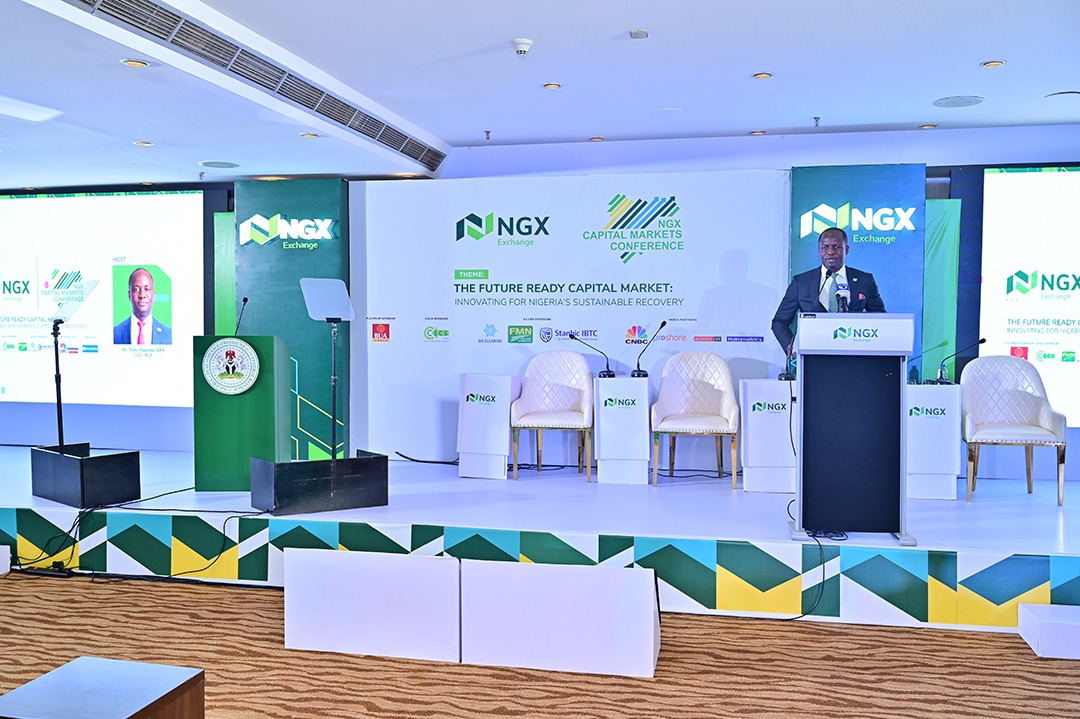
By Dipo Olowookere
The local stock market was relatively flat on Friday, as the bears and the bulls shared the spoils of war, though investor sentiment turned bullish compared with the preceding session’s bearish posture.
Data from the Nigerian Exchange (NGX) Limited showed that the All-Share Index (ASI) was marginally down by 4.66 points as it ended at 201,698.89 points versus Wednesday’s 201,703.55 points, and the market capitalisation slightly contracted by N3 billion to N129.806 trillion from N129.809 trillion.
Customs Street was shut on Friday because of the public holidays declared by the federal government today and next Monday.
Business Post reports that John Holt declined by 9.91 per cent to N15.45, Abbey Mortgage Bank shed 9.60 per cent to trade at N8.95, International Energy Insurance slipped by 6.48 per cent to N3.32, Chams shrank by 5.30 per cent to N3.75, and Tantalizers depreciated by 5.18 per cent to N4.03.
On the flip side, Unilever Nigeria improved by 10.00 per cent to N103.40, Fortis Global Insurance gained 9.82 per cent to trade at N1.23, Multiverse appreciated 9.81 per cent to N20.15, Legend Internet advanced by 9.38 per cent to N6.30, and Zichis grew by 9.02 per cent to N14.14.
The market breadth index was positive during the trading session, as there were 35 appreciating stocks and 24 depreciating stocks.
Yesterday, investors traded 560.0 million equities valued at N19.3 billion in 49,676 deals, in contrast to the 815.5 million equities worth N33.3 billion transacted in 52,641 deals in the preceding day, representing a drop in the trading volume, value, and number of deals by 31.33 per cent, 42.04 per cent, and 5.63 per cent, respectively.
Secure Electronic Technology dominated the activity log with 59.7 million shares valued at N61.1 million, Wema Bank exchanged 52.0 million equities worth N1.4 billion, VFD Group transacted 36.0 million stocks for N410.5 million, Access Holdings sold 35.3 million shares valued at N914.8 million, and Chams traded 31.0 million equities worth N115.0 million.
-
 Feature/OPED6 years ago
Davos was Different this year
-
Travel/Tourism10 years ago
Lagos Seals Western Lodge Hotel In Ikorodu
-

 Showbiz3 years ago
Estranged Lover Releases Videos of Empress Njamah Bathing
-
 Banking8 years ago
Sort Codes of GTBank Branches in Nigeria
-

 Economy3 years ago
Subsidy Removal: CNG at N130 Per Litre Cheaper Than Petrol—IPMAN
-

 Banking3 years ago
Sort Codes of UBA Branches in Nigeria
-

 Banking3 years ago
First Bank Announces Planned Downtime
-

 Sports3 years ago
Highest Paid Nigerian Footballer – How Much Do Nigerian Footballers Earn