
Economy
Governance Issues Around NEM Insurance 48th AGM: Investigation and Outcomes


The latest decision by the Securities and Exchange Commission (SEC) on the issues relating to NEM Insurance Plc’s (NEM) 48th Annual General Meeting (AGM) held on Wednesday, 20 June 2018, at the Premier Hotel, Ibadan, Oyo State (Re: SEC Invalidates NEM Insurance Plc’s 48th AGM and Resolutions; Orders Firm to Reconvene Proper AGM) came on the back of another extensive review conducted by the Nigerian Stock Exchange (NSE) in October 2018, showing an increased level of co-ordination in the enforcement regime in the Nigerian markets.
The Complaint(s)
Following the completion of the AGM, formal complaints were received from five (5) shareholders of NEM in June and July 2018.
The Issues
The shareholders’ complaints can be broadly categorized into two (2) main areas:
Non-receipt of the Company’s AGM notice within the time (at least twenty-one (21) days) prescribed by Section 217(1) of the Companies and Allied Matters Act, Cap. C20 Laws of the Federation of Nigeria 2004 (CAMA);
Special resolution proposed and passed at the AGM to raise additional capital through special/private placement was set at a price below the market price – reversal of the special resolution proposed and passed at the AGM.
Fact Findings
The Notice of AGM was dispatched and delivered to the 1st to 4th Complainants by registered post through a private courier service on 13 June 2018, seven (7) days before the AGM. The proof of delivery was provided.
The Company claimed it dispatched the Notice of AGM to the 5th Complainant via NIPOST on 13 June 2018. The Company did not provide any proof of dispatch or delivery of the Notice to the 5th Complainant.
The Notice of AGM was published in two (2) daily newspapers, Leadership and New Telegraph Newspapers on 30 May 2018. The proof of publication was provided.
A special resolution to raise additional capital through special/private placement was proposed and passed at the AGM.
Relevant Laws and Rules:
The Companies and Allied Matters Act (CAMA) Cap C20 Laws of the Federation of Nigeria 2004
(i) Section 217 of CAMA
“217. Length of notice for calling meetings
(1) The notice required for all types of general meetings from the commencement of this Act shall be 21 days from the date on which the notice was sent out.
(2) A general meeting of a company shall, notwithstanding that it is called by a shorter notice than that specified in subsection (1) of this section, be deemed to have been duly called if it is so agreed in the case of‐ (a) a meeting called as the annual general meeting, by all the members entitled to attend and vote thereat; and
(b) any other general meeting, by a majority in number of the members having a right to attend and vote at the meeting, being a majority together holding not less than 95 per cent in nominal value of the shares giving a right to attend and vote at the meeting or, in the case of a company not having a share capital, together representing not less than 95 per cent of the total voting rights at that meeting of all the members.
(ii) Section 220 of CAMA
“220. Service of Notice
(1) A notice may be given by the company to any member either personally or by sending it by post to him or to his registered address, or (if he has no registered address within Nigeria) to the address, if any, supplied by him to the company for the giving of notice to him.
(2) Where a notice is sent by post, service of the notice shall be deemed to be effected by properly addressing, prepaying, and posting a letter containing the notice, and to have been effected in the case of a notice of a meeting at the expiration of seven days after the letter containing the same is posted, and in any other case at the time at which the letter would be delivered in the ordinary course of post.
(5) “Registered address” means, in the case of a member, any address supplied by him to the company for the giving of notice to him.”
(iii) Section 221 of CAMA
“221. Failure to give notice
(1) Failure to give notice of any meeting to a person entitled to receive it shall invalidate the meeting unless such failure is an accidental omission on the part of the person or persons giving the notice.
(2) Failure to give notice to a person entitled to it due to a misrepresentation or misinterpretation of the provisions of this Act, or of the articles, shall not amount to an accidental omission for the purposes of the foregoing subsection.”
(iv) Section 222 of CAMA
“222. Additional notice
In addition to the notice required to be given to those entitled to receive it in accordance with the provisions of this Act, every public company shall, at least 21 days before any general meeting, advertise a notice of such meeting in at least two daily newspapers.”
The Securities and Exchange Commission Consolidated Rules, 2013
(v) Rule 99(6) of the Securities and Exchange Commission Consolidated Rules, 2013
“99. Functions
(6) A Registrar of a public company may dispatch annual reports and notices of general meetings to shareholders by electronic means.”
(vi) Rule 593 of the Securities and Exchange Commission (SEC) Consolidated Rules, 2013
“593. Service of proxy statement and proxy forms
(1) The registrant shall furnish the proxy statement and proxy form to the shareholder together with the notice of meeting and annual report twenty one (21) days to the date of the meeting in the case of annual general meeting (A.G.M.).
(2) Where proxies are solicited at the expense of the company on behalf of the board, proxy forms and materials must be sent to every member of the company entitled to notice of the meeting and to vote by proxy at the meeting.
The Securities and Exchange Commission Code of Corporate Governance for Public Companies, 2011 (vii) Clause 24 of the SEC Code of Corporate Governance for Public Companies, 2011
“24. Notice of Meeting
Notices of general meetings shall be twenty-one (21) days from the date on which the notice was sent out. Companies shall allow at least seven days for service of notice if sent out by post from the day the letter containing the same is posted. The notices should include copies of documents, including annual reports and audited financial statements and other information as will enable members prepare adequately for the meeting.”
The Rulebook of The Nigerian Stock Exchange, 2015 (Issuers’ Rules)
(viii) Rule 19.3, Rules Relating to Board Meetings and General Meetings of Issuers, Rulebook of The Exchange, 2015 (Issuers’ Rules)
“Rule 19.3: General Meetings of Members
(a) Every Issuer shall hold sessions of the general meetings of shareholders or holders of other securities in accordance with the relevant provisions in the Companies and Allied Matters Act Cap C20 LFN (CAMA) and any other relevant legislation, these Rules and the Issuer’s Articles of Association. The Issuer shall also ensure that shareholders or holders of other securities are allowed to lawfully exercise their rights at the meetings.
(ix) Rule 19.5, Rules Relating to Board Meetings and General Meetings of Issuers, Rulebook of The Exchange, 2015 (Issuers’ Rules)
“Rule 19.5: Notice of Meeting
(a) The Board of Directors or Trustees of the Issuer shall give Notice of Meeting as provided in Rule 19.8(c) below, to each security holder to ensure that each security holder has a reasonable opportunity to attend the meeting and exercise his voting rights threat.
(b) The Notice shall state the nature of the meeting, time and venue and shall include a proxy form which shall include clearly worded resolution proposals in order that securities’ holders may be properly guided in casting their votes either for or against each resolution.”
(x) Rule 19.8, Rules Relating to Board Meetings and General Meetings of Issuers, Rulebook of The Exchange, 2015 (Issuers’ Rules)
“(vii) Rule 19.8: Notice to be Displayed on the Website
(c) Issuers shall ensure that the Notice of Meeting and the full copy of the Annual Reports or any other relevant documentation are dispatched to shareholders or holders of other securities and the relevant Regulatory authorities at least twenty-one (21) days before the date of the meeting and evidence of postage shall be made available for inspection by the Regulators at the meeting. Where the notice is personally delivered, evidence of such delivery shall be produced. Issuers shall allow at least five (5) business days for delivery of the Notice of Meeting if sent out by post from the day the letter containing same is posted.”
Findings – Issues
Issue 1: Non-receipt of the Company’s AGM Notice
The Company did not dispatch the Notice of the 48th AGM and Annual Reports to the shareholders at least 21 days before the date of meeting as prescribed by the CAMA, SEC Rules and the Rulebook of The Exchange. This action of NEM violates Rule 19.8(vii), Rulebook of The Exchange (Issuers’ Rules) and Section 217(1) of CAMA stated above.
The shareholders who did not receive the Notice of AGM were not given the opportunity to attend and exercise their voting rights in respect of any of the resolutions passed at the 48th AGM, including the proposed special resolution to raise additional capital through special/private placement.
Issue 2: Special resolution proposed and passed at the AGM to raise additional capital through special/private placement at a price below the market price
The Exchange found that the resolution was duly proposed and passed at the AGM.
Issue 3: Reversal of the special resolution proposed and passed at the meeting
The Exchange is not the Competent Authority to invalidate the AGM pursuant to Section 221 of CAMA, for failure to give Notice of the AGM to shareholders. See, Section 221(1) of CAMA cited above. NEM as a listed entity is required to comply with the Rules of The Exchange, in addition to compliance with other relevant legislations and regulations. For general meetings, Issuers are required to comply with the requirements of The Exchange, CAMA, and the Securities and Exchange Commission Rules and Regulations (SEC Rules) as provided in Rule 19.3 cited above.
The Exchange viewed this act of non-compliance as a corporate governance issue for a listed company which holds the Corporate Governance Rating System (CGRS) certification, and is included in The Exchange’s Corporate Governance Index (CGI), for listed companies. CGRS certified companies are required to demonstrate high standards of corporate governance and compliance with applicable laws and regulations. A company’s treatment of its stakeholders, particularly its shareholders, provides incontrovertible evidence of its corporate governance practices. And, the facts in regard to the five complaints considered raise significant questions about the state of corporate governance in NEM.
Sanctions
In view of the above, The Exchange sanctioned NEM pursuant to the provisions of Rule 19.16: Sanctions, Rules Relating to Board Meetings and General Meetings of Issuers, Rulebook of The Exchange, 2015 (Issuers’ Rules) which states that:
“(a) Where an Issuer or any of its directors or any of the Trustees of a Bond contravene or fail to adhere to any of these provisions, The Exchange may censure the Issuer and/or the Issuer’s director(s) or the Trustees individually or jointly, either privately or in public. (b) In the event of breach of any of these Rules, The Exchange shall impose the following penalties: (i) A form of censure which it determines to be appropriate; and (ii) A fine not exceeding fifty per-cent (50%) of the listing fees of the Issuer.”
Thus, the following sanctions were imposed on NEM for contravening Rule 19.8 cited above:
Private Censure – The Exchange shall communicate directly with the Board of Directors of NEM Insurance regarding its findings on the complaints; and
A fine of Five Hundred and Seventy-Five Thousand, Five Hundred and Five Naira only (N575,505.00), being fifty per-cent (50%) of NEM annual listing fee, on the Company.
NEM is expected to pay the fine of N575,505.00 to The Exchange on or before close of business on Wednesday, 7 November 2018 to avoid the enforcement of the provisions of Clause 14(d), Appendix III: Form of General Undertaking (Equities), Rulebook of The Exchange, 2015 (Issuers’ Rules), which states that:
“A listed company who contravenes any of the provisions of the Listing Rules and General Undertaking and fails to pay the penalty imposed on it for such contravention on or before the due date shall be liable to a further fine of N300,000.00 in addition to N25,000 per day for the period the violation continues”.
More importantly, NEM is also required to disclose the above contravention and penalty paid in its Annual Report and Accounts for the year ended 31 December 2018.
Additional Corporate Governance Measures
The Exchange will, as part of its own governance ethos, take steps to communicate its findings to the Steering Board of the Corporate Governance Rating System (CGRS), which may decide to suspend, withdraw or do nothing to the CGRS rating of NEM. Please be advised that the Steering Board’s decision may affect NEM’s status as a component of the Corporate Governance Index of The Exchange.
Conclusion
NEM is one of the best performing stock in its sector on the bourse, and it is expected that lessons will (ought to) be learned from this in the future; even as it complies with the decision of the SEC communicated today, comply with all requirements of The Exchange and that of other relevant laws and applicable rules.
The market looks forward to listed companies willing to work on their governance issues and help deliver a fair, efficient and transparent market for all investors. This is a teachable moment for NEM.









By Adedapo Adesanya
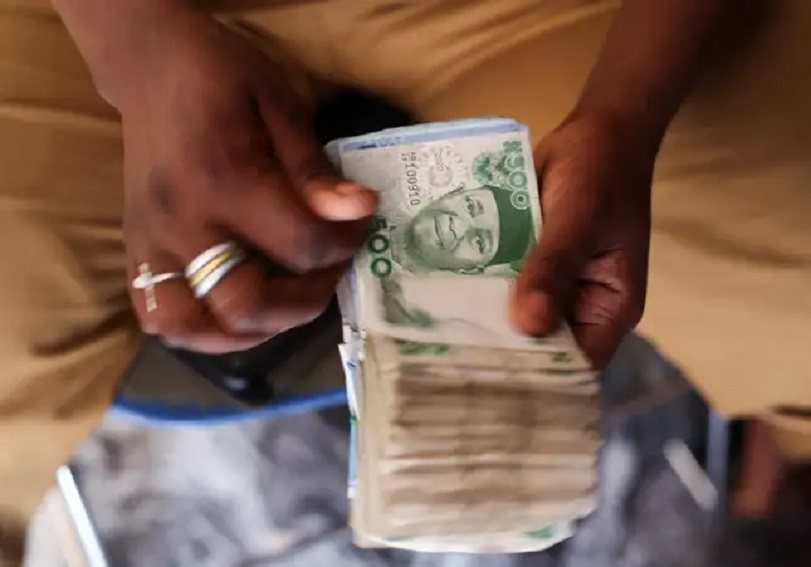
The Centre for the Promotion of Private Enterprise (CPPE) has projected relative stability for the Naira exchange rate in the second quarter of the year, supported by improved foreign reserves and liquidity, but cautioned that volatility risks remain.
In its Q1 2026 Economic Review and Q2 Outlook: Macro Stability Gains Amid Persistent Cost Pressures and Rising Geopolitical Risks report released on Sunday, the think-tank’s chief executive, Mr Muda Yusuf, said exchange rate conditions also improved significantly as the Naira, which experienced substantial volatility during the reform transition period, stabilised within a relatively narrow band of about N1,340–N1,430 per Dollar in the official market during Q1 2026.
“This stability has helped to moderate imported inflation and restore a measure of business confidence. External reserves strengthened considerably, rising above $50 billion in early 2026,” he stated.
The group said that the Nigerian economy in the first quarter of 2026 reflected a blend of improving macroeconomic stability and persistent structural constraints.
It said that proof of a more stable macroeconomic environment is increasingly evident, underpinned by the cumulative gains from foreign exchange reforms, a sustained period of monetary tightening, and the gradual normalisation of key economic indicators.
However, it noted that these improvements continue to coexist with significant headwinds, adding that the country’s economic growth will remain positive in the next three months, but the pace of expansion may slow due to mounting downside risk
The report also warned of a growing risk of stagflation, as persistent cost pressures combine with fragile growth conditions. It added that rising political activities ahead of the 2027 general elections could weaken reform momentum and distract from economic management.
The CPPE noted that rising global crude oil prices, triggered by the ongoing Middle East conflict, pose a major threat to Nigeria’s fragile disinflation process. While higher oil prices could boost export earnings and government revenue, the think tank stressed that the domestic impact would be adverse.
“The cost pass-through effect poses a significant threat to the fragile disinflation process, potentially reversing recent gains in price stability, weakening real incomes, and further exacerbating the cost-of-living pressures facing households and businesses,” the organisation said.
Highlighting monetary policy concerns, CPPE said the current inflationary trend is largely driven by structural and cost-related factors rather than excess demand, observing that, “Additional monetary tightening would have limited effectiveness in addressing the underlying drivers of inflation, while potentially exacerbating constraints on investment, credit expansion, and overall economic growth.”
The CPPE further raised concerns over the implementation of the proposed N68 trillion 2026 budget, citing weak revenue performance, delays in capital releases, and growing political influence on spending priorities.
“As political pressures intensify, there is a risk of weakening fiscal discipline, with greater emphasis on recurrent and politically expedient spending,” the group stated, advising businesses to shift focus towards resilience and efficiency, urging firms to prioritise cost containment, adopt alternative energy sources, and strengthen foreign exchange risk management strategies.
It also called on policymakers to take urgent steps to safeguard economic stability and protect vulnerable groups.
“Policy priorities should therefore focus on consolidating macroeconomic stability, addressing structural bottlenecks, and implementing targeted measures to protect vulnerable populations,” it noted.
The CPPE concluded that while macroeconomic stability gains recorded in the first quarter of 2026 are notable, the outlook for the second quarter remains cautiously positive but increasingly uncertain due to geopolitical tensions, fiscal risks, and domestic political dynamics.
By Adedapo Adesanya
The Organisation of the Petroleum Exporting Countries and its allies (OPEC+) agreed to raise its oil output quotas by 206,000 barrels per day for May.
Eight members of OPEC+, comprising Saudi Arabia, Russia, Iraq, the UAE, Kuwait, Kazakhstan, Algeria, and Oman, agreed to the increase in May quota at a virtual meeting on Sunday, OPEC+ said in a statement.
However, the rise will be in theory, as its key members are unable to raise production due to the US-Israeli war with Iran, which has affected production.
The war has effectively shut the Strait of Hormuz, the world’s most important oil route, since the end of February and cut exports from some OPEC+ members, including Saudi Arabia, the UAE, Kuwait and Iraq. These are the only countries in the group which were able to significantly raise production even before the conflict began.
Besides the disruptions affecting Gulf members, others, such as Russia, are unable to increase output due to Western sanctions and damage to infrastructure inflicted during the war with Ukraine. For Nigeria, even as Africa’s largest producer, it has not been able to keep production quotas steady.
The OPEC+ quota increase of 206,000 barrels per day represents less than 2 per cent of the supply disrupted by the Hormuz closure, but it signals readiness to raise output once the waterway reopens.
Also meeting on Sunday, a separate OPEC+ panel called the Joint Ministerial Monitoring Committee (JMMC), expressed concern about attacks on energy assets, saying they were expensive and time-consuming to repair and so have an impact on supply.
May’s OPEC+ increase is the same as the eight members had agreed for April at their last meeting held on March 1, just as the war began to disrupt oil flows.
A month later, the largest oil supply disruption on record is estimated to have removed as many as 12 to 15 million barrels per day or up to 15 per cent of global supply.
The eight OPEC+ members have raised production quotas by about 2.9 million barrels per day from April 2025 through December 2025, before pausing increases for January to March 2026. The sub-group holds its next meeting on May 3.
Market analysts have warned that oil prices could hit $150 per barrel if the closure of the strait is prolonged and continues, due to damage to energy assets across the critical Middle East region.
As of the time of this report, Brent crude is trading at $108 per barrel, below the US West Texas Intermediate (WTI) crude at $109 per barrel.
By Adedapo Adesanya
Workers at Seplat Energy will resume work after a strike action that impacted production was called off by the Petroleum and Natural Gas Senior Staff Association of Nigeria (PENGASSAN) over the weekend, with the company issuing written commitments on pay rises.
Top employees began an indefinite strike last Friday as talks over a collective bargaining agreement and staff welfare issues broke down. The action came at a time when Nigeria is seeking to maximise production amid rising global oil prices.
According to Reuters, in an April 4 letter to the chief executive of Seplat Nigeria, Mr Roger Brown, PENGASSAN said it had directed members at the local energy firm to immediately suspend industrial action after negotiations resumed with the Nigerian National Petroleum Company (NNPC) Limited. Other less-skilled workers are covered by the Nigeria Labour Congress (NLC) and did not partake in the strike with PENGASSAN.
The union said talks on a 2026 collective bargaining agreement would continue, with the aim of concluding outstanding issues by April 13. However, according to the publication, the union did not disclose more details about its financial demands.
“We can confirm that the union has suspended its notice of industrial action to allow negotiations to conclude on outstanding items within an agreed framework,” Seplat spokesperson, Mr Ogechukwu Udeagha, said, adding that “operations are recommencing at our various locations.”
Seplat Energy’s group production averaged 131,506 barrels of oil equivalent per day in 2025, according to its latest audited results. That is the equivalent of around 7 per cent–9 per cent of Nigeria’s total liquids production.
The company expects output to rise to 155,000 barrels of oil equivalent per day, making any sustained disruption particularly sensitive for Nigeria’s supply outlook. This comes as it seeks to scale production while remaining a major supplier of gas to Nigeria’s domestic power market.
With the company’s output expected to rise, any prolonged disruption would have significantly impacted Nigeria’s oil supply and fiscal outlook.
-
 Feature/OPED6 years ago
Davos was Different this year
-
Travel/Tourism10 years ago
Lagos Seals Western Lodge Hotel In Ikorodu
-

 Showbiz3 years ago
Estranged Lover Releases Videos of Empress Njamah Bathing
-
 Banking8 years ago
Sort Codes of GTBank Branches in Nigeria
-

 Economy3 years ago
Subsidy Removal: CNG at N130 Per Litre Cheaper Than Petrol—IPMAN
-

 Banking3 years ago
Sort Codes of UBA Branches in Nigeria
-

 Banking3 years ago
First Bank Announces Planned Downtime
-

 Sports3 years ago
Highest Paid Nigerian Footballer – How Much Do Nigerian Footballers Earn