Connect with us

Economy

Hike in Prices of Petrol, Electricity Will Benefit Nigerians—Buhari

Published

on

sell public assets Buhari

By Modupe Gbadeyanka

Nigerians have been urged to see the increase in the prices of electricity and premium motor spirit (PMS) commonly known as petrol as a blessing in disguise.

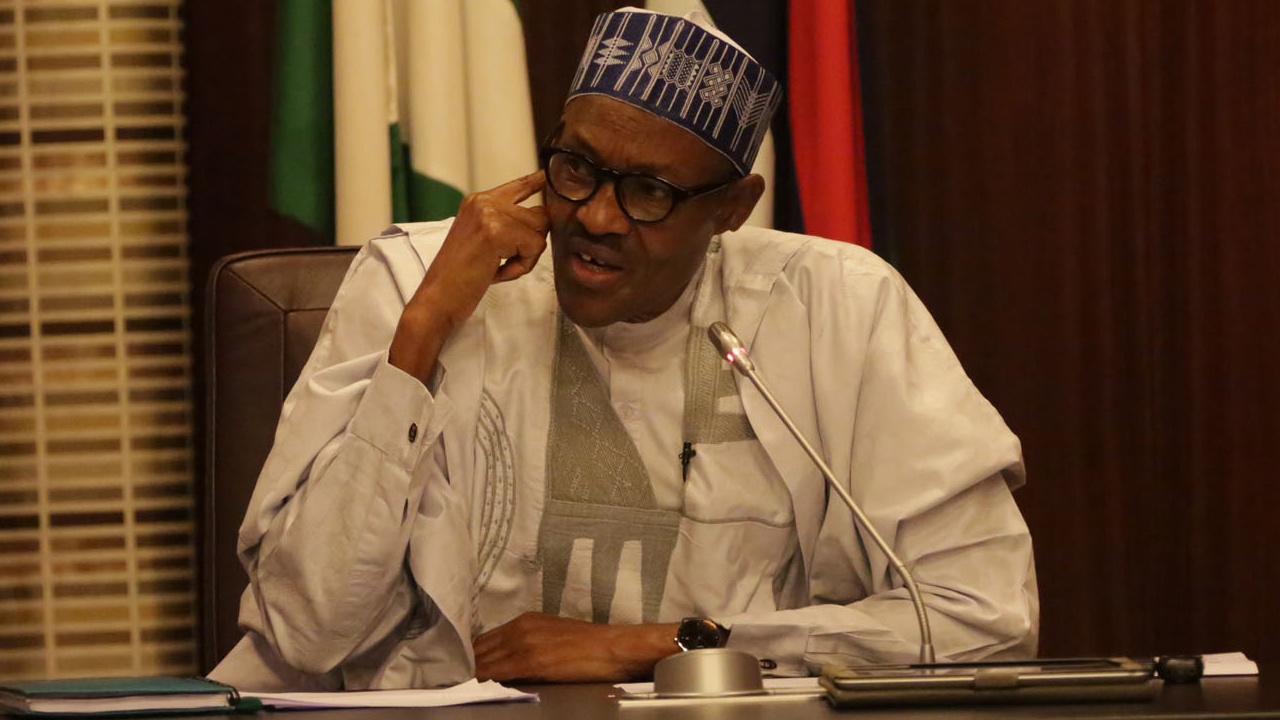
Speaking on Monday at the first year ministerial performance review retreat at the State House Conference Centre, Abuja, President Muhammadu Buhari said the new hike in electricity tariff will make Nigerians enjoy better service.

According to him, “the implementation of a willing buyer, willing seller policy for the power sector has opened opportunities for increased delivery of electricity.”

He assured Nigerians of the willingness and determination of the federal government to provide stable electricity to every home and industry.

Mr Buhari noted that increase in the price of electricity and deregulation of the petroleum sector were crucial decisions that were taken at the beginning of the year, preceding the COVID-19 pandemic, and continuous delay in implementation of the policies, especially the deregulation of the petroleum would be detrimental to the economy, placing the burden of regular light cuts and fuel queues on Nigerians.

“We are also executing some critical projects through the transmission, rehabilitation and expansion programme, which will result in the transmission and distribution of a total of 11,000 Megawatts by 2023,” he said.

The President emphasised that the target of providing 11,000 megawatts by 2023 was realistic and realizable, and would provide a lifeline for many businesses and improve the living conditions of many Nigerians.

Mr Buhari noted that he is aware of the economic challenges being faced by individuals, families and businesses, but stressed that the decisions had to be taken at this crucial time.

The President said the COVID-19 pandemic led to a severe downturn in the funds available to finance the nation’s budget.

“One of the steps we took at the beginning of the crisis in March when oil prices collapsed at the height of the global lockdown, was the deregulation of the price of Premium Motor Spirit (PMS) such that the benefit of lower prices at that time was passed to consumers.

“This was welcome by all and sundry. The effect of deregulation though is that PMS prices will change with changes in global oil prices. This means quite regrettably that as oil prices recover we would see some increases in PMS prices. This is what has happened now. When global prices rose, it meant that the price of petrol locally would go up.

“There are several negative consequences if the government should even attempt to go back to the business of fixing or subsidizing PMS prices.

“First of all, it would mean a return to the costly subsidy regime. Today we have 60 per cent less revenues, we just cannot afford the cost. The second danger is the potential return of fuel queues – which has, thankfully, become a thing of the past under this administration.

“Nigerians no longer have to endure long queues just to buy petrol, often at highly inflated prices. Also, as I hinted earlier, there is no provision for fuel subsidy in the revised 2020 budget, simply because we are not able to afford it, if reasonable provisions must be made for health, education and other social services. We now simply have no choice.

“Nevertheless, I want to assure our compatriots that Government is extremely mindful of the pains that higher prices mean at this time, and we do not take the sacrifices that all Nigerians have to make for granted.

“We will continue to seek ways and means of cushioning pains especially for the most vulnerable in our midst. We will also remain alert to our responsibilities to ensure that marketers do not exploit citizens by raising pump price arbitrarily,” he said.

The President emphasised that he was “convinced that if we stay focused on our plans, brighter, more prosperous days will come soon.”


Modupe Gbadeyanka is a fast-rising journalist with Business Post Nigeria. Her passion for journalism is amazing. She is willing to learn more with a view to becoming one of the best pen-pushers in Nigeria. Her role models are the duo of CNN's Richard Quest and Christiane Amanpour.

Click to comment

Leave a Reply

Your email address will not be published. Required fields are marked *

Economy

MRS Oil, FrieslandCampina Wamco Shrink NASD Index by 0.68%

Published

on

MRS Oil voluntary delisting

By Adedapo Adesanya

The duo of MRS Oil and FrieslandCampina Wamco Nigeria Plc weakened the NASD Over-the-Counter (OTC) Securities Exchange by 0.68 per cent on Friday, June 5.

MRS Plc lost N19.00 during the session to sell at N171.00 per share compared with Thursday’s value of N190.00 per share, and FrieslandCampina Wamco Nigeria Plc depreciated by N8.70 to finish at N181.68 per unit compared with the preceding session’s N190.38 per unit.

As a result, the market capitalisation further lost N22.59 billion to close at N2.607 trillion versus the N2.630 trillion it ended a day earlier, and the NASD Unlisted Security Index (NSI) dropped 37.76 points to settle at 4,358.32 points, in contrast to the previous day’s 4,396.08 points.

The alternative stock market closed the last trading day of this week with a price gainer, Central Securities Clearing System (CSCS) Plc, which gained 6 Kobo to quote at N78.40 per share compared with the preceding session’s N78.34 per share. However, it could not prevent the market from going down at the close of business.

Yesterday, the volume of securities bought and sold by investors went down by 50.0 per cent to 140,345 units from the preceding day’s 280,714 units, the value of stocks decreased by 16.5 per cent to N17.9 million from the previous session’s N21.5 million, and the number of deals carried out by market participants fell by 35.7 per cent to 27 deals from the 42 deals recorded on Thursday.

When trading activities closed for the day, Great Nigeria Insurance (GNI) Plc remained the most active stock by value on a year-to-date basis, with 3.4 billion units exchanged for N8.4 billion, trailed by Infrastructure Credit Guarantee (Infracredit) Plc with 2.3 billion units sold for N6.5 billion, and CSCS Plc with 64.7 million units traded for N4.4 billion.

GNI Plc also ended the session as the most traded stock by volume on a year-to-date basis, with 3.4 billion units worth N8.4 billion, followed by Infracredit Plc with 2.3 billion units transacted for N6.5 billion, and Resourcery Plc with 1.1 billion units valued at N415.7 million.

Continue Reading

Economy

NGX Index Rebounds 0.15% on Renewed Interest in Financial Stocks

Published

on

Financial Stocks

By Dipo Olowookere

Renewed interest in financial stocks and others lifted the Nigerian Exchange (NGX) Limited by 0.15 per cent on Friday.

Customs Street closed higher yesterday despite the 1.37 per cent loss recorded by the consumer goods sector as a result of profit-taking.

This was offset by gains in the other key sectors of the local bourse, as the insurance counter chalked up 1,14 per cent. The banking space appreciated by 0.90 per cent, the industrial goods segment grew by 0.46 per cent, and the energy sector expanded by 0.01 per cent.

Consequently, the All-Share Index (ASI) went up by 366.00 points to 242,593.31 points from 242,227.31 points, and the market capitalisation gained N235 billion to close at N155.594 trillion compared with the previous day’s N155.359 trillion.

The trio of International Energy Insurance, Abbey Mortgage Bank, and DAAR Communications improved by 10.00 per cent each yesterday to N7.26, N9.35, and N1.98, respectively, while Zichis advanced by 9.39 per cent to N32.38, with Sovereign Trust Insurance up by 8.70 per cent to N2.50.

On the flip side, Academy Press lost 9.84 per cent to quote at N8.25, University Press depreciated by 9.73 per cent to N5.10, Africa Prudential dipped by 2.63 per cent to N12.95, Chams crumbled by 2.44 per cent to N4.00, and International Breweries slipped by 1.59 per cent to N12.35.

Business Post reports that the market breadth index was positive during the session after recording 37 appreciating equities and 14 depreciating equities, implying strong investor sentiment.

Abbey Mortgage Bank led the activity chart with a turnover of 164.1 million units worth N1.5 billion, Ellah Lakes sold 76.7 million units for N767.2 million, Access Holdings transacted 44.8 million units valued at N1.1 billion, Linkage Assurance exchanged 23.0 million units worth N41.2 million, and The Initiates traded 20.2 million units for N562.1 million.

At the close of trades, market participants transacted 608.5 million units worth N32.0 billion in 53,826 deals versus the 588.5 million units valued at N27.9 billion executed in 57,352 deals in the previous session. This showed that the number of deals eased by 6.15 per cent, the volume of transactions rose by 3.40 per cent, and the value of transactions soared by 14.70 per cent.

Continue Reading

Economy

Naira Depreciates to N1,362/$1 at Official Market

Published

on

Naira 4 Dollar

By Adedapo Adesanya

The Naira further depreciated against the United States Dollar by N3.46 or 0.25 per cent to N1,362.21/$1 from N1,358.75/$1 in the Nigerian Autonomous Foreign Exchange Market (NAFEX) on Friday, June 5.

However, it appreciated against the Pound Sterling in the same market window during the session by N4.47 to trade at N1,823.59/£1 compared with the previous day’s N1,828.06/£1, and gained N7.00 against the Euro to sell at N1,574.58/€1, in contrast to Thursday’s closing price of N1,581.58/€1.

For another trading session, the Nigerian Naira maintained stability against the Dollar in the parallel market and the GTBank forex counter on Friday at N1,375/$1 and N1,372/$1, respectively.

The Naira is expected to remain strong in the near term, backed by a rise in external reserves, which are nearing $50 billion, enhancing analysts’ confidence about its outlook in the second half of 2026.

Heightened global uncertainty has reduced the incentive for importers and corporates to demand FX, as cautious trade weighs on import needs. Analysts estimate a $40 billion net FX position for the year, a projection anchored in oil windfall gains.

As for the cryptocurrency market, prices remained depressed following a strong US jobs report that spurred markets to price in higher-for-longer interest rates, sending Treasury yields and the dollar up while hammering stocks, especially AI-related names. Crypto markets saw heavy leverage washouts with about $1.6 billion in positions liquidated over 24 hours.

Ethereum (ETH) gave up 4.9 per cent to trade at $1,584.68, Solana (SOL) fell by 3.3 per cent to $63.22, Bitcoin (BTC) crashed by 1.9 per cent to $61,333.23, Dogecoin (DOGE) slipped by 1.8 per cent to $0.0821, and Ripple (XRP) moderated by 1.8 per cent to $1.09.

Further, TRON (TRX) dropped 1.6 per cent to sell at $0.3197, Binance Coin (BNB) slumped by 1.0 per cent to $581.18, and  Cardano (ADA) declined by 0.4 per cent to $0.1589, while the US Dollar Tether (USDT) gained 0.07 to sell at $0.9997, and US Dollar Coin (USDC) closed flat at $0.9998.

Continue Reading

Trending