
Economy
Honeywell Flour Targets More Revenue Streams to Boost FY Performance


By Modupe Gbadeyanka
Managing Director of Honeywell Flour Mills Plc, Mr ‘Lanre Jaiyeola, has disclosed that the leading foods manufacturer in Nigeria, would make efforts to deliver impressive results in the current financial year.
Mr Jaiyeola gave this assurance while commenting on the performance of the company in the first quarter of the year ended June 30, 2019.
According to the financial figures of the firm, the revenue moved up 7 percent to N19.0 billion, compared with N17.7 billion recorded in the corresponding quarter of 2018.
Also, the gross profit margin increased by 7 percent from N3,193 to N3,411 while the operating profit increased by 52 percent from N1.02 billion to N1.54 billion, with profit for the period under review also moving up by 6 percent from N102 million to N108 million.
In a statement issued by Honeywell Flour Mills, Mr Jaiyeola noted that, “Despite the tough operating environment, revenue for the quarter was up by 7 percent to N19 billion, when compared with revenue of N17.7 billion recorded in the corresponding quarter of the last financial year.
“This was driven by sales of our various Pasta products, which led to the continued strong performance of our B2C business line.
“With the commencement of full commercial production at our ultra-modern Foods and Agro-allied complex in Sagamu, Ogun State, we were able to grow our capacity to meet the increasing demand for our Pasta products which is evidenced by the impressive 157 percent volume increase.
“The performance in Pasta gives credence to the company’s commitment to continue to expand its footprint into growth areas that will positively impact the long-term sustainability of the business.”
Mr Jaiyeola further explained that, “Execution of well-embedded savings and efficiency initiatives aimed at improving the company’s margins led to a 14 percent drop in selling and administration expenses from N2.2 billion to N1.9 billion. This translated to the operating profit accelerating at a faster rate than revenue by 52 percent, from N1.02 billion to N1.54 billion.
The growth in operating profit, he further explained, “was however moderated by increase in finance expense which was up by 58 percent from N892 million in the corresponding quarter of the last financial year to N1.4 billion.
“The growth in finance expense was as a result of the cost of financing the Foods and Agro-allied complex which is now being recognised in the income statement following the commencement of commercial operations. As a result, profit for the period only increased by 6 percent from N102 million to N108 million.
Confident of sustaining an improved performance through the remaining period of the financial year and the future, the Managing Director held that, “We are confident about the future and our performance for the full year.
“We will continue to execute on our five core strategic pillars through three key drivers of growth, efficiency and capability.
“We will also strengthen and expand our business portfolio, generate additional revenue streams by offering new products tailored to consumers’ taste and nutritional needs and we will drive margin improvement by enhancing operational efficiency and developing capabilities to extend product offerings and serve new markets.”



By Dipo Olowookere
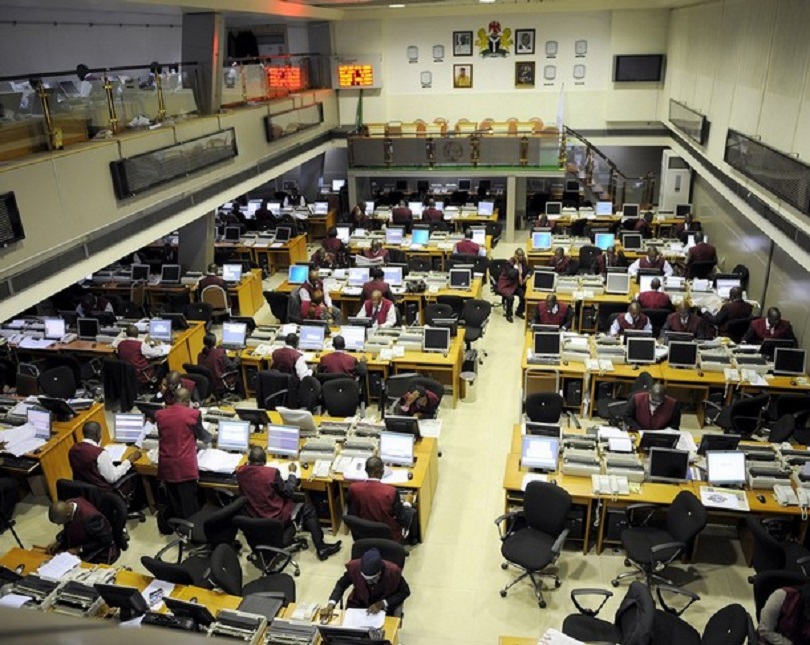
The absence of a positive trigger left Nigerian stocks 0.38 per cent deeper in the bears’ territory on Friday, as investors embarked on cautious trading.
Two of the five major sectors tracked by Business Post finished in red on the last trading session of this week, with the industrial goods down by 2.44 per cent, and the energy down by 0.26 per cent due to profit-taking.
However, bargain-hunting raised the insurance sector by 1.52 per cent, the banking index increased by 0.79 per cent, and the consumer goods sector expanded by 0.28 per cent.
When the closing gong was struck yesterday, the All-Share Index (ASI) of the Nigerian Exchange (NGX) Limited crashed by 741.04 points to 192,826.77 points from 193,567.81 points, and the market capitalisation lost N476 billion to close at N123.763 trillion compared with the previous day’s N124.239 trillion.
According to data from Customs Street, Mecure gave up 9.97 per cent to trade at N75.85, Meyer depreciated by 9.90 per cent to N18.65, DAAR Communications crumbled by 9.83 per cent to N2.11, Champion Breweries staggered by 6.49 per cent to N18.00, and Dangote Cement crashed by 6.09 per cent to N779.00.
Conversely, Sovereign Trust Insurance gained 9.95 per cent to settle at N2.21, RT Briscoe improved by 9.93 per cent to N12.51, NGX Group expanded by 9.78 per cent to N124.00, Ellah Lakes surged by 9.70 per cent to N13.00, and Omatek chalked up 9.70 per cent to sell for N2.60.
A total of 44 shares finished on the gainers’ chart during the session, while 25 shares ended on the losers’ table, representing a positive market breadth index and strong investor sentiment.
The activity chart showed that 823.8 million stocks valued at N34.8 billion exchanged hands in 63,759 deals during the session versus the 868.5 million stocks worth N31.5 billion traded in 69,310 deals on Thursday.
This indicated that the value of transactions increased by 10.48 per cent, the volume of trades declined by 5.15 per cent, and the number of deals dipped by 8.01 per cent.
The busiest equity on Friday was Fortis Global Insurance, which sold 146.6 million units for N137.3 million, Zenith Bank transacted 79.4 million units valued at N7.1 billion, Japaul exchanged 57.2 million units worth N225.1 million, Jaiz Bank traded 49.5 million units valued at N589.3 million, and Access Holdings exchanged 44.8 million units worth N1.2 billion.

By Adedapo Adesanya
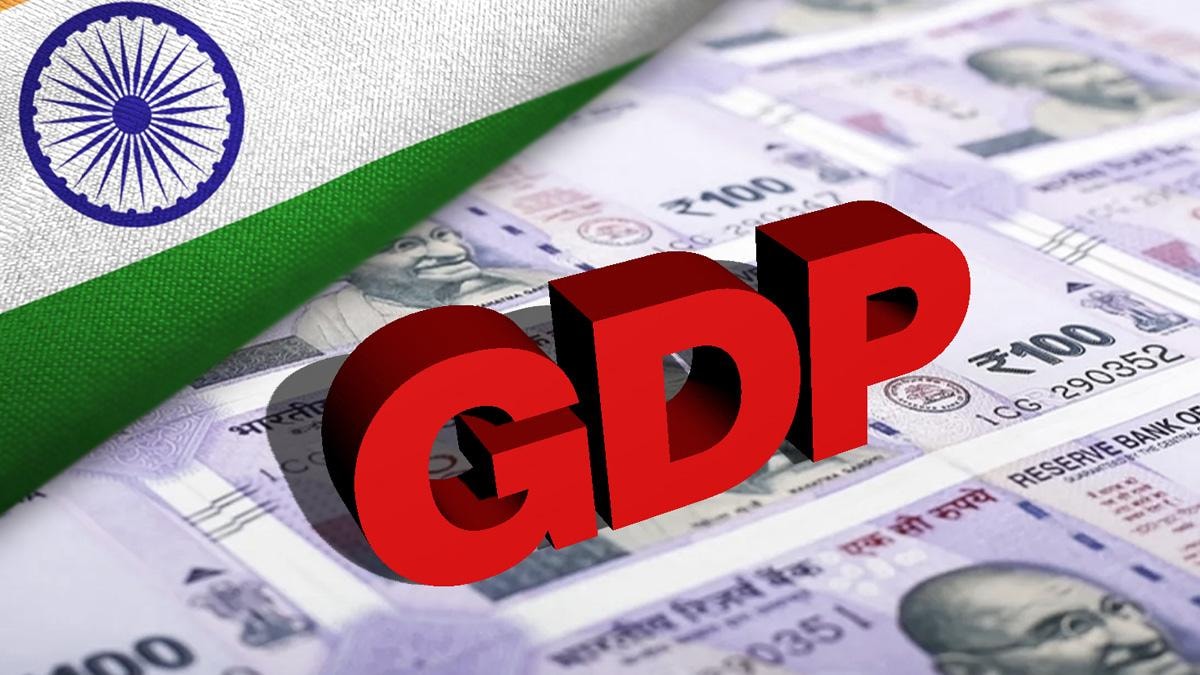
Nigeria’s economy, measured by gross domestic product (GDP), grew by 4.07 per cent (year-on-year) in real terms in the fourth quarter (Q4) of 2025.
The National Bureau of Statistics (NBS) announced the development in its latest GDP report for Q4 2025 on Friday.
The latest figure represents an improvement over the 3.76 per cent growth recorded in the corresponding period of 2024, signalling sustained recovery across key sectors of the economy. The growth rate was faster than the third quarter’s 3.98 per cent.
The report confirmed that Nigeria’s oil sector grew 6.79 per cent year-on-year and the non-oil part of the economy expanded by 3.99 per cent.
Nigeria’s average daily oil production stood at 1.58 million barrels per day in the final three months of 2025. That was lower than the third quarter’s output of 1.64 million barrels per day but higher than the 1.54 million barrels per day in the fourth quarter of 2024.
Breakdown of the data showed that the agriculture sector grew by 4.00 per cent in the fourth quarter of 2025. This marks a significant increase compared to the 2.54 per cent growth recorded in the same quarter of 2024, reflecting improved output and resilience in the sector.
The industry sector also recorded a stronger performance during the period under review. It grew by 3.88 per cent year-on-year, up from 2.49 per cent posted in the fourth quarter of 2024. The improvement suggests enhanced activity in manufacturing, construction, and related industrial sub-sectors.
The services sector maintained its position as a major growth driver, expanding by 4.15 per cent in Q4 2025. However, this was slightly lower than the 4.75 per cent growth recorded in the corresponding quarter of the previous year.
Overall, the 4.07 per cent GDP growth in the final quarter of 2025 underscores broad-based expansion across agriculture, industry, and services, despite a marginal moderation in services growth.
The Q4 performance provides further evidence of strengthening economic momentum, with improvements recorded in both agriculture and industry compared to the previous year.

By Modupe Gbadeyanka
For the second time, Flour Mills of Nigeria Plc is sponsoring the Paris International Agricultural Show (PIAS) as part of its strategies to fortify its ties with France.
The 2026 PIAS kicked off on February 21 and will end on March 1, with about 607,503 visitors, nearly 4,000 animals, and over 1,000 exhibitors in attendance last year, and this year’s programme has already shown signs of being bigger and better.
The theme for this year’s event is Generations Solution. It is to foster knowledge transfer from younger generations and structure processes through which knowledge can be harnessed to drive technological advancement within the global agricultural sector.
In his address on the inaugural day of the Nigerian Pavilion on February 23, the Managing Director for FMN Agro and Director of Strategic Engagement/Stakeholder Relations, Mr Sadiq Usman, said, “At FMN, our mission is Feeding and Enriching Lives Every Day.
“This is a mandate we have fulfilled through decades of economic shifts, rooted in a culture of deep resilience and constant innovation. We support this pavilion because FMN recognises that the next frontier of global Agribusiness lies in high-level technical exchange.
“We thank the France-Nigeria Business Council (FNBC), the organisers of the PIAS, and our fellow members of the Nigerian Pavilion – Dangote, BUA, Zenith, Access, and our partners at Creativo El Matador and Soilless Farm Lab— we are exceedingly pleased to work to showcase the true face of Nigerian commerce.”
Speaking on the invaluable nature of the relationship between Nigeria and France, and the FMN’s commitment to process and product innovation, Mr John G. Coumantaros, stated, “The France – Nigeria relationship is a valuable partnership built on a shared value agenda that fosters remarkable Intercontinental trade growth.
“Also, as an organisation with over six decades of transformational footprint in Nigeria and progressively across the African Continent, FMN has been unwaveringly committed to product and process innovation.
“Therefore, our continuous partnership with France for the success of the Paris International Agricultural Show further buttresses the thriving relationship between both countries.”
PIAS is one of the most widely attended agricultural shows, with thousands of people from across the world in attendance.








-
 Feature/OPED6 years ago
Davos was Different this year
-
Travel/Tourism10 years ago
Lagos Seals Western Lodge Hotel In Ikorodu
-

 Showbiz3 years ago
Estranged Lover Releases Videos of Empress Njamah Bathing
-
 Banking8 years ago
Sort Codes of GTBank Branches in Nigeria
-

 Economy3 years ago
Subsidy Removal: CNG at N130 Per Litre Cheaper Than Petrol—IPMAN
-

 Banking3 years ago
Sort Codes of UBA Branches in Nigeria
-

 Banking3 years ago
First Bank Announces Planned Downtime
-

 Sports3 years ago
Highest Paid Nigerian Footballer – How Much Do Nigerian Footballers Earn