Economy
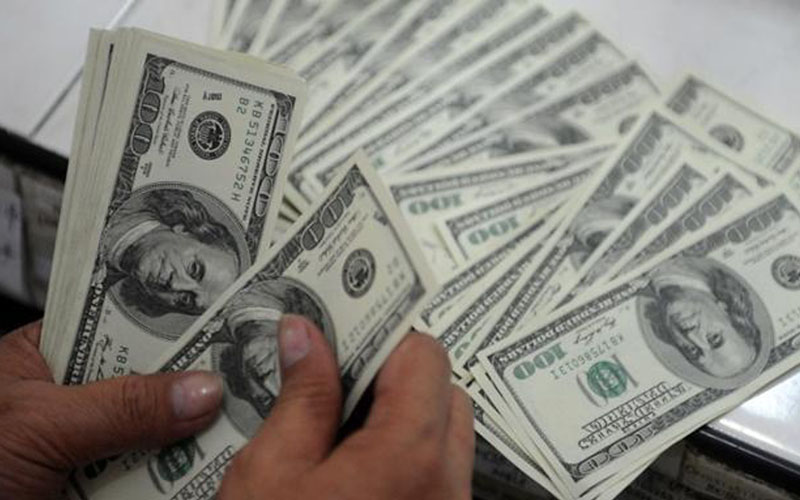
How Forex Impacts Trade in Nigeria
By Otori Emmanuel
Nigeria’s economy has been in a slump in recent months owing to inflation, interest rates, public debt, and current account deficits. Nigeria’s inflation rate increased to 21.09 per cent in October 2022, up from 15.92 per cent the previous year. The volatile currency exchange rate, however, also has an impact on Nigeria’s economic problems.
The term “Foreign Exchange” or “Forex” refers to a global market where currencies from different countries can be exchanged. The forex markets are often the biggest and most liquid asset markets in the world because of the global nature of commerce, finance and trade. Exchange rate pairs are used to compare currencies to one another and are deemed comparable. Particularly in comparisons to important currencies like the dollar and the pound, the value of the Nigerian naira has declined significantly during the past few years.
The sale of foreign currency to Bureau de Change (BDC) operators was prohibited in 2021, and the Central Bank of Nigeria (CBN) also stopped approving requests for licenses for Bureau De Changes. This monetary policy by the CBN was intended to bring stability and transparency to the forex market. With the exception of the fact that the supply and demand of forex dictate prices and rarity, this appeared to be a way of reducing illegal subterranean domination of the market.
Why does this matter? An item’s worth is increased by its rarity. In other words, the ban on forex market operators raises the demand for foreign currencies, favouring them over the Naira. The excessive demand for foreign currency drives down the value of the national currency until both domestic goods and services are competitively priced enough to attract international customers.
In foreign markets, a country’s exports are more expensive, and its imports are less expensive when its currency is valued higher. It is reasonable to anticipate that a rising exchange rate will impair a nation’s trade balance.
High Exchange Rates on Trade
A major issue affecting the Nigerian economy and having a threefold impact on businesses has been identified as the unsettling exchange rate. In order to import commodities and raw materials because the naira’s weakening can no longer be controlled, many Nigerians need the dollar.
- Increased exchange expenses – This is a problem for firms that conduct international trades since they are required to pay exchange fees, such as those associated with clearing products and other customs fees, which drive up the cost of goods and services.
- Price hikes – Due to the rising cost of supply, several businesses have had to raise their pricing. Nigeria can only produce a limited amount due to a lack of raw materials; hence importation is required to increase output.
- Subpar productions – Due to Nigeria’s small amount of continuous production and its limited resource base, product quality has severely declined. Every player in the economy, from suppliers to producers to end consumers, is impacted by this chain of deficiencies. Raw materials that are of high quality and are reasonably priced for producers are challenging for suppliers to supply. Producers are forced to raise the prices of commodities to cover the expenses of production.
As a result of these issues, businesses are experiencing poor patronage. Many consumers seek alternatives to high pricing, such as sachetization of things, providing demands on a scale of choice, and reducing quantities. If the CBN reduces onerous forex regulation and price-fixing of the nominal standard rate, demand and supply of dollars could really work to balance the market and trade activities.
Economy
Nigerian Stocks Chalk up 0.33% on Positive Market Breadth Index
By Dipo Olowookere
Renewed buying interest raised the Nigerian Exchange (NGX) Limited by 0.33 per cent on Monday, with gains recorded in almost all the major sectors of the bourse at the close of transactions.
According to data harvested by Business Post, the insurance counter expanded by 0.62 per cent, the banking index grew by 0.59 per cent, the energy sector appreciated by 0.40 per cent, and the consumer goods space improved by 0.10 per cent, while the industrial goods segment closed flat.
When the closing gong was struck by 4 pm to signify the close of business on Customs Street, the All-Share Index (ASI) was up by 1,113.76 points to 243,707.07 points from 242,593.31 points, and the market capitalisation chalked up N714 billion to close at N156.308 trillion compared with the previous session’s N155.594 trillion.
Interest in Nigerian stocks yesterday resulted in a rise in the activity level, with the trading volume soaring by 17.86 per cent to 717.2 million units from 608.5 million units. The trading value advanced by 77.19 per cent to N56.7 billion from N32.0 billion, and the number of deals surged by 36.22 per cent to 73,321 deals from 53,826 deals.
FCMB was the busiest stock during the trading day, with a turnover of 152.3 million units worth N1.8 billion, Premier Paints exchanged 61.0 million units valued at N135.3 million, Dangote Cement traded 34.7 million units for N29.7 billion, The Initiates sold 32.8 million units worth N1.0 billion, and Jaiz Bank transacted 32.6 million units valued at N293.3 million.
Yesterday, the market breadth index was positive after the exchange closed with 37 price gainers and 28 price losers, representing strong investor sentiment.
International Energy Insurance gained 9.92 per cent to settle at N7.98, the Initiates added 9.91 per cent to its share price to quote at N32.15, ABC Transport garnered 9.68 per cent to trade at N6.80, Abbey Mortgage Bank grew by 9.63 per cent to close at N10.25, and Linkage Assurance soared by 9.36 per cent to N1.87.
On the flip side, Fidson Healthcare gave up 10.00 per cent to finish at N122.85, Academy Press crashed by 9.70 per cent to N7.45, RT Briscoe depreciated by 9.43 per cent to N13.45, SUNU Assurances tumbled by 9.37 per cent to N4.06, and Learn Africa decreased by 8.70 per cent to N10.50.
Economy
NASD OTC Exchange Opens Week Lower as Valuation Dips N1.27bn
By Adedapo Adesanya
The NASD Over-the-Counter (OTC) Securities Exchange recorded a marginal 0.05 per cent drop on Monday, June 8, depleting the market capitalisation by N1.27 billion to N2.606 trillion from N2.607 trillion, and cutting the Unlisted Security Index (NSI) by 2.12 points to 4,356.20 points from the previous 4,358.32 points.
The contraction witnessed during the session was triggered by a price loser, which overpowered that gains recorded by two securities on the trading platform.
Data indicated that MRS Oil Plc lost N6 at the close of business to settle at N165.00 per share compared with last Friday’s price of N171.00 per share.
Conversely, Lighthouse Financial Services Plc added 9 Kobo to sell at N1.03 per unit versus 94 Kobo per unit, and Central Securities Clearing System (CSCS) Plc appreciated by 8 Kobo to N78.48 per share from N78.40 per share.
The volume of securities traded by investors yesterday soared by 51.9 per cent to 213,188 units from 140,345 units, and the value of securities increased by 12.6 per cent to N20.2 million from N17.9 million, while the number of deals executed fell by 7.4 per cent to 25 deals from 27 deals.
Great Nigeria Insurance (GNI) Plc remained the most traded stock by value on a year-to-date basis, with 3.4 billion units sold for N8.4 billion, followed by Infrastructure Credit Guarantee (Infracredit) Plc with 2.3 billion units valued at N6.5 billion, and CSCS Plc with 64.8 million units exchanged for N4.4 billion.
GNI Plc also remained as the most traded stock by volume on a year-to-date basis, with 3.4 billion units worth N8.4 billion, trailed by Infracredit Plc with 2.3 billion units transacted for N6.5 billion, and Resourcery Plc with 1.1 billion units traded for N415.7 million.
Economy
Naira Loses Against Dollar Official, Black Markets
By Adedapo Adesanya
The Naira opened the new trading week on a negative note on Monday at the Nigerian Autonomous Foreign Exchange Market (NAFEX) and the black market.
At the parallel market, the Nigerian currency weakened against the US Dollar by N5 to sell for N1,380/$1 compared with the preceding session’s rate of N1,375/$1, and at the GTBank FX desk, it shed N1 to trade at N1,373/$1 versus N1,372/$1.
At the official market, it lost 63 Kobo or 0.05 per cent against the Dollar during the session to close at N1,362.84/$1, in contrast to last Friday’s value of N1,362.21/$1.
However, the Nigerian Naira gained N2.30 against the Pound Sterling at the spot market yesterday, quoting at N1,821.29/£1 compared with the previous rate of N1,823.59/£1, and improved against the Euro by 23 Kobo to settle at N1,574.35/€1 versus N1,574.58/€1.
Data from the Central Bank of Nigeria (CBN) showed that interbank forex turnover increased to $92.248 million across 90 deals, from $73.565 million last Friday.
On the policy front, participants believed that the application of the fourth edition of the Foreign Exchange Manual of the central bank, which introduces updated guidelines for foreign exchange transactions and tightening compliance requirements for authorised dealers and market participants, will enhance market flexibility and ease previous restrictions.
Meanwhile, the cryptocurrency market snapped from recent declines, jolted by Strategy’s purchase of 1,550 Bitcoin for approximately $101 million, increasing its total holdings to 845,256 BTC. The company raised $181 million through common stock sales, using the proceeds to fund the bitcoin purchase and increase its cash reserves to $1 billion, pushing the price of the coin higher by 3.2 per cent to $63,731.69.
Cardano (ADA) appreciated by 8.4 per cent to $0.1738, Ethereum (ETH) rose by 5.2 per cent to $1,711.54, Solana (SOL) expanded by 5.1 per cent to $67.82, and Ripple (XRP) improved by 4.9 per cent to $1.18.
Further, Dogecoin (DOGE) jumped by 4.3 per cent to $0.0873, Binance Coin (BNB) soared by 2.7 per cent to $609.50, and TRON (TRX) increased by 0.7 per cent to $0.3274, while the US Dollar Tether (USDT) and the US Dollar Coin (USDC) remained unchanged at $0.9997 and $0.9998, respectively.
-
Feature/OPED6 years agoDavos was Different this year
-
Travel/Tourism10 years ago
Lagos Seals Western Lodge Hotel In Ikorodu
-
Showbiz3 years agoEstranged Lover Releases Videos of Empress Njamah Bathing
-
Banking8 years agoSort Codes of GTBank Branches in Nigeria
-
Economy3 years agoSubsidy Removal: CNG at N130 Per Litre Cheaper Than Petrol—IPMAN
-
Banking3 years agoSort Codes of UBA Branches in Nigeria
-
Banking3 years agoFirst Bank Announces Planned Downtime
-
Sports3 years agoHighest Paid Nigerian Footballer – How Much Do Nigerian Footballers Earn