
Economy
How Stablecoins Are Helping African Businesses Navigate Traditional Financial System Challenges


Introduction
Running a business in Africa comes with several challenges. One challenge is volatile local currencies, while others are delayed settlements and limited access to foreign exchange. It’s no surprise that more businesses are turning to stablecoins to stay afloat.
But, what are stablecoins, and why are they suddenly so relevant in African markets today? Stablecoins are almost like regular cryptocurrencies, but with a clear difference; their value is pegged to other assets like the U.S. dollar. This means, unlike volatile assets like Bitcoin or Ethereum, stablecoins maintain a consistent value. Prices in the broader digital assets market may change, but stablecoins are designed to remain unchanged.
Why does this matter? Stablecoins matter because they address many financial challenges in Africa.
Most African countries use different currencies (bar a few), different banking systems, and distinct economic structures. Though this is common in many parts of the world, it presents challenges with far-reaching effects in emerging markets. Although Nigeria, Ghana, Kenya and South Africa have relatively advanced financial systems that support instant interbank transfers, many countries on the continent still operate with weak or poor financial infrastructures. Unlike the Eurozone or SEPA, Africa lacks a unified monetary system. The Pan-African financial settlement infrastructure (a payment infrastructure launched by Afreximbank) remains limited.
Challenges of Traditional Financial Systems in Africa
Stablecoins create a lifeline for businesses grappling with the many limitations posed by traditional financial systems. These are:
Inefficient Cross-Border Payments
Cross-border transactions rely heavily on traditional financial institutions and multiple intermediaries, which often leads to delays, costly fees, and limited transparency. These systems are poorly suited for the needs of modern businesses, especially those with foreign exchange exposure.
Currency Volatility and Foreign Exchange Shortages
Many African economies still struggle with unstable local currencies and limited access to foreign exchange. Since most African countries are net importers, businesses constantly need hard currency to buy finished goods and sometimes raw materials from abroad. However, with central banks often unable to meet demand, they are forced to source forex on their own, mostly at unfavourable rates. Ledig Technologies effectively solves this challenge.
Limited Banking Infrastructure
The financial inclusion problem in emerging markets is also a challenge for traditional financial rails. In many African countries, particularly rural regions or conflict-affected zones, formal banking services are either unavailable or difficult to access. Limited access to banking infrastructure excludes businesses and individuals from accessing FX for key business opportunities, leading to over-reliance on inefficient rails.
High Remittance Costs
With cross-border transfers routed through legacy systems, fees often run high, and settlements are delayed. These hurt businesses, especially those that rely on timely payments to sustain operations. These challenges make alternative solutions essential, and stablecoins offer fast, borderless, low-cost transactions to address them.
Stablecoins as a Solution
Stablecoins address the financial challenges outlined through fast, stable, and cost-effective transactions. At their core, they are digital assets designed to maintain a stable value. There are three primary types of stablecoins: fiat-backed (e.g., USDT, USDC), crypto-collateralised (e.g., DAI), and algorithmic; though the latter are less popular due to their inherent risk.
Regardless of the model, they offer features that make them useful in underserved markets like Africa. Their most important advantage is price stability, a critical need in economies where inflation and currency volatility are common.
Beyond stability, stablecoins operate 24/7, unlike traditional banks that operate within limited hours, impacting settlement times. The ability to transfer value across borders using public blockchains, rather than legacy financial rails, is another defining advantage. Traditional cross-border payments rely on legacy networks that can be slow and expensive. By contrast, stablecoin transactions settle directly on blockchain networks, allowing users to move money to even the most remote nations in minutes, without relying on intermediaries.
Transaction costs on blockchain networks are typically lower than bank wires or traditional remittance services. While fees vary depending on the blockchain used, most stablecoin transfers cost a fraction of what traditional systems charge. Even Ethereum, which faced previous criticism for high gas fees, has implemented updates that now keep most transaction costs below $1. These savings are significant for businesses operating on tight margins and can be the difference between making a profit and running at a loss.
Furthermore, stablecoins allow users to bypass currency conversion fees and inefficiencies. Businesses that earn in one currency but operate in another often face high conversion spreads, regulatory bottlenecks, and inconsistent exchange rates. Stablecoins remove that friction, enabling businesses to receive, store, and pay in a stable currency regardless of their local banking environment.
Businesses with foreign exchange exposure across the continent are increasingly adding stablecoins to their daily operations for survival. Import and export business owners are top beneficiaries. They leverage stablecoins to streamline cross-border payments, settle suppliers quickly, and protect their capital from the currency volatility common across African markets. Others are PSPs, Crypto exchanges, Crypto payment gateways, Trade facilitators, among others.
Ledig and its institutional Stablecoin liquidity offering.
Ledig Technologies offers Stablecoin-powered liquidity for businesses and individuals across many industries. The company supports high-ticket transactions and helps businesses with FX exposure manage currency complexity in emerging markets, including over 17 African markets.
The company’s products cover all areas of stablecoin liquidity, including conversions, fiat and stablecoin wallets, hedging tools for volatility, and liquidity guarantee services. The company provides an Instant fiat-stablecoin and stablecoin-fiat conversion service, ensuring businesses have no exposure to local currencies even as they do business in those markets, effectively cutting out volatility.
Its volatility hedging tools help businesses access FX at a fixed rate over an agreed period of time, protecting capital from depreciation.
While its infrastructure is purpose-built for institutional clients, it also powers retail-facing platforms, helping them manage stablecoin-based treasuries while handling local currency invoicing and settlements in emerging markets.
Risks, Challenges, and Regulatory Outlook
Despite their growing relevance in Africa’s financial system, stablecoins are not without risks and challenges. The very features that make them appealing, such as stability, speed, and low transaction costs, also raise significant regulatory and operational concerns.
These challenges must be addressed to ensure stablecoins can be safely and effectively integrated into Africa’s financial ecosystem.
One prominent challenge is the lack of clear national cryptocurrency regulations across many African nations. Most governments are yet to establish comprehensive legal frameworks for digital assets, resulting in a regulatory grey zone where usage persists but enforcement is inconsistent. For example, Nigeria has moved between imposing bans and developing regulations, creating uncertainty for businesses and individuals integrating stablecoins into financial workflows. Although Nigeria’s Securities and Exchange Commission (SEC) has introduced a framework, enforcement remains inconsistent. In this regard, Ledig Technologies prioritises compliance, aligning operations with government directives as they are released and facilitating liquidity and other services only for businesses that pass its rigorous compliance process.
Anti-money laundering (AML) and counter-terrorism financing (CFT) compliance are also critical concerns. Stablecoins’ ability to facilitate peer-to-peer transfers without intermediaries raises fears of their potential use in illicit activities. To mitigate this, institutional liquidity providers like Ledig Technologies maintain blacklists and collaborate with law enforcement to keep bad actors out.
They check new wallets against known blacklists, like those from the Office of Foreign Assets Control (OFAC), Federal Bureau of Investigation (FBI), Circle and Tether. Ledig is also registered on the Nigerian Financial Intelligence Unit (NFIU) portal to coordinate reporting and ensure user-level enforcement is robust, helping prevent illicit use of stablecoin.
Another significant challenge for businesses is efficiently sourcing stablecoins. Ledig Technologies addresses this by offering large-volume liquidity at competitive rates. In addition to providing institutional liquidity for major African currencies such as the Nigerian Naira (NGN), Kenyan Shilling (KES), Egyptian Pound (EGP), and Ethiopian Birr (ETB), Ledig also supports hard-to-source currencies in Africa, including Malawi’s Kwacha (MWK).
Conclusion
As the future draws near and African businesses adjust to global realities, stablecoins will continue to be a suitable alternative to the complexities posed by traditional financial rails in many emerging markets today. Ledig Technologies, leveraging stablecoins, is positioned to help businesses effectively mitigate these challenges.









By Adedapo Adesanya
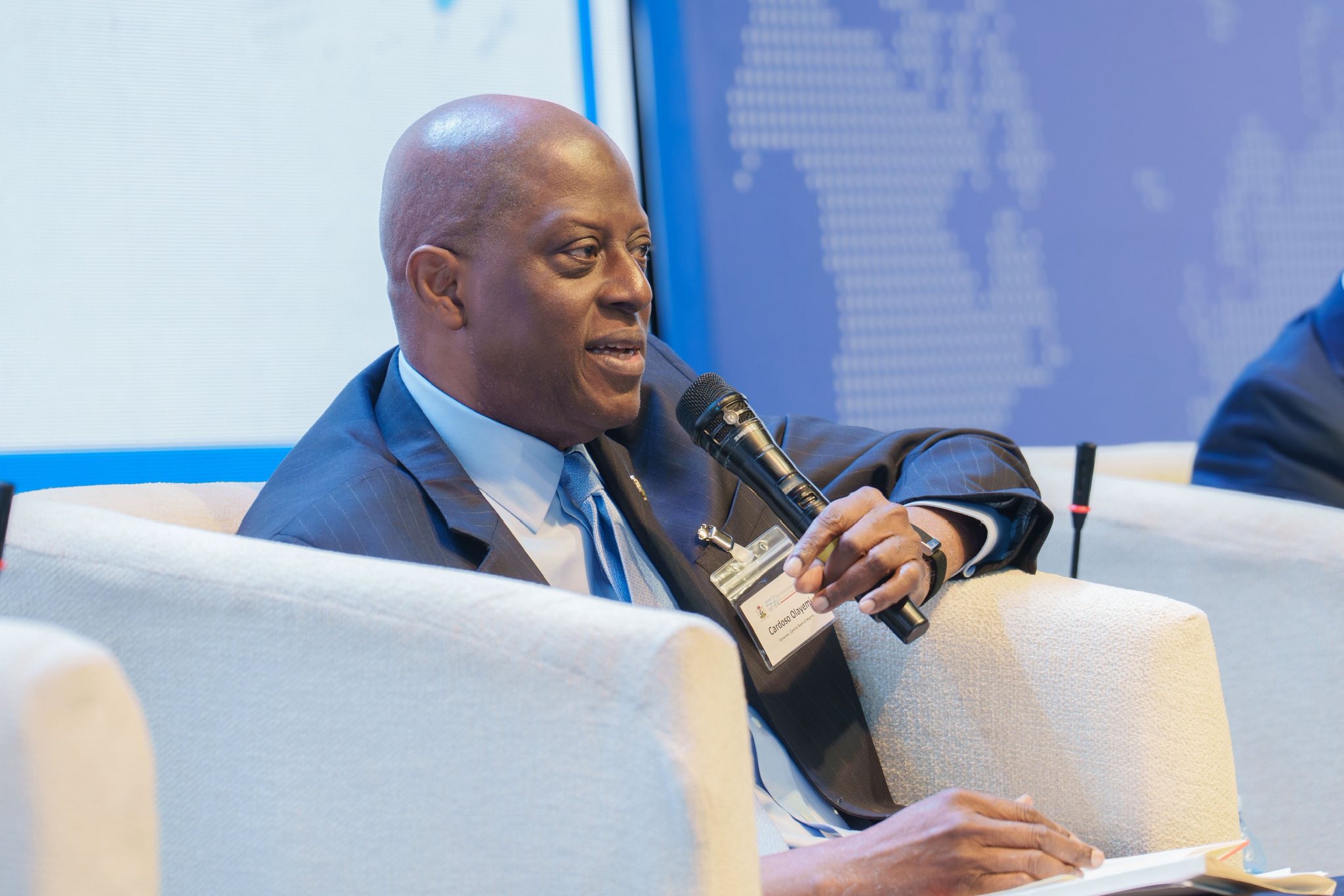
The Governor of the Central Bank of Nigeria, Mr Yemi Cardoso, has eased fears of any devaluation of the Naira anytime soon, saying the country’s ongoing monetary and foreign exchange reforms have restored confidence in the currency and strengthened the financial system.
Speaking while delivering a keynote address at the Annual Distinguished Alumni Lecture held in celebration of Founders’ Day of the St. Gregory’s College Old Boys Association in Lagos, the apex bank governor said, “These reforms have restored pride in our currency and strengthened confidence in our financial system.”
Mr Cardoso explained that the CBN remains focused on restoring price stability and bringing inflation down to single digits, noting that although the objective will take time to achieve, it remains central to the apex bank’s policy direction.
“Our goal remains to bring inflation down to single digits. This cannot happen overnight. External shocks will continue to occur, and global developments will always have some impact. But inflation is effectively a tax, and it disproportionately affects the most vulnerable members of society,” he said.
“That is why restoring price stability remains a central objective.”
He noted that the bank’s commitment to transparency and well-governed markets is evident in the reforms carried out in the foreign exchange market, including the elimination of the multiple exchange rate system that previously benefited only a few.
According to him, although some critics argue that the exchange rate appears higher today than it was before the reforms, the key difference lies in accessibility and transparency.
“Some critics argue that the exchange rate today appears higher than it was before the reforms. My response is simple: when the official rate was lower, how many people could actually access foreign exchange at that rate? The answer, in most cases, was very few,” he said.
“Today, the situation is fundamentally different. Foreign exchange is accessible through formal channels, and the system is far more transparent.”
He explained that many Nigerians travelling abroad can now use their naira cards directly instead of searching for foreign currency through informal channels, a development he said represents a major improvement compared to previous years when travellers struggled to access foreign exchange.
Mr Cardoso further revealed that the premium between the official and parallel markets has narrowed sharply from around 50 per cent in 2022 to less than 2 per cent on average in 2025, reflecting improved liquidity and efficiency in the FX market.
By Adedapo Adesanya
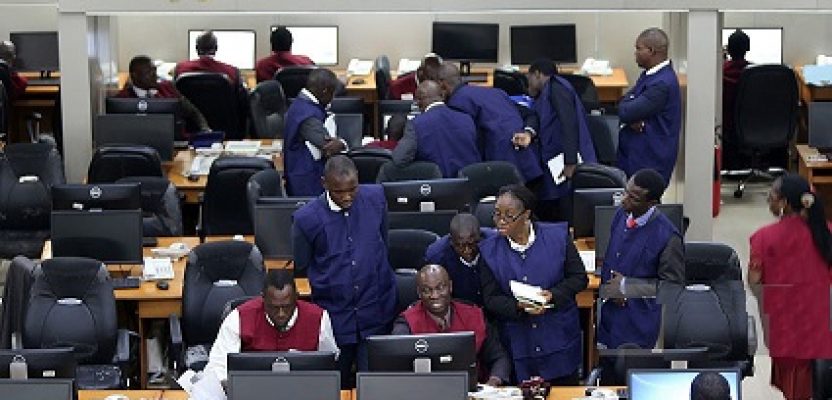
Four stocks weakened the NASD Over-the-Counter (OTC) Securities Exchange by 0.56 per cent on Thursday, March 12, making it the third consecutive loss this week.
The price losers were led by FrieslandCampina Wamco Nigeria Plc, which crumbled by N4.71 to N128.07 per share from N132.78 per share. Central Securities Clearing System (CSCS) Plc lost N1.98 to close at N78.02 per unit versus the previous day’s N80.00 per unit, First Trust Mortgage Bank Plc declined by 15 Kobo to N1.75 per share from N1.90 per share, and MRS Oil Plc crashed by 10 Kobo to settle at N210.00 per unit compared with the preceding session’s N210.10 per unit.
Consequently, the market capitalisation went down by N14.13 billion to N2.519 trillion from N2.533 trillion, and the NASD Unlisted Security Index (NSI) dipped by 23.61 points to 4,210.30 points from 4,233.91 points.
There were three price gainers yesterday, led by Okitipupa Plc, which gained N10.00 to N240.00 per share from N230.00 per share, IPWA Plc increased by 45 Kobo to N5.01 per unit from N4.56 per unit, and Afriland Properties Plc appreciated by 35 Kobo to N17.95 per share from N17.60 per share.
During the session, the value of securities surged by 197.4 per cent to N95.0 million from N31.9 million, the volume of securities grew by 185.8 per cent to 3.7 million units from 1.3 million units, and the number of deals improved by 44.4 per cent to 52 deals from 36 deals.
The most active stock by value (year-to-date) was CSCS Plc with 38.4 million units worth N2.4 billion, followed by Okitipupa Plc with 6.4 million units valued at N1.1 billion, and FrieslandCampina Wamco Nigeria Plc with 6.2 million units sold for N566.8 million.
The most traded stock by volume (year-to-date) was Resourcery Plc with 1.05 billion units traded for N408.7 million, trailed by Geo-Fluids Plc with 130.6 million units transacted for N503.8 million, and CSCS Plc with 38.4 million units worth N2.4 billion.
By Adedapo Adesanya
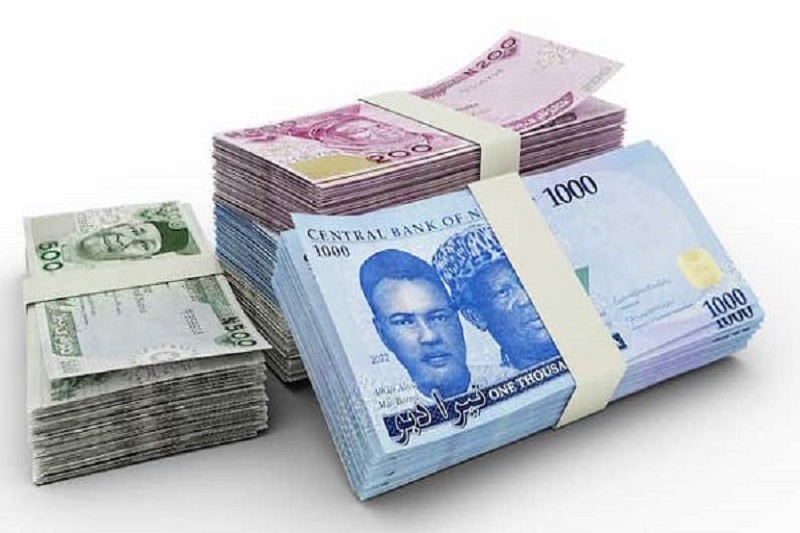
The Naira rallied against the United States Dollar by N4.68 or 0.34 per cent to trade at N1,371.51/$1 in the Nigerian Autonomous Foreign Exchange Market (NAFEX) on Thursday, March 12, compared with the N1,376.19/$1 it was traded on Wednesday.
The local currency also appreciated against the Pound Sterling in the same market window during the session by N10.67 to quote at N1,834.80/£1 versus midweek’s price of N1,845.47/£1, and strengthened against the Euro by N49.62 to finish at N1,581.89/€1, in contrast to the previous session’s N1,631.51/€1.
At the parallel market, the Naira also gained N10 against the Dollar yesterday to close at N1,410/$1 versus the preceding day’s rate of N1,420/$1, and gained N16 at the GTBank’s FX desk to settle at N1,391/$1 compared with the N1,407/$1 it was exchanged a day earlier.
Pressure further eased on the FX market as a result of inflows from foreign investors, exporters and non-bank corporates, among others.
With gross external reserves standing above $50 billion, the highest since 2009, analysts said the Naira has a positive outlook, amidst projections that the FX rate could rise to N1,300 per dollar in the first half of 2026.
However, external pressure threatens this, as increased demand for the US Dollar has strengthened globally due to the war triggered by the United States and Israel against Iran, which has been ongoing for two weeks.
A look at the digital currency market showed that prices extended a quiet stretch of consolidation that has kept the market largely unmoved by turbulence in global equities.
Amid geopolitical tensions in the Middle East and supply disruptions, crypto markets appear to be largely ignoring those pressures for now. Analysts noted that until a clear macro catalyst or wave of new capital arrives, the market appears content to consolidate gains rather than chase a breakout.
Cardano (ADA) appreciated by 6.0 per cent to $0.2743, Dogecoin (DOGE) grew by 4.9 per cent to $0.0966, Solana (SOL) added 4.6 per cent to sell for $88.99, Ethereum (ETH) rose by 4.3 per cent to $2,111.22, Ripple (XRP) jumped 3.9 per cent to $1.42, Bitcoin (BTC) expanded by 3.0 per cent to $71,546.01, Binance Coin (BNB) improved by 2.6 per cent to $661.08, and TRON (TRX) increased by 0.1 per cent to $0.2897, while the US Dollar Tether (USDT) and the US Dollar Coin (USDC) traded flat at $1.00 each.













-
 Feature/OPED6 years ago
Davos was Different this year
-
Travel/Tourism10 years ago
Lagos Seals Western Lodge Hotel In Ikorodu
-

 Showbiz3 years ago
Estranged Lover Releases Videos of Empress Njamah Bathing
-
 Banking8 years ago
Sort Codes of GTBank Branches in Nigeria
-

 Economy3 years ago
Subsidy Removal: CNG at N130 Per Litre Cheaper Than Petrol—IPMAN
-

 Banking3 years ago
Sort Codes of UBA Branches in Nigeria
-

 Banking3 years ago
First Bank Announces Planned Downtime
-

 Sports3 years ago
Highest Paid Nigerian Footballer – How Much Do Nigerian Footballers Earn
Pingback: How Some African Regulators Are Embracing Stablecoins — Akelicious - Biofixedu News
Pingback: Decoding the Digital Frontier: How Some African Regulators Are Embracing Stablecoins — Akelicious