
Economy
How to Insure Your Agricultural Projects in Nigeria


By Modupe Gbadeyanka
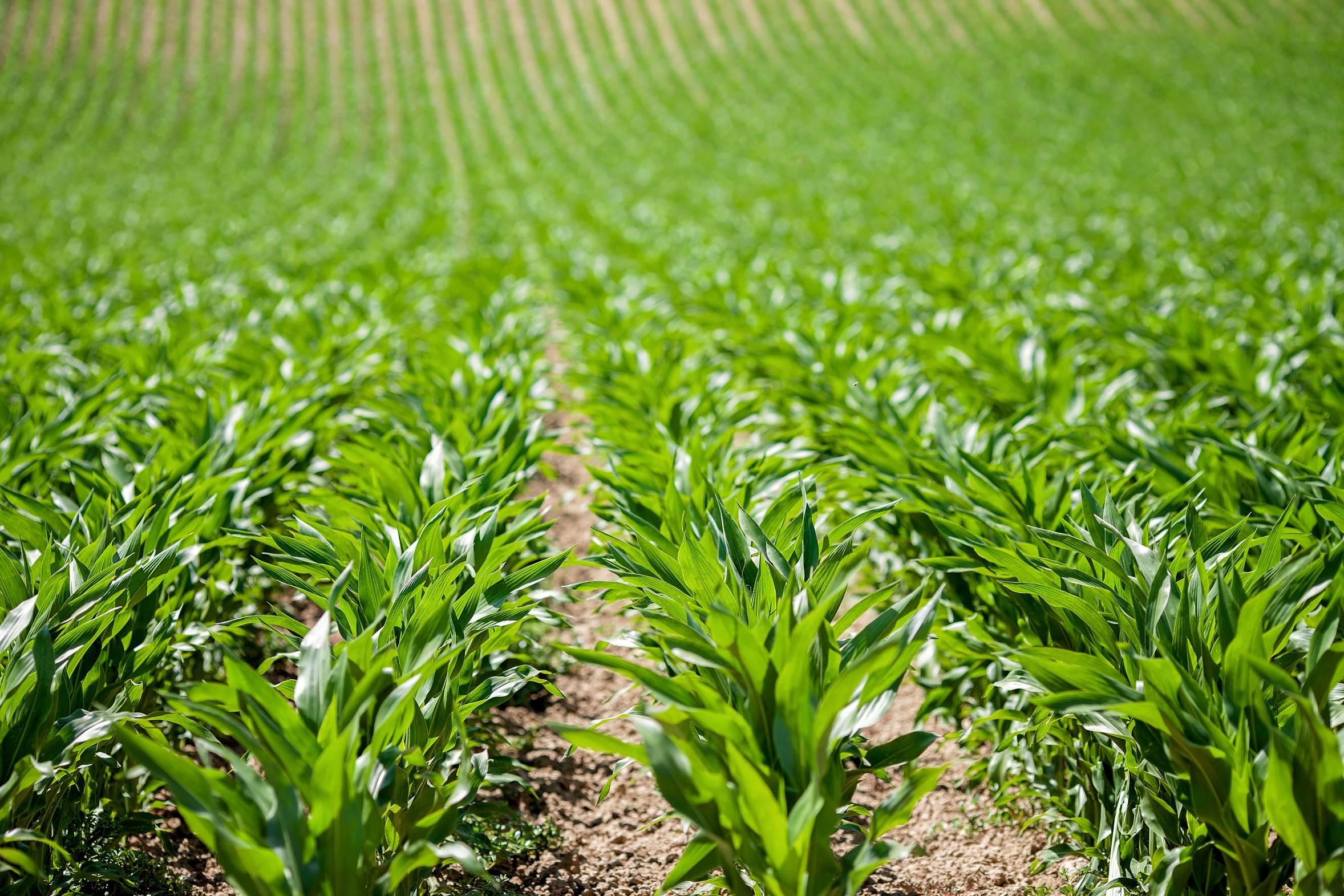
It is no doubt that agricultural production in Nigeria is faced with inherent and myriad of risks and prominent among them are input supply, price of inputs, agricultural yield, project prices and production risks due to effects of climate change or natural disasters.
It is important to note that the agricultural production risks always affect farmers and agribusiness in different ways, thereby affecting agricultural production and threatening food security in the country.
Agricultural insurance is the protection of farmers against the risks of natural disasters, pests and diseases in exchange for regular premium payments proportion to the likelihood and cost of risk involved.
Not many may know that in order to address agricultural production risks, the Federal Government of Nigeria established the Nigerian Agricultural Insurance Scheme, managed by Nigerian Agricultural Insurance Corporation (NAIC), to provide protection to farmers on the effect of natural hazards.
The scheme was launched on December 15, 1987, as part of its efforts to enhance and sustain food production in Nigeria in realization of the fact that most efforts to promote food production have not yielded much results, due largely to incidence of incremental weather conditions and the effects of natural hazards like floods, drought, pests, diseases, fire etc.
NAIC was established and incorporated by Act No. 37 of 1993 to operationalize the Nigerian Agricultural Insurance Scheme with the following key objectives:
* Provide financial support to farmers where losses to crops and livestock arise from natural hazards;
* Induce the provision of credit by financial institutions, as the insurance serves as an added collateral;
* Promote and enhance agricultural production by giving farmers confidence to accept new and modern innovations and inputs;
* Eliminate or minimize the need for Government to provide ad-hoc assistance to farmers during agricultural disasters.
Agricultural Items Covered by NAIC
The Scheme provide cover to all crops, livestock and tangible fixed assets like farm buildings, machinery, equipment, agricultural produce activities, warehousing and other Agro-processing activities.
Summary of items covered by NAIC include:
(a) Subsidized Crop – maize, rice, millet, yam, mixed crop, cassava, sorghum, vegetables, irish potato, sweet potato, soya beans, cowpea, pumpkin, melon, groundnut, sesame, wheat, peanut, coco yam, pepper, garlic etc.
(b) Subsidized Livestock – cattle, sheep, goat, poultry, fishery, pig, apiary, snailery, grass cutter, rabbitry etc.
(c) Commercial crop – cocoa, rubber, oil palm, horticulture, plantain, sugarcane, jatropha, ginger, cotton, tea, coffee, gum Arabic, pineapple, kolanut, tree crops etc.
(d) Commercial Livestock – dogs, horses, camel, donkeys, pets, zoo animals etc.
(e) Multi-Peril Cover (MPC) – combined trading, agroc-processing, storage rksks, ware-house activities etc.
(f) Tangible Fixed Assets – farm buildings, machinery, equipment, motor vehicles, fishing nets, outboard engines, fishing boats etc.
(g) Farmers, Farm Labour/Employees and their dependants.
(h) General Business – Motor vehicle, Fire and Special Perils, Burglary, Group Personal Accident, Money Insurance, Plant-All-Risks, Machinery Breakdown etc.
Perils Under Cover
The perils covered under the agricultural sub-sector are as follows:
(a) Subsidized Crops – The perils covered are comprehensive in nature and include fire, lightning, windstorm, flood, drought, pests and diseases.
(b) Commercial Crops = The perils covered include fire, lightning, windstorm, flood, drought.
(c) Subsidized Livestock – The perils covered are death or injury due to accident, disease, fire, lightning, storm and flood.
(d) Commercial Livestock – The perils covered are the same as in subsidized livestock.
(e) Multi-Peril Cover – The policy covers risks of loss or damage to agricultural produce or goods while in storage or in transit from one destination to the other or due to and fire, allied risks, burglary, house breaking and transit goods.
(f) Tangible Fixed Assets – The perils covered include loss or damage to insured items by fire, lightning, collision, explosion, storm, violent theft and other allied perils.
(g) Farmers’ Farm Labour, Employees and Dependants – The policy covers death or bodily injury which may result in temporary or permanent disability during the course of duty or work.
(h) General Business – Perils covered in General Insurance include theft, accident, burglary, loss or damage to plants, machinery etc, transit risks and other allied risks.
How to Insure Agricultural Projects with NAIC
NAIC was established to cater for all farmers in the country, either small, medium or large scale farmers either in groups or as individuals.
The scheme operates a mandatory cover which applies to all Agricultural and Agro-related projects or programmes assisted supported or fully funded from public funds, all direct and on-lending loans taken by Federal, State or Local Government for disbursement to farmers and all form of agricultural loan disbursed by all banks and non-bank lending agencies.
Insuring Agricultural Projects Through banks and other Lending Institutions
Insurance cover can be obtained through Banks and other lending agencies/institutions by following procedure outlined below:
* The farmer or client approaches the Bank or lending agency and applies for an agricultural loan;
* The bank or agency processes the loan and approval given;
* The Bank or agency decides on the applicable insurance needs of the loan applicant;
* NAIC and the bank/lending institution enlighten the client/loan applicant on all the insurable risks involved in the class of agric business or projects the farmer is proposing to embark upon and also the importance and benefits of taking the insurance cover;
* Proposal form is then issued to the client for completion from which NAIC obtains complete, accurate and adequate information about the applicant and the proposed project. For large scale project Bank offer letter and feasibility report of the projects are required;
* On proper completion of the proposal form, premium is computed based on the prevailing and approved rate on the loan volume, sum insured or estimated production cost of the proposed project(s);
* The client is advised on the premium payable to provide insurance cover to the project;
* Premium deducted by the Bank or intermediary is sent to NAIC by cheque, or electronic transfer together with the Bank remittance list and cover commences immediately;
* The Certificate of Provisional Insurance Cover (CPIC) and other documents are issued to the client/bank. This will confirm temporary cover;
* A comprehensive inspection is conducted on the farm to ascertain the suitability of the farm;
* Once the project has been found to be genuine and insurable based on the inspection report, cover will be fully granted on the project;
* Original policy is issued to the client through the lending bank.
Insurance of Agricultural Project by Individual/Self-Financed Farmers
Insurance cover can be obtained by self-financed or individual farmer through the following procedure:
* The Farmer collects proposal form from NAIC based on the interested project(s) to be insured;
* He is then enlightened/educated on how to complete the form and also the terms and conditions of the policies;
* NAIC examines the duly completed proposal form and compute the appropriate premium based on the estimated cost of production or sum insured of the project;
* On payment of appropriate premium a Certificate of Provisional Insurance Cover (CPIC) is issued as a temporary cover;
* A policy document is then issued to the insured as evidence of the contract;
* NAIC may undertake a monitoring visit to any of the insured projects as a way of verifying and assessing the projects.
The above provide a detailed procedure for insuring Agricultural projects with NAIC. All prospective clients are encouraged to contact the nearest NAIC office nationwide for enquiry and their agricultural insurance needs.
All clients are advised to study the conditions of their policies noting all exceptions and exclusions.
The approved premium rates for subsidized crop are 4 percent of the sum insured and 5 percent for livestock.
It is important to mention that under the Nigerian Agricultural Insurance Scheme some crops and livestock items are subsidized to the tune of 50 percent by the Federal and State Government in the proportion of 37.5 percent and 12.5 percent of the premium payable.
In NAIC, claims are treated and paid with dispatch and insured are encouraged to report claim incidence promptly to enable verification and commencement of processing for payment. The indemnity for crops is based on the approved input costs, less the value of crops harvested or salvaged if any. For the livestock indemnity is the value of the animal at the commencement of the policy plus the approved input costs.




By Adedapo Adesanya
The National Insurance Commission has issued new guidelines for the collection, management, and administration of the Insurance Policyholders’ Protection Fund.
In a circular issued to all insurance institutions on Tuesday, the regulator also set May 31, 2026, as the deadline for insurers to submit their assessment returns for the 2025 financial year.
Recall that on August 5, 2025, President Bola Tinubu signed into law the Nigerian Insurance Industry Reform Act ( NIIRA 2025).
This landmark legislation repeals the Insurance Act 2003, and consolidates related provisions, ushering in a modern regulatory framework. It lays a strong foundation for sustainable growth and increased investment in the country’s insurance sector.
The commission said the guidelines were issued in exercise of its powers under the 2025 Act and other existing insurance laws and regulations to provide regulatory clarity, improve guidance, and ensure ease of compliance across the industry.
According to NAICOM, the guidelines establish a comprehensive structure for the operation of the IPPF, which serves as a statutory safety net to protect insurance policyholders in the event of distress or insolvency of a licensed insurer or reinsurer. The framework also provides direction on the reimbursement of loans by insurers and reinsurers.
NAICOM stated, “The guidelines ensure regulatory clarity, guidance and ease of compliance, as it provides a comprehensive regulatory framework for the collection, management, and administration of the Fund, which serves as a statutory safety net designed to protect insurance policyholders against distress and insolvency of a licensed insurer or reinsurer, including guidance for the reimbursement of loans by an insurer or reinsurer.
“Please be informed that the IPPF Assessment Returns in respect of the year 2025 shall be submitted to the Commission not later than 31st May 2026, while subsequent submissions shall be in line with Section 4.3 of the Guideline on Insurance Policyholders Protection Fund.”
By Adedapo Adesanya
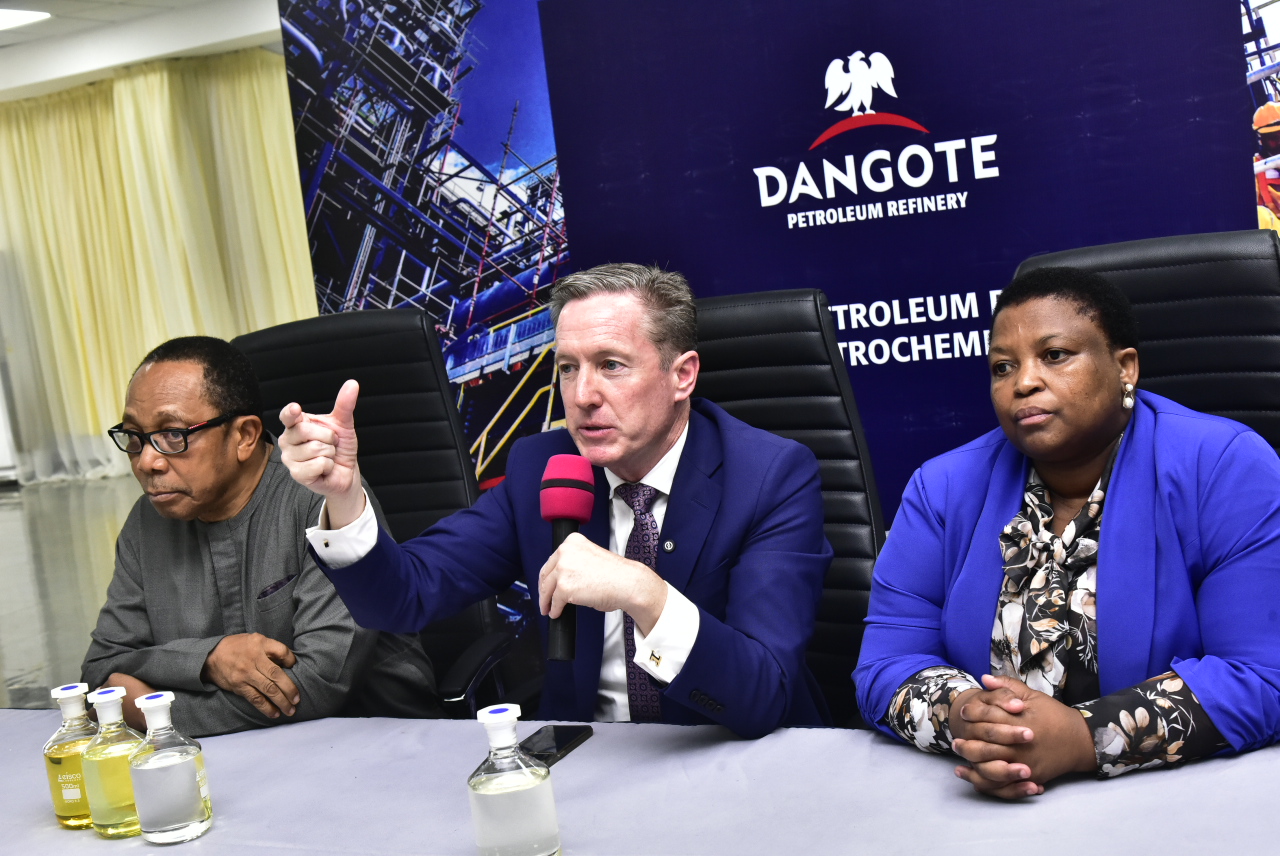
The Dangote Refinery on Wednesday returned the petrol price to N1,200 per litre, less than 24 hours after it increased it by 5 per cent.
The private refinery had raised the ex-depot price by N75 on Tuesday, citing pressure from volatile global oil markets, but quickly brought it back to N1,200 per litre from N1,275 per litre.
The swift downward review is directly linked to a sharp drop in international crude prices. Brent crude has plunged to $95.05 per barrel, after a 13 per cent decline, while the US West Texas Intermediate (WTI) crude closed at $97.18, recording nearly a 14 per cent drop.
This development comes after US President Donald Trump announced a conditional two-week ceasefire with Iran, which eased fears of immediate supply disruptions in the global oil market.
“This will be a double-sided CEASEFIRE!” Trump said on social media, marking a sharp reversal from his earlier warning that “a whole civilisation will die tonight” if Iran failed to comply with US demands.
Iran’s Foreign Minister, Mr Abbas Araqchi, confirmed that the country would halt attacks provided strikes against Iran cease and transit through the Strait of Hormuz is coordinated by Iranian forces.
Despite the breakthrough, tensions remain elevated across the region, with several Gulf states reporting missile launches, drone activity, or issuing civil defence warnings.
While oil prices have fallen back below $100, they remain significantly elevated after surging by a record amount in March. Market analysts noted that regardless of how successful the ceasefire is, geopolitical risk related to the Strait of Hormuz is likely to remain elevated for the foreseeable future under the control of Iran.
By Adedapo Adesanya
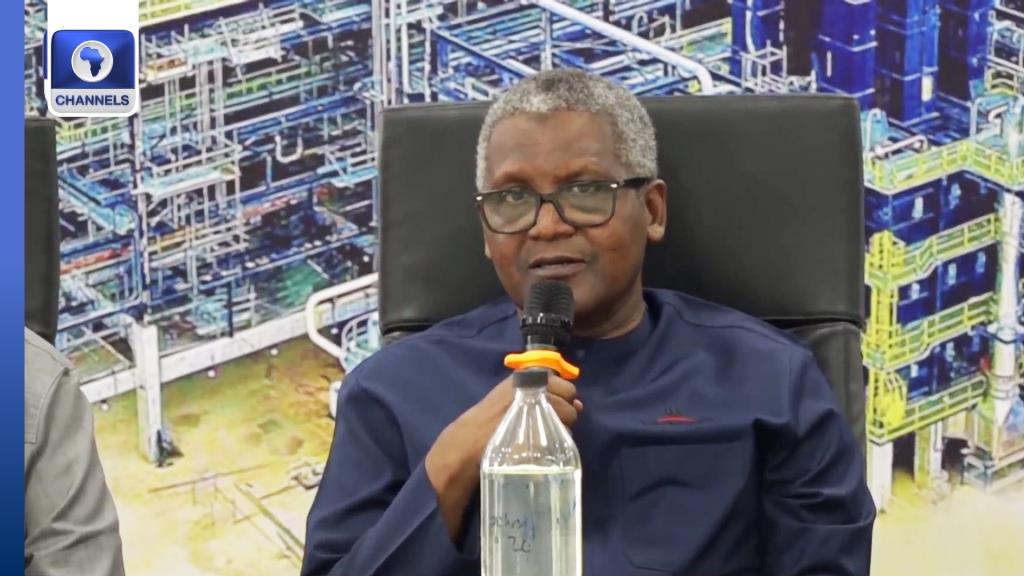
Crude oil deliveries from the Nigerian National Petroleum Company (NNPC) Limited to the Dangote Petroleum Refinery doubled in March, boosting prospects for improved fuel availability.
This was revealed by the chief executive of Dangote Industries Limited, Mr Aliko Dangote, on Tuesday, when he received the Deputy Secretary-General of the United Nations, Mrs Amina Mohammed, at the industrial complex in Ibeju-Lekki, Lagos.
While speaking on feedstock supply, Mr Dangote commended the NNPC for increasing crude deliveries to the refinery in March, noting that volumes rose to 10 cargoes—six supplied in Naira and four in Dollars—to support domestic fuel availability, according to a statement by the Refinery.
“Last month, they gave us six cargoes for Naira and four cargoes for Dollars,” he said.
Despite the improvement, Mr Dangote noted that the supply remains below the 19 cargoes required for optimal operations, with the refinery continuing to bridge the gap through imports from the United States and other African producers.
He also expressed concern over the unwillingness of international oil companies operating in Nigeria to sell to the refinery, stating that their preference for selling crude to traders forces it to repurchase at higher costs, with broader implications for the economy.
Mr Dangote added that the refinery is seeking increased access to domestically priced crude under local currency arrangements as part of efforts to moderate fuel costs and enhance long-term energy and food security across the continent.
On her part, Mrs Mohammed underscored the strategic importance of Dangote Industries Limited -particularly Dangote Fertiliser Limited—in addressing Africa’s mounting food security challenges, while calling for stronger global partnerships to scale its impact.
Mrs Mohammed said the United Nations would prioritise amplifying scalable solutions capable of mitigating the continent’s food crisis, describing Dangote’s integrated industrial model as a critical pathway.
“I think the UN’s job here is to amplify and to put visibility on the possibilities of mitigating a food security crisis, and this is one of them,” she said. “I hope that when we go back, we can continue to engage partners and countries that should collaborate with Dangote Industries.”
-
 Feature/OPED6 years ago
Davos was Different this year
-
Travel/Tourism10 years ago
Lagos Seals Western Lodge Hotel In Ikorodu
-

 Showbiz3 years ago
Estranged Lover Releases Videos of Empress Njamah Bathing
-
 Banking8 years ago
Sort Codes of GTBank Branches in Nigeria
-

 Economy3 years ago
Subsidy Removal: CNG at N130 Per Litre Cheaper Than Petrol—IPMAN
-

 Banking3 years ago
Sort Codes of UBA Branches in Nigeria
-

 Banking3 years ago
First Bank Announces Planned Downtime
-

 Sports3 years ago
Highest Paid Nigerian Footballer – How Much Do Nigerian Footballers Earn
4 Comments