
Economy
How U.S. and Nigerian Borrowing Policies Differ


Borrowing rules in the United States and Nigeria may share some similarities. Both systems serve the same human need, access to cash when life gets complicated. What separates them is how each country balances control and opportunity.
In the U.S., a loan is not just a transaction but a data point in a lifetime of credit history. In Nigeria, borrowing is often a leap of faith between a lender and a customer with no paper trail. These differences affect not only how people get money but also how they build financial stability.
Borrowing in the U.S.: Quick Overview
The U.S. credit environment is built on documentation and transparency. Every adult with a bank account is part of a vast credit network monitored by three major bureaus: Experian, Equifax, and TransUnion. They build credit reports that reflect an individual’s financial behavior and translate it into the FICO score. This number can open or close financial doors. The U.S. system rewards discipline. The better your credit score, the lower your borrowing cost.
Lenders here make decisions based on strict verification and legal protection. Key regulations include:
- Truth in Lending Act (TILA) – requires clear disclosure of fees and APRs.
- Fair Credit Reporting Act (FCRA) – sets standards for how credit data can be used.
- State-level lending laws – define limits on loan amounts, APRs, and other terms.
Short-term loans in the U.S. are legal only where local law allows. In some states, they’re banned entirely, while in others, they are strictly regulated to prevent exploitation. Borrowers know the total cost in advance, and auto-debit payments minimize missed deadlines.
Borrowing in Nigeria: Quick Overview
Nigeria’s credit system is young but growing fast. Over the past decade, fintech innovation has brought financial services to millions who never had a bank account. Apps now approve loans in minutes, using mobile data instead of a credit bureau report.
This convenience, however, comes with a price. Borrowers often face unclear interest rates and hidden service fees, aggressive collection tactics, including public “debt shaming,” and little or no credit-building effect, even after on-time payments. On top of that, short repayment periods, sometimes less than 30 days, make debts difficult to handle.
The Central Bank of Nigeria (CBN) has tried to impose order by licensing Credit Reporting Companies and enforcing transparency rules. But many lenders still operate outside the formal system. Inflation and limited employment push citizens toward quick, high-cost borrowing just to manage daily expenses.
Short-Term Borrowing in the U.S. and Nigeria
This is where the contrast becomes sharpest. In the U.S., payday loans are strictly regulated at both the state and federal levels. They usually range from $100 to $1,000 and are due in about two weeks. The fees, while steep, are disclosed upfront and standardized. Most borrowers take them for emergencies, such as rent, car repairs, or medical bills, and repay automatically on their next payday.
U.S. borrowers can borrow money from payday lenders safely, provided that they are dealing with a top-rated lending platform. When choosing a reliable loan provider, applicants can rest assured that their personal data is safe and that the company fully complies with all consumer protection rules. However, short-term loans in the US usually come with high costs, which are $10 to $30 for each $100 borrowed. Therefore, some states fully prohibit payday lending.
In Nigeria, digital microloans dominate. Some require no collateral or even identification beyond a phone number. Approval takes minutes, but repayment deadlines are so tight that re-borrowing is common. Rates can vary from 10% to 30% per month, depending on the platform.
Short-term loans in the U.S. function within a regulated system, while risks of predatory lending still exist. Nigerian short-term credit runs on speed and accessibility but often lacks guardrails.
Long-Term Credit and Consumer Protection
Long-term lending reveals the maturity gap between the two countries. In the United States, borrowers can access a full range of structured loans, including mortgages with 15–30-year repayment terms, auto loans backed by the purchased vehicle, and personal installment loans with fixed monthly payments and interest rates.
Each loan builds credit history when managed responsibly, allowing borrowers to access better terms in the future. Consumers also benefit from protection under the Consumer Financial Protection Bureau (CFPB), which monitors fairness and prevents predatory lending.
In Nigeria, long-term credit remains a luxury. Commercial banks require collateral, employment proof, and detailed income statements. For many citizens, these conditions are unreachable. As a result, they rely on rolling short-term loans from digital lenders. This pattern can trap them in high-interest cycles.
Still, local fintechs are experimenting with longer repayment models. The results are mixed: flexibility has increased, but oversight hasn’t caught up.
Credit Scores in Both Economies
A person’s credit score is a fingerprint of trust. In the United States, credit scoring has been part of daily life for decades. The three major bureaus, Experian, Equifax, and TransUnion, collect repayment data, credit card limits, loan applications, and even utility bills. These factors form the FICO score, a universal measure that determines an individual’s trustworthiness and directly affects borrowing terms.
Your credit behavior in the U.S. affects nearly everything. It determines whether a bank will issue a personal or car loan, the rate you’ll pay for insurance, and even your ability to rent a home or land certain jobs.
The advantage is stability. Borrowers can rebuild credit by paying on time, disputing inaccurate reports, and keeping credit utilization low. Over time, this creates a transparent feedback loop between lenders and borrowers.
Nigeria is just starting this journey. Its Credit Reporting Companies (CRCs), established under the Credit Bureau Act, are building a database from scratch. However, most lenders still rely on alternative data, such as mobile phone activity, including call history and airtime top-ups, utility and rent payments, and e-commerce and wallet transactions.
While these sources help extend loans to people with no banking history, they lack consistency. Not all digital lenders report back to credit bureaus, so on-time payments don’t always improve a borrower’s record. The result is uneven progress. People borrow more, but their financial profiles stay invisible.
Cultural and Economic Factors Behind Borrowing Behavior
Money habits grow from social roots as much as from regulation. In the U.S., personal finance education and widespread access to banking make credit a predictable tool. People use loans strategically. Among the most common reasons are debt consolidation, investing in education, or funding small businesses. Even short-term borrowing carries an expectation of repayment discipline, although many borrowers end up being trapped in debt.
In Nigeria, the motivation to borrow is different. Most citizens turn to credit for survival or micro-entrepreneurship. Inflation above 20% and unstable income streams mean that cash shortages are frequent, especially among market vendors, gig workers, and small traders. The informal economy determines how people think about debt. They often treat it as a community affair rather than a personal contract.
Social lending groups, called ROSCAs (Rotating Savings and Credit Associations), remain common. They rely on trust and peer accountability instead of paperwork. This culture of shared obligation fills the gaps left by limited formal credit.
Yet, as digital lending grows, that sense of personal responsibility is shifting. Borrowers are moving from face-to-face agreements to app-based decisions made by algorithms. The cultural adjustment is still ongoing, and regulators are racing to keep pace with behavior that changes faster than the law.
What Both Countries Can Learn from Each Other
The United States could learn from Nigeria’s creativity. Fintech innovation in Nigeria has redefined what accessibility looks like. Peer-to-peer lending, mobile-first onboarding, and microloans show how technology can reach people ignored by the traditional system. U.S. lenders, often slowed by paperwork, could adopt lighter, data-driven verification for smaller loans without sacrificing compliance.
Nigeria, meanwhile, could take cues from the American model of regulation and transparency. Establishing consistent reporting standards across all lenders would make credit scores meaningful and protect borrowers from predatory practices. Integrating mobile data into official credit systems could also help people transition from informal borrowing to formal finance, unlocking larger, safer loan options.
Both nations face the same global challenge: building credit systems that balance innovation with fairness. The U.S. has mastered structure, while Nigeria has speed. The future of lending may depend on combining both strengths.
Final Thoughts
Borrowing, at its core, reflects a country’s priorities. The United States prides itself on predictability, where every transaction leaves a record. Nigeria prioritizes accessibility, sometimes at the expense of oversight. This happens because its people can’t afford to wait for old systems to catch up.
As these economies evolve, their borrowing models may slowly converge. With technology bridging data gaps and governments refining consumer protections, the distance between Washington and Lagos might shrink, at least in financial terms. For now, both nations remind us that credit isn’t just about money; it’s about trust, time, and the stability of a paycheck and economy.




By Adedapo Adesanya
The Manufacturers Association of Nigeria (MAN) is seeking protection from the federal government amid rising concerns over the impact of escalating Middle East tensions on Nigeria’s manufacturing sector, particularly risks linked to disrupted global shipping routes, volatile energy markets, and supply chain bottlenecks.
MAN noted, “Its vigilance regarding the escalating military tensions involving the United States, Israel, and Iran. These events have significant implications for the global macroeconomic landscape, which can indirectly impact Nigeria.”
The director-general of MAN, Mr Segun Ajayi-Kadir, expressed that this situation arises at a pivotal moment when Nigeria has seen its annual inflation rate positively ease to 15.10 per cent, and manufacturing capacity utilisation has begun to exceed the 60 per cent mark, saying, however, the current geopolitical turbulence poses challenges that require careful navigation to protect the economic progress achieved.
“Although these conflicts are occurring far from our shores, their economic consequences may directly influence the Nigerian economy.
“We are particularly attentive to issues surrounding global shipping disruptions, fluctuating energy markets, and potential supply chain bottlenecks that could challenge local production,” Ajayi-Kadir stated.
Mr Ajayi-Kadir further explained that the recent hostilities in the Middle East are reshaping the global energy and logistics environment.
“With critical disruptions in the Strait of Hormuz, the global markets have become unsettled, reflected in rising Brent crude prices exceeding $84.50 per barrel, and increased global freight and war-risk insurance premiums as vessels seek safer routes,” he stated.
For Nigerian manufacturers, MAN DG added that the implications of these developments are immediate and significant, increasing production costs, saying that historically, disruptions in the U.S. and the Middle East have reverberated throughout the global economy, and Nigeria is no exception.
He noted that “while a rise in global oil prices could theoretically benefit Nigeria by bolstering foreign exchange reserves and contributing to the stability of the Naira, the current reality presents a complex challenge. Nigeria’s domestic crude production hovers around 1.3 to 1.4 million barrels per day due to ongoing structural challenges, limiting the ability to fully leverage potential gains.”
He disclosed that in terms of trade relations, the United States remains one of Nigeria’s most vital partners, stating that given the existing conflict, disruptions in this crucial trade relationship could lead to increased costs for global freight forwarding and longer lead times for imported raw materials, potentially resulting in imported inflation.
According to him, the manufacturing sector is poised to face a variety of immediate and complex challenges, including rising energy costs, which are particularly relevant given that manufacturers depend heavily on gas and diesel for effective operations.
“Additionally, increasing freight costs and longer shipping times are making it more expensive to procure raw materials. Furthermore, heightened costs for essential goods could diminish consumer purchasing power, presenting manufacturers with the challenge of rising production costs amid stagnant or declining sales.”
In identifying the sectors most likely to be affected, MAN emphasised that the impact of global conflicts is not uniformly distributed, adding that “while the entire real sector is likely to feel the pressure, specific groups such as the Chemical and Pharmaceuticals Sector and the Basic Metals, Iron, and Steel Sector may encounter unique challenges.

By Dipo Olowookere
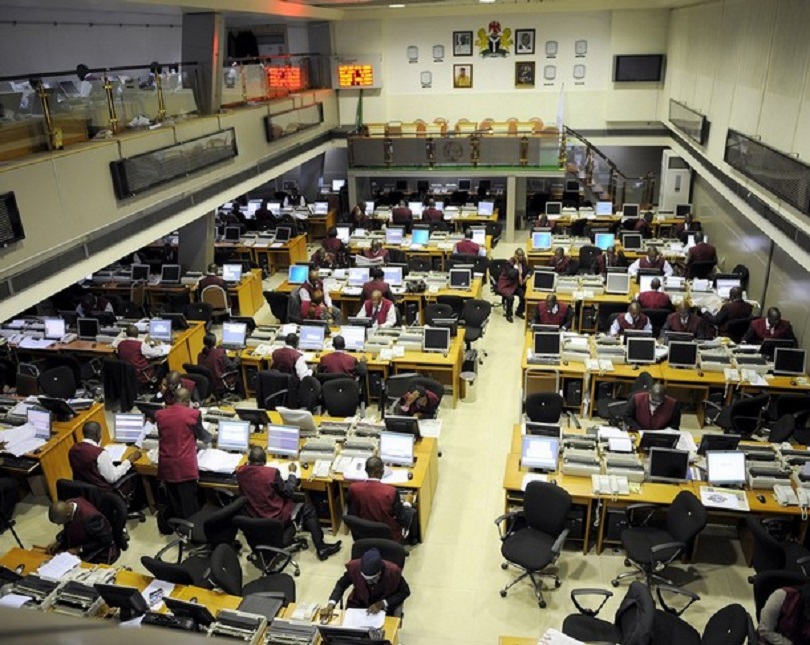
The Nigerian Exchange (NGX) Limited witnessed 47 price gainers last week, marginally lower than the 48 recorded in the preceding week.
This occurred as the All-Share Index (ASI) and the market capitalisation depreciated by 0.12 per cent on a week-on-week basis to 200,913.06 points and N128.969 trillion apiece due to profit-taking.
Similarly, all other indices finished lower except the main board, insurance, AFR Div Yield, energy, Lotus II, growth and commodity indices, which appreciated by 1.53 per cent, 2.22 per cent, 1.36 per cent, 1.93 per cent, 1.61 per cent, 2.31 per cent and 2.77 per cent, respectively, while the sovereign bond index closed flat.
Business Post reports that in the week, 45 equities shed weight compared with 43 equities in the previous week, while 56 stocks closed flat versus 57 stocks a week earlier.
The best-performing stock last week was Zichis, which gained 60.72 per cent to trade at N13.79. Premier Paints appreciated by 60.25 per cent to N37.50, John Holt rose by 59.92 per cent to N18.95, Legend Internet grew by 25.00 per cent to N7.50, and McNichols increased by 20.65 per cent to N7.42.
As for the worst-performing stock for the week, it was Livestock Feeds, which declined by 11.73 per cent to N7.15, Fidson depreciated by 9.97 per cent to N94.85, Cadbury Nigeria dropped 9.94 per cent to N63.00, Austin Laz stumbled by 9.89 per cent to N4.01, and Learn Africa lost 9.09 per cent to settle at N8.50.
A look at the activity chart showed that 3.950 billion shares worth N201.312 billion exchanged hands in 359,642 deals in the five-day trading week, in contrast to the 8.761 billion shares valued at N267.253 billion traded in 193,473 deals a week earlier.
Financial stocks dominated with 2.881 billion units sold for N102.259 billion traded in 139,093 deals, contributing 72.94 per cent and 50.80 per cent to the total trading volume and value apiece.
ICT equities transacted 230.539 million units worth N45.172 billion in 52,669 deals, and agriculture shares traded 191.927 million units valued at N6.626 billion in 16,471 deals.
Wema Bank, Access Holdings, and UBA were the busiest, with 1.448 billion units worth N43.191 billion in 28,436 deals, contributing 36.65 per cent and 21.45 per cent to the total trading volume and value, respectively.
By Dipo Olowookere
Nigerian stocks shrank by 0.02 per cent as a result of renewed selling pressure, after the consumer goods index crumbled by 0.89 per cent, and the banking space contracted by 0.23 per cent.
Business Post reports that the Nigerian Exchange (NGX) Limited weakened yesterday despite the energy sector closing 1.78 per cent higher, the insurance segment increasing by 0.31 per cent, and the industrial goods counter closing flat.
The All-Share Index (ASI) eased by 44.83 points to 200,913.06 points from 200,957.89 points, and the market capitalisation decreased by N29 billion to N128.969 trillion from N128.998 trillion.
eTranzact lost 10.00 per cent to trade at N20.70, Abbey Mortgage Bank declined by 10.00 per cent to N9.90, Cadbury Nigeria retreated by 10.00 per cent to N63.00, Eterna also fell by 10.00 per cent to N33.75, and DAAR Communications dipped by 9.50 per cent to N1.81.
Conversely, Premier Paints appreciated by 9.97 per cent to N37.50, Zichis gained 9.97 per cent to trade at N13.79, McNichols improved by 9.93 per cent to N7.42, John Holt chalked up 9.86 per cent to close at N18.95, and Trans Nationwide Express went up by 9.75 per cent to N2.59.
On the last day of the week, 595.2 million equities valued at N24.5 billion were transacted in 43,440 deals versus the 678.1 million equities worth N33.1 billion traded in 42,222 deals in the previous session.
This showed an improvement in the number of deals by 2.89 per cent, and a cut in the trading volume and value by 12.22 per cent and 25.98 per cent, respectively.
Wema Bank ended the day as the busiest stock after a turnover of 131.5 million units worth N3.5 billion, Legend Internet traded 41.6 million units valued at N339.2 million, Zichis sold 35.2 million units for N485.6 million, Access Holdings exchanged 29.4 million units worth N764.8 million, and Japaul transacted 21.5 million units valued at N74.6 million.










-
 Feature/OPED6 years ago
Davos was Different this year
-
Travel/Tourism10 years ago
Lagos Seals Western Lodge Hotel In Ikorodu
-

 Showbiz3 years ago
Estranged Lover Releases Videos of Empress Njamah Bathing
-
 Banking8 years ago
Sort Codes of GTBank Branches in Nigeria
-

 Economy3 years ago
Subsidy Removal: CNG at N130 Per Litre Cheaper Than Petrol—IPMAN
-

 Banking3 years ago
Sort Codes of UBA Branches in Nigeria
-

 Banking3 years ago
First Bank Announces Planned Downtime
-

 Sports3 years ago
Highest Paid Nigerian Footballer – How Much Do Nigerian Footballers Earn