Economy
Ibeto to Build New Cement Factory in Nkalagu
By Modupe Gbadeyanka
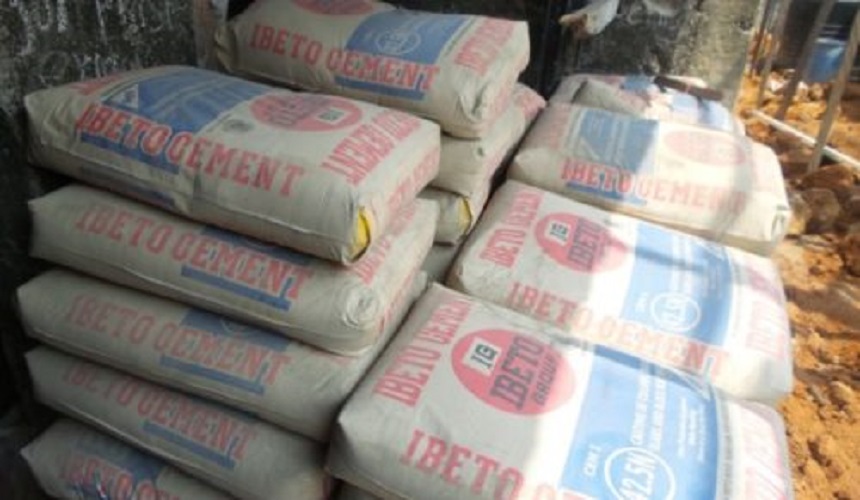
Nigerian businessman and Chairman of Ibeto Group, Mr Cletus Ibeto, has promised to establish a new cement factory in Nkalagu under Ishielu local government area of Ebonyi State.
Mr Ibeto made this pledge when he visited Governor David Umahi of Enugu State alongside some American investors in the state to work towards the revitalisation of the Nigeria Cement Company (Nigercem) also in Nkalagu.
During the visit, the business mogul thanked Governor Umahi for the enormous support it has been receiving from the state government towards the revitalization of NIGERCEM.
He added that with America’s support as financiers of the project, NIGERCEM would soon bounce back.
In his remarks, the Governor assured Ibeto Group of Companies and its foreign partners of adequate security of its staff and investment in the state.
He stated that the revitalization of NIGERCEM Company would serve as a catalyst for the vast development of the state.
According to him, we are at home with America and any support you need to make the project a success would be given to you by the present administration.
“I am so excited today. We are happy to have the technical partners here. We are at home with America as our partners. I want to assure the Nalagu people that the promise we made to you is being fulfilled.
“I want to assure you of the cooperation of the locals. I am building the seven bridges and roads leading to Nkalagu have been worked on. We have a law that protects investors. Nigercem will be a catalyst for vast development of the state. We will continue to support Ibeto so that the project will succeed,” he said.
Economy
Oyedele Rules Out Policy Reversals Amid Reform Push
By Adedapo Adesanya
The new Minister of Finance, Mr Taiwo Oyedele, has said the federal government will stay the course on economic reforms, declaring that policy reversals will not define the current phase of the country’s economic management.
The Minister stated this while speaking at the launch of the Nigerian Economic Summit Group Private Sector Outlook 2026 in Lagos on Thursday, according to a statement issued by the Director of Information in the Ministry of Finance, Mr Efe Ovuakporie.
Mr Oyedele, who gave the assurance to investors at the event, said the administration was shifting from stabilisation to measurable growth, where reforms will be judged by outcomes rather than intent.
His comments came barely 48 hours after he assumed office, following the exit of Mr Wale Edun from the Federal Executive Council (FEC) over health reasons.
“We are not looking back,” Mr Oyedele said, stressing that consistency in policy direction remains critical to investor confidence.
He warned that mixed signals or abrupt reversals could stall progress, noting that “businesses need to know that today’s decisions will still hold tomorrow.”
While pointing to early signs of macroeconomic stabilisation, including a more aligned exchange rate and improved revenue performance, the minister said these gains must translate into tangible outcomes such as job creation, productivity growth and better living standards.
He identified four priorities for driving investment in the next phase: policy consistency, predictability across fiscal and regulatory frameworks, reduction in the cost of doing business, and improved access to capital.
On financing, Mr Oyedele said the government is working to expand credit across the economy, from consumer lending to industrial financing, with support from institutions such as the Bank of Industry, to stimulate growth and unlock private sector participation.
He added that Nigeria must target stronger real GDP per capita growth to make a meaningful impact on poverty, noting that modest growth figures would not be sufficient given the country’s population dynamics.
The minister further described the current stage of reforms as decisive, where success will depend on execution. “Reforms on their own do not create growth. We need investment at scale,” he said, adding that investors respond to stable and predictable environments, not policy announcements.
In the area of productivity, Mr Oyedele said Nigeria must move beyond consumption-driven expansion and focus on improving output and competitiveness in key sectors, including agriculture, manufacturing, energy and the digital economy.
He also called for deeper collaboration between the government and the private sector, maintaining that economic growth cannot be delivered by public policy alone.
As the country enters what he termed a consolidation phase, Mr Oyedele said the government would continue to deepen reforms, strengthen public financial management and improve coordination across all tiers of government.
He, however, acknowledged risks, including reform fatigue, inflationary pressures from global uncertainties, and political tensions ahead of the election cycle, but maintained that these challenges are surmountable with discipline and cooperation.
“Our task now is execution,” Mr Oyedele said, adding that “This phase demands focus, consistency and accountability. That is the direction we are pursuing.”
Economy
Dangote Plans New Refinery in Tanzania for East African Region
By Adedapo Adesanya
African businessman, Mr Aliko Dangote, has announced plans to build a new oil refinery in Tanzania, as the war in Iran exposes the continent’s over-reliance on fuel imports from the Middle East.
The project will include a pipeline that links the Kenyan port city of Mombasa to the northeastern Tanzanian harbour of Tanga, where the facility will be situated, Kenyan President William Ruto said at an Africa Finance Corp summit in Nairobi on Thursday.
The refinery will process crude from countries, including the Democratic Republic of Congo and South Sudan, he said at the forum.
“We are discussing that we are going to have a joint refinery in Tanga to benefit all of us,” Mr Dangote said at the forum on Thursday. “My commitment today here is that we will lead the refinery. We’ll make sure that that refinery is built within the next four to five years.”
The plans to build the facility in Tanzania coincide with Mr Dangote’s $40-billion expansion of his industrial empire, aimed at more than doubling capacity at his 650,000 barrel-a-day plant in Lagos.
“I can give commitment to the two presidents that were here, if they will support the refinery, we’ll build the identical one that we have in Nigeria,” Mr Dangote said on a panel discussion that included President Ruto and Ugandan President Yoweri Museveni.
Kenyan President confirmed the ongoing discussions with the Nigerian billionaire, saying the proposed project.
“Aliko is telling us that the private sector and the government can discuss a refinery in Tanzania, a joint refinery to benefit all of us. The oil will take on board the oil from Kenya, DRC, and even Uganda. We just need to construct a pipeline from Tanga to Mombasa, and the finished product will come by the already built pipeline we have in Uganda,” he said.
He said countries should avoid pursuing individual gains and instead collaborate in shaping policies that benefit the East African market.
The announcement on the oil refinery in Tanzania comes after the Nairobi Securities Exchange (NSE) Chief Executive Officer, Mr Frank Mwiti, said on April 12 that discussions had been held on how the NSE and other African exchanges could support what may become Africa’s largest initial public offering (IPO).
Dangote’s IPO is aimed at expanding Mr Dangote’s refinery business and is estimated at about $22 billion.
The planned offering is expected to float between 5 per cent and 10 per cent of the refinery’s equity. Analysts estimate the refinery’s valuation at between $40 billion and $50 billion.
The share sale targets up to $5 billion, which will make it the largest IPO ever conducted on an African stock exchange.
Economy
Manufacturers Push for Transparency in Naira-for-Crude Pricing Policy
By Adedapo Adesanya
The Manufacturers Association of Nigeria (MAN) has urged the federal government to ensure total transparency in the domestic pricing matrix in line with the Naira-for-Crude policy.
Speaking in a new interview with a Nigerian newspaper, New Telegraph, the Director-General of the manufacturing body, Mr Segun Ajayi-Kadir, said that the government should ensure that local refineries received their full, unhindered daily crude quotas without bureaucratic bottlenecks.
The Naira-for-Crude policy introduced in October 2024 is a strategic initiative to boost local refining and reduce pressure on foreign exchange reserves. The policy directs the Nigerian National Petroleum Company (NNPC) to sell crude oil to local refineries, notably the Dangote Petroleum Refinery, in Naira, with a focus on stabilising the local currency and reducing reliance on USD for energy imports.
“The federal government should mandate total transparency in the domestic pricing matrix and ensure that local refineries receive their full, unhindered daily crude quotas without bureaucratic bottlenecks.
“The true macroeconomic benefit of this policy must be allowed to materialise for the end consumer and the productive sector,” he told the paper.
According to Mr Ajayi-Kadir, while the implementation of crude oil sales in Naira to local refineries is a landmark structural victory, its current execution requires unmitigated optimisation.
His comments come on the back of recent worries by Dangote Refinery and other smaller refiners not getting enough crude feedstock to serve their structures. This has led to an increase in crude importation from other countries at a premium, which is in turn making fuels expensive.
Analysts note that most of Nigeria’s crude production is already tied to export contracts as the country sells a large share of its oil through long-term agreements with international oil companies via joint ventures. These contracts, often priced in Dollars, are hard to redirect even as local refiners need supply.
He also urged the government to accelerate the Presidential Compressed Natural Gas (CNG) initiative by heavily subsidising the conversion of commercial and industrial transport fleets as part of the effort to roll out alternative energy aggressively.
He said that logistics accounted for a massive chunk of consumer goods inflation, adding that shifting from Premium Motor Spirit (PMS) and diesel to abundant, locally sourced CNG was the ultimate inflation-buster.
-
Feature/OPED6 years agoDavos was Different this year
-
Travel/Tourism10 years ago
Lagos Seals Western Lodge Hotel In Ikorodu
-
Showbiz3 years agoEstranged Lover Releases Videos of Empress Njamah Bathing
-
Banking8 years agoSort Codes of GTBank Branches in Nigeria
-
Economy3 years agoSubsidy Removal: CNG at N130 Per Litre Cheaper Than Petrol—IPMAN
-
Banking3 years agoSort Codes of UBA Branches in Nigeria
-
Banking3 years agoFirst Bank Announces Planned Downtime
-
Sports3 years agoHighest Paid Nigerian Footballer – How Much Do Nigerian Footballers Earn