
Economy
IMF Okays $16.1m Funding Package for Gambia

By Dipo Olowookere
A total of $16.1 million has been approved by the Executive Board of the International Monetary Fund (IMF) for the Gambia under the Rapid Credit Facility (RCF).
The Gambia faces an urgent balance of payments need triggered by a weak agricultural season, lower tourism receipts due to the political turmoil early this year, and higher commodity prices.
The financial assistance is intended to address urgent balance of payments needs that have arisen on account of the shocks.
In addition, the Board was informed about the IMF Managing Director’s approval of a one-year staff-monitored program (SMP) to guide policy implementation.
With the recent political transition, the new government has inherited a dire economic situation and the country is faced with an urgent balance of payments need and a precariously low level of usable international reserves.
The Gambia has been hit by a bad agricultural season, the political turmoil following the elections in December 2016 has greatly reduced tourism receipts in early 2017, and higher fuel and commodity prices put further strain on the balance of payments.
These shocks have exacerbated an already fragile macroeconomic situation, reflecting past economic mismanagement.
The funding package will help fill budgetary gaps while the authorities implement economic and structural policies aimed at restoring macroeconomic stability and reducing poverty.
The Executive Board’s approval of the RCF disbursement will also enable the authorities to engage in further discussions with the donor community regarding assistance to meet their remaining financing needs.
The Board’s approval enables the immediate disbursement of the full amount of the RCF loan, which is equivalent to 18.75 percent of The Gambia’s quota in the IMF.
Following the Executive Board discussion, Mr Mitsuhiro Furusawa, Deputy Managing Director and Acting Chair, said, “The Gambian authorities are strongly committed to a break with past policies and to restoring macroeconomic stability and debt sustainability.
He also said authorities “have committed to drastically reducing domestic borrowing, including by ending central bank deficit financing, and are taking substantive measures to increase non-tax revenue and reduce expenditures in 2017.”
“The authorities also plan to undertake comprehensive reforms of key state-owned enterprises to secure the planned fiscal adjustment.
“These efforts are complemented by substantial external support from development partners. However, sustained further efforts beyond 2017 will be needed to secure fiscal sustainability.
“The Gambia’s high public debt exposes it to significant vulnerabilities. To reduce these vulnerabilities, multilateral development banks have committed to provide additional support and assurances of highly concessional support have been received from some of The Gambia’s major official bilateral creditors.”



By Aduragbemi Omiyale
The securities of DN Tyre and Rubber Plc, and Greif Nigeria Plc have been delisted by the regulatory arm of the Nigerian Exchange (NGX) Group Plc, NGX Regulation Limited.
A statement signed by the Head of the Issuer Regulation Department of NGX RegCo, Mr Godstime Iwenekhai, said the delisting became effective on Thursday, April 9, 2026.
In the notice issued yesterday, it was further disclosed that the action complied with the provisions of Clause 14 of the Amended Form of General Undertaking, for Listing on Nigerian Exchange Limited General Undertaking.
According to this clause, “The exchange reserves the right to, at its sole and absolute discretion, suspend trading in any listed securities of the Issuer, delist such securities, or remove the name of the issuer (listed company) from the daily official list of the exchange with or without prior notice to the issuer, upon failure of the issuer to comply with any one or more of the provisions of this General Undertaking, or when in its sole discretion, the exchange determines that such suspension of trading or delisting is in the public interest, or otherwise warranted.”
It was explained that the shares of the two firms were delisted because they fell below the listing standards.
“The securities of DN Tyre and Rubber Plc and Greif Nigeria have been delisted from the facilities of Nigerian Exchange Limited (NGX) effective Thursday, April 9, 2026, on the grounds that the companies are operating below the listing standards of NGX and their securities are no longer considered suitable for continued listing and trading in the market,” the disclosure noted.

By Adedapo Adesanya
The NASD Over-the-Counter (OTC) Securities Exchange declined by 0.95 per cent on Thursday, April 9, plunging the Unlisted Security Index (NSI) by 37.41 points to 3,893.50 points from 3,930.91 points.
In the same vein, the market capitalisation lost N22.38 billion during the session to N2.329 trillion from the N2.351 trillion it ended at midweek.
The OTC securities exchange was under selling pressure yesterday, resulting in a negative market breadth index after three securities lost weight and one gained weight.
Central Securities Clearing System (CSCS) Plc led the losers’ table after it shed N3.74 to sell at N64.21 per unit versus N67.95 per unit. Food Concepts Plc went down by 19 Kobo to N2.68 per share from N2.87 per share, and Free Range Farms Plc dropped 10 Kobo to settle at 90 Kobo per unit versus N1.00 per unit.
On the flip side, MRS Oil gained N5 to close at N165.00 per share compared with the preceding day’s N160.00 per share.
At the trading session, there was a 23.5 per cent jump in the value of securities to N40.4 million from N32.7 million, but the volume of securities fell by 81.9 per cent to 1.04 million units from 5.7 million units, and the number of deals went down by 29.7 per cent to 26 deals from the preceding session’s 37 deals.
At the close of transactions, Great Nigeria Insurance (GNI) Plc remained the most active stock by value on a year-to-date basis with 3.4 billion units valued at N8.4 billion, followed by CSCS Plc with 57.5 million units exchanged for N3.9 billion, and Okitipupa Plc with 27.5 million units traded for N1.8 billion.
Also, GNI Plc ended the trading day as the most traded stock by volume on a year-to-date basis with the sale of 3.4 billion units worth N8.4 billion, trailed by Resourcery Plc with 1.1 billion units worth N415.7 million, and Infrastructure Guarantee Credit Plc with 400 million units sold for N1.2 billion.
By Adedapo Adesanya
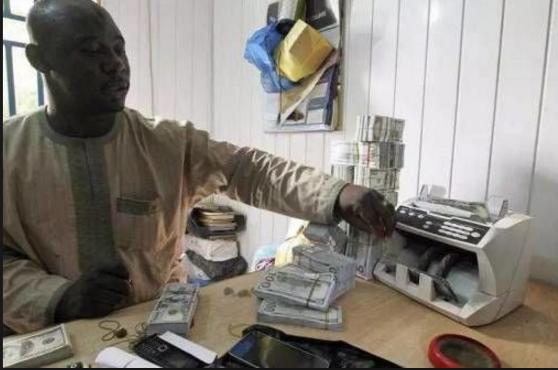
The Naira further appreciated against the US Dollar in the various segments of the foreign exchange (FX) market on Thursday, April 9.
At the black market, the Nigerian currency improved its value yesterday by N20 to quote at N1,390/$1 compared with the previous day’s rate of N1,410/$1.
In the Nigerian Autonomous Foreign Exchange Market (NAFEX) window, the domestic currency gained N12.50 or 0.9 per cent against the greenback to trade at N1,359.32/$1, in contrast to midweek’s price of N1,371.82/$1.
In the same official market, the local currency gained N14.89 against the Euro to sell at N1,589.18/€1 versus N1,604.07/€1, and traded flat against the Pound Sterling at N1,844.83/£1.
Data from the Central Bank of Nigeria (CBN) showed that turnover increased to N71.156 million across 115 deals, suggesting that banks’ customers’ demand for foreign payments eased slightly on the day.
The local currency has been in strong demand from foreign portfolio investors seeking to purchase OMO bills and other fixed-income instruments.
External reserves, which provide the CBN with firepower to support the currency, declined for the 13th consecutive session, falling by about $840 million to $49.18 billion as of April 1 from $50.02 billion recorded on March 11, according to CBN data.
The persistent drawdown reflects mounting external pressures tied to heightened geopolitical tensions in the Middle East, which analysts say have dampened investor appetite for frontier markets and weakened capital inflows into Nigeria.
In the cryptocurrency market, prices tapped into optimism as geopolitical tensions over a fragile Iran ceasefire and a partial reopening of the Strait of Hormuz keep markets cautious and oil prices volatile.
Market analysts noted that if the ceasefire survives through the weekend and the Strait opens further, momentum will build for risk assets like crypto. However, if Iran’s grievances escalate or President Donald Trump’s rhetoric shifts, prices may crater.
Bitcoin (BTC) appreciated by 1.6 per cent to $71,989.47, Dogecoin (DOGE) expanded by 1.5 per cent to $0.0928, Solana (SOL) added 1.4 per cent to sell for $83.34, Ripple (XRP) jumped 1.1 per cent to $1.34, Cardano (ADA) went up by 0.8 per cent to $0.2518, TRON (TRX) grew by 0.7 per cent to $0.3195, Ethereum (ETH) increased by 0.6 per cent to $2,192.07, and Binance Coin (BNB) climbed 0.4 per cent to $601.29, while the US Dollar Tether (USDT) and the US Dollar Coin (USDC) remained unchanged at $1.00 each.
-
 Feature/OPED6 years ago
Davos was Different this year
-
Travel/Tourism10 years ago
Lagos Seals Western Lodge Hotel In Ikorodu
-

 Showbiz3 years ago
Estranged Lover Releases Videos of Empress Njamah Bathing
-
 Banking8 years ago
Sort Codes of GTBank Branches in Nigeria
-

 Economy3 years ago
Subsidy Removal: CNG at N130 Per Litre Cheaper Than Petrol—IPMAN
-

 Banking3 years ago
Sort Codes of UBA Branches in Nigeria
-

 Banking3 years ago
First Bank Announces Planned Downtime
-

 Sports3 years ago
Highest Paid Nigerian Footballer – How Much Do Nigerian Footballers Earn