Connect with us

Economy

Inflation: Reps Ask FG to Control Prices of Food Items, Others

Published

on

reps price control board

By Bliss Okperan

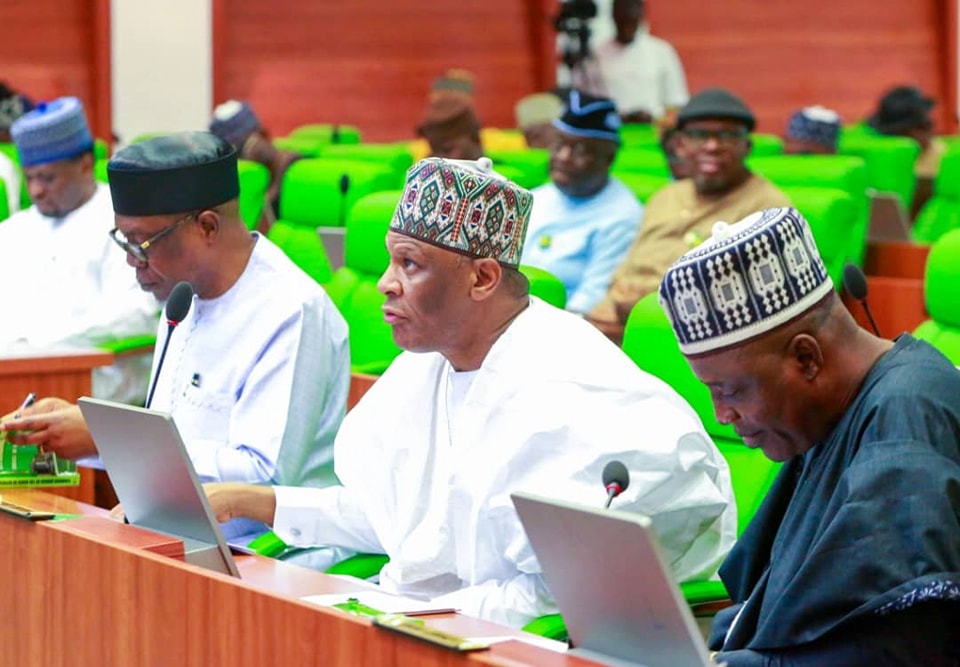
The House of Representatives has charged the federal government to establish a price control board to regulate the prices of food items, petroleum products and others in the country.

The lower arm of the National Assembly advised the central government to take this action to tackle the rising inflation and cost of living in the country.

Moving a motion on Thursday, Mr Hussaini Mohammed Jalo argued that the skyrocketing inflation and cost of living in the country was affecting citizens, who they represent at the lower chamber of the parliament.

He blamed high cost of petroleum products and the increasing exchange rate differentials for the price instability in Nigeria, urging the government to quickly do something to bring down prices of items.

The lawmaker said the government, through the Minister of Commerce, should introduce zero duty on agricultural products for a period of five years to encourage agricultural growth and reduce the burden on farmers, increase food production.

Mr Jalo further noted the existence of a Price Control Act is to ensure that goods are sold at government approved prices to stabilize the general price level, prevention of hoarding of goods, protection of customers from exorbitant prices.

He stressed that the price control board, when inaugurated, would be saddled with the responsibility to oversee the price of petroleum products and ensure that marketers don’t take undue advantage of consumers, depending on the prevailing price on the international market.

According to him, the absence of price control mechanism in the country was giving room for exploitation by sellers, reducing the purchasing power of the consumers.

“The absence of a price control board will give room to manufacturers, wholesalers and retailers of agricultural products to inflate the costs of production, thus disrupting the economic equilibrium of the nation,” he noted.

“Lack of proper regulation on prices of commodities has resulted in unpredictable rise in the costs of petroleum products especially Premium Motor Spirit (PMS), Automotive Gas Oil (AGO) and kerosene, the volatility in pricing affects the transportation sector which in turn influences the cost of living for the ordinary citizens,” the lawmaker submitted.

His colleagues in the House agreed with his submission and the motion, which was seconded by Mr Kabiru Yusuf Alhaji. It was then adopted and referred to the House of Committee on Commerce.


Economy

Ibeto Customs, Police Renew Joint Security Pact for Efficiency, Safety

Published

on

Nigeria Customs Service

By Adedapo Adesanya

The Nigeria Customs Service (NCS), Ibeto Seaport and Terminals Command, Port Harcourt, and the Nigeria Police Force have renewed their commitment to joint security operations at the nation’s maritime corridors, following a strategic meeting between top officials of both agencies.

According to a statement, the renewed partnership came as the Commissioner of Police, Eastern Port Police Command, CP Shuaibu Audu, paid a working visit to the Customs Area Controller, Comptroller Usman Yahaya, at the Command headquarters on April 17, 2026.

The engagement, according to a statement by the Command’s Public Relations Officer, Chief Superintendent of Customs Tangwa Emmanuel, was aimed at strengthening inter-agency cooperation and boosting operational efficiency within the port environment.

Speaking during the visit, Comptroller Yahaya described the engagement as significant, stressing that sustained collaboration among security agencies remains critical to safeguarding national assets and ensuring seamless port operations.

This visit is timely and highly appreciated. It reflects the importance of sustained cooperation among agencies entrusted with the security of our nation and the protection of critical economic assets,” he said.

He assured the police boss of Customs’ readiness to maintain strong working relations with the Eastern Port Police Command.

“We are fully committed to working with the new Commissioner of Police and giving all necessary support towards the successful discharge of his responsibilities,” Mr Yahaya added.

The Customs Area Controller noted that the synergy between both agencies has continued to play a vital role in maintaining order, facilitating legitimate trade and curbing criminal activities within the port system.

This was contained in a statement shared via the Customs official X handle.

Customs and the Police share common responsibilities in safeguarding the port environment. Synergy remains the cornerstone for achieving our collective mandate,” he stated.

He also briefed the visiting Commissioner on the operational relevance of the Ibeto Seaport and Terminals Command, reiterating the Command’s commitment to strengthening maritime security.

On his part, CP Audu said the visit was part of efforts to consolidate existing ties between the Nigeria Police Force and the Nigeria Customs Service.

“My presence here today is to reinforce the cordial relationship between the Nigeria Police Force and the Nigeria Customs Service. No organisation can function effectively in isolation,” he said.

He emphasised the importance of sustained collaboration among security agencies, particularly in securing the nation’s ports, which he described as vital to economic stability.

Synergy among security agencies is essential to addressing emerging threats. Our ports are strategic national assets, and we must work together to keep them secure,” Mr Audu stated.

The police commissioner also sought continued support from Customs officers in advancing shared security objectives.

Continue Reading

Economy

Tinubu Removes Wale Edun, Elevates Taiwo Oyedele as New Finance Minister

Published

on

swear in taiwo oyedele

By Modupe Gbadeyanka

Mr Taiwo Oyedele has become the new Minister of Finance and Coordinating Minister for the Economy after the exit of Mr Wale Edun.

This announcement was made on Tuesday by the Office of the Secretary to the Government of the Federation via a statement signed by Mr Yomi Odunuga, the Special Adviser of Media and Publicity to the Secretary to the Government of the Federation, Mr George Akume.

It was disclosed that President Bola Tinubu approved the removal of Mr Edun as Finance Minister as well his counterpart in the Housing and Urban Development Ministry, Mr Ahmed Musa Dangiwa.

According to Mr Akume, “These changes are aimed at strengthening cohesion, synergy in governance as well as achieving more impactful delivery on the economy to Nigerians, through the Renewed Hope Agenda.”

In approving the cabinet reshuffle, the President has fully exercised his powers as conferred on him by Sections 147 and 148 of the Constitution of the Federal Republic of Nigeria (1999, as amended), he added.

Before this minor cabinet reshuffle in the membership of the Federal Executive Council (FEC), Mr Oyedele the Minister of State for Finance.

Mr Muttaqha Rabe Darma has now been named as the ministerial nominee and minister designate for the Housing and Urban Development Ministry.

Mr Tinubu thanked the outgoing ministers for their services to the nation while wishing them the best in all their future endeavours, reminding others that “the process of reinvigoration shall be continuous.”

Continue Reading

Economy

Dangote Eyes Crude Oil Production to Ease Shortfalls

Published

on

Crude Oil Production

By Adedapo Adesanya

The Dangote Group has announced plans to begin its own crude production, to help cover shortfalls in local crude feedstocks, in the coming weeks through its upstream assets.

According to Mr Devakumar Edwin, the Vice President of the Dangote Group, the company has commenced early testing on crude from its Niger Delta licenses.

In an interview with Platts, part of S&P Global Energy, the official said the company has already begun standard well testing and is preparing to scale up output.

“We have opened a well and begun standard testing, which should be completed in the next three to four weeks, maximum.

“After that point, oil can start to be pumped in larger volumes, and the company can begin work on drilling new wells,” he said.

Also speaking, Mr David Bird, the chief executive officer (CEO) of the Dangote refinery, said the upstream assets could provide a more stable crude supply for the refinery.

“Alongside its upstream interests, the company is seeking to establish its own shipping presence to help reduce logistics costs and improve the reliability of its crude sourcing,” Mr Bird said.

While confirmation has come from the company, the Nigerian government or the Nigerian National Petroleum Company (NNPC) Limited is yet to officially confirm the development.

The 650,000 barrels-per-day facility has been able to get enough feedstock locally under the federal government’s Crude-for-Naira initiative, leading it to source crude from international markets at a premium, which is partly responsible for the high cost of petrol and other fuels.

However, in April 2026, the NNPC said it would increase its crude supply to Dangote Refinery to seven cargoes.

The refinery, on several occasions, has stated it sources the majority of its crude oil outside Nigeria despite being the country’s Naira-for-crude sale deal.

Last month, it said the NNPC only gave it four to five cargoes, which is less than 50 per cent of expected volumes. The majority of Nigeria’s crude is tied to joint ventures with international oil companies.

With the latest development, it would help reduce the dependency on international crude as well as allow Dangote to ease some of its import costs.

Continue Reading

Trending