Economy
Jigawa Residents Groan as Kerosene Hits N350 per Litre

By Modupe Gbadeyanka
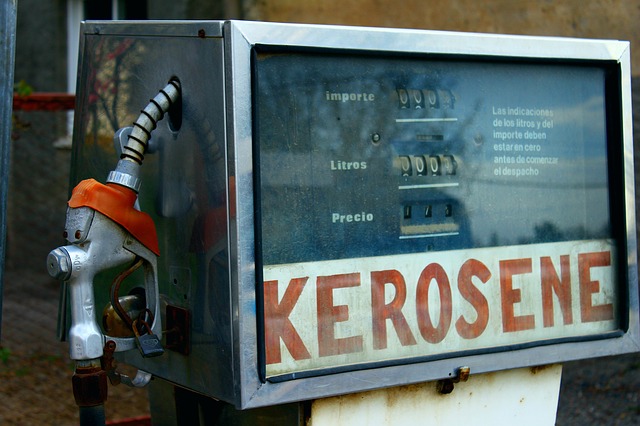
Residents of Jigawa State are not happy with the lingering scarcity of kerosene, which now goes for N350 per litre at the black market.
According to the News Agency of Nigeria (NAN), checks in Hadejia on Tuesday showed that most petrol stations had run out of supply of the product.
The commodity, the news agency said, is now only available in black market outlets where it is sold at N350 per litre, as against the N83 approved pump price.
Black-market operators were seen making brisk businesses due to high patronage occasioned by the scarcity of the products.
Some consumers who spoke to NAN said that the situation had exposed them to hardships.
Auwalu Abdu, a resident, said his family had experienced difficulties in sourcing the product.
Abdu noted that the situation had caused a heavy drain on his pocket, adding, “I now spend a lot on kerosene due to its acute scarcity”.
Another resident, Malam Sale Danladi, said that the exorbitant prices of kerosene had forced him to rely on firewood for cooking.
“I prefer firewood because it is cheaper than kerosene even though it is cumbersome to use,” Danladi said.
He appealed to the Federal Government to help the residents by making the product available.
Economy
AVA Capital Expands Investors’ Investment Opportunities With NGX Listing
By Dipo Olowookere
The range of investment opportunities available to investors in the nation’s capital market has been deepened with the listing of five billion ordinary shares of AVA Capital Plc on the Nigerian Exchange (NGX) Limited.
The local investment firm joined the country’s flagship stock exchange on Friday through listing by introduction of its equities at N7.50 per share, with a market capitalisation of N37.5 billion.
The listing marks a significant milestone in the company’s growth journey, reinforcing its commitment to sustainable growth, strong corporate governance and long-term value creation, while enhancing its visibility within Nigeria’s capital market.
The chief executive of AVA Capital, Mr Kayode Fadahunsi, described the admission of the organisation on the main board of the exchange as a defining moment in its evolution.
“Our admission to the main board of Nigerian Exchange is more than a listing; it is a public affirmation of the business we have built and the future we are committed to creating.
“We have established a resilient institution with a clear growth strategy, strong governance culture and an unwavering focus on creating sustainable value for our shareholders.
“Becoming a listed company deepens our accountability, broadens our visibility and positions us to seize new opportunities as we continue our growth journey,” he said.
On his part, the chief exchange of NGX Limited, Mr Jude Chiemeka, said the admission reflects the continued confidence of businesses in Nigeria’s capital market as a platform for sustainable growth.
“[The] listing reflects the confidence that forward-looking companies continue to place in the Nigerian capital market.
“By joining the main board of Nigerian Exchange, AVA Capital Plc is embracing the transparency, governance standards and market discipline that define public companies, while positioning itself to access a broader investor base and unlock long-term value.
“We are delighted to welcome AVA Capital Plc to the NGX family and look forward to supporting its continued growth,” he stated.
Economy
Oil Prices up on Renewed Middle East Risks
By Adedapo Adesanya
Oil prices were slightly up by 1 per cent on Friday after Iran said it had stopped two vessels seeking to exit the Strait of Hormuz, underscoring concerns over global energy supplies.
Brent futures gained $1.09 or 1.2 per cent to trade at $90.12 a barrel, while the US West Texas Intermediate (WTI) futures chalked up $1.08 or 1.3 per cent to settle at $84.67 a barrel. For July, Brent gained 24 per cent, and WTI rose 21 per cent.
Iran said four other tankers turned back after its forces intervened, although the Iranian reports could not be independently confirmed.
The war in Iran, which began on February 28, has sharply curtailed traffic through the Strait of Hormuz, a vital chokepoint that previously carried about a fifth of global crude oil and natural gas supplies, disrupting millions of barrels per day of Middle East output.
Iran has largely blocked shipping through the strait since the conflict began, while its Houthi allies in Yemen in July threatened vessels transiting the Bab el-Mandeb strait at the southern end of the Red Sea, jeopardising an alternative export route used by Saudi Arabia and other regional producers.
A drone strike that sparked fires on two gas vessels in Egypt’s Mediterranean port of Damietta also raised threats to shipping through the Suez Canal.
A body set up by Iran to manage the Strait of Hormuz said on Friday that crossings remained impossible due to “continued aggressive actions by U.S. military forces in the region.”
However, there were no reports of new US attacks on Iran overnight between Thursday and Friday after what was a sharp escalation in its war on Iran earlier in the week, with joint US-Saudi strikes on Iranian-allied forces in Iraq.
There are indications that this might go over the weekend after US President Donald Trump, in a statement to Fox News on Friday, said the war was going well.
He later said he believed a deal could still be reached with Iran, and Special Envoy Steve Witkoff, his son-in-law Jared Kushner and Secretary of State Marco Rubio are involved in talks.
Earlier in the week, the US Energy Information Administration (EIA) data showed commercial crude stocks last week fell to their lowest levels since 2018.
Oman has presented Iran with a plan backed by Gulf states to manage the Strait of Hormuz, including collecting voluntary fees for using it. This was initially rejected, but Reuters reported that talks with Oman over the waterway were continuing.
Economy
SEC Approves Coronation Infrastructure Fund Series II
By Aduragbemi Omiyale
The Series II of the Coronation Infrastructure Fund (CIF) has received the approval of the Securities and Exchange Commission (SEC).
This was confirmed by Coronation Asset Management, which is floating the investment tool, which attracted N8.79 billion from 33 investors across four investor categories during its Series I issuance.
Business Post gathered that the net proceeds from the Series II offer will be deployed to provide debt financing for infrastructure and infrastructure-related projects, companies and Special Purpose Vehicles in line with the fund’s investment objectives and policies.
Already, about N3.31 billion has been distributed in income to unit holders, reflecting its disciplined investment approach and ability to originate, structure, and manage infrastructure credit investments that deliver sustainable, risk-adjusted returns while preserving capital.
A signing ceremony was recently held at Coronation Plaza in Lagos to formally bring together the fund’s transaction parties, marking the completion of a critical regulatory milestone and paving the way for the opening of the Series II offer for subscription. The next phase will see the fund complete the remaining regulatory notification requirements ahead of the public offer.
“Today’s signing marks an important step towards the launch of the Series II offer. It reflects the strength of our partnerships, the confidence of our regulators and the disciplined approach we have taken in managing the fund since inception.
“Series I demonstrated strong demand for well-structured infrastructure investment opportunities that deliver attractive risk-adjusted returns alongside real economic impact.
“With Series II, we are building on that track record by connecting long-term capital with infrastructure projects that support Nigeria’s growth while creating lasting value for our investors,” the chief executive of Coronation Asset Management, Mr Aigbovbioise Aig-Imoukhuede, said.
Also commenting, the Head of the Coronation Infrastructure Fund, Mr Mayowa Ikotun, said, “Series II is designed to build on the strong foundation established by the inaugural issuance. The Fund will continue to target a diversified portfolio of infrastructure debt opportunities across telecommunications, transport, energy, utilities, social infrastructure and real estate, investing in projects with resilient cash flows and strong credit fundamentals.
“Our objective remains to provide investors with attractive long-term risk-adjusted returns while helping to bridge Nigeria’s infrastructure financing gap.”