
Economy
KPMG Identifies Inherent Errors, Inconsistencies, Others in Nigeria’s New Tax Laws


By Aduragbemi Omiyale
The Nigerian arm of global consultancy firm, KPMG, has highlighted some inherent errors, inconsistencies, gaps and omissions in the country’s new tax laws.
In a report on its website, analysed by Business Post, KPMG Nigeria charged the local authorities to address these issues to boost investor confidence.
It noted that while the new tax laws would result in increased revenue for the government, there is always the need to strike a delicate balance between revenue generation and sustainable growth.
“It is, therefore, critical that government review the gaps, omissions, inconsistencies and lacunae highlighted in this newsletter to ensure the attainment of the desired objectives. Government must also seek international cooperation and collaboration to facilitate the sharing of information, build capacity and capability of tax administration in the country,” it said.
Analysing an error in Section 3(b) and (c) of the Nigeria Tax Act (NTA), which dwells on the imposition of tax, the agency said the section specifies persons on whom taxes should be levied, including individuals, families, companies or enterprises, trustees, and an estate, but omits community, which is included in the definition of person under Section 201.
It recommended that, “If the intention is to impose tax on communities, this should be explicitly introduced in Section 3. Otherwise, the law should clearly state that communities are now exempt from tax.
It also pointed out that Section 6(2) of the NTA on Controlled Foreign Companies (CFC), the Act states that undistributed foreign profits are to be “construed as distributed” but also mandates that they be “included in the profits of the Nigerian company” (implying income tax at 30 per cent).
Though dividend distributed by a Nigerian company is deemed to be franked investment income, this does not appear to be the case with dividends distributed by foreign companies.
It thus appears that such dividends will be taxed at the income tax rate. Consequently, there will be differences in the treatment of dividends distributed by Nigerian companies and those distributed by foreign companies.
KPMG Nigeria advised the government to “modify the section by providing clarity on the treatment of foreign and local dividends.”
On Section 20(4) of the NTA focusing on deductions allowed, it states that expenses incurred in a currency other than the Naira may only be deducted to the extent of its Naira equivalent at the official exchange rate published by the Central Bank of Nigeria (CBN).
This implies that where a business buys forex at a rate that is higher than the official rate, such company cannot claim tax deduction for the difference in value between the official and the other rates.
The intention is to discourage speculative foreign exchange transactions and encourage the appreciation of the Naira. However, issues surrounding the accessibility of all forex needs due to supply problems have not been fully considered.
It recommended that, “We do not think that this condition is necessary at this time. With the current state of the economy, focus should be on improving liquidity and introducing stricter reporting requirements to track and monitor foreign exchange transactions.”
As for the next section, which dwells on deductions not allowed, it includes expenses on which VAT has not been charged. This means that such expenses will not be considered allowable tax deductions even when those expenses have been validly incurred for business purposes.
This implies that a company could be held accountable for any inaction or non-performance by its suppliers or service providers. While the defaulting service providers may eventually be required to pay the VAT during an audit or investigation, the company will have already been denied the ability to claim a deduction for the related expense.
It called for the removal of this section, saying “the only criteria should be that any expense that is wholly and exclusively incurred for business purposes should be allowable for tax purposes.”
Other sections it found errors in include Section 17(3)(c) of the NTA on taxation of non-resident persons, Section 27 of the NTA on the ascertainment of total profits of companies, Section 30 of the NTA on the ascertainment of chargeable income of an individual, Sections 39 and 40 of the NTA on computation of chargeable gains, Section 47 of the NTA on indirect transfer of ownership of companies or assets, Section 63(4) / 162(b) of the NTA on collective investment scheme, amongst others.




By Adedapo Adesanya
The Governor of the Central Bank of Nigeria, Mr Yemi Cardoso, has eased fears of any devaluation of the Naira anytime soon, saying the country’s ongoing monetary and foreign exchange reforms have restored confidence in the currency and strengthened the financial system.
Speaking while delivering a keynote address at the Annual Distinguished Alumni Lecture held in celebration of Founders’ Day of the St. Gregory’s College Old Boys Association in Lagos, the apex bank governor said, “These reforms have restored pride in our currency and strengthened confidence in our financial system.”
Mr Cardoso explained that the CBN remains focused on restoring price stability and bringing inflation down to single digits, noting that although the objective will take time to achieve, it remains central to the apex bank’s policy direction.
“Our goal remains to bring inflation down to single digits. This cannot happen overnight. External shocks will continue to occur, and global developments will always have some impact. But inflation is effectively a tax, and it disproportionately affects the most vulnerable members of society,” he said.
“That is why restoring price stability remains a central objective.”
He noted that the bank’s commitment to transparency and well-governed markets is evident in the reforms carried out in the foreign exchange market, including the elimination of the multiple exchange rate system that previously benefited only a few.
According to him, although some critics argue that the exchange rate appears higher today than it was before the reforms, the key difference lies in accessibility and transparency.
“Some critics argue that the exchange rate today appears higher than it was before the reforms. My response is simple: when the official rate was lower, how many people could actually access foreign exchange at that rate? The answer, in most cases, was very few,” he said.
“Today, the situation is fundamentally different. Foreign exchange is accessible through formal channels, and the system is far more transparent.”
He explained that many Nigerians travelling abroad can now use their naira cards directly instead of searching for foreign currency through informal channels, a development he said represents a major improvement compared to previous years when travellers struggled to access foreign exchange.
Mr Cardoso further revealed that the premium between the official and parallel markets has narrowed sharply from around 50 per cent in 2022 to less than 2 per cent on average in 2025, reflecting improved liquidity and efficiency in the FX market.

By Adedapo Adesanya
Four stocks weakened the NASD Over-the-Counter (OTC) Securities Exchange by 0.56 per cent on Thursday, March 12, making it the third consecutive loss this week.
The price losers were led by FrieslandCampina Wamco Nigeria Plc, which crumbled by N4.71 to N128.07 per share from N132.78 per share. Central Securities Clearing System (CSCS) Plc lost N1.98 to close at N78.02 per unit versus the previous day’s N80.00 per unit, First Trust Mortgage Bank Plc declined by 15 Kobo to N1.75 per share from N1.90 per share, and MRS Oil Plc crashed by 10 Kobo to settle at N210.00 per unit compared with the preceding session’s N210.10 per unit.
Consequently, the market capitalisation went down by N14.13 billion to N2.519 trillion from N2.533 trillion, and the NASD Unlisted Security Index (NSI) dipped by 23.61 points to 4,210.30 points from 4,233.91 points.
There were three price gainers yesterday, led by Okitipupa Plc, which gained N10.00 to N240.00 per share from N230.00 per share, IPWA Plc increased by 45 Kobo to N5.01 per unit from N4.56 per unit, and Afriland Properties Plc appreciated by 35 Kobo to N17.95 per share from N17.60 per share.
During the session, the value of securities surged by 197.4 per cent to N95.0 million from N31.9 million, the volume of securities grew by 185.8 per cent to 3.7 million units from 1.3 million units, and the number of deals improved by 44.4 per cent to 52 deals from 36 deals.
The most active stock by value (year-to-date) was CSCS Plc with 38.4 million units worth N2.4 billion, followed by Okitipupa Plc with 6.4 million units valued at N1.1 billion, and FrieslandCampina Wamco Nigeria Plc with 6.2 million units sold for N566.8 million.
The most traded stock by volume (year-to-date) was Resourcery Plc with 1.05 billion units traded for N408.7 million, trailed by Geo-Fluids Plc with 130.6 million units transacted for N503.8 million, and CSCS Plc with 38.4 million units worth N2.4 billion.
By Adedapo Adesanya
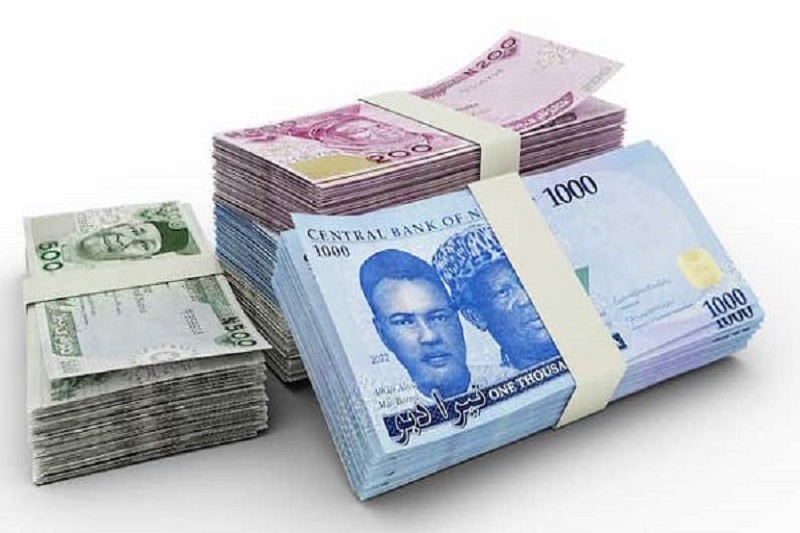
The Naira rallied against the United States Dollar by N4.68 or 0.34 per cent to trade at N1,371.51/$1 in the Nigerian Autonomous Foreign Exchange Market (NAFEX) on Thursday, March 12, compared with the N1,376.19/$1 it was traded on Wednesday.
The local currency also appreciated against the Pound Sterling in the same market window during the session by N10.67 to quote at N1,834.80/£1 versus midweek’s price of N1,845.47/£1, and strengthened against the Euro by N49.62 to finish at N1,581.89/€1, in contrast to the previous session’s N1,631.51/€1.
At the parallel market, the Naira also gained N10 against the Dollar yesterday to close at N1,410/$1 versus the preceding day’s rate of N1,420/$1, and gained N16 at the GTBank’s FX desk to settle at N1,391/$1 compared with the N1,407/$1 it was exchanged a day earlier.
Pressure further eased on the FX market as a result of inflows from foreign investors, exporters and non-bank corporates, among others.
With gross external reserves standing above $50 billion, the highest since 2009, analysts said the Naira has a positive outlook, amidst projections that the FX rate could rise to N1,300 per dollar in the first half of 2026.
However, external pressure threatens this, as increased demand for the US Dollar has strengthened globally due to the war triggered by the United States and Israel against Iran, which has been ongoing for two weeks.
A look at the digital currency market showed that prices extended a quiet stretch of consolidation that has kept the market largely unmoved by turbulence in global equities.
Amid geopolitical tensions in the Middle East and supply disruptions, crypto markets appear to be largely ignoring those pressures for now. Analysts noted that until a clear macro catalyst or wave of new capital arrives, the market appears content to consolidate gains rather than chase a breakout.
Cardano (ADA) appreciated by 6.0 per cent to $0.2743, Dogecoin (DOGE) grew by 4.9 per cent to $0.0966, Solana (SOL) added 4.6 per cent to sell for $88.99, Ethereum (ETH) rose by 4.3 per cent to $2,111.22, Ripple (XRP) jumped 3.9 per cent to $1.42, Bitcoin (BTC) expanded by 3.0 per cent to $71,546.01, Binance Coin (BNB) improved by 2.6 per cent to $661.08, and TRON (TRX) increased by 0.1 per cent to $0.2897, while the US Dollar Tether (USDT) and the US Dollar Coin (USDC) traded flat at $1.00 each.













-
 Feature/OPED6 years ago
Davos was Different this year
-
Travel/Tourism10 years ago
Lagos Seals Western Lodge Hotel In Ikorodu
-

 Showbiz3 years ago
Estranged Lover Releases Videos of Empress Njamah Bathing
-
 Banking8 years ago
Sort Codes of GTBank Branches in Nigeria
-

 Economy3 years ago
Subsidy Removal: CNG at N130 Per Litre Cheaper Than Petrol—IPMAN
-

 Banking3 years ago
Sort Codes of UBA Branches in Nigeria
-

 Banking3 years ago
First Bank Announces Planned Downtime
-

 Sports3 years ago
Highest Paid Nigerian Footballer – How Much Do Nigerian Footballers Earn