Economy
KPMG Sees 9% Drop in Household Consumption Spending in Q1’23
By Adedapo Adesanya
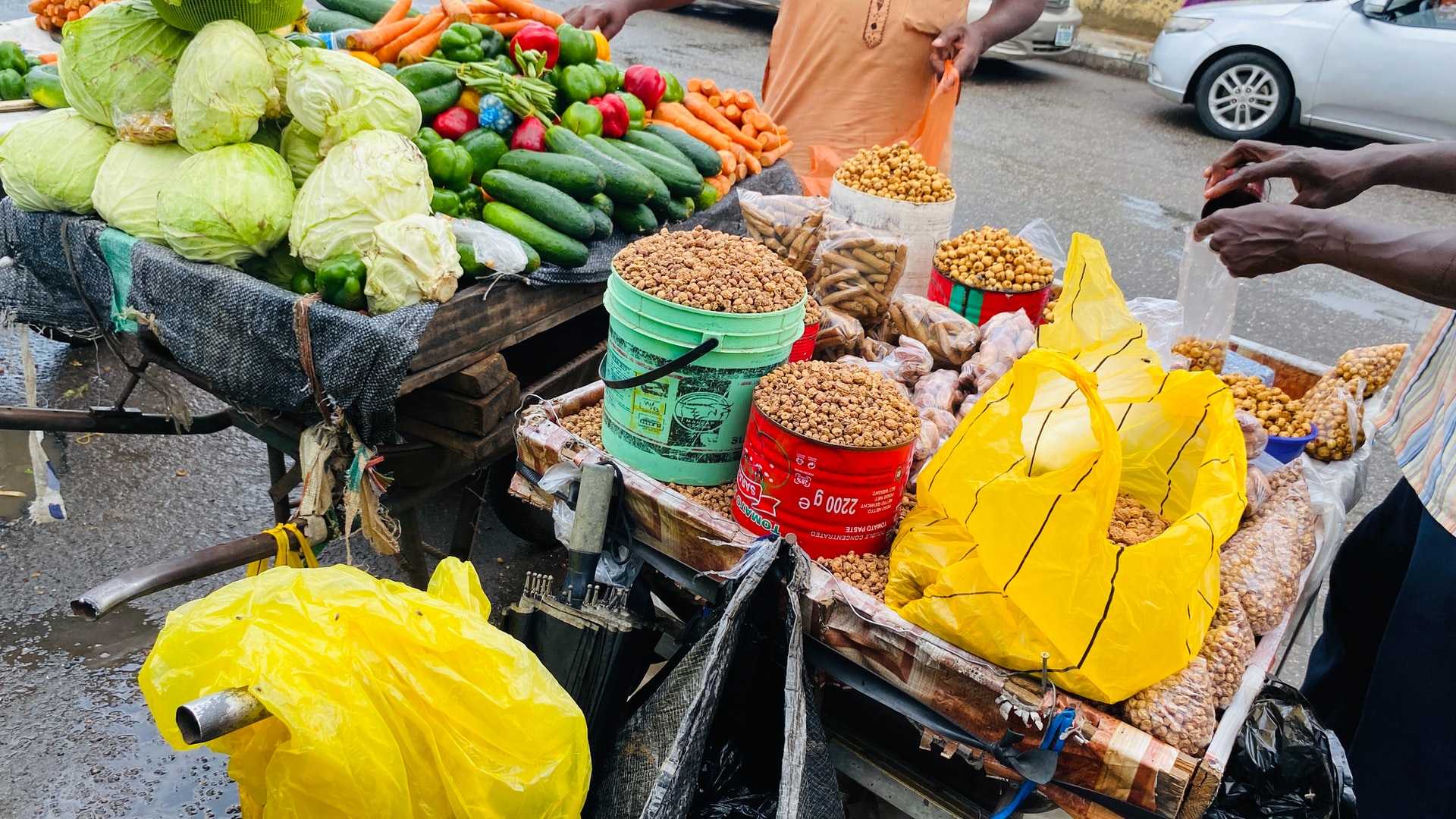
The first quarter of the year came with many challenges for businesses and households in Nigeria, who had to deal with a heavy cash crunch while trying to navigate already existing headwinds in the macroeconomic environment.
According to its Macroeconomic Snapshot, a top consultancy firm, KPMG, the squeeze in the formal and informal sectors impacted nominal household consumption spending by 9 per cent between January and March 2023.
“We are estimating a year-on-year contraction in nominal household consumption expenditure by 9 per cent in Q1 2023 following these challenges,” it said.
It noted that this is as businesses faced substantial challenges on both the demand and supply sides.
“On the demand side, the combination of higher taxes on goods and services, hyperinflation which averaged 21.9 per cent in Q1 2023, monetary policy targeting demand to control inflation, and the cash shortages and disruptions in the electronic payment channels following the naira redesign policy constrained consumer demand,” it said.
“On the supply side, high cost of financing with the CBN interest rate hikes, higher energy costs, transport and distribution costs, and higher input costs especially given FX unavailability and instability, have also increased costs substantially year on year.
“Purchaser Manager Indices covering Q1 2023 had also shown persistent declining trends with some levels lower than what was obtained during the COVID-19 pandemic when the economy contracted and eventually entered a recession,” it added.
KPMG maintained its earlier estimate of a N10-15 trillion drop in nominal GDP and a Q1 real GDP growth of between 1.5 per cent – 2.0 per cent, given that there will be slower consumer demand and reduced earnings for businesses and, at the same time, rising costs of their operations.
This will, however, be largely dependent on if the oil sector can reverse its 11-quarter-long contraction, warning that further contraction from the oil sector may result in Q1 2023 real GDP growth of -0.23 per cent – 1.18 per cent.
Economy
Crude Oil Prices Fall as Fears of US-Iran Conflict Ease
By Adedapo Adesanya
Crude oil prices fell on Friday as traders gained confidence that renewed conflict between the United States and Iran was growing less likely.
The price of Brent crude futures settled at $93.09 a barrel, down $1.94 or 2.04 per cent, and the US West Texas Intermediate (WTI) crude futures finished at $90.54 a barrel, down $2.50 or 2.69 per cent.
President Donald Trump said the US will win the conflict with Iran either “militarily or on paper,” referring to the fitful negotiations with the Iranian government, and he suggested he could meet with Iran’s reclusive supreme leader “if it was to make a deal.”
He also said he had no desire to meet with Iranian Supreme Leader Mojtaba Khamenei, who has not been seen since the outbreak of violence on February 28 and was reportedly seriously injured in US-Israeli air strikes. He, however, added that if the two sides reached a deal, it was possible the two leaders would meet.
Meanwhile, Hezbollah leader Naim Qassem rejected on Thursday a US-brokered agreement between Israel and the Lebanese government to halt the fighting. Iran has made a ceasefire in Lebanon a condition for any peace deal with America.
Oman said operations at Mina al Fahal port were unaffected after it was reported that oil loading had been suspended following an explosion near its mooring berths. Oman exports 800,000 to 900,000 barrels per day of crude from the terminal.
As the US-Iran war peace talks dragged on, traffic in the Strait of Hormuz, where a fifth of the world’s oil passes, remained limited. Gains have been capped by oil inventories lasting longer than expected, rerouted exports and falling demand.
The Organisation of the Petroleum Exporting Countries and its allies (OPEC) is sticking to its oil demand growth forecast of 1.2 million barrels per day for this year, its Secretary General Haitham Al Ghais said, despite the Middle East conflict and closure of the Strait of Hormuz.
OPEC crude output fell last month, hitting its lowest level in decades as the US blockade of Iran and disruption in the Persian Gulf continued to curb production.
Output from its 11 current members dropped by 1.22 million barrels per day to 16.33 million a day in May, with Iran accounting for more than half of the decline, according to a Bloomberg survey. That was the lowest in at least 37 years. The data excludes the United Arab Emirates, which left the organisation last month after six decades.
Key members of the OPEC+ are expected to nudge up targets by a modest 188,000 barrels again in July during a video conference on Sunday. The session is one of four online meetings OPEC and its allies are due to hold that day.
Economy
OPEC Crude Output Falls to 37-Year Low Amid Iran Disruptions
By Adedapo Adesanya
Crude production under the collective Organisation of the Petroleum Exporting Countries (OPEC ) fell in May to its lowest level in at least 37 years as the blockade of Iran by the United States and disruptions in the Persian Gulf, continued to limit output.
According to a Bloomberg survey released on Friday, output from the organisation’s 11 current members, including Nigeria, dropped by 1.22 million barrels per day to 16.33 million barrels per day last month.
Iran accounted for more than half of the decline. The data excludes the United Arab Emirates (UAE), which departed the cartel last month after six decades of membership.
War between a US-Israeli alliance and Iran has reduced oil supplies from the Middle East, largely closing the Strait of Hormuz waterway. Saudi Arabia, Iraq, the UAE and Kuwait have been forced to cut crude production. Iranian shipments face additional pressure following a US blockade of its ports imposed in mid-April.
Iranian output fell by 710,000 barrels per day to a five-year low of 2.34 million barrels per day in May, the survey showed. Central Command reported that US forces have redirected 127 commercial vessels to enforce the blockade of all maritime traffic entering and exiting Iranian ports.
Kuwait recorded the second-largest decline last month, with production falling by 310,000 barrels per day to 490,000 barrels per day, less than one-fifth of pre-war levels. Saudi Arabia, the group’s leader, saw output decrease by 240,000 barrels per day to 6.57 million barrels per day.
The production reductions have not prevented OPEC and its allies from raising quotas over recent months, continuing a year-long process of restoring output halted several years ago.
This comes ahead of a meeting scheduled to be held on Sunday, June 7, where a sub-group of seven members is expected to increase targets by 188,000 barrels again in July. The session is one of four online meetings OPEC and its partners plan to hold that day.
Delegates indicated the alliance has plans for two additional monthly quota increases in August and September. UAE output rose by 300,000 barrels per day to 2.44 million barrels per day in May, according to the survey.
Economy
Debt Repayments: FG Overshoots Budget Allocation by 18%
By Aduragbemi Omiyale
The 2025 third quarter Budget Implementation Report from the Budget Office of the Federation has shown that the federal government exceeded the funds allocation for repayment of debts for the first nine months of the fiscal year by about 18 per cent.
In a report by Punch, the sum of N10.74 trillion was budgeted for debt servicing between January and September 2025, but the government used N12.63 trillion for the purpose, N1.90 trillion or 17.65 per cent more than the allocation for the year.
The funds were spent on domestic debts, foreign debts and sinking fund by the central government in nine months.
Business Post reports that for the whole year, the amount approved by the National Assembly and signed by President Bola Tinubu for debt repayments was N14.31 trillion.
Looking at the nine-month figures, domestic debt service gulped N6.23 trillion, exceeding its N5.39 trillion provision, while foreign debt service was N6.30 trillion versus the budget provision of N5.06 trillion.
According to the report, the figures indicated that 67.2 per cent of the federal government’s retained revenue of N18.63 trillion was spent on debt service in the first nine months of 2025. When the sinking fund is included, debt-related payments consumed about 67.8 per cent of revenue.
It was also observed that aggregate federal government revenue underperformed the budget by N12.03 trillion or 39.24 per cent, as actual revenue of N18.63 trillion fell short of the N30.67 trillion projected for the first three quarters.
In the third quarter alone, the government generated N7.70 trillion versus the quarterly target of N10.22 trillion as a result of persistent oil revenue shortfalls, despite stronger non-oil collections.
The debt burden also crowded out capital spending, as total capital expenditure was N3.10 trillion in the first nine months compared with the N17.58 trillion budgeted for the period, indicating that actual debt-related payments were more than four times capital expenditure.
-
Feature/OPED6 years agoDavos was Different this year
-
Travel/Tourism10 years ago
Lagos Seals Western Lodge Hotel In Ikorodu
-
Showbiz3 years agoEstranged Lover Releases Videos of Empress Njamah Bathing
-
Banking8 years agoSort Codes of GTBank Branches in Nigeria
-
Economy3 years agoSubsidy Removal: CNG at N130 Per Litre Cheaper Than Petrol—IPMAN
-
Banking3 years agoSort Codes of UBA Branches in Nigeria
-
Banking3 years agoFirst Bank Announces Planned Downtime
-
Sports3 years agoHighest Paid Nigerian Footballer – How Much Do Nigerian Footballers Earn