Connect with us

Economy

Lafarge Africa’s 2025 Nine-Month Net Profit Surges 246% to N207.8bn

Published

on

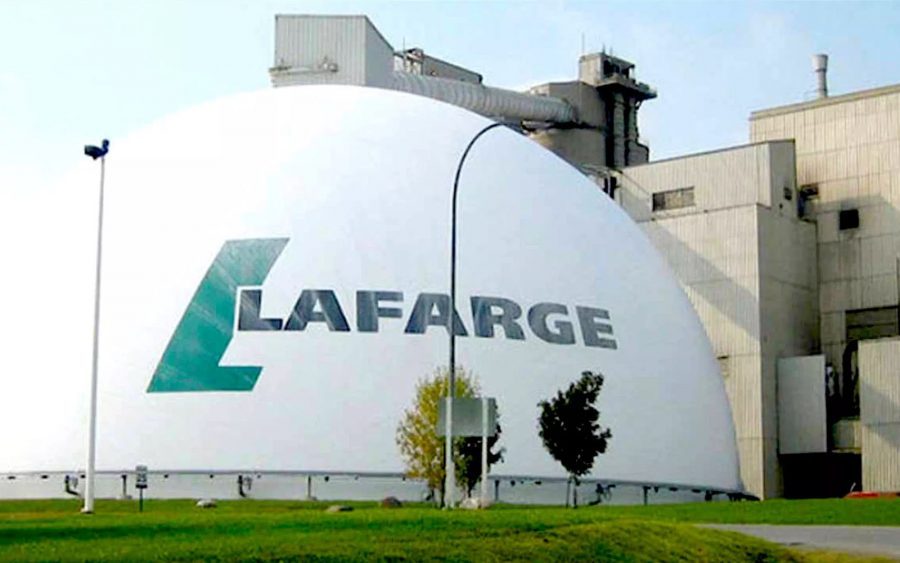
Lafarge Africa Substainable Practices

By Dipo Olowookere

One of the leading cement makers in Nigeria, Lafarge Africa Plc, impressed investors with an outstanding performance in the first nine months of 2025.

The financial results of the cement manufacturers filed to the Nigerian Exchange (NGX) Limited indicated that the company grew its net sales in the period under review by 63 per cent to N780.5 billion from the N479.5 billion achieved in the same period of 2024, driven by uptick in volumes and improved plant reliability.

The decision of Lafarge Africa to launch Nigeria’s first low-carbon readymix concrete known as ECOCrete in the third quarter of the year was a gamechanger.

The latest building solution from the firm provides sustainable building solutions in Nigeria. It was formulated to deliver a minimum of 20 per cent reduction in carbon emissions while maintaining uncompromising strength, quality, and performance

The ECOCrete launch followed from the Q2 launch of ECOPlanet in the Western market, accounting for over 50 per cent of total cement sales in the West in Q3 of 2025.

In the period under consideration, Lafarge Africa grew its operating profit by 129 per cent to N298.4 billion from N130.1 billion as a result of strong topline growth and sustained operational efficiency gains.

With volume growth and operational efficiency gains, the cement miller improved its post-tax profit by 246 per cent to N207.8 billion from N60.1 billion in the same period of last year, as the earnings per share (EPS) jumped by 246 per cent to N12.90 from N3.73.

“Building on the performance from previous quarters, Q3 results showcase our cost discipline, strategic market positioning, unwavering commitment to value creation, and strong operational efficiency – demonstrated by a +7 per cent YoY improvement in capacity utilization.

“We ended Q3 with net sales up 43 per cent, operating profit up 107 per cent, and profit after tax of N75 billion.

“We closed 9M 2025 with net sales and operating profit up 63 per cent and 129 per cent, respectively. Our 9M 2025 performance reaffirms our resilience, underpinned by sustained volume growth, operational excellence, innovative product offerings, and agile response to market opportunities,” the chief executive of Lafarge Africa, Mr Lolu Alade-Akinyemi, stated.

“As we look forward, we remain attentive to the dynamic macroeconomic environment, and we are confident that our resilience and strategic focus position us to seize emerging opportunities, drive sustainable growth, and deliver lasting value,” he added.


Economy

Customs Street Gains 1.48% as Year-to-Date Return Hits 43.20%

Published

on

Customs Street Nigerian Stock Exchange

By Dipo Olowookere

The year-to-date return of the Nigerian Exchange (NGX) Limited stretched to 43.20 per cent after a 1.48 per cent rise on Thursday.

Demand pressure on the consumer goods, banking and industrial goods stocks contributed to the surge recorded during the session.

Data showed that the consumer goods counter expanded by 4.67 per cent, the banking index rose by 1.53 per cent, and the industrial goods segment improved by 1.03 per cent. They offset the 0.91 per cent loss suffered by the insurance space and the 0.06 per cent cut posted by the energy industry.

When the closing gong was struck, the All-Share Index (ASI) of Customs Street increased by 3,251.48 points to 222,837.68 points from 219,586.20 points, and the market capitalisation moved up by N2.093 trillion to N143.477 trillion from N141.384 trillion.

The duo of Unilever Nigeria and UAC Nigeria led the advancers’ log after growing by 10.00 per cent each to sell for N121.00 and N133.10, respectively. Trans-Nationwide Express jumped 9.97 per cent to N8.71, Tantalizers appreciated by 9.80 per cent to N3.81, and Dangote Sugar expanded by 9.78 per cent to N73.50.

On the flip side, McNichols lost 9.93 per cent to close at N6.44, Multiverse depreciated by 9.85 per cent to N23.35, Coronation Insurance retreated by 9.26 per cent to N2.45, Abbey Mortgage Bank moderated by 9.24 per cent to N5.40, and Japaul slipped by 5.94 per cent to N3.01.

Business Post reports that there were 35 price gainers and 37 price losers during the session, representing a negative market breadth index and weak investor sentiment.

Access Holdings was the busiest equity for the day with 39.5 million units worth N1.3 billion, UBA traded 37.5 million units valued at N2.0 billion, Zenith Bank exchanged 36.3 million units for N4.8 billion, Fidelity Bank sold 32.1 million units valued at N700.8 million, and GTCO transacted 27.6 million units worth N3.6 billion.

At the close of transactions, investors bought and sold 667.9 million units valued at N38.1 billion in 53,062 deals compared with the 683.7 million units worth N36.2 billion traded in 51,694 deals at midweek.

This showed that the trading volume shrank by 2.28 per cent, and the trading value and number of deals soared by 5.25 per cent and 2.65 per cent apiece.

Continue Reading

Economy

Dangote Refinery Takes 1.1 billion Litres of Aviation Fuel to Europe

Published

on

Modular Refinery for Aviation Fuel

By Modupe Gbadeyanka

About 1.1 billion litres of aviation fuel have been exported to Europe by the Dangote Petroleum Refinery and Petrochemicals after supplying over 95 per cent of the volume needed by airlines operating in Nigeria.

This development was confirmed by the spokesperson of the Airlines Operators of Nigeria (AON), Mr Obiora Okonkwo, during a television interview.

It was gathered that the volume of the petroleum product taken out of the country by the Lagos-based private refinery was between March and April 20.

“It is a matter of fact that over 95 per cent of aviation fuel supplied across the country comes from the Dangote refinery. To airline operators in Nigeria, Dangote is not just a refinery; it is a game changer and, indeed, a lifesaver,” Mr Okonkwo said.

He noted that despite the refinery’s consistent supply, airlines continue to face severe operational strain due to escalating Jet A1 prices, which he attributed to sharp practices within the downstream distribution chain.

According to him, some fuel marketers are allegedly creating artificial scarcity in spite of available supply from the refinery, leading to disproportionate price increases. He disclosed that airline operators have recorded Jet A1 price hikes of up to 300 per cent since the onset of the Middle East crisis.

“We consider this exploitation. The refinery has not indicated any shortage, yet we are witnessing artificial scarcity and unjustifiable price increases. What airlines pay does not reflect depot prices,” he said, suggesting the presence of racketeering within the market.

Echoing these concerns after a closed‑door meeting between AON and the federal government, the chief executive of Air Peace, Mr Allen Onyema, described the situation as deeply troubling, particularly given that the Dangote refinery sells its products at comparatively lower rates.

“The truth is that marketers must be called to account. How do prices rise by as much as 300 per cent when Dangote’s supply remains the cheapest and some marketers source directly from the refinery?” Mr Onyema asked. “So, why the astronomical increase?”

Meanwhile, the Dangote Refinery continues to expand its footprint in the international aviation fuel market. Industry data indicate that the facility exported approximately 876,000 metric tonnes of jet fuel to Europe within the period under review—about 456,000 tonnes in March and an additional 420,000 tonnes by April 20.

These export volumes underscore the refinery’s growing capacity and improved logistics, further reinforcing Nigeria’s emerging role in the global downstream oil and gas market, even as it strengthens domestic energy security.

Continue Reading

Economy

Oyedele Rules Out Policy Reversals Amid Reform Push

Published

on

Taiwo Oyedele

By Adedapo Adesanya

The new Minister of Finance, Mr Taiwo Oyedele, has said the federal government will stay the course on economic reforms, declaring that policy reversals will not define the current phase of the country’s economic management.

The Minister stated this while speaking at the launch of the Nigerian Economic Summit Group Private Sector Outlook 2026 in Lagos on Thursday, according to a statement issued by the Director of Information in the Ministry of Finance, Mr Efe Ovuakporie.

Mr Oyedele, who gave the assurance to investors at the event, said the administration was shifting from stabilisation to measurable growth, where reforms will be judged by outcomes rather than intent.

His comments came barely 48 hours after he assumed office, following the exit of Mr Wale Edun from the Federal Executive Council (FEC) over health reasons.

“We are not looking back,” Mr Oyedele said, stressing that consistency in policy direction remains critical to investor confidence.

He warned that mixed signals or abrupt reversals could stall progress, noting that “businesses need to know that today’s decisions will still hold tomorrow.”

While pointing to early signs of macroeconomic stabilisation, including a more aligned exchange rate and improved revenue performance, the minister said these gains must translate into tangible outcomes such as job creation, productivity growth and better living standards.

He identified four priorities for driving investment in the next phase: policy consistency, predictability across fiscal and regulatory frameworks, reduction in the cost of doing business, and improved access to capital.

On financing, Mr Oyedele said the government is working to expand credit across the economy, from consumer lending to industrial financing, with support from institutions such as the Bank of Industry, to stimulate growth and unlock private sector participation.

He added that Nigeria must target stronger real GDP per capita growth to make a meaningful impact on poverty, noting that modest growth figures would not be sufficient given the country’s population dynamics.

The minister further described the current stage of reforms as decisive, where success will depend on execution. “Reforms on their own do not create growth. We need investment at scale,” he said, adding that investors respond to stable and predictable environments, not policy announcements.

In the area of productivity, Mr Oyedele said Nigeria must move beyond consumption-driven expansion and focus on improving output and competitiveness in key sectors, including agriculture, manufacturing, energy and the digital economy.

He also called for deeper collaboration between the government and the private sector, maintaining that economic growth cannot be delivered by public policy alone.

As the country enters what he termed a consolidation phase, Mr Oyedele said the government would continue to deepen reforms, strengthen public financial management and improve coordination across all tiers of government.

He, however, acknowledged risks, including reform fatigue, inflationary pressures from global uncertainties, and political tensions ahead of the election cycle, but maintained that these challenges are surmountable with discipline and cooperation.

“Our task now is execution,” Mr Oyedele said, adding that “This phase demands focus, consistency and accountability. That is the direction we are pursuing.”

Continue Reading

Trending