Economy
Lagos Empowers 4000 SMEs to Boost Economy
By Dipo Olowookere
No fewer than 4000 small and medium scale businesses have benefited from the N25 billion Employment Trust Fund (ETF) set up by the administration of Governor Akinwunmi Ambode of Lagos State in 2015.
This, according to Mr Ambode, was part of his efforts to boost the economy of the state and turn small enterprises to bigger organisations.
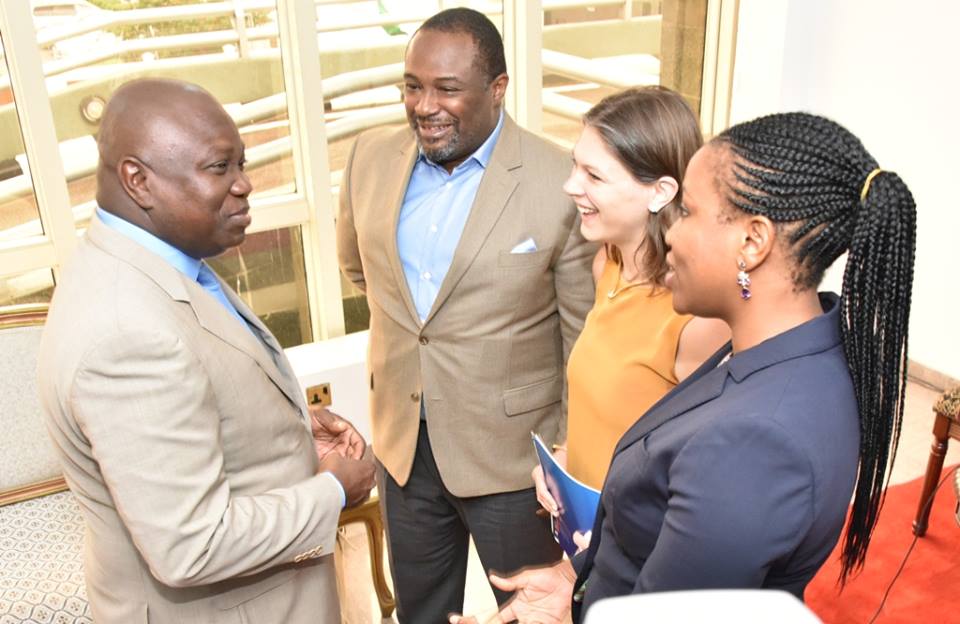
Mr Ambode, while receiving a delegation from Legatum Center for Development and Entrepreneurship, Massachusetts Institute of Technology (MIT) on a courtesy visit at the Lagos House in Ikeja, said deliberate efforts have been made by his administration to aid businesses and encourage budding entrepreneurs in the state.
Alluding to the fact that the State boasts of a burgeoning population of youths, the Governor said that driving entrepreneurship growth was a sure way to engage the youths meaningfully to enable them contribute their quota to the growth of the economy.
“There is no way under this economic recession that we have found ourselves that we can actually employ all the people under that age bracket. So the best thing is to create a framework that would allow them to dissipate their energy and creativity into the things that they would love to do.
“That’s why we set up the Employment Trust Fund with a budget of N25billion to be able to touch those younger ones that would not necessarily have the capital to recreate their skills and so far so good in the last two years we have done almost about 4000 entrepreneurs and we are doing more,” he said.
Welcoming the partnership prospects with MIT, Governor Ambode said he was excited that the Legatum Center had finally discovered the importance of the African continent as a key part of the map to driving innovation as well as entrepreneurship and Lagos as one of its major city partners.
Besides, the Governor said that the setting up of the Ministry of Wealth Creation and Employment was in consonance with the ideals of the Legatum Center, assuring that his administration would do all it can to sustain the partnership beyond entrepreneurship.
“I am committing the State Government that we would continue to support this, we would make sure that we would support this. I am excited that in the next two days, you would be finding new entrepreneurs that can come into this enterprise bracket. We would also like to support in any way that we can promote these younger ones.
“I am happy to see the CEO of Wecyclers, Mrs Billkiss Abiola here; recycling is something that is dear to my heart, even before becoming Governor, I visited the place and I can tell you that I was excited about the skill set brought to bear. We’ve supported a whole lot of entrepreneurs also and we would continue to do that,” the Governor said.
Earlier, in her remarks, Executive Director, MIT, Mrs Georgina Flatter said the team was in Lagos to liaise with entrepreneurs in the State and build sustainable partnerships going forward.
She said the MIT team had spent the last few days touring eco systems and visiting entrepreneurs and ventures across Lagos, describing the experience so far as most inspiring.
“We visited Billlkiss’s recycling site yesterday and saw the amazing job that she’s been doing in the city and how she is bringing huge value to the eco system and this is why we are here, to understand your entrepreneurs and see how we can build partnerships and strengthen this partnership with your entrepreneurs through seeing the great work that people are doing.
“We can start to understand what role we can play to support them. I also like to thank you for the service that you are providing, we can see the good work that this government is doing to support the entrepreneurs,” Mrs Flatter said.
Economy
Nigeria Sustains OPEC Quota Compliance, Expands Production Capacity
By Adedapo Adesanya
The Minister of State for Petroleum Resources (Oil), Mr Heineken Lokpobiri, says Nigeria has continued to maintain crude oil production within its Organisation of the Petroleum Exporting Countries (OPEC) quota while simultaneously expanding its production capacity.
Mr Lokpobiri disclosed this after participating as head of the Nigerian delegation at the 41st OPEC and non-OPEC Ministerial Meeting, the 66th Joint Ministerial Monitoring Committee (JMMC) meeting, and the 193rd OPEC Conference.
According to the minister, participating countries reaffirmed existing crude oil production levels under the Declaration of Cooperation (DoC) framework, which will remain in force until December 31, 2026, as agreed at the 38th OPEC and non-OPEC Ministerial Meeting.
According to a statement on his official X handle, the meetings focused on sustaining market stability, transparency and long-term growth in the global energy industry.
“During these engagements, we reaffirmed the overall crude oil production levels for OPEC and non-OPEC Participating Countries under the Declaration of Cooperation (DoC), as agreed at the 38th OPEC and non-OPEC Ministerial Meeting, with the framework remaining in place until 31 December 2026,” Mr Lokpobiri stated.
The minister noted that member countries also reviewed progress on the Maximum Sustainable Capacity (MSC) assessment, which will serve as the benchmark for determining future production baselines from 2027.
“We also noted the importance of completing the Maximum Sustainable Capacity (MSC) assessment for all DoC countries, which will serve as the reference point for determining production baselines from 2027,” he said.
Mr Lokpobiri explained that the discussions underscored the collective commitment of oil-producing nations to maintaining a balanced market while ensuring sustainable long-term investments in the energy sector.
“These deliberations reflect our shared commitment to ensuring market stability, transparency, and long-term sustainability within the global energy sector,” he added.
For Nigeria, however, the minister said the more significant development was the country’s ability to comply with its OPEC obligations while strengthening production capabilities through ongoing reforms and investment inflows.
“For Nigeria, it is particularly noteworthy that we have consistently maintained production within our OPEC quota while simultaneously strengthening our capacity to produce more,” he stated.
He said the strategy places Nigeria in a stronger position to respond to future increases in demand without compromising market stability or national economic objectives.
“This balanced approach positions us to respond effectively to future opportunities while safeguarding the best economic interests of our people and supporting national development objectives,” Mr Lokpobiri said.
Economy
Crypto Derivatives Exchange in Nigeria: 2026 Guide
Nigeria’s crypto regulatory environment keeps shifting. Traders looking for the best crypto derivatives exchange in Nigeria are still figuring out how to navigate evolving frameworks while accessing global derivatives platforms — and the choice comes down to a handful of practical concerns: how painful is onboarding, what contracts are available, how high does leverage go, what do fees actually look like at your volume tier, and can you practice before putting real money at risk?
Choosing a Crypto Derivatives Exchange in Nigeria
A crypto derivatives exchange in Nigeria gives traders access to perpetual futures — instruments that let you speculate on price movements with leverage without holding the underlying asset. Perpetual futures don’t expire and rely on funding rate mechanisms to keep prices anchored to spot. Margin can be denominated in USDT, USDC, or the base coin.
Several factors carry extra weight for traders based in Nigeria. KYC processes can drag on or hit dead ends depending on your region, so low-barrier onboarding matters a lot. Fiat on-ramp variety, competitive fees, demo environments for learning leverage mechanics, and transparent reserve data — these are what separate serious platforms from thin wrappers. BYDFi Nigeria— the regional arm of a global exchange founded in 2020 that has been operating for over 6 years — addresses several of these needs in ways worth examining.
Six Years Running, Plus a Premier League Deal
The exchange launched in 2020 and now serves more than 1,000,000 registered users across 190+ countries and regions. Six years of continuous operation gives it a track record that newer platforms simply can’t replicate.
One credibility signal that lands particularly well in Nigeria: BYDFi became the Official Crypto Exchange Partner of Premier League club Newcastle United through a multi-year deal announced in August 2025. The Premier League has enormous Nigerian viewership, so the partnership signals brand visibility and commercial commitment. The platform is registered as a Money Services Business with FinCEN in the U.S. and holds membership in South Korea’s CODE VASP Alliance.
How Nigeria’s Regulatory Reality Shapes Platform Choice
Banking restrictions and verification bottlenecks have historically been the biggest headache for Nigerian crypto traders. For anyone evaluating a crypto derivatives exchange in Nigeria, the onboarding experience matters enormously. The exchange’s approach here is notable: users can sign up with just an email address and start trading without immediate identity verification, subject to tier-based limits.
That low-friction entry is a genuine practical edge. Optional KYC unlocks higher withdrawal limits and features like P2P trading, so anyone planning to move significant capital can verify at their own pace.
Perpetual Futures, Copy Trading, and Leverage Tools
Nigeria’s derivatives trading community has grown fast, fueled by traders who want leveraged exposure to BTC, ETH, and altcoins without the capital demands of spot accumulation. Contract infrastructure matters enormously here.
In December 2024, the platform upgraded its perpetuals system with three features experienced derivatives traders will recognise as significant: opening new positions without unrealized profits, bi-directional long/short hedging, and shared funds in full-margin mode to reduce liquidation risk. The hedging capability — holding simultaneous long and short positions on the same contract — is a tool commonly used during volatile sessions to manage directional exposure without closing positions.
Fees sit at maker 0.02% / taker 0.06% at the base VIP 0 tier. A 7-tier VIP program (VIP 0–6) offers up to 60% futures fee discount based on 30-day trading volume or asset balance.
| Feature | Details |
| Contract types | USDT-M, USDC-M, COIN-M perpetual futures |
| Leverage range | 1x – 200x |
| Base fees (VIP 0) | Maker 0.02% / Taker 0.06% |
| Max fee discount | Up to 60% (VIP 6) |
| Hedging | Bi-directional long/short on same contract |
| Copy Trading | Live since Jan 2025; starts at $10 |
Copy Trading went live in January 2025, followed by Perpetual Smart Copy Trading in August 2025. Users can automatically follow professional traders with proportional order sizing and isolated positions. Entry starts at just $10, with flexible margin options and multi-asset contract support. On the automation side, the platform offers four trading bots — Spot DCA, Spot Grid, Futures Grid, and Spot Martingale — plus a Bot Marketplace for community-created strategies.
Demo Trading: Learning Leverage at Zero Cost
Probably the most underappreciated feature for anyone entering the derivatives space. Setting up BYDFi’s demo trading account takes under two minutes. It comes preloaded with 50,000 USDT and mirrors real market conditions, supporting both USDT-M and COIN-M perpetual contracts.
For Nigerian traders new to futures, it’s a practical way to understand how margin calls and liquidation actually work before converting naira into risk capital. Not a luxury — a necessity. Any crypto derivatives exchange in Nigeria worth considering should offer this kind of risk-free practice environment.
What to Watch Going Forward
Nigeria’s crypto regulatory picture is still developing, and how global exchanges adapt to local compliance requirements will determine which platforms remain accessible. The tiered access model works today, but the broader industry trajectory points toward tighter verification standards.
The more concrete metric to track: whether the platform keeps expanding its contract types and risk-management tools.
Economy
Nigerian Stocks Chalk up 0.33% on Positive Market Breadth Index
By Dipo Olowookere
Renewed buying interest raised the Nigerian Exchange (NGX) Limited by 0.33 per cent on Monday, with gains recorded in almost all the major sectors of the bourse at the close of transactions.
According to data harvested by Business Post, the insurance counter expanded by 0.62 per cent, the banking index grew by 0.59 per cent, the energy sector appreciated by 0.40 per cent, and the consumer goods space improved by 0.10 per cent, while the industrial goods segment closed flat.
When the closing gong was struck by 4 pm to signify the close of business on Customs Street, the All-Share Index (ASI) was up by 1,113.76 points to 243,707.07 points from 242,593.31 points, and the market capitalisation chalked up N714 billion to close at N156.308 trillion compared with the previous session’s N155.594 trillion.
Interest in Nigerian stocks yesterday resulted in a rise in the activity level, with the trading volume soaring by 17.86 per cent to 717.2 million units from 608.5 million units. The trading value advanced by 77.19 per cent to N56.7 billion from N32.0 billion, and the number of deals surged by 36.22 per cent to 73,321 deals from 53,826 deals.
FCMB was the busiest stock during the trading day, with a turnover of 152.3 million units worth N1.8 billion, Premier Paints exchanged 61.0 million units valued at N135.3 million, Dangote Cement traded 34.7 million units for N29.7 billion, The Initiates sold 32.8 million units worth N1.0 billion, and Jaiz Bank transacted 32.6 million units valued at N293.3 million.
Yesterday, the market breadth index was positive after the exchange closed with 37 price gainers and 28 price losers, representing strong investor sentiment.
International Energy Insurance gained 9.92 per cent to settle at N7.98, the Initiates added 9.91 per cent to its share price to quote at N32.15, ABC Transport garnered 9.68 per cent to trade at N6.80, Abbey Mortgage Bank grew by 9.63 per cent to close at N10.25, and Linkage Assurance soared by 9.36 per cent to N1.87.
On the flip side, Fidson Healthcare gave up 10.00 per cent to finish at N122.85, Academy Press crashed by 9.70 per cent to N7.45, RT Briscoe depreciated by 9.43 per cent to N13.45, SUNU Assurances tumbled by 9.37 per cent to N4.06, and Learn Africa decreased by 8.70 per cent to N10.50.
-
Feature/OPED6 years agoDavos was Different this year
-
Travel/Tourism10 years ago
Lagos Seals Western Lodge Hotel In Ikorodu
-
Showbiz3 years agoEstranged Lover Releases Videos of Empress Njamah Bathing
-
Banking8 years agoSort Codes of GTBank Branches in Nigeria
-
Economy3 years agoSubsidy Removal: CNG at N130 Per Litre Cheaper Than Petrol—IPMAN
-
Banking3 years agoSort Codes of UBA Branches in Nigeria
-
Banking3 years agoFirst Bank Announces Planned Downtime
-
Sports3 years agoHighest Paid Nigerian Footballer – How Much Do Nigerian Footballers Earn