
Economy
Lagos Targets Investment Opportunities in Waste Water Management

By Modupe Gbadeyanka
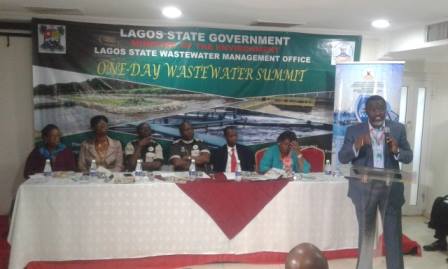
Governor Akinwunmi Ambode of Lagos State has disclosed that his administration was targeting the various business opportunities in waste water management.
According to him, efforts would be made to overcome the underlying challenges confronting the sector as the state government continue to thrive hard to achieve its Smart City vision.
Mr Ambode said his administration had keyed into requires global best practices in waste water management through the use of modern methods to collect, transport and treat waste water to acceptable standards prior to reuse or discharge into the environment.
Governor Ambode, who was represented at the Lagos State Wastewater Summit held at Ikeja, Lagos by the Permanent Secretary, Ministry of the Environment, Mr Abiodun Bamgboye, added that the summit provides a platform for stakeholders in the waste water sector to examine existing frameworks, identify limiting factors, proffer sustainable solutions and chart a new vision for the sector.
He, however, called on investors and practitioners in the wastewater sector to collaborate and partner with the government to ensure that wastewater management in the state is at par with global practices.
“These practices are further sustained by a partnership with the private sector for the financing, construction, operation and maintenance of wastewater treatment infrastructure” he stated.
The Governor also reiterated that “as a government that is committed to a cleaner and sustainable environment and improved health of the people, we are committed to providing necessary support for investors and practitioners in the sector”.
He maintained that the current State of wastewater management in the state indicates that the huge potential in the sector remains untapped, adding that the multi-billion naira potential in the sector needs to be properly harnessed.
Earlier, in his address, Commissioner for Environment, Mr Samuel Babatunde Adejare, represented by the General Manager, Lagos State Parks and Gardens Agency, Mrs Abimbola Jijoho-Ogun, said there was still more to desire in a mega city that has moved from the use of pail latrines and night-soil systems by 85 percent of the state’s population.
He further said the theme of the event – Wastewater Management in Lagos State: Charting a New Vision – identifies the improper wastewater management system that will ultimately lead to the spread and pollution of the environment as the government continues to pursue the goals of achieving an environment that is safe, secure and healthy across the State.
The Coordinator, Lagos State Wastewater Management Office, Engineer Adeniyi Abdul who commended the Governor for the transformation in all sectors in the state, especially the water sector, said a lot more can be achieved with more private and individual partnership.
He said, “The upgrade and transformation of any sector globally cannot be achieved without active participation of the government, private sector and well-meaning individuals in the society.”



By Aduragbemi Omiyale
The board of Beta Glass Plc has been reorganised, with the addition of four new executives, who will help to drive the company’s next phase of innovation and growth.
In a statement, Beta Glass announced the appointments of four non-executive directors, who are Mr Nitin Kaul, Ms Olusola Carrena, Mr Bolaji Olatunbosun Osunsanya, and Mr Boye Olusanya.
They are replacing the departing Mr Emmanouil Metaxakis, Mr Vassilis Kararizos, Mr Serge Joris, and Mr Gagik Apkarian from the board.
Their appointments, however, are subject to the ratification of the shareholders of the organisation at the next Annual General Meeting (AGM) on June 26, 2026.
Mr Kaul brings to the team over 25 years of global experience in strategy, mergers and acquisitions, restructuring, and business transformation across developed and emerging markets. He is a Partner, Portfolio Operations and member of the Executive Committee at Helios Investment Partners. Prior to joining Helios, he co-founded a boutique advisory firm focused on M&A and operational improvement for private businesses. He previously served as President of diversified industrial and aftermarket businesses at Gates Corporation, where he
was part of the executive team that led its sale to Blackstone in 2014. Earlier in his career, he held senior leadership roles at Tomkins and began his professional journey at Arthur Andersen. He currently serves on the boards of several companies across emerging markets.
As for Ms Carrena, she is a highly respected financial services leader with over 23 years of experience across investment banking, private equity, and corporate finance in Africa. She serves as Managing Director (Nigeria) on the Investment Team at Helios Investment Partners, where she oversees deal origination, execution, exits, and portfolio management across sectors. Before this, she spent a decade at Stanbic IBTC Capital Limited, rising to Executive Director and Head of Corporate Finance. During her tenure, she led and closed over 30 transactions valued at more than $4 billion across diverse industries, including oil and gas, FMCG, financial services, infrastructure, and healthcare. A CFA Charterholder, she holds a Master’s degree from the University of Alberta and a First-Class degree from the University of Lagos.
For Mr Osunsanya, he is an accomplished CEO, investor, and governance leader with more than 35 years of experience spanning energy, finance, and infrastructure. He previously served as Group CEO of Axxela Ltd., where he led strategic restructuring and significant value growth initiatives. Earlier, he held executive leadership roles at Oando PLC and Access Bank Plc, contributing to business transformation, governance strengthening, and sustainable expansion. He has served on the boards of several publicly listed and private companies, providing oversight in areas of strategy, audit, risk, and corporate governance, and remains an influential voice in Nigeria’s energy and financial sectors.
On the part of Mr Olusanya, he is a transformative business leader with over three decades of cross-industry experience spanning engineering, telecommunications, manufacturing, and agribusiness. He currently serves as chief executive of Flour Mills of Nigeria Plc, where he is leading a strategic transformation agenda focused on value chain integration, sustainability, and digital innovation. He previously served as Chief Executive Officer of 9mobile and as Chief Transformation Officer at Dangote Industries Limited, driving enterprise-wide restructuring and operational efficiency programs. He also served as Group Operating Partner at Helios Investment Partners, overseeing performance optimisation across portfolio companies. In addition, he is Vice Chairman of the Nigerian Economic Summit Group, contributing to national economic policy dialogue and private-sector development.

By Adedapo Adesanya
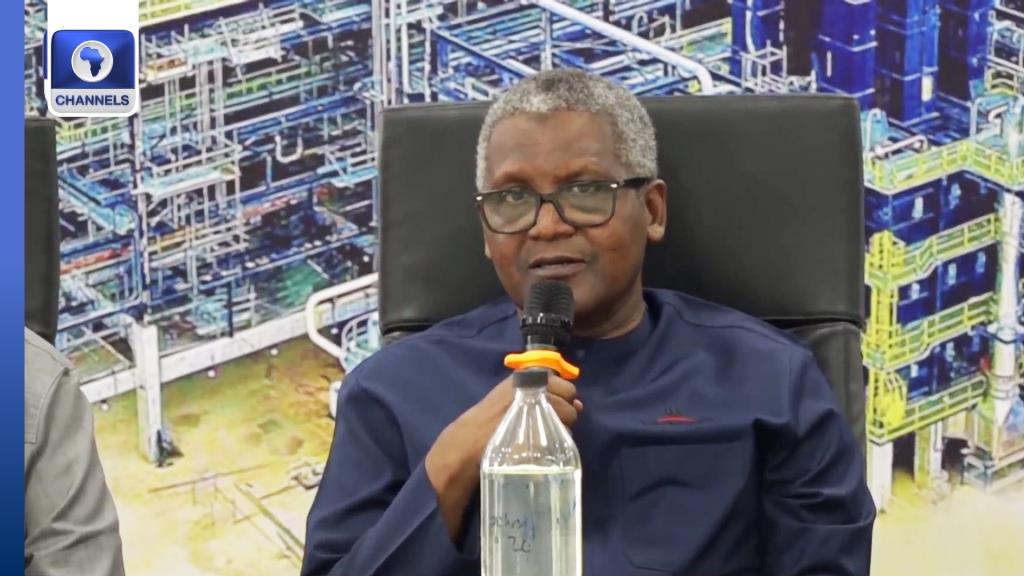
Dangote Petroleum Refinery has reduced its ex-depot prices for Premium Motor Spirit (PMS) and Automotive Gas Oil (AGO), marking the first downward adjustment after several sharp increases recorded in recent days.
According to the refinery’s latest pricing template released on March 10, 2026, the gantry price of petrol has been cut by N100 to N1,075 per litre, down from N1,175 per litre previously.
The 650,000 barrels per day capacity refinery also disclosed that PMS supplied through coastal distribution will now sell at N1,050 per litre, reflecting a marginal price differential for marine deliveries.
In addition, the gantry price of AGO, commonly known as diesel, has been reduced to N1,430 per litre, representing a N190 drop from the earlier price of N1,620 per litre.
The company noted that the quoted gantry prices exclude statutory charges imposed by the Nigerian Midstream and Downstream Petroleum Regulatory Authority (NMDPRA).
The price adjustment came amid a recent decline in global crude oil prices, which has started to ease cost pressures across the international petroleum market and is influencing pricing trends in the downstream sector.
US President Donald Trump reassured markets and claimed the war would end soon, but Iran on Tuesday vowed not to let “a litre” of oil be exported from the Middle East until the United States and Israel stop bombing it.
Brent crude price, which hit a high of $109 per barrel, has now dropped to $90 per barrel, as the largest oil producers in the Middle East Gulf have deepened production cuts and are already lowering output by a combined more than 5 million barrels per day, as the blockade of the Strait of Hormuz has started to affect upstream production.
However, there are worries that, unlike the speed at which petrol stations hiked their cost at the pump, the revised ex-depot prices will not reflect through depot channels and translate into lower retail pump prices nationwide.
By Adedapo Adesanya
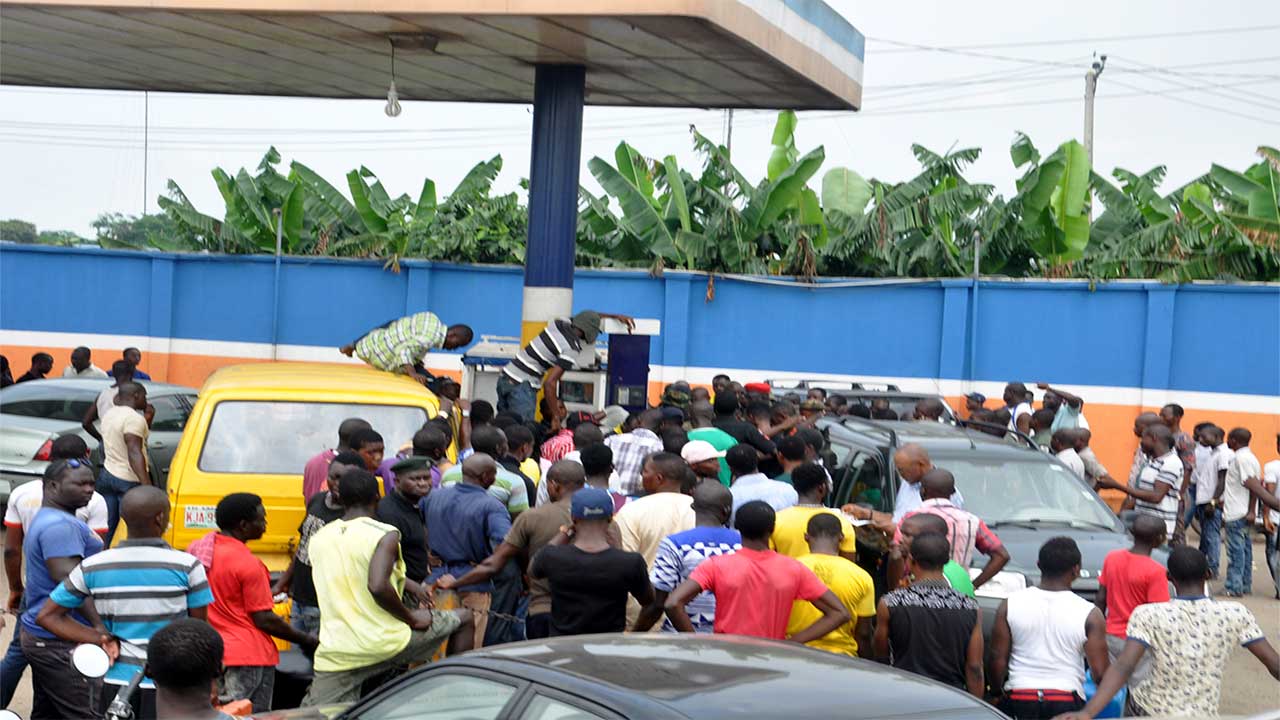
The Petroleum Products Retail Outlets Owners Association of Nigeria (PETROAN) has urged the Nigerian National Petroleum Company (NNPC) Limited to urgently strengthen domestic refining capacity to shield the country from global petroleum market shocks.
The National President, PETROAN, Billy Gillis-Harry, on Monday called on the Group Chief Executive Officer of the state oil company, Mr Bayo Ojulari, to facilitate the immediate commencement of production at Nigeria’s local refineries.
Mr Gillis-Harry said that production at the refineries was paramount, particularly the Area five Plant at Port Harcourt Refinery and the Warri Refinery, which previously operated briefly before shutdown for profit index evaluation.
He said that this had become imperative due to the ongoing conflict involving Israel, the United States and Iran, which was pushing global petroleum prices to alarming levels.
Projecting future trends, he warned that Premium Motor Spirit (PMS) could rise close to N2,000 per litre while Automotive Gas Oil (AGO) may approach N3,000 per litre if the situation persists.
He said that sustained drone and missile attacks now threaten critical oil routes and infrastructure, creating uncertainty in global supply chains.
“With no clear end to the conflict, petroleum product prices in both international and domestic markets are expected to rise sharply in the coming days.
“Before the crisis, PMS, known as fuel sold at N774 per litre, but now sells above N1,000 per litre, representing an increase of about 30 per cent.
“Diesel, previously sold at N950 per litre, has risen to N1,400 per litre and above, an increase of about 49 per cent,” he said.
Mr Gillis-Harry said that rehabilitating Nigeria’s refineries for immediate domestic production was critical.
On local refining, he said that it would reduce exposure to international market volatility, especially as Nigeria had abundant crude oil resources under the custody of NNPC Limited.
He said that government-owned refineries were less vulnerable to global supply disruptions compared to privately owned refineries dependent on imported crude.
The PETROAN president said that continued fuel price increases would worsen inflation, cause job losses, deepen economic hardship, increase transportation costs, and raise prices of goods and services nationwide.
“Fuel remains essential for daily mobility, while diesel is vital for manufacturing and industrial operations,” he said.
He commended President Bola Tinubu for the ongoing bold policies to reform the oil and gas sector, and called on Tinubu to direct the immediate rehabilitation and commencement of production at the government-owned refineries.
According to him, this will ultimately bring relief to citizens and stimulate economic growth.







-
 Feature/OPED6 years ago
Davos was Different this year
-
Travel/Tourism10 years ago
Lagos Seals Western Lodge Hotel In Ikorodu
-

 Showbiz3 years ago
Estranged Lover Releases Videos of Empress Njamah Bathing
-
 Banking8 years ago
Sort Codes of GTBank Branches in Nigeria
-

 Economy3 years ago
Subsidy Removal: CNG at N130 Per Litre Cheaper Than Petrol—IPMAN
-

 Banking3 years ago
Sort Codes of UBA Branches in Nigeria
-

 Banking3 years ago
First Bank Announces Planned Downtime
-

 Sports3 years ago
Highest Paid Nigerian Footballer – How Much Do Nigerian Footballers Earn