Economy
Libya, Iraq Supply Disruption Raises Crude Prices
By Adedapo Adesanya
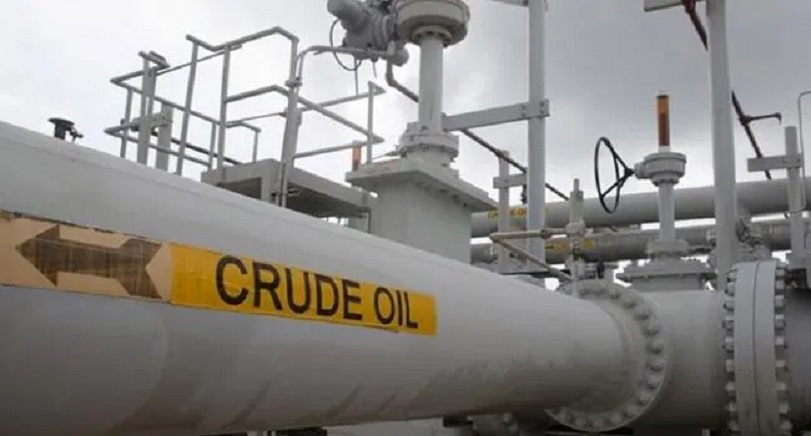
Crude oil prices rose Thursday as supply disruptions in Libya and plans to lower output in Iraq raised fears of tighter global supplies, with Brent gaining $1.29 or 1.6 per cent to settle at $79.94 a barrel and US West Texas Intermediate (WTI) appreciating by $1.39 or 1.9 per cent to $75.91 a barrel.
Libya’s eastern government called force majeure on all oil production and exports, which could remove up to 1 million barrels per day of crude from the markets.
More than half of Libya’s oil production was offline on Thursday and exports were halted at several ports due to a standoff between rival political factions.
Libya’s National Oil Corporation, which controls the country’s oil resources, said yesterday that the average oil output stood at 591,024 barrels as of Wednesday, August 28, over 50 per cent of Libya’s output of 1.18 million barrels per day produced in July.
Market analysts noted that Libya’s development is much more significant to oil markets because it represents real barrels lost, effectively tightening the physical market for as long as the Libya crisis lasts.
The conflict over control of Libya’s central bank threatens a new bout of instability in the country, which is divided between eastern and western factions supported by Turkey and Russia.
Elsewhere, Iraq plans to reduce oil output in September as part of a plan to compensate for producing over the quota agreed with the Organisation of the Petroleum Exporting Countries (OPEC) and its allies.
Iraq, which produced 4.25 million barrels per day in July, will cut output to between 3.85 million and 3.9 million barrels per day next month. Its agreed quota is 4 million barrels per day.
Oil prices were also helped by expectations that the US Federal Reserve would begin reducing interest rates next month. President of the Atlanta Federal Reserve Raphael Bostic stated that as unemployment has increased more than expected and inflation has decreased further, it might be time for cuts.
The disruptions, and expectations of lower interest rates in the US, turned the attention away from signs of weak demand after data showed that US crude inventories last week fell by 846,000 barrels to 425.2 million, smaller than the expected draw.
Economy
Meta Contributes $820m Annually to Nigerian Economy—Research
By Aduragbemi Omiyale
New independent research has revealed that the parent company of Facebook, WhatsApp, and Instagram, Meta, contributes about $820 million to the Nigerian economy every year.
In the new report titled Nigeria’s Digital Economy, conducted by Public First, it was discovered that about 14 million Nigerian small and medium enterprises (SMEs) used Meta’s apps like Facebook, Instagram, WhatsApp, Messenger, Meta AI, and Threads, to start and grow their businesses in 2025, contributing $2 billion to the country’s gross domestic product (GDP) and delivering an estimated $640 million in productivity gains through more efficient instant messaging.
Business Post gathered from the study released in Abuja on Thursday that the adoption of artificial intelligence (AI) is set to add about $22 billion to Nigeria’s DGP by 2035.
It was observed that virtually all Nigerian businesses surveyed confessed that Meta’s platforms have expanded their customer reach, with the company’s platforms functioning as essential digital infrastructure connecting Nigerian entrepreneurs to customers, markets, and new economic opportunities.
WhatsApp is Nigeria’s gateway to AI
WhatsApp is playing a central role in connecting Nigerians to AI and new economic opportunities across the region. The platform serves as Nigerians’ primary AI surface — reflecting the wider regional pattern where 93 per cent of Meta AI prompts in Sub-Saharan Africa are made via WhatsApp — demonstrating how AI adoption in Nigeria is happening through the tools people already use every day.
“Nigeria is one of the most dynamic, entrepreneurial and digitally engaged markets in the world — and this research makes clear the scale of what is possible when Nigerian ambition meets the right digital tools.
“From a tailor in Lagos reaching customers across the country through Instagram, to a small business owner in Kano taking orders on WhatsApp, to a creator in Abuja building a global audience on Facebook — Meta’s platforms are removing the traditional barriers to growth and unlocking real economic opportunity,” the Director of Public Policy for Sub-Saharan Africa at Meta, Balkissa Ide Siddo, said.
The fact that 80 per cent of Nigerians say access to reliable internet has improved compared to a decade ago speaks to the progress already made, and with continued investment in connectivity, smart policy that supports innovation, and the rise of open-source AI built for and by Africans, Nigeria is exceptionally well positioned to lead the continent’s next decade of digital growth. We are proud to be a long-term partner in that journey,” Ide Siddo added.
AI and Nigeria’s next growth frontier
The research highlights the transformative potential of artificial intelligence for Nigeria’s economy and innovation ecosystem.
SMEs are reaching new customers across Nigeria
For Nigerian small businesses, Meta’s platforms have become a primary sales and discovery channel. 81 per cent of online businesses surveyed said Facebook, Instagram, and WhatsApp have expanded their customer base beyond their local geography — reducing customer acquisition costs and giving a business in Kano access to the same advertising and commerce tools available to businesses in Lagos, London or New York.
“Nigeria’s digital transformation is creating new opportunities for businesses, creators and consumers alike. The findings show that Meta’s platforms are helping Nigerian firms grow across formal and informal sectors, supporting entrepreneurship and strengthening participation in one of the world’s most rapidly expanding digital economies.
“With the right combination of infrastructure, platform access and open-source AI, the upside for Nigeria is significant,” a Director at Public First, Alison Neyle, stated.
Economy
Oando Reports Windfall as Buyers Shift from Middle East Oil
By Adedapo Adesanya
Nigerian energy giant, Oando Plc, says it is reporting rising revenues as global crude buyers increasingly turn away from the volatile Middle East in search of safer supply sources.
According to the chief executive of Oando, Mr Wale Tinubu, the crisis around the Strait of Hormuz has damaged the Gulf region’s long-standing reputation as the world’s safest and most reliable oil-producing hub, leading to demand elsewhere.
Speaking in a recent interview on the sidelines of the Africa CEO Forum in Kigali, Rwanda, Mr Tinubu disclosed that Oando is already benefiting financially from the geopolitical tensions.
“We are certainly getting a windfall increase in our revenues,” Mr Tinubu said.
According to him, mounting security concerns around the Strait of Hormuz have forced buyers to reconsider their dependence on Middle Eastern crude. The waterway accounts for around 20 per cent of global crude and liquified natural gas (LNG) flows, mostly to Asian markets.
“The Middle Eastern premium you got from being a stable environment to produce hydrocarbons has been shattered,” he added.
The conflict is rapidly reshaping global energy trade flows, with African producers, particularly Nigeria, emerging as alternative suppliers at a time of heightened uncertainty in the Gulf.
Indonesia recently took in some Nigeria crude to cushion against the impact that disruptions are having on fuel supplies.
Mr Tinubu said Oando is rolling out a seven-well drilling campaign aiming to add 10,000 barrels per day by the end of the year.
Oando is also looking to raise up to $750 million to execute a 100-well onshore drilling campaign, aiming to triple its oil and gas output from 32,000 barrels of oil equivalent per day to nearly 100,000 barrels of oil equivalent per day.
According to Mr Tinubu, global supply shocks have created highly favourable conditions for securing financing and expanding operations to meet supply gaps.
Economy
Otedola Plans $100m Stake in Dangote Refinery Private Placement
By Adedapo Adesanya
Nigerian billionaire investor, Mr Femi Otedola, has announced plans to invest $100 million in the Dangote Refinery, which plans to list later this year.
Mr Otedola disclosed this on Wednesday after leading a delegation of top executives from First HoldCo on a visit to the Dangote refinery.
“On a personal note, I’ve appealed to him (Aliko Dangote). I’ve been here with him 25 times, so my compensation is he’s going to allocate to me shares worth $100 million in the private placement,” the billionaire said.
Mr Otedola had previously denied that he had any stake or funded the construction of a 650,000 barrels per day facility.
The announcement marks his next big move after increasing his stake in First Holdco as well as buying a $10 million property in London.
Mr Dangote last year said the refinery could sell up to 10 per cent stake in the listing, which is valued at about $5 billion. It is aiming for a valuation of up to $50 billion for Dangote refinery.
The billionaire is planning to make the IPO a cross-border listing to enable the refinery to draw investments from domestic and international investors.
Mr Dangote, this week, said the IPO is designed to democratise wealth creation and give Africans direct access to participate in the continent’s industrial transformation.
On his part, Mr Dangote, president of the Dangote Group, says the company is targeting a private placement of about $2 billion for the refinery.
While the actual date for the IPO is yet to be announced, Mr Otedola’s early investment indicates value and could spur other high-net-worth individuals to show interest.
Mr Otedola, an ally of Mr Dangote, led top executives of First HoldCo on a tour of the refinery and the fertiliser plants in the Lekki free trade zone area.
The team also visited key project sites such as the jetty, a facility built by Dangote industries to receive large vessels.
-
Feature/OPED6 years agoDavos was Different this year
-
Travel/Tourism10 years ago
Lagos Seals Western Lodge Hotel In Ikorodu
-
Showbiz3 years agoEstranged Lover Releases Videos of Empress Njamah Bathing
-
Banking8 years agoSort Codes of GTBank Branches in Nigeria
-
Economy3 years agoSubsidy Removal: CNG at N130 Per Litre Cheaper Than Petrol—IPMAN
-
Banking3 years agoSort Codes of UBA Branches in Nigeria
-
Banking3 years agoFirst Bank Announces Planned Downtime
-
Sports3 years agoHighest Paid Nigerian Footballer – How Much Do Nigerian Footballers Earn