
Economy
Lingering Trade Worries to Stretch Wall Street Volatility

By Investors Hub
The major U.S. index futures are pointing to a lower opening on Wednesday following the notable advance seen over the course of the previous session.
Stocks are likely to move back to the downside as traders continue to worry the trade dispute between the U.S. and China is escalating into a full-fledged trade war.
A report from the South China Morning Post said Chinas is re-examining the entire bilateral economic relationship between the U.S. and China.
The SCMP said Chinese government advisers are highlighting the risk of sourcing critical supplies from an increasingly hostile U.S. following the Trump administration?s recent move to blacklist Chinese tech giant Huawei.
Mei Xinyu, a fellow at the research institute under China?s Ministry of Commerce, told the SCMP that Beijing should prepare for the worst-case scenario to defend its rights in climbing up the global value chain through technological catch-up.
?Even if a deal is reached, it could be torn apart [by President Donald Trump] easily at any time,? Mei said, comparing the current trade talk deadlock to the Panmunjom peace talks during the Korean War.
Potentially adding to the trade concerns, Treasury Secretary Steven Mnuchin recently told CNBC?s Ylan Mui the U.S. has no plans to go to Beijing to resume trade negotiations.
Later in the session, trading may be impacted by reaction to the release of the minutes of the latest Federal Reserve meeting.
The minutes may shed additional light on the outlook for interest rates but could also be viewed as old news considering the constantly shifting developments on the trade front.
With the markets continuing to show intense sensitivity to trade-related news, stocks showed a strong move back to the upside during the trading day on Tuesday after moving mostly lower over the course of Monday?s session.
The major averages ended the day firmly in positive territory. The Dow climbed 197.43 points or 0.8 percent to 25,877.33, the Nasdaq jumped 83.35 points or 1.1 percent to 7,785.72 and the S&P 500 advanced 24.13 points or 0.9 percent to 2,864.36.
The rebound on Wall Street came in reaction to news that the U.S. Commerce Department has temporarily eased trade restrictions on Chinese tech giant Huawei.
The Commerce Department issued a temporary license authorizing specific, limited engagement in transactions involving the export, re-export, and transfer of items to Huawei for 90 days.
Commerce Secretary Wilbur Ross said the temporary reprieve grants “operators time to make other arrangements and the Department space to determine the appropriate long term measures for Americans and foreign telecommunications providers that currently rely on Huawei equipment for critical services.”
“In short, this license will allow operations to continue for existing Huawei mobile phone users and rural broadband networks,” he added.
The move by the Trump administration led U.S. tech giant Google to reverse an earlier decision and announce it will continue to work with Huawei over the next 90 days.
Tech stocks rebounded on the news after falling sharply in the previous session amid reports of companies cutting off supplies to Huawei.
Meanwhile, traders largely shrugged off a report from the National Association of Realtors showing an unexpected drop in existing home sales in the month of April.
NAR said existing home sales dipped by 0.4 percent to an annual rate of 5.19 million in April after plunging by 4.9 percent to a rate of 5.21 million in March.
The continued decrease came as a surprise to economists, who had expected existing home sales to jump by 2.7 percent to a rate of 5.35 million.
Semiconductor stocks turned in some of the market’s best performances on the day after falling sharply in the previous session.
Reflecting the rebound by the sector, the Philadelphia Semiconductor Index spiked by 2.1 percent after plunging by 4 percent on Monday.
Substantial strength also emerged among biotechnology stocks, as reflected by the 2.2 percent jump by the NYSE Arca Biotechnology Index.
Natural gas, steel, computer hardware and oil service stocks also saw considerable strength on the day, moving higher along with most of the other major sectors.






By Dipo Olowookere
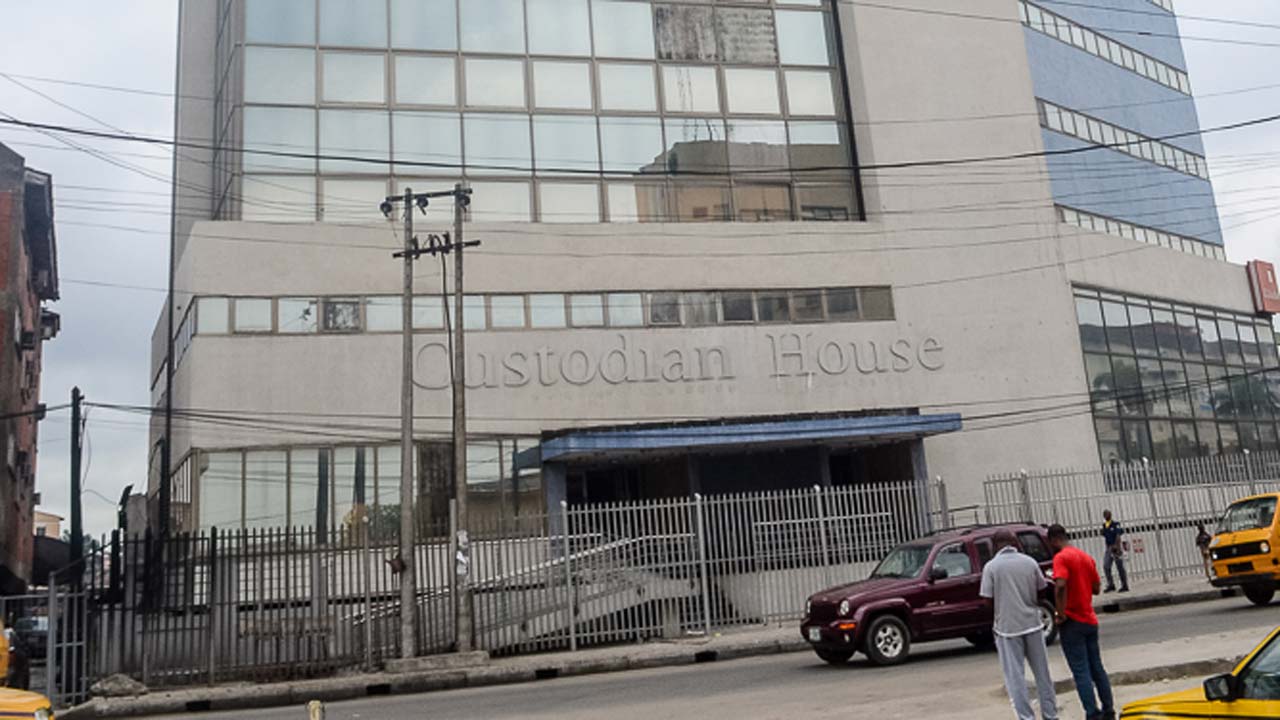
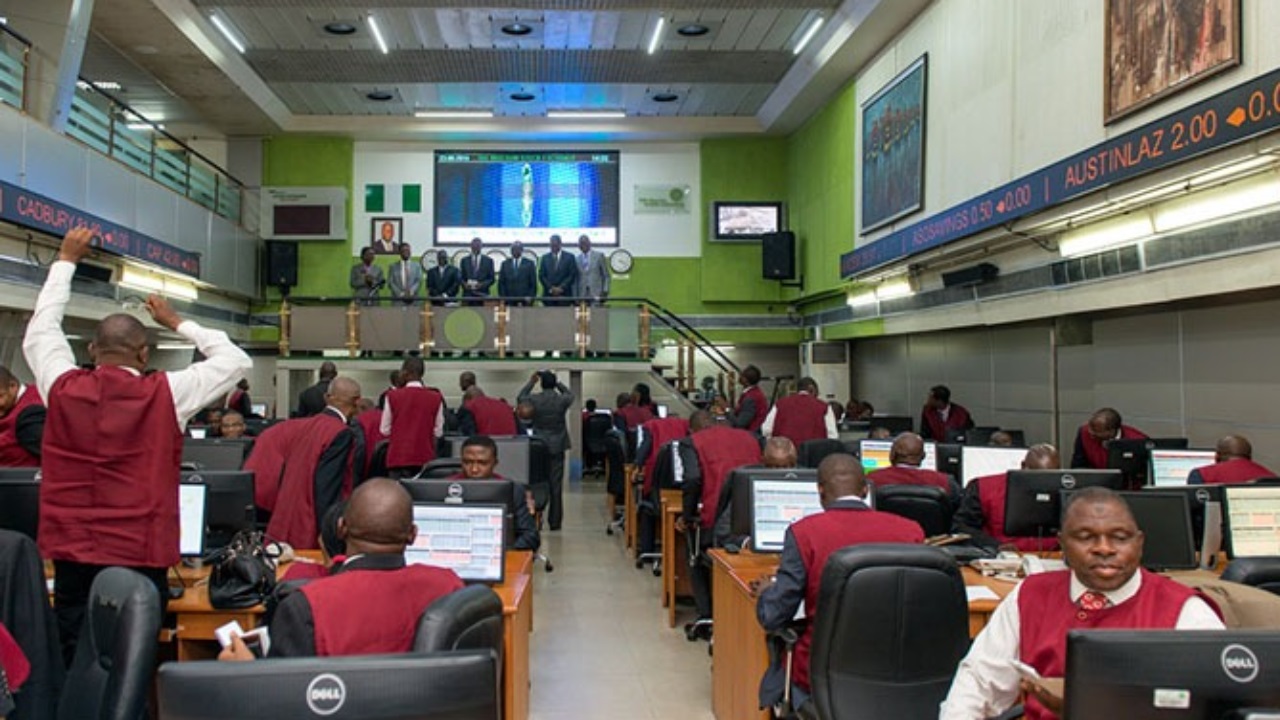
The Nigerian Exchange (NGX) Limited ended its first trading session of this week on a positive note after it improved by 0.12 per cent on Monday.
Buying pressure across key sectors of Customs Street influenced the growth achieved yesterday despite the global instability triggered by the war in Iran by the United States and Israel.
Energy stocks on the local bourse have continued to benefit from the crisis, which has raised the price of crude oil above $100 per barrel.
The energy index was up by 2.07 per cent during the session, and the consumer goods sector appreciated by 0.58 per cent, while the insurance and banking indices depreciated by 3.05 per cent and 0.99 per cent, respectively.
When the closing gong was struck on Monday, the All-Share Index (ASI) increased by 228.82 points to 197,196.97 points from 196,968.15 points, and the market capitalisation garnered N147 billion to settle at N126.584 trillion compared with last Friday’s N126.437 trillion.
The trio of Conoil, Legend Internet, and Omatek advanced by 10.00 per cent each to N185.90, N7.04, and N2.42 apiece, as NGX Group chalked up 9.97 per cent to trade at N166.00, and Oando appreciated by 9.96 per cent to N54.65.
Conversely, Aluminium Extrusion shrank by 10.00 per cent to N13.95, SCOA Nigeria declined by 9.90 per cent to N30.95, RT Briscoe lost 9.87 per cent to finish at N10.87, Sunu Assurances crashed by 9.81 per cent to N4.32, and Union Dicon lost 9.76 per cent to settle at N14.80.
The most active stock for the session was Fortis Global Insurance with 120.4 million units worth N174.1 million, Access Holdings exchanged 32.2 million units valued at N818.5 million, Chams traded 28.3 million units for N110.5 million, Zenith Bank transacted 25.3 million units worth N2.4 billion, and Japaul sold 21.6 million units valued at N82.1 million.
At the close of trades, market participants bought and sold 762.5 million shares for N31.2 billion in 86,488 deals during the session, in contrast to the 586.2 million shares valued at N30.6 billion traded in 62,699 deals in the preceding session, implying a spike in the trading volume, value, and number of deals by 30.08 per cent, 1.96 per cent, and 37.94 per cent apiece.

By Adedapo Adesanya
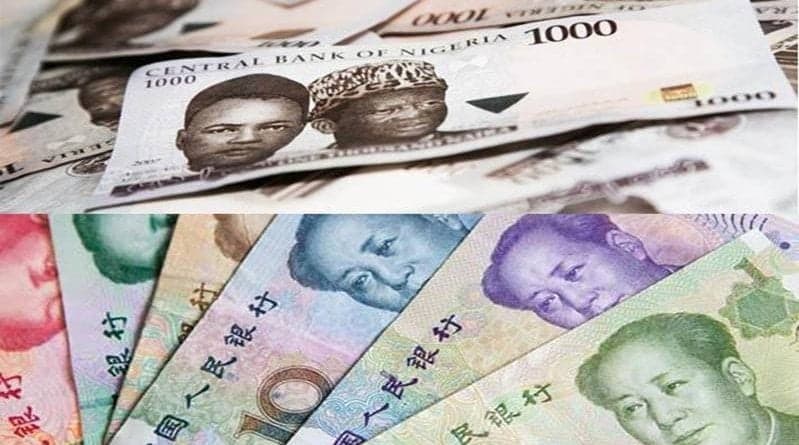
The Naira halted two consecutive weeks of depreciation in the Nigerian Autonomous Foreign Exchange Market (NAFEX) on Monday, March 9, by remaining unchanged at N1,393.26/$1.
However, against the Pound Sterling, it further depreciated by N3.07 yesterday to trade at N1,863.06/£1 compared with last Friday’s value of N1,859.99/£1, and lost 65 Kobo against the Euro to close at N1,612.14/€1 versus the preceding session’s rate of N1,611.49/€1.
In the black market, the Nigerian Naira crashed against the Dollar yesterday by N10 to quote at N1,415/$1 compared with the N1,405/$1 it was exchanged in the previous trading session, and at the GTBank FX desk, it weakened by N9 to sell for N1,419/$1 versus the previous value of N1,410/$1.
The Naira’s performance comes as rising demand for foreign payments is outpacing supply, heightening worries that the domestic currency is entering the threshold it hasn’t traded in over two months.
Despite this, there appears to be a rise in foreign exchange inflows into the country’s currency market, with data from Coronation Merchant Bank showing that in the past week, FX inflows into the market have strengthened. As of the end of last week, total FX inflows into the Nigerian market settled at $1.26 billion, representing an increase of 17.76 per cent compared with $1.07 billion recorded in the previous week.
In the cryptocurrency market, tensions that have spurred higher energy prices and reignited inflation fears, which could potentially delay Federal Reserve rate cuts, eased after US President Donald Trump said the war with Iran could be over soon. This led to crypto and equity markets adding to gains following the comments.
Solana (SOL) appreciated by 5.6 per cent to $86.05, Ethereum (ETH) expanded by 5.5 per cent to $2,024.18, Bitcoin (BTC) added 4.6 per cent to sell for $68,802.86, Binance Coin (BNB) gained 4.1 per cent to trade at $639.78, and Cardano (ADA) jumped 3.3 per cent to $0.2582.
Further, Dogecoin (DOGE) grew by 2.9 per cent to $0.0914, Litecoin (LTC) went up by 2.8 per cent to $54.10, and Ripple (XRP) improved by 2.4 per cent to $1.37, while the US Dollar Tether (USDT) and the US Dollar Coin (USDC) traded flat at $1.00 each.
By Dipo Olowookere
The rise in the prices of crude oil grades on the global market as a result of the attacks on Iran by the duo of the United States and Israel has triggered an increase in the price of premium motor spirit (PMS), otherwise known as petrol, in Nigeria.
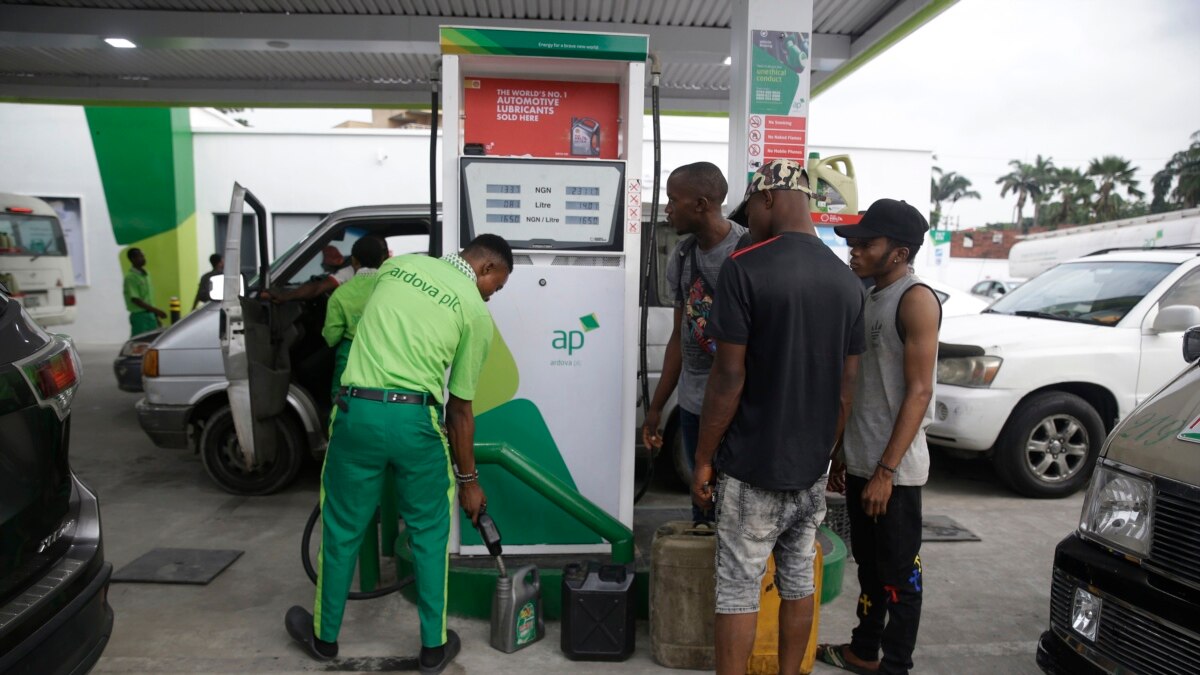
This reporter observed that some petrol stations dispensing the product to consumers were selling above N1,200 on Monday evening.
In the areas monitored by Business Post yesterday in the Alimosho area of Lagos State, most of the fuel stations selling PMS did so at between N1,200 and N1,230 per litre.
A retailer around Jendol Superstores on Ipaja Road, dispensing at N1,020 to motorists, witnessed a long queue on Monday evening, causing traffic gridlock that stretched to Abesan Roundabout.
But the others selling at N1,230, especially in the Okunola area of Alimosho, had few vehicles, while many others shut their gates and were not selling.
It was gathered that the pump price rose to N1,230 per litre yesterday evening, as many of them sold at N1,050 per litre in the morning.
“The situation is crazy,” a motorist, who spoke with the newspaper, lamented.
“But why is petrol very expensive in Nigeria when we were not bombed like Saudi Arabia?” another consumer, who identified himself as Mr Tayo Goriola, queried.
An analyst speaking on Nigeria Info 99.3 FM Lagos on Monday, Mr Majeed Dahiru, said it was wrong for the government to hand off subsidy on energy because of situations like this.
“This was what some of us foresaw when we said the government cannot remove a safety net called a subsidy on energy because of times like this.
“As we speak, all others have triggered their safety mechanisms to stabilise prices, including in the UAE and Saudi Arabia, which have come under attack, unlike Nigeria, which has not been attacked,” he said on Dailies Today with Kofi Bartels yesterday.
Petrol prices went up on Monday after the crude oil hit $105 per barrel, and there are fears that the war could jack prices up to $150 per barrel, which could raise PMS to N1,500 or N2,000 per litre in Nigeria.
Meanwhile, Dangote Refinery has assured Nigerians of sufficient supply of PMS during this period, saying, “With government support and steady access to domestic crude, Dangote Refinery will continue to meet all of Nigeria’s refined fuel requirements.”











-
 Feature/OPED6 years ago
Davos was Different this year
-
Travel/Tourism10 years ago
Lagos Seals Western Lodge Hotel In Ikorodu
-

 Showbiz3 years ago
Estranged Lover Releases Videos of Empress Njamah Bathing
-
 Banking8 years ago
Sort Codes of GTBank Branches in Nigeria
-

 Economy3 years ago
Subsidy Removal: CNG at N130 Per Litre Cheaper Than Petrol—IPMAN
-

 Banking3 years ago
Sort Codes of UBA Branches in Nigeria
-

 Banking3 years ago
First Bank Announces Planned Downtime
-

 Sports3 years ago
Highest Paid Nigerian Footballer – How Much Do Nigerian Footballers Earn