
Economy
Linking Macroeconomic Trends to Personal Financial Goals Vital—Delano

By Aduragbemi Omiyale
The Executive Director for Personal and Private Banking at Stanbic IBTC, Mr Olu Delano, has stressed the need to link macroeconomic trends to personal financial goals.
At the 2026 Regional Economic Outlook Series of Stanbic IBTC recently, he said, “Whether planning for retirement, funding education abroad, or expanding a business, improved stability creates opportunities. But those opportunities require careful structuring around foreign exchange dynamics, inflation trends, and interest rate movements.”
Business Post reports that the regional investor summit was designed to provide high-net-worth individuals, investors, business leaders, and senior executives with clarity in a rapidly evolving economic environment.
Hosted in Lagos, Abuja, and Port Harcourt, the series served as a strategic platform for translating Nigeria’s reform momentum into practical investment and business decisions.
It featured a keynote address by Professor Adedipe, whose insights set a strong analytical foundation for the conversations that followed. His presentation unpacked structural reforms, fiscal recalibration, and the direction of monetary policy, offering attendees a comprehensive perspective on Nigeria’s growth trajectory and the discipline required to sustain macroeconomic stability.
Across all three cities, Stanbic IBTC’s subject matter experts and industry professionals moved the discussion from macroeconomic signals to market strategy. Sessions were structured to bridge economic context with sector-specific opportunities, portfolio construction frameworks, and risk management considerations. The focus extended beyond understanding the environment to making informed, disciplined decisions within it.
A recurring theme throughout the summit was the evolving monetary policy cycle. Discussions examined the Central Bank of Nigeria’s tight stance in addressing inflationary pressures and stabilising the currency.
Participants also considered the potential implications of a gradual policy easing cycle, particularly for fixed income instruments, equity positioning, and broader asset allocation strategies. Emphasis was placed on timing, selectivity, and portfolio resilience.
Beyond markets, the conversations addressed the practical realities of wealth and business strategy. High net worth individuals gained clarity on diversification, currency exposure, and inflation management, while business leaders explored how improving macroeconomic stability can support capital allocation decisions and long-term expansion plans.
The chief executive of Stanbic IBTC Asset Management, Ms Busola Jejelowo, reflected on the quality of engagement across the regions.
She noted that the depth of questions and analytical rigour demonstrated a maturing investment culture and a growing appetite for data-driven strategies.
According to her, the series was not only about presenting forecasts, but about equipping clients with structured frameworks for navigating uncertainty.











By Dipo Olowookere
The bulls remained in control of the Nigerian Exchange (NGX) Limited on Thursday, helping the market record a marginal growth of 0.02 per cent amid weak investor sentiment.
During the session, the market breadth index was negative after Customs Street finished with 30 appreciating stocks and 37 depreciating equities.
The gains were largely driven by the banking and consumer goods indices, which closed higher by 0.26 per cent and 0.18 per cent, respectively.
Profit-taking occurred in the other sectors, with the insurance counter down by 0.82 per cent, the industrial goods sector weakened by 0.21 per cent, and the energy index lost 0.16 per cent.
When the bourse closed for the day, the All-Share Index (ASI) increased by 32.14 points to 200,957.89 points from 200,925.75 points, and the market capitalisation moved up by N21 billion to N128.998 trillion from N128.977 trillion.
Premier Paints rose by 10.00 per cent to N34.10, Zichis appreciated by 10.00 per cent to N12.54, Legend Internet improved by 9.92 per cent to N7.98, John Holt grew by 9.87 per cent to N17.25, and McNichols soared by 9.76 per cent to N6.75.
On the flip side, University Press fell by 9.17 per cent to N5.45, Sunu Assurances slumped by 8.88 per cent to N4.31, Veritas Kapital depreciated by 6.98 per cent to N2.00, FTN Cocoa tumbled by 6.67 per cent to N5.60, and NGX Group lost 6.46 per cent to trade at N168.75.
A total of 678.1 million shares valued at N33.1 billion exchanged hands in 42,222 deals yesterday versus the 538.0 million shares worth N25.4 billion traded in 45,641 deals on Wednesday, showing a drop in the number of deals by 7.49 per cent, and a jump in the trading volume and value by 26.04 per cent and 30.32 per cent apiece.
The surge in the activity level was due to the 134.6 million units of Access Holdings shares traded for N3.5 billion, and the 105.5 million units of Wema Bank shares exchanged for N2.8 billion. Veritas Kapital transacted 74.2 million units for N147.8 million, Zichis traded 23.3 million units valued at N290.8 million, and UBA sold 18.1 million units worth N852.5 million.

By Adedapo Adesanya
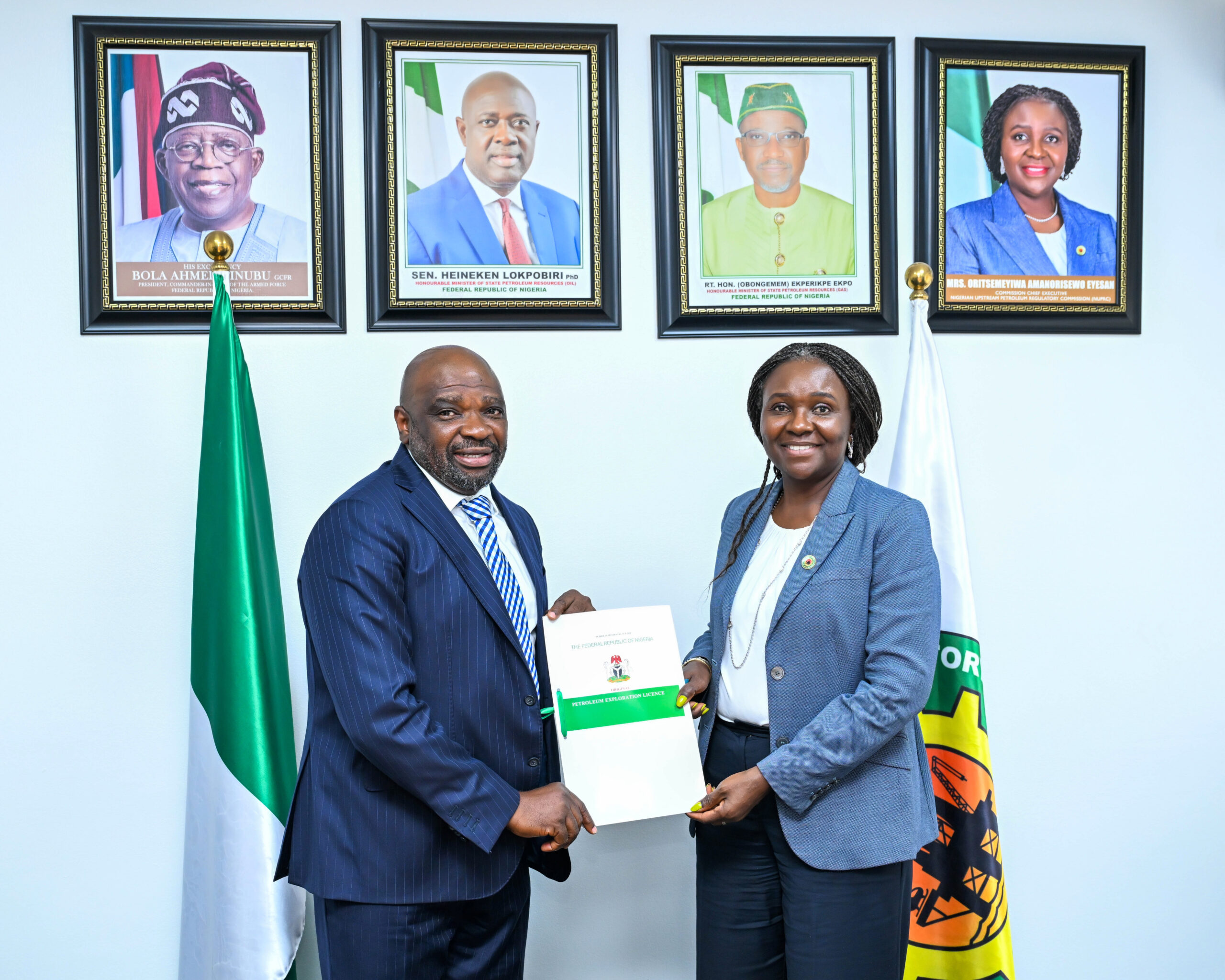
The Nigerian Upstream Petroleum Regulatory Commission (NUPRC) has signed a Petroleum Exploration Licence (PEL) No. 5 agreement with SeaSeisGeophysical Limited, paving the way for a major offshore data acquisition project aimed at boosting oil and gas exploration.
The agreement, executed in Abuja, authorises SeaSeis, in partnership with global data firm TGS, to undertake the acquisition and processing of new 3D seismic and gravity data.
The PEL 5 project spans approximately 11,700 square kilometres offshore the Eastern Niger Delta, covering water depths ranging from 400 to 2,800 metres.
The initiative is expected to enhance subsurface understanding, improve prospectivity, and support more efficient development of Nigeria’s hydrocarbon resources, in line with provisions of the Petroleum Industry Act (PIA) 2021.
Speaking at the signing ceremony, the chief executive of NUPRC, Mrs Oritsemeyiwa Eyesan, said the licence underscores the commission’s commitment to data-driven exploration, transparency, and long-term value creation for the country’s oil and gas industry.
She noted that the project would provide critical geological data needed to attract investment and unlock new opportunities in Nigeria’s upstream sector.
In his remarks, the Managing Director of SeaSeisGeophysical Limited, Mr Goke Adeniyi, described the PEL 5 project as the company’s largest in Africa, highlighting the vast potential within Nigeria’s offshore energy landscape.
The partnership is expected to strengthen collaboration between regulators and industry players while advancing efforts to optimise resource development and sustain growth in the sector.
Recall that the upstream oil sector regulator is slashing the time it takes to approve applications to revive idle oil wells from weeks to hours as Nigeria, which is Africa’s top crude producer, seeks to take advantage of high energy prices triggered by the conflict in the Middle East.
The country is also fast-tracking approvals for evacuations and barges at production facilities and export terminals to let barrels get to buyers quickly, as buyers turn to suppliers such as Nigeria and Angola on the African continent.
By Adedapo Adesanya
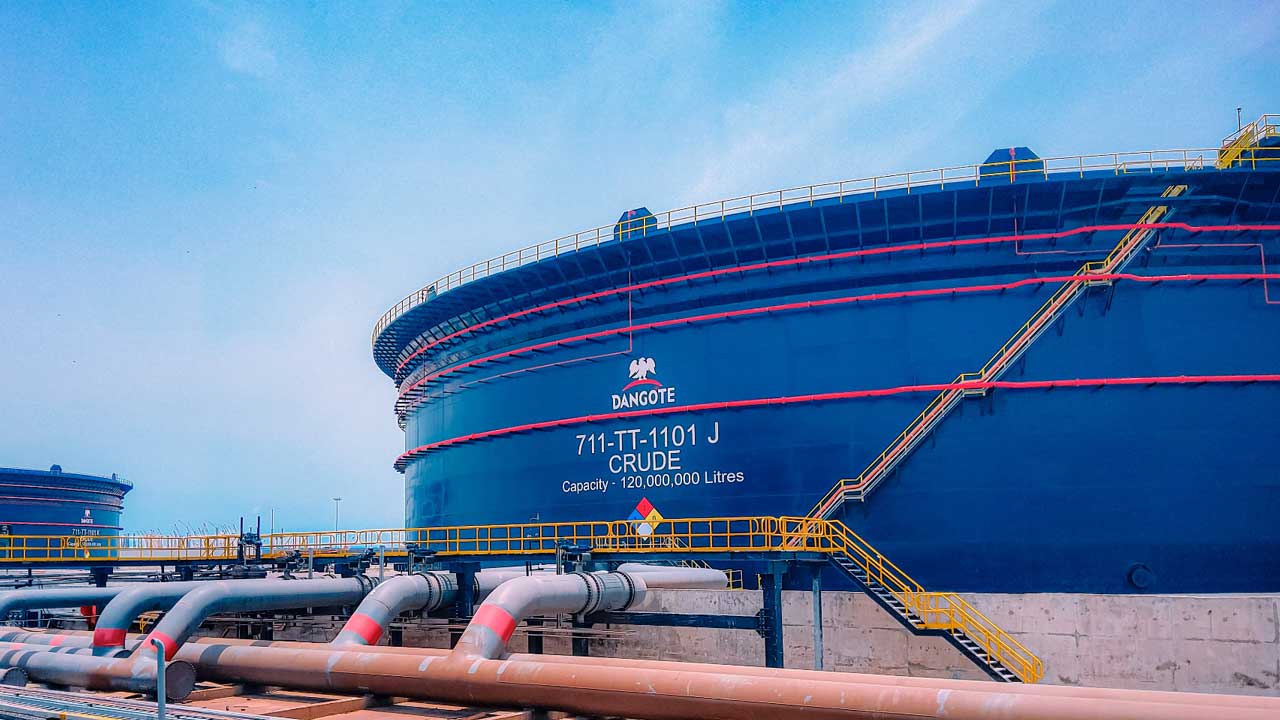
There are indications of a possible fuel shortage in Nigeria as the 650,000 barrels per day Dangote Refinery and Petrochemicals, which is responsible for over 60 per cent of domestic supply, is now getting only about 40 per cent of local feedstock.
According to the chief executive of Dangote Refinery and Petrochemicals, Mr David Bird, the refinery currently gets only about five cargoes of crude monthly, against an expected 13 to 15 cargoes.
He explained that this was below its agreed crude oil supply under the Federal Government’s crude-for-Naira arrangement.
According to him, the shortfall has affected the refinery’s ability to optimise local crude supply despite existing agreements being fully met.
“What we see under that agreement, we should be getting about 13 to 15 cargoes a month. And that’s what we could process to meet the domestic fuel requirements of Nigeria.
“Currently, we’re only getting five. So, that’s an underperformance against that pre-agreed volume contract.”
Mr Bird stated that the crude-for-Naira policy was designed to stabilise Nigeria’s foreign exchange market rather than provide financial advantages to the refinery, adding that the company still purchases crude at international benchmark prices.
He explained that the shortfall had caused the refinery to source preferred Nigerian crude grades from the international market at higher costs.
“And that value between the purchase price and the premium that we’re now seeing is money that Nigeria is leaking to the international trading community,” he said.
Last year alone, Dangote Petroleum Refinery imported a total of $3.74 billion worth of crude oil to make up for shortfalls
The Nigerian National Petroleum Company (NNPC), which is the refinery’s main trade partner and minority stakeholder, has been plagued by challenges that restrict optimal crude supply, so the Lagos-based company has to get feedstock from alternative supply links. This led to the importation of crude from Brazil, Equatorial Guinea, Angola, Algeria, and the US, among others.
For instance, in March 2025, the company said it now counts Brazil and Equatorial Guinea among its global oil suppliers, receiving up to 1 million barrels of the medium-sweet grade Tupi crude at the refinery on March 26 from Brazil’s Petrobras.
While Nigeria has so far been insulated from shortages that have plagued countries in South Asia and some parts of Europe, disruptions to trade triggered by the Middle East war may constrain flows, leading to higher prices, even for countries not directly affected.







-
 Feature/OPED6 years ago
Davos was Different this year
-
Travel/Tourism10 years ago
Lagos Seals Western Lodge Hotel In Ikorodu
-

 Showbiz3 years ago
Estranged Lover Releases Videos of Empress Njamah Bathing
-
 Banking8 years ago
Sort Codes of GTBank Branches in Nigeria
-

 Economy3 years ago
Subsidy Removal: CNG at N130 Per Litre Cheaper Than Petrol—IPMAN
-

 Banking3 years ago
Sort Codes of UBA Branches in Nigeria
-

 Banking3 years ago
First Bank Announces Planned Downtime
-

 Sports3 years ago
Highest Paid Nigerian Footballer – How Much Do Nigerian Footballers Earn