Connect with us

Economy

Manufacturers Push for Transparency in Naira-for-Crude Pricing Policy

Published

on

Naira-for-Crude

By Adedapo Adesanya

The Manufacturers Association of Nigeria (MAN) has urged the federal government to ensure total transparency in the domestic pricing matrix in line with the Naira-for-Crude policy.

Speaking in a new interview with a Nigerian newspaper, New Telegraph, the Director-General of the manufacturing body, Mr Segun Ajayi-Kadir, said that the government should ensure that local refineries received their full, unhindered daily crude quotas without bureaucratic bottlenecks.

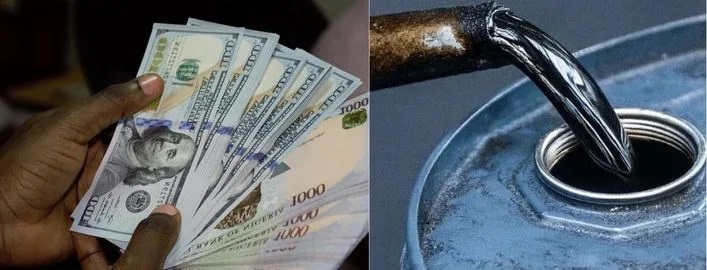
The Naira-for-Crude policy introduced in October 2024 is a strategic initiative to boost local refining and reduce pressure on foreign exchange reserves. The policy directs the Nigerian National Petroleum Company (NNPC) to sell crude oil to local refineries, notably the Dangote Petroleum Refinery, in Naira, with a focus on stabilising the local currency and reducing reliance on USD for energy imports.

“The federal government should mandate total transparency in the domestic pricing matrix and ensure that local refineries receive their full, unhindered daily crude quotas without bureaucratic bottlenecks.

“The true macroeconomic benefit of this policy must be allowed to materialise for the end consumer and the productive sector,” he told the paper.

According to Mr Ajayi-Kadir, while the implementation of crude oil sales in Naira to local refineries is a landmark structural victory, its current execution requires unmitigated optimisation.

His comments come on the back of recent worries by Dangote Refinery and other smaller refiners not getting enough crude feedstock to serve their structures. This has led to an increase in crude importation from other countries at a premium, which is in turn making fuels expensive.

Analysts note that most of Nigeria’s crude production is already tied to export contracts as the country sells a large share of its oil through long-term agreements with international oil companies via joint ventures. These contracts, often priced in Dollars, are hard to redirect even as local refiners need supply.

He also urged the government to accelerate the Presidential Compressed Natural Gas (CNG) initiative by heavily subsidising the conversion of commercial and industrial transport fleets as part of the effort to roll out alternative energy aggressively.

He said that logistics accounted for a massive chunk of consumer goods inflation, adding that shifting from Premium Motor Spirit (PMS) and diesel to abundant, locally sourced CNG was the ultimate inflation-buster.


Adedapo Adesanya is a journalist, polymath, and connoisseur of everything art. When he is not writing, he has his nose buried in one of the many books or articles he has bookmarked or simply listening to good music with a bottle of beer or wine. He supports the greatest club in the world, Manchester United F.C.

Click to comment

Leave a Reply

Your email address will not be published. Required fields are marked *

Economy

Lafarge Africa Rebrands to HBM Nigeria

Published

on

Lafarge Africa HBM Nigeria

By Aduragbemi Omiyale

To reinforce its commitment to Nigeria’s industrial growth, one of the leading cement manufacturers in the country, Lafarge Africa Plc, has unveiled a new corporate identity, rebranding to HBM Nigeria Plc.

According to the chief executive of the organisation, Mr Lolu Alade-Akinyemi, the new identity signals a forward-looking phase for the company, driven by operational excellence, innovation, sustainability, and long-term value creation.

He noted that the transition marks a significant milestone in the company’s transformation journey and strategic alignment with its new shareholder structure, reflecting the company’s continued evolution as one of Nigeria’s leading building solutions providers, combining strong local roots with enhanced global industrial collaboration.

He reaffirmed that the name change will not affect its operations, workforce, customers, shareholders, or its unwavering commitment to Nigeria’s economic growth and infrastructure development.

“HBM Nigeria Plc represents an exciting new chapter in our journey as a leading building solutions company. While our corporate identity is evolving, our commitment to Nigeria remains unwavering.

“We remain focused on delivering quality cement, concrete, aggregates, and innovative building solutions that support infrastructure development, housing growth, and industrialisation.

“This transition positions us for the future while reinforcing the values of excellence, sustainability, customer satisfaction, and responsible business practices that have defined our legacy for decades,” he stated.

Mr Alade-Akinyemi explained that the transition to HBM Nigeria Plc will be implemented through a structured, phased process across the company’s nationwide operations, adding that employees, customers, shareholders, investors, host communities, and other stakeholders should expect seamless business continuity, sustained investments across the country, and an even stronger focus on creating long-term economic and social value.

In his remarks, the Chairman of HBM Nigeria Plc, Mr Gbenga Oyebode, said the transition is designed to position the company for enduring success while remaining true to the values and principles that have shaped its legacy over the decades.

“I would like to express my sincere appreciation to our shareholders for their continued trust, to the Board and Management for their leadership, and to our employees whose dedication and commitment continue to drive the company forward.

“We are confident that HBM Nigeria Plc will continue to create sustainable value for shareholders, strengthen stakeholder trust, and deliver on its long-term ambitions,” Mr Oyebode said.

 Also speaking at the event, the Minister of Works, Mr David Umahi, commended HBM Nigeria Plc for its significant contributions to Nigeria’s infrastructure development by delivering landmark projects across the country.

Highlighting the company’s role in supporting the federal government’s infrastructure agenda, he said, “I can talk about Lafarge for a whole day because we have come a long way. Though the company is very strict and of high integrity, I can say that their products are impeccable.”

Continue Reading

Economy

MRS Oil, Three Others Lift NASD Exchange by 0.70%

Published

on

NASD OTC exchange

By Adedapo Adesanya

The NASD Over-the-Counter (OTC) Securities Exchange rose by 0.70 per cent on Monday, June 22, buoyed by four price gainers led by MRS Oil Plc, which gained N7.77 to sell at N150.00 per share compared with the previous session’s N142.33 per share.

Further, Central Securities Clearing System (CSCS) Plc appreciated by N2.05 to trade at N79.82 per unit versus last Friday’s N77.77 per unit, FrieslandCampina Wamco Nigeria Plc added N2.14 to close at N172.14 per share compared with the previous N170.00 per share, and First Trust Mortgage Bank Plc grew by 22 Kobo to N2.49 per unit from N2.27 per unit.

As a result of the gains by these four securities, the market capitalisation of the platform increased by 17.87 billion to N2.570 trillion from N2.552 trillion, and the NASD Unlisted Security Index (NSI) improved by 27.98 points to 4,282.51 points from 4,252.73 points.

The volume of securities transacted by market participants during the session decreased by 65.4 per cent to 330,034 units from the previous 954,106 units, the value of securities depleted by 23.4 per cent to N32.7 million from the preceding session’s N42.7 million, and the number of deals retreated by 45.7 per cent to 19 deals from the 35 deals recorded in the previous trading session.

At the close of business, Great Nigeria Insurance (GNI) Plc was the most traded stock by value on a year-to-date basis, with 3.4 billion units worth N8.4 billion, followed by Infrastructure Credit Guarantee (Infracredit) Plc with 2.3 billion units sold for N6.5 billion, and CSCS Plc with 68.1 million units exchanged for N4.7 billion.

GNI Plc also ended the trading day as the most traded stock by volume on a year-to-date basis, with the sale of 3.4 billion units worth N8.4 billion, the second spot was taken by Infracredit Plc with 2.3 billion units valued at N6.5 billion, and the third spot was occupied by Resourcery Plc with a turnover of 1.1 billion units worth N415.7 million.

Continue Reading

Economy

Naira Firms to N1,369.11/$ at Official Market as FX Pressure Eases

Published

on

print Naira massively

By Adedapo Adesanya

The Naira started the new week on a positive note after its value was strengthened against the United States Dollar by N1.35 or 0.09 per cent in the Nigerian Autonomous Foreign Exchange Market (NAFEX) on Monday, June 22, to N1,369.11/$1 from last Friday’s N1,370.46/$1.

Against the Euro, it appreciated at the official market by N5.11 to sell at N1,566.39/€1 compared with the preceding session’s price of N1,571.50/€1, but against the Pound Sterling, the local currency declined by 68 Kobo to trade at N1,815.44/£1 versus the previous trading day’s rate of N1,814.76/£1.

At the parallel market, the Naira weakened against the US Dollar yesterday by N5 to quote at N1,395/$1 versus the previous rate of N1,390/$1, and at the GTBank forex counter, it lost N4 to exchange at N1,380/$1 versus N1,376/$1.

The Nigerian currency witnessed an easing in FX pressure during the session amid a surge in the country’s foreign reserves to $51.060 billion, its highest since 2009, according to data from the Central Bank of Nigeria (CBN).

FX reserves gained traction as a result of lower oil imports, high crude oil prices in the global commodity market, and a surge in the nation’s production output. This is expected to bolster investor confidence in the Nigerian economy and support exchange rate stability.

Interbank FX turnover increased sharply to $65.206 million, up by more than 63 per cent from the previous close of $39.897 million, according to data published by the apex bank on Monday.

Meanwhile, the cryptocurrency market was down on Monday as a result of sell-offs triggered by risk as investors pulled out of the technology stocks that have led markets all year. A rotation out of this year’s best-performing technology and chip shares sank global equities.

Bitcoin (BTC) fell by 1.3 per cent to $63,352.91, Ethereum (ETH) lost 1.4 per cent to trade at $1,712.35, Solana (SOL) shrank by 4.0 per cent to $70.98, Dogecoin (DOGE) crashed by 2.4 per cent to $0.0814, Ripple (XRP) declined by 1.9 per cent to $1.11, Cardano (ADA) slid by 1.6 per cent to $0.1574, and Binance Coin (BNB) slumped by 1.0 per cent to $585.34.

However, TRON (TRX) added 1.0 per cent to sell at $0.3314, while the US Dollar Tether (USDT) and the US Dollar Coin (USDC) traded flat at $1.00 each.

Continue Reading

Trending