
Economy
Market Cap of Top 40 Miners Hit $714b—Report


By Dipo Olowookere
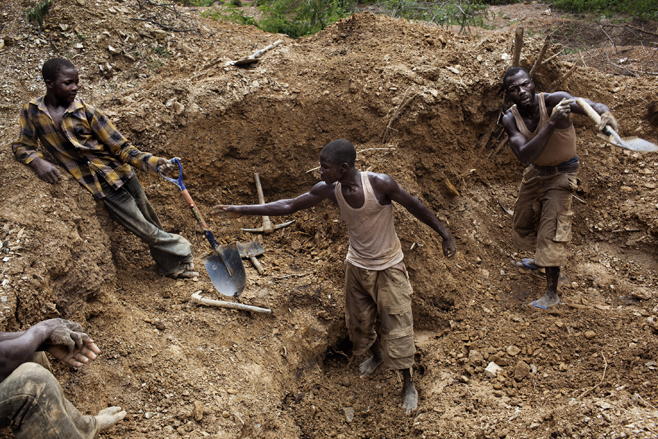
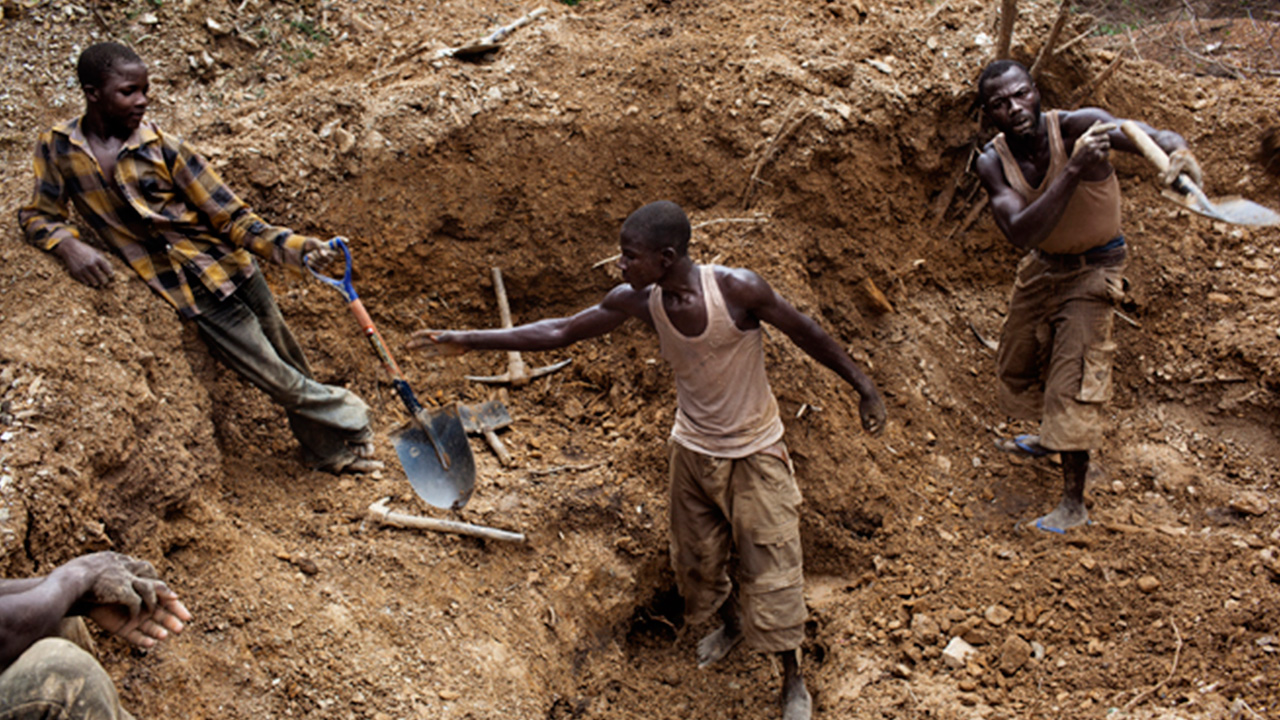
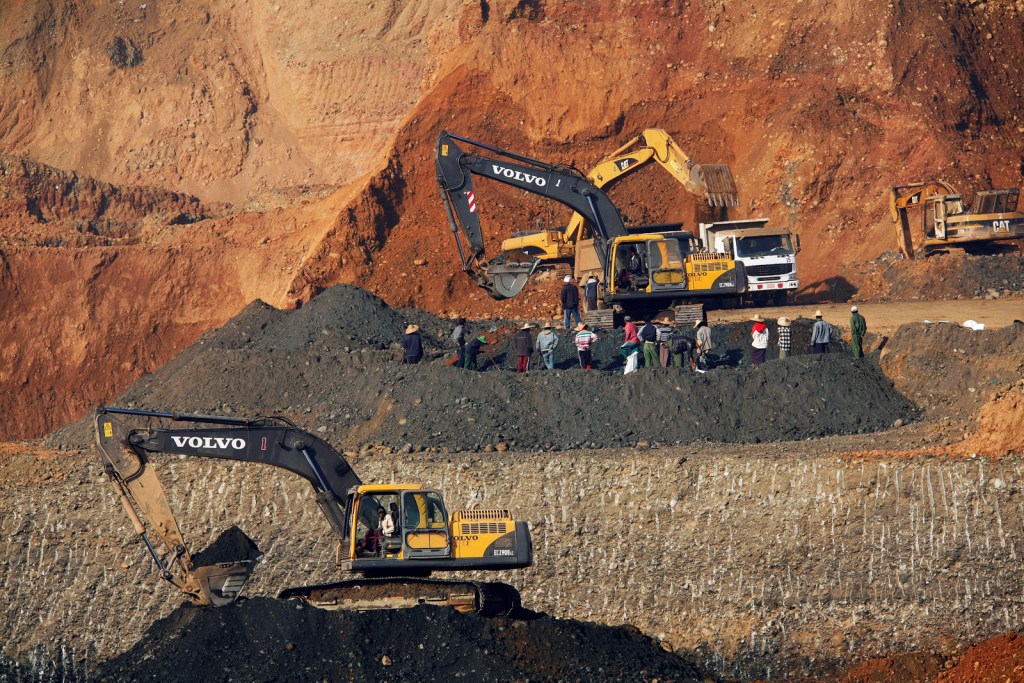
A new report by PwC has revealed that market capitalisation of the top 40 mining companies in the world increased by 45 percent to $714 billion, approaching the 2014 level. This was mainly due to rising commodity prices.
The report, titled PwC Mine 2017 report, noted that the world’s Top 40 miners recovered from a race to the bottom, with bolstered balance sheets and a return to profitability in 2016, giving them much-needed space to pause and draw breath.
As it looks to the future, the 14th edition of PwC’s industry series analysing financial performance and global trends, also outlines the new opportunities and hazards on the horizon – and the impact of intransigent or innovative activity.
Mine 2017 was released by PwC Africa last week at the Junior Indaba conference held in Johannesburg.
Michal Kotzé, Energy, Utilities and Mining Industry Leader for PwC Africa, commented: “The narrative of the Top 40 in 2016 tends to read like a mine site safety mantra: Stop. Think … Act. The industry has moved out of danger but 2016 was not a year of significant action, and we now wait to see who will be bold and step out beyond the fluctuating market confidence.”
The report analysed 40 of the largest listed mining companies by market capitalisation. The financial information for 2016 covers the reporting periods 1 April 2015 to 31 December 2016, with each company’s results included for the 12-month financial reporting period that falls into this time frame.
The number of emerging companies included in the Top 40 has decreased by two and now totals 17. There were seven new entrants from the previous year, five of which had made appearances on previous rankings in either 2014 or 2015. First Quantum and Teck Resources re-emerged on the 2016 list after strengthening their financial positions.
The report recognises a return to profitability in 2016, with an aggregate Top-40 net profit of $20 billion; after an aggregate loss of $28 billion in 2015. The improved fortunes of the industry were then directed to strengthening balance sheets.
Revenue from the Top 40 remained relatively flat – up just one percent from the previous year’s sum of $491 billion – despite a rebound in commodity prices, particularly coal and iron ore in the second half of the year.
Capex fell dramatically again, by a further 41 percent, to a new record low of just $50 billion, the report noted.
After hitting a near-record in 2015, impairment charges tumbled last year to a less-alarming $19 billion.
The report said debt repayments totalled $93 billion, up from $73 billion a year earlier, with most of the debt issued to refinance, rather than fund acquisitions or mine development.
Kotzé added: “We see an improved gearing ratio of 41 per cent, down from the 2015 record of 49 per cent. But this is still well above the 10 year average of 29 per cent. Interestingly, we also found that around half the capex figure was invested in sustaining activities, so the growth capital portion was strikingly small compared with previous years.”
Rapidly rising commodity prices sparked renewed market optimism and improved credit ratings across the Top 40 firms. Valuations also climbed, especially for the traditional miners, with the trend continuing through the first quarter of 2017 even as commodity prices remained flat. But, valuations aside, there is little to suggest that the group made any substantial advances throughout the year.
For the fourth consecutive year, the industry reduced spending on exploration. $7.2 billion was invested in 2016, barely one-third of the record $21.5 billion allocated in 2012, with the funds cautiously targeted at less risky, later stage assets, typically located in politically stable countries.
Limited M&A activity
One of the biggest M&A stories of 2016 concerned the assets that did not sell. Numerous large deals, expected to be completed by early 2017, were withdrawn from the market, possibly due to the rebound in commodity prices and the improving prospects of the companies that owned them. More broadly, asset sales in 2016 were largely strategic rather than fire sales. Mines, especially diversified players, sold minority stakes in non-mining businesses.
China in the driving seat
China remains the exception to the dominant investment behaviour within the Top 40. During the downturn, Chinese companies demonstrated one enormous advantage over other miners from both traditional and emerging countries: access to capital.
With deeper pockets, Chinese players were able to fund more acquisitions than their counterparts, either confidently buying assets at bullish prices or moving quickly on assets made available at the bottom of the price cycle. We also saw an increase in acquisitions by Chinese private equity firms, and we expect China to continue to be active in acquiring global mining assets as a way to reduce its longer term dependency on imports.
Moving into action
Balance sheet clean-ups require discipline, and this has resulted in a tailing-off of impairments, the avoidance of any new bankruptcies, the absence of any significant streaming transactions and a general passing of distress. The market rightly applauded this, reinstating a positive gap between market caps and net book values that was absent in 2015.
All of this provides a platform for decisive action in the future. While many will be willing to ride the waves of industry sentiment, others will see the conditions as ripe for value accretive moves, with market differentiation their immediate goal.
Action might also come in the form of commitments to greenfield projects, M&A or technology – or a combination of these – while others may realign their strategy in response to external forces such as recycling and substation, shareholder activism and government intervention.
Will the digital revolution become an enduring part of the mining psyche?
New technologies promising a boost for the sector include software to optimise asset utilisation, devices to remotely monitor and control activities, and robotics to automate repetitive task.
The benefits of asset optimisation tools are significant. According to an analysis by PwC, it is estimated that maintenance costs can be reduced by 20 to 40 percent, asset utilisation increased by up to 20 percent, capital expenses reduced by 5 to 10 percent, while also delivering improved environmental, health and safety outcomes. A number of Top 40 miners have announced or implemented digital innovations that are already enhancing performance.
Andries Rossouw, PwC Assurance Partner commented: “Mining companies need to combine engineering excellence and know-how with a new open-mindedness to learn from advanced analytics and a need to embrace robotics and platforms that fundamentally challenge decades of doing things the same way…it is as much about behaviour as technology.”
Rossouw concludes: “The key question is, who will act rather than simply react? There will be more advances this year but how impactful they will be, remains to be seen.”







By Adedapo Adesanya
The NASD Over-the-Counter (OTC) Securities Exchange extended its stay in the south territory with a decline of 0.56 per cent on Wednesday, April 2.
This brought down the market capitalisation by N13 billion to N2.417 trillion from N2.430 trillion, and downed the NASD Unlisted Security Index (NSI) by 22.57 points to 4,062.87 points from the previous session’s 4,062.87 points.
It was observed that the NASD exchange ended with three price gainers and three price losers during the trading day.
MRS Oil Plc depreciated by N19.00 to close at N171.00 per unit compared with the previous price of N190.00 per unit, NASD Plc lost N4.14 to trade at N37.36 per share compared with Wednesday’s N41.50 per share, and Central Securities Clearing System (CSCS) Plc gave up N2.00 to sell at N78.00 per unit versus N80.00 per unit.
On the flip side, FrieslandCampina Wamco Nigeria Plc appreciated by 19 Kobo to N93.00 per share from N92.81 per share, Food Concepts Plc expanded by 15 Kobo to N2.87 per unit from N2.72 per unit, and Great Nigeria Insurance (GNI) Plc improved by 2 Kobo to 52 Kobo per share from 50 Kobo per share.
Yesterday, the volume of securities dipped by 91.8 per cent to 260.2 million units from 3.2 billion units, the value of securities went down by 98.1 per cent to N154.2 million from N8.3 billion, while the number of deals soared by 53.3 per cent to 46 deals from 30 deals.
GNI Plc was the most active stock by value on a year-to-date basis with 3.4 billion units worth N8.4 billion, followed by CSCS Plc with 56.9 million units valued at N3.9 billion, and Okitipupa Plc with 27.5 million units traded for N1.8 billion.
The most traded stock by volume on a year-to-date basis was also GNI Plc with 3.4 billion units sold for N8.2 billion, trailed by Resourcery Plc with 1.1 billion units exchanged for N415.7 million, and Infrastructure Guarantee Credit Plc with 400 million units transacted for N1.2 billion.
By Adedapo Adesanya
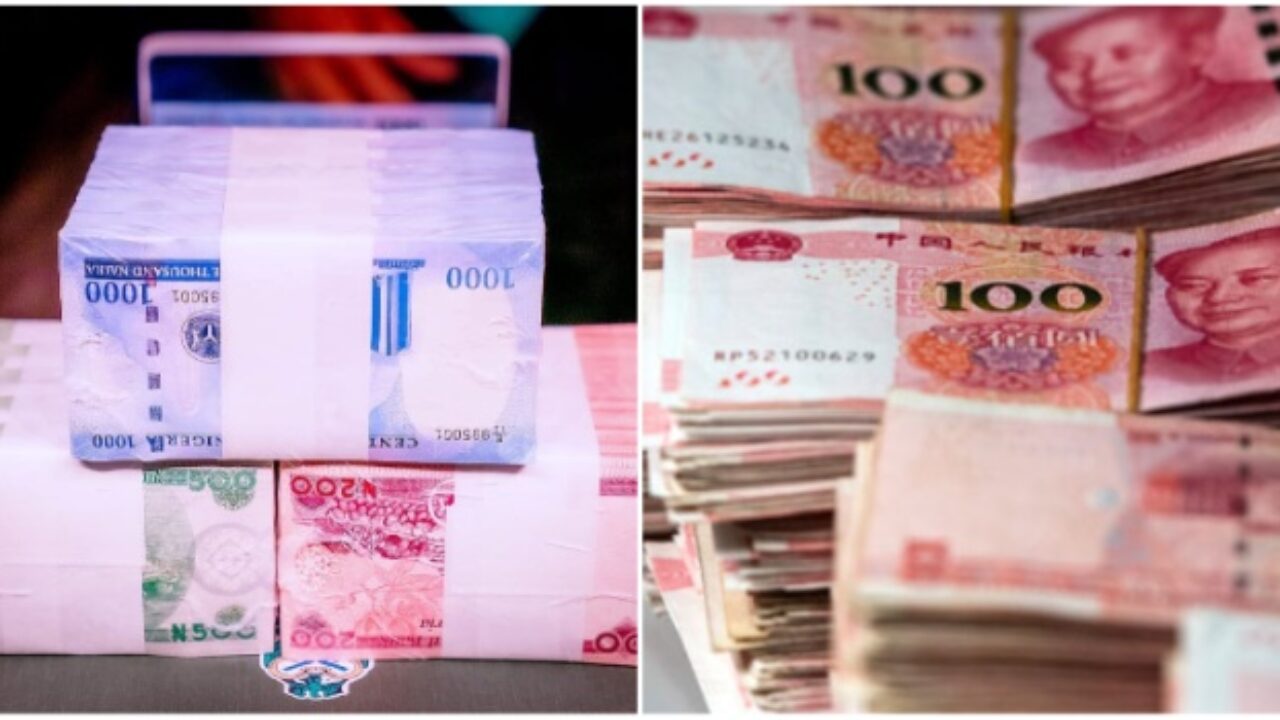
The Naira dropped N2.09 or 0.15 per cent against the United States Dollar in the Nigerian Autonomous Foreign Exchange Market (NAFEX) on Thursday, April 2, to trade at N1,380.79/$1 compared with Wednesday’s rate of N1,378.70/$1.
However, it appreciated against the Pound Sterling in the official market by N2.77 to quote at N1,824.86/£1 versus the N1,836.57/£1 it was traded at midweek, and improved its value against the Euro by N10.54 to N1,591.92/€1 from N1,602.46/€1.
Yesterday was the last trading session of the week for the local currency in the spot market, as the market will be closed on Friday and Monday for the Easter Holiday.
At the black market, the Nigerian Naira maintained stability against the greenback yesterday at N1,405/$1, but gained N8 at the GTBank FX counter to settle at N1,388/$1, in contrast to the previous session’s N1,396/$1.
Pressure eased on the domestic currency as strong policy indicators have helped calm the majority of worries within the financial systems. Particularly in the remittance segment, the apex bank has directed all International Money Transfer Operators (IMTOs) to route remittance transactions through designated Naira settlement accounts in banks, a move aimed at boosting transparency and channelling more foreign exchange into the formal market.
This helps take off pressure from the foreign reserves, which have fallen below the $50 billion mark as they are gradually decreasing rather than falling sharply.
Meanwhile, the cryptocurrency market was bullish on Thursday, as macro sentiment shifted against recent optimism after reports that Iran is drafting a protocol with Oman to manage traffic through the Strait of Hormuz, easing concerns about disruptions to a key global oil route.
The remarks came after U.S. President Trump on Wednesday night vowed to hit Iran “extremely hard” in the coming weeks and that the Strait of Hormuz would “open naturally” once the war ends.
Cardano (ADA) chalked up 1.9 per cent to trade at $0.2435, Dogecoin (DOGE) grew by 1.2 per cent to $0.0912, Ethereum (ETH) appreciated by 0.8 per cent to $2,066.37, Bitcoin (BTC) added 0.5 per cent to sell at $67,080.53, Solana (SOL) increased by 0.5 per cent to $79.91, and Ripple (XRP) jumped 0.2 per cent to $1.31.
Conversely, Binance Coin (BNB) dipped 0.7 per cent to $586.90, and TRON (TRX) depreciated by 0.3 per cent to $0.3147, while the US Dollar Tether (USDT) and the US Dollar Coin (USDC) closed flat at $1.00 each.
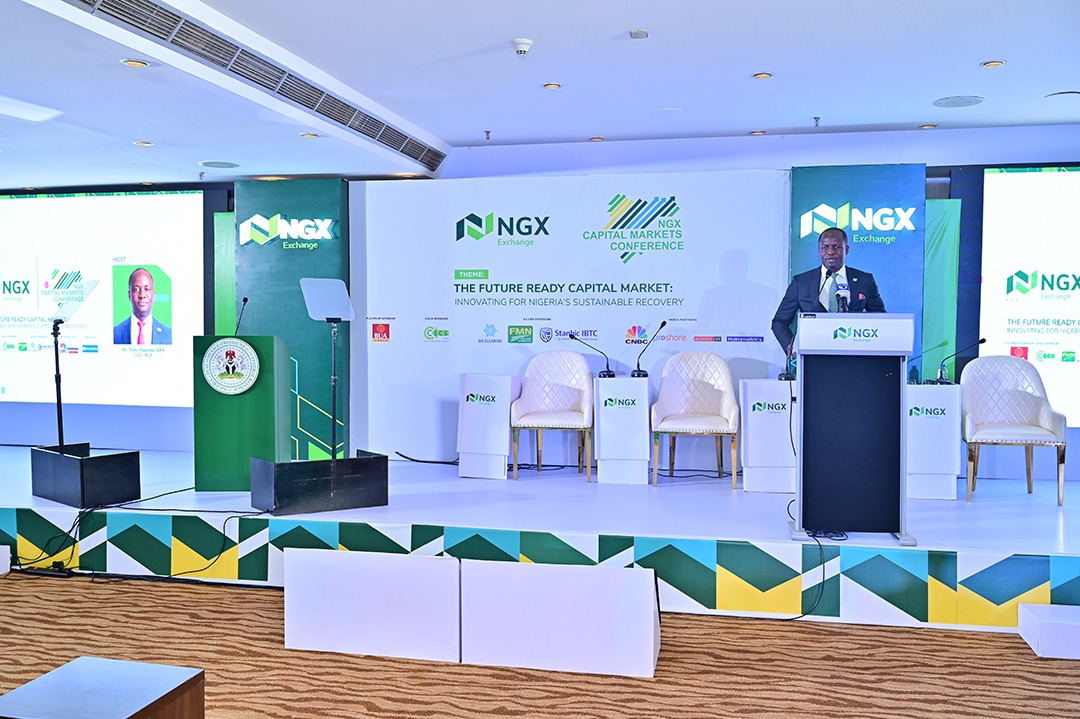
By Dipo Olowookere
The local stock market was relatively flat on Friday, as the bears and the bulls shared the spoils of war, though investor sentiment turned bullish compared with the preceding session’s bearish posture.
Data from the Nigerian Exchange (NGX) Limited showed that the All-Share Index (ASI) was marginally down by 4.66 points as it ended at 201,698.89 points versus Wednesday’s 201,703.55 points, and the market capitalisation slightly contracted by N3 billion to N129.806 trillion from N129.809 trillion.
Customs Street was shut on Friday because of the public holidays declared by the federal government today and next Monday.
Business Post reports that John Holt declined by 9.91 per cent to N15.45, Abbey Mortgage Bank shed 9.60 per cent to trade at N8.95, International Energy Insurance slipped by 6.48 per cent to N3.32, Chams shrank by 5.30 per cent to N3.75, and Tantalizers depreciated by 5.18 per cent to N4.03.
On the flip side, Unilever Nigeria improved by 10.00 per cent to N103.40, Fortis Global Insurance gained 9.82 per cent to trade at N1.23, Multiverse appreciated 9.81 per cent to N20.15, Legend Internet advanced by 9.38 per cent to N6.30, and Zichis grew by 9.02 per cent to N14.14.
The market breadth index was positive during the trading session, as there were 35 appreciating stocks and 24 depreciating stocks.
Yesterday, investors traded 560.0 million equities valued at N19.3 billion in 49,676 deals, in contrast to the 815.5 million equities worth N33.3 billion transacted in 52,641 deals in the preceding day, representing a drop in the trading volume, value, and number of deals by 31.33 per cent, 42.04 per cent, and 5.63 per cent, respectively.
Secure Electronic Technology dominated the activity log with 59.7 million shares valued at N61.1 million, Wema Bank exchanged 52.0 million equities worth N1.4 billion, VFD Group transacted 36.0 million stocks for N410.5 million, Access Holdings sold 35.3 million shares valued at N914.8 million, and Chams traded 31.0 million equities worth N115.0 million.
-
 Feature/OPED6 years ago
Davos was Different this year
-
Travel/Tourism10 years ago
Lagos Seals Western Lodge Hotel In Ikorodu
-

 Showbiz3 years ago
Estranged Lover Releases Videos of Empress Njamah Bathing
-
 Banking8 years ago
Sort Codes of GTBank Branches in Nigeria
-

 Economy3 years ago
Subsidy Removal: CNG at N130 Per Litre Cheaper Than Petrol—IPMAN
-

 Banking3 years ago
Sort Codes of UBA Branches in Nigeria
-

 Banking3 years ago
First Bank Announces Planned Downtime
-

 Sports3 years ago
Highest Paid Nigerian Footballer – How Much Do Nigerian Footballers Earn