

Connect with us

Economy

Molex Envisions the Future of Robotics in New Industry Report that Considers the Rising Potential of Human-Machine Collaborations

Published

on

  • Advances in artificial intelligence, machine learning and sensor fusion drive robotics functionality across factory, home, classroom, healthcare and military applications
  • Ongoing innovations in high-speed connectivity, edge computing, network redundancy and fail-safe procedures crucial to optimizing robotics opportunities
  • Emergence of natural language processing and emotional AI functionality poised to propel more intuitive, responsive and adaptive human-machine interaction


LISLE, IL – Media OutReach Newswire – 3 December 2024 – Molex, a global electronics leader and connectivity innovator, has issued a thought leadership report that looks at the future potential of robotics, resulting in more intuitive, intelligent and interconnected human-machine communications and collaborations. “The Molex 2024 Robotics Report: How Robotics will Empower Human Potential” contemplates a future where highly advanced robotics systems and multipurpose robots transform fundamental aspects of everyday life — from improving how factories function and students learn to making smart homes more efficient, elevating patient care and increasing support for military operations.
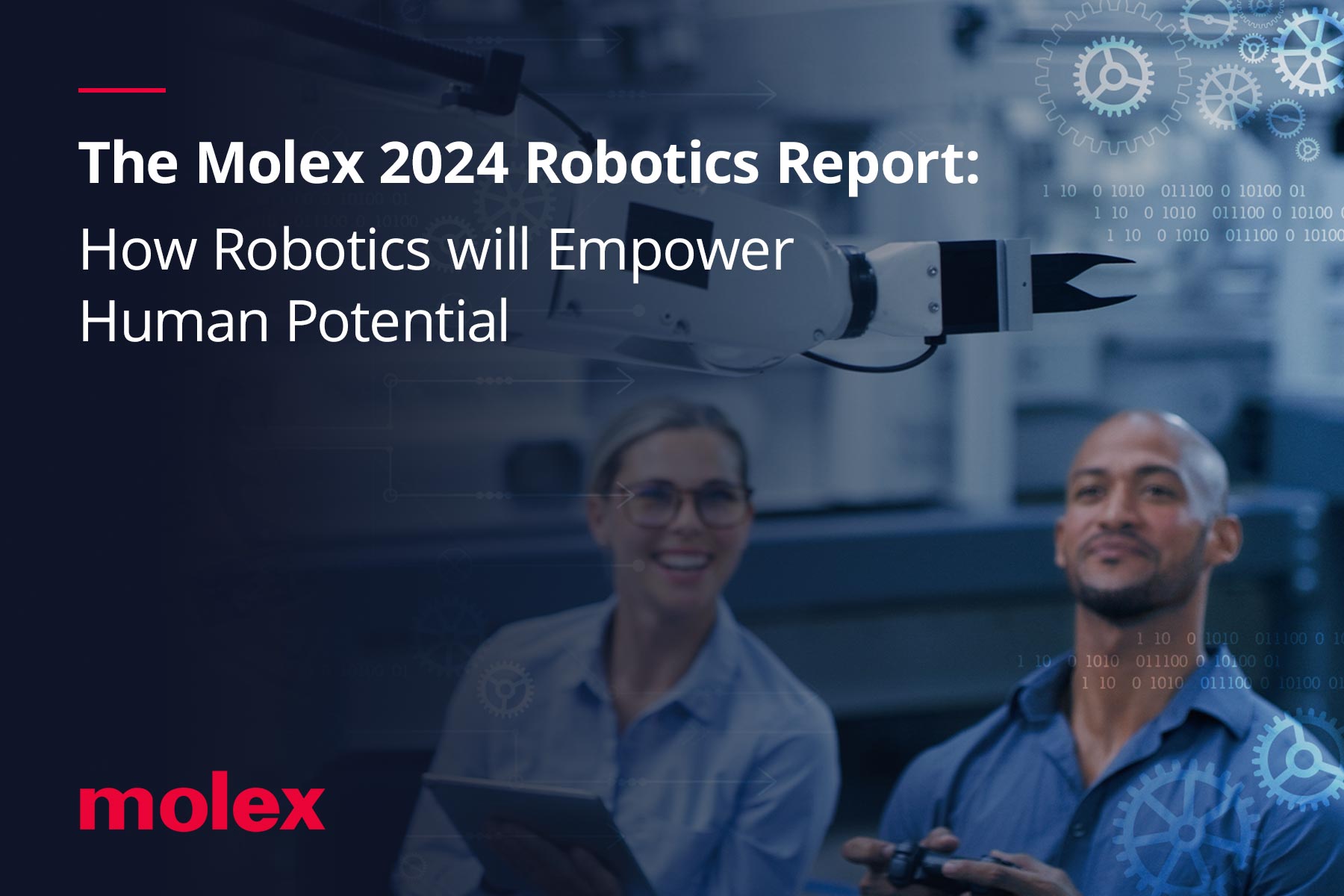
Molex Envisions the Future of Robotics in New Industry Report that Considers the Rising Potential of Human-Machine Collaborations

“As we explore the role of robotics across various industries, it is becoming increasingly apparent that the future will be shaped by the evolving relationship between humans and machines,” said Brian Hauge, SVP and president, Consumer and Commercial Solutions, Molex. “This latest industry report sheds light on a promising future of unprecedented human-machine interactions while underscoring the critical need for enabling technologies and seamless connections between robotics systems and their human counterparts to empower faster, more effective and extremely precise decision making.”

Foundational Technologies Driving Robotics Advancements
The future of robotics depends in larger part on the continued evolution of core communications and computing technologies that enable autonomous operation in dynamic environments. Topping the list is high-speed connectivity, as robotics systems require low-latency communications and near-instantaneous data transfers to respond with speed and precision. While 5G/6G networks will deliver high bandwidth, low latency communications, it is important to design robotics solutions with multiple connectivity options, including the ability to switch between 5G and Wi-Fi or satellite networks that provide multi-channel redundancy.

Equally important, processing data locally on nearby edge devices ensures uninterrupted, independent operation of robotics systems and robots. With edge computing, for example, these automated solutions can process data instantaneously, which is essential for applications requiring split-second decisions. In most industrial automation or manufacturing environments, robots are always programmed with fail-safe protocols that throttle back power and functionality to a safe operational state if connectivity is disrupted or compromised.

Benefitting from AI/ML and Sensor Fusion Innovations
As the biggest engines behind robotic adaptability, advancements in AI and ML are crucial. AI algorithms let robots make informed decisions based on real-time data while adapting quickly to new circumstances, and even predicting future conditions based on past interactions. Through ML, robots can analyze patterns to optimize behavior while increasing efficiency and accuracy by continually learning, adapting and improving performance. Sensor fusion combines data from different sources, such as LiDAR, cameras, along with depth and force sensors, to help multipurpose robots better perceive depth, movement and obstacles in different settings.

Important Factors in Greater Human-Robot Interactions
According to Molex’s robotics report, robots that can understand, respond to, and even anticipate human emotional and contextual needs are on the horizon. With Natural Language Processing (NLP), for instance, robots can follow spoken commands, engage in dialogue and adjust actions based on contextual understanding. Additionally, emotional AI enables robots to recognize and respond to emotional cues by analyzing a human’s tone of voice or facial expressions. Molex expects this rise in human-centered interactions to foster a deeper sense of engagement, enabling future robotics systems and autonomous robots to adapt more readily to complex home environments, and take on new roles as personalized educational tutors, indispensable surgery assistants and continuous patient monitors.

With the arrival of Industry 4.0, collaborative robots, or cobots, are gaining traction in handling increasingly complicated duties in industrial settings. Not only can robotics systems and an entire fleet of robots keep production lines running smoothly, but they can also anticipate and fix potential manufacturing bottlenecks while helping engineers design better products. In the future, cobots will redefine precision and personalization in every environment, including operating rooms, classrooms and battlefields.

Critical Enabler of Robotic Transformations
Major advances in robotic technologies and greater interaction opportunities will require innovations in connectivity, power management and data processing. Molex’s robust portfolio of resilient and reliable connectors will enable ever-increasing collaboration between humans and machines to support the most demanding applications across diverse industry sectors.
Hashtag: #Molex

The issuer is solely responsible for the content of this announcement.

About Molex

Molex is a global electronics leader committed to making the world a better, more connected place. With presence in more than 40 countries, Molex enables transformative technology innovation in the automotive, data center, industrial automation, healthcare, 5G, cloud and consumer device industries. Through trusted customer and industry relationships, unrivaled engineering expertise, and product quality and reliability, Molex realizes the infinite potential of Creating Connections for Life. For more information, visit .

Adedapo Adesanya is a journalist, polymath, and connoisseur of everything art. When he is not writing, he has his nose buried in one of the many books or articles he has bookmarked or simply listening to good music with a bottle of beer or wine. He supports the greatest club in the world, Manchester United F.C.

Economy

Ibeto Customs, Police Renew Joint Security Pact for Efficiency, Safety

Published

on

Nigeria Customs Service

By Adedapo Adesanya

The Nigeria Customs Service (NCS), Ibeto Seaport and Terminals Command, Port Harcourt, and the Nigeria Police Force have renewed their commitment to joint security operations at the nation’s maritime corridors, following a strategic meeting between top officials of both agencies.

According to a statement, the renewed partnership came as the Commissioner of Police, Eastern Port Police Command, CP Shuaibu Audu, paid a working visit to the Customs Area Controller, Comptroller Usman Yahaya, at the Command headquarters on April 17, 2026.

The engagement, according to a statement by the Command’s Public Relations Officer, Chief Superintendent of Customs Tangwa Emmanuel, was aimed at strengthening inter-agency cooperation and boosting operational efficiency within the port environment.

Speaking during the visit, Comptroller Yahaya described the engagement as significant, stressing that sustained collaboration among security agencies remains critical to safeguarding national assets and ensuring seamless port operations.

This visit is timely and highly appreciated. It reflects the importance of sustained cooperation among agencies entrusted with the security of our nation and the protection of critical economic assets,” he said.

He assured the police boss of Customs’ readiness to maintain strong working relations with the Eastern Port Police Command.

“We are fully committed to working with the new Commissioner of Police and giving all necessary support towards the successful discharge of his responsibilities,” Mr Yahaya added.

The Customs Area Controller noted that the synergy between both agencies has continued to play a vital role in maintaining order, facilitating legitimate trade and curbing criminal activities within the port system.

This was contained in a statement shared via the Customs official X handle.

Customs and the Police share common responsibilities in safeguarding the port environment. Synergy remains the cornerstone for achieving our collective mandate,” he stated.

He also briefed the visiting Commissioner on the operational relevance of the Ibeto Seaport and Terminals Command, reiterating the Command’s commitment to strengthening maritime security.

On his part, CP Audu said the visit was part of efforts to consolidate existing ties between the Nigeria Police Force and the Nigeria Customs Service.

“My presence here today is to reinforce the cordial relationship between the Nigeria Police Force and the Nigeria Customs Service. No organisation can function effectively in isolation,” he said.

He emphasised the importance of sustained collaboration among security agencies, particularly in securing the nation’s ports, which he described as vital to economic stability.

Synergy among security agencies is essential to addressing emerging threats. Our ports are strategic national assets, and we must work together to keep them secure,” Mr Audu stated.

The police commissioner also sought continued support from Customs officers in advancing shared security objectives.

Continue Reading

Economy

Tinubu Removes Wale Edun, Elevates Taiwo Oyedele as New Finance Minister

Published

on

swear in taiwo oyedele

By Modupe Gbadeyanka

Mr Taiwo Oyedele has become the new Minister of Finance and Coordinating Minister for the Economy after the exit of Mr Wale Edun.

This announcement was made on Tuesday by the Office of the Secretary to the Government of the Federation via a statement signed by Mr Yomi Odunuga, the Special Adviser of Media and Publicity to the Secretary to the Government of the Federation, Mr George Akume.

It was disclosed that President Bola Tinubu approved the removal of Mr Edun as Finance Minister as well his counterpart in the Housing and Urban Development Ministry, Mr Ahmed Musa Dangiwa.

According to Mr Akume, “These changes are aimed at strengthening cohesion, synergy in governance as well as achieving more impactful delivery on the economy to Nigerians, through the Renewed Hope Agenda.”

In approving the cabinet reshuffle, the President has fully exercised his powers as conferred on him by Sections 147 and 148 of the Constitution of the Federal Republic of Nigeria (1999, as amended), he added.

Before this minor cabinet reshuffle in the membership of the Federal Executive Council (FEC), Mr Oyedele the Minister of State for Finance.

Mr Muttaqha Rabe Darma has now been named as the ministerial nominee and minister designate for the Housing and Urban Development Ministry.

Mr Tinubu thanked the outgoing ministers for their services to the nation while wishing them the best in all their future endeavours, reminding others that “the process of reinvigoration shall be continuous.”

Continue Reading

Economy

Dangote Eyes Crude Oil Production to Ease Shortfalls

Published

on

Crude Oil Production

By Adedapo Adesanya

The Dangote Group has announced plans to begin its own crude production, to help cover shortfalls in local crude feedstocks, in the coming weeks through its upstream assets.

According to Mr Devakumar Edwin, the Vice President of the Dangote Group, the company has commenced early testing on crude from its Niger Delta licenses.

In an interview with Platts, part of S&P Global Energy, the official said the company has already begun standard well testing and is preparing to scale up output.

“We have opened a well and begun standard testing, which should be completed in the next three to four weeks, maximum.

“After that point, oil can start to be pumped in larger volumes, and the company can begin work on drilling new wells,” he said.

Also speaking, Mr David Bird, the chief executive officer (CEO) of the Dangote refinery, said the upstream assets could provide a more stable crude supply for the refinery.

“Alongside its upstream interests, the company is seeking to establish its own shipping presence to help reduce logistics costs and improve the reliability of its crude sourcing,” Mr Bird said.

While confirmation has come from the company, the Nigerian government or the Nigerian National Petroleum Company (NNPC) Limited is yet to officially confirm the development.

The 650,000 barrels-per-day facility has been able to get enough feedstock locally under the federal government’s Crude-for-Naira initiative, leading it to source crude from international markets at a premium, which is partly responsible for the high cost of petrol and other fuels.

However, in April 2026, the NNPC said it would increase its crude supply to Dangote Refinery to seven cargoes.

The refinery, on several occasions, has stated it sources the majority of its crude oil outside Nigeria despite being the country’s Naira-for-crude sale deal.

Last month, it said the NNPC only gave it four to five cargoes, which is less than 50 per cent of expected volumes. The majority of Nigeria’s crude is tied to joint ventures with international oil companies.

With the latest development, it would help reduce the dependency on international crude as well as allow Dangote to ease some of its import costs.

Continue Reading

Trending

