Economy
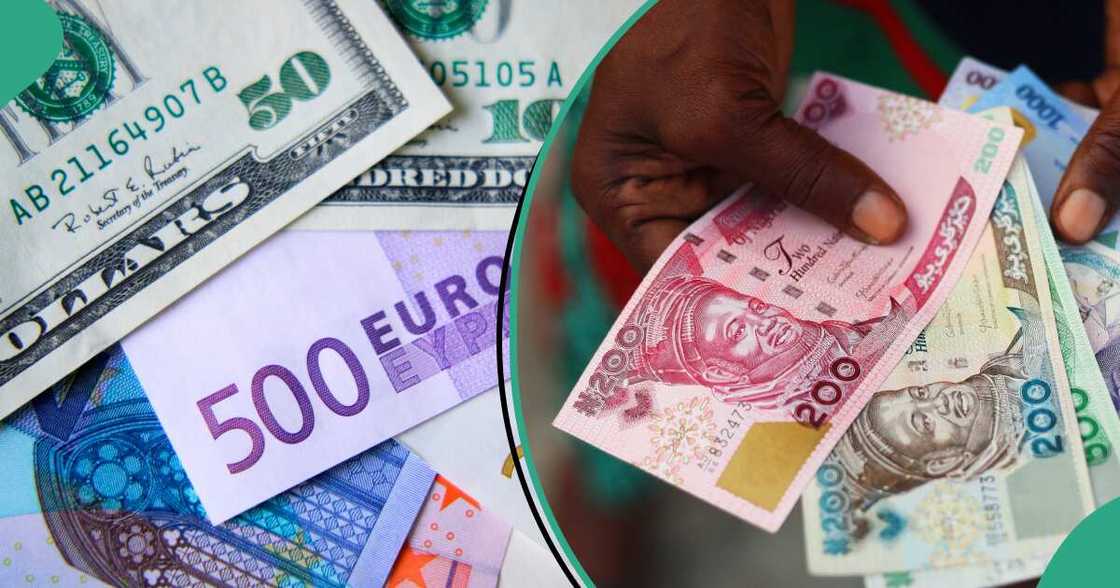
Weak Investor Participation Shrinks NAFEM Inflows to $2.86bn in April
By Adedapo Adesanya
Total inflows into the Nigerian Autonomous Foreign Exchange Market (NAFEM) fell sharply in April 2026 as geopolitical tensions and weaker participation from both domestic and foreign investors impacted liquidity in the FX market.
Data from the FMDQ Securities Exchange showed that total foreign exchange inflows declined by 30.1 per cent month-on-month to $2.86 billion in April, down from $4.09 billion recorded in March.
The decline was driven by reduced inflows from the Central Bank of Nigeria (CBN), exporters, importers, foreign portfolio investors and non-bank corporates, reflecting growing investor caution amid rising tensions in the Middle East and uncertainty surrounding the US-Iran conflict.
Local inflows, which accounted for 42.8 per cent of total market inflows, dropped by 38.7 per cent to $1.22 billion from $2.00 billion in March.
The steepest decline came from the CBN, whose interventions in the market fell by 83 per cent month-on-month. Inflows from exporters and importers declined by 19.3 per cent, non-bank corporates by 18.2 per cent, while inflows from individuals fell by 33.3 per cent.
Foreign inflows, which contributed 57.2 per cent of the total, also weakened by 21.9 per cent to $1.63 billion compared to $2.09 billion in March.
A breakdown of the foreign component showed that foreign portfolio investment (FPI) inflows dropped by 17.8 per cent, foreign direct investment (FDI) plunged by 78.9 per cent, while inflows from other corporates declined by 54.6 per cent.
Despite the drop in inflows, the local currency posted a modest gain against the US Dollar during the week, appreciating by 1.2 per cent to close at N1,360/$1, supported largely by offshore investor inflows that helped offset domestic demand pressures.
However, the local currency ended the week slightly weaker at the official market, depreciating by 0.22 per cent to N,361.40 per Dollar while gaining 44 basis points at the parallel market to close at N1,363.15/$1.
In the forwards market, the Naira strengthened across all tenors, with the one-month contract appreciating by 1.2 per cent to N1,384.53 to the Dollar, the three-month contract by 1.2 per cent to N1,424.08/$1, the six-month contract by 1.3 per cent to N1,478.39/$1, and the one-year contract by 1.5 per cent to N1,586.56/$1.
Nigeria’s gross external reserves continued their downward trend, declining by $40 million to $48.33 billion as of May 7, 2026. This marked the eighth consecutive week of decline, attributed to sustained CBN interventions, debt service obligations, subdued oil receipts and foreign capital outflows.
Meanwhile, crude oil prices rose in the international market as renewed hostilities between the US and Iran in the Strait of Hormuz raised concerns over potential supply disruptions.
Brent Crude gained 1.2 per cent to $101.30 per barrel while the US West Texas Intermediate (WTI) rose 0.5 per cent to $95.28 per barrel.
Economy
NGX Lauds Stanbic IBTC’s role in Enhancing Investor Confidence, Market Safety
By Aduragbemi Omiyale
Stanbic IBTC Nominees Limited has been commended for its critical role in the Nigerian capital market, especially for safely keeping non-pension assets.
For the past 30 years, the company has provided custody services in Nigeria, and to celebrate this milestone, it was honoured with a closing gong ceremony at the Nigerian Exchange (NGX) Limited.
The milestone reflects the institution’s longstanding contribution to investor confidence and the continued development of the nation’s capital market.
Welcoming the organisation to Customs Street, the chief executive of NGX, Mr Jude Chiemeka, commended its three decades of custody services, recognising the firm’s role in strengthening investor confidence and enhancing market safety.
He highlighted NGX’s continued investment in technology, which he said has enabled over 2.6 million active retail investors to trade on the platform.
“Technology continues to be at the heart of our strategy,” Mr Chiemeka said, noting that a vibrant and secure marketplace remains essential to investor participation.
In his remarks, the chief executive of Stanbic IBTC Bank, Mr Wole Adeniyi, thanked NGX for its continued partnership, saying, “We are thrilled to be here today, commemorating not just our journey, but also the remarkable progress made by the NGX.”
He noted that the collaboration between the two institutions has continued to drive innovation, product development and thought leadership across the industry.
“We are dedicated to raising standards within the industry as part of Standard Bank Group. Our focus remains driving the growth and development of Nigeria’s capital market. Indeed, Nigeria is our home, and we drive her growth,” he added.
The chief executive of Stanbic IBTC Nominees, Mr Babatunde Majiyagbe, reflected on the evolution of the business from the era of physical share certificates stored in fireproof vaults to today’s fully dematerialised market, where securities are held electronically.
“We started with holding custody of physical certificates, investing in vaults with fire and dust protection, so those certificates could be presented when needed,” Mr Majiyagbe recalled, noting that while the market has evolved significantly, the commitment to service excellence has remained unchanged.
“What has endeared a lot of investors to the market is that they are dealing with a reputable organisation like ours. We are high on good governance, and high on technology, making the process of investment in Nigeria easier,” he said.
Mr Majiyagbe added that Stanbic IBTC Nominees’ role goes beyond just attracting foreign portfolio investment (FPI) and capital.
“For us, it’s not just about FPI; but also about the value we have delivered over 30 years. Stanbic IBTC Nominees continue to be the eyes and ears of foreign and domestic investors in our market,” he stated.
Mr Majiyagbe added that the firm has also supported the development of market rules and safeguards, noting: “We have, over the years, advocated for growth, change, transformation and stability in our capability to provide services to domestic and foreign portfolio investors continuously.”
The deputy chief executive of Stanbic IBTC Bank and Chairman of Stanbic IBTC Nominees, Mrs Bunmi Dayo-Olagunju, said the next phase of growth will build on the institution’s legacy of trust.
“For 30 years, we’ve delivered growth, security, and client confidence. That’s why investors have stayed with us and why new business keeps coming.
“Our target for this new phase of growth is simple: build on that trust and ride the acceleration in Nigeria’s economic activity.
“With custody, settlement, capital raise, and advisory integrated on one platform, we’re not just a custodian. We’re an infrastructure. We look forward to building on that trust for generations to come, serving both local and international clients. Hopefully, we’ll have another 100 years of maintaining that trust with local and international markets,” Mrs Dayo-Olagunju said.
Economy
Local Stock Market Indices Remain in Red Amid Positive Market Breadth Index
By Dipo Olowookere
The positive market breadth index recorded by the Nigerian Exchange (NGX) Limited could not save it from further claws of the bears on Friday.
The major performance indicators, the All-Share Index (ASI) and the market capitalisation, depreciated by 0.03 per cent and 0.01 per cent, respectively.
The ASI was down by 78.58 points to 245,283.68 points from the previous day’s 245,362.26 points, and the market capitalisation receded by N14 billion to N158.326 trillion from Thursday’s N158.340 trillion.
Business Post reports that market participants traded 943.0 million equities valued at N46.7 billion in 55,480 deals compared with the 2.1 billion equities worth N230.8 billion transacted in 48,231 deals a day earlier.
This implied that the trading volume shrank by 55.10 per cent, the trading value reduced by 79.77 per cent, and the number of deals surged by 15.03 per cent.
An analysis of the sectoral performance showed that the consumer goods space crashed by 0.60 per cent and the energy index went down by 0.09 per cent.
However, the banking sector improved by 1.90 per cent, the insurance counter expanded by 0.75 per cent, and the industrial goods segment soared by 0.10 per cent.
There were 33 appreciating stocks and 29 depreciating stocks during the last trading session of the week and month of July, indicating bullish investor sentiment despite the poor outcome.
CAP lost 9.97 per cent to trade at N128.25, Veritas Kapital depreciated by 9.49 per cent to N1.43, Vitafoam Nigeria slipped by 7.70 per cent to N179.80, The Initiates dipped by 6.67 per cent to N28.00, and NAHCO crashed by 6.63 per cent to N155.00.
Conversely, Eterna gained 10.00 per cent to sell for N33.00, Consolidated Hallmark also grew by 10.00 per cent to N8.36, McNichols expanded by 9.52 per cent to N5.75, Honeywell Flour increased by 8.96 per cent to N18.25, and First Holdco chalked up 8.00 per cent to quote at N129.55.
Economy
NASD Securities Exchange Gains 0.99%, Market Cap Rises to N2.66trn
By Adedapo Adesanya
The NASD Over-the-Counter (OTC) Securities Exchange extended its bullish run on Friday, July 31, by 0.99 per cent.
This raised the NASD Security Index (NSI) by 43.54 points to 4,431.71 points from 4,388.17 points, and lifted the market capitalisation by N26.13 billion to N2.659 trillion from N2.633 trillion.
The growth came amid a significant decline in the activity level, as the volume of securities decreased by 73.0 per cent to 690,990 units from 2.6 million units, the value of securities slid by 15.0 per cent to N75.0 million from the preceding session’s N88.3 million, and the number of deals contracted by 31.6 per cent to 26 deals from the 38 deals recorded a day earlier.
The most active stock by value on a year-to-date basis remained Great Nigeria Insurance (GNI) Plc, with a turnover of 3.4 billion units valued at N8.4 billion, trailed by Infrastructure Credit Guarantee (Infracredit) Plc with 2.3 billion units sold for N6.5 billion, and Central Securities Clearing System (CSCS) Plc with 76.6 million units exchanged for N5.5 billion.
The most active stock by volume on a year-to-date basis was also GNI Plc, with the sale of 3.4 billion units worth N8.4 billion, followed by Infracredit Plc with 2.3 billion units transacted for N6.5 billion, and Resourcery Plc with 1.1 billion units traded for N415.7 million.
Investor sentiment was bullish yesterday after a positive market breadth index triggered by five price gainers and two price losers, led by 11 Plc, which gave up N14.99 to close at N225.01 per share versus the previous day’s N240.00 per share, and MRS Oil Plc, which shed N14.55 to settle at N132.00 per unit versus N146.55 per unit.
However, Nipco Plc gained N41.50 to sell at N456.50 per share compared with the preceding session’s N415.00 per share, FrieslandCampina Wamco Nigeria Plc appreciated by N12.93 to N147.93 per unit from N135.00 per unit, Nitrox Industrial Gases Plc improved by N1.00 to N20.00 per share from N19.00 per share, CSCS Plc soared by 54 Kobo to N102.00 per unit from N101.46 per unit, and Industrial and General Insurance (IGI) Plc jumped by 1 Kobo to 50 Kobo per share from 49 Kobo per share.