Connect with us

Economy

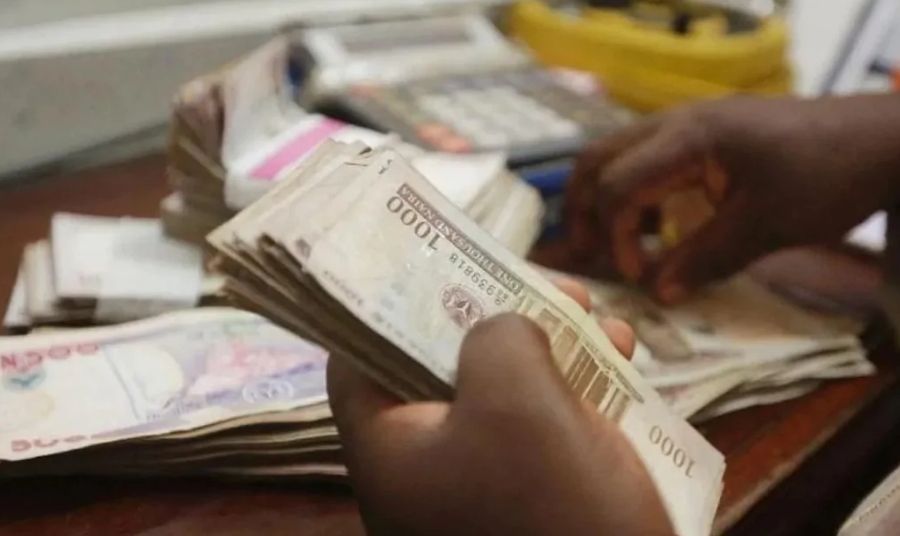
Naira Burnout Continues, Now N484/$1 at Black Market

Published

on

30-Day Treasury Bills Yield

By Adedapo Adesanya

The Naira further dropped to N484 against the Dollar on Friday at the black market as the seasonal rush for foreign currencies devalued the local currency by N4.

At the previous session, the Nigerian currency was exchanged against the American currency at the parallel market at N480/$1.

An analysis by Business Post showed that for the five trading days of this week, the Naira has lost N14 or 3.0 per cent against the greenback at the black market after it opened the week at N470/41.

On Monday, it depreciated to N475/$1 and closed flat on Tuesday before declining to N478/$1 on Wednesday and crashed to N480/$1 on Thursday and crumbled to N484/$1 yesterday.

However, at the same black market, the value of the Naira remained unchanged against the Pound Sterling on Friday at N620/$1 and traded flat against the Euro at 570/€1.

At the Investors and Exporters (I&E) window, the local currency depreciated at the against the Dollar by 33 kobo or 0.09 per cent to close at N385.83/$1 in contrast to N385.50/$1 it finished the previous day.

The depreciation of the Naira came despite the decline in the demand for the greenback at the market segment by 67.5 per cent or $138.95 million. This was because the day’s turnover dropped to $66.89 million from $205.84 million quoted on Thursday.

As the Naira faced an unfavourable outcome at the forex market, investors at the cryptocurrency market were smiling to the bank as the value of the seven digital tokens by Business Post on Quidax pointed north.

Ripple (XRP) gained 8.1 per cent to sell at N157.8, Ethereum (ETH) rose by 7.7 per cent to sell for N245,831.00, while Bitcoin appreciated by 4.2 per cent to sell at N8,890,987.36.

Also, the value of Litecoin (LTC) increased on Friday by 3.2 per cent to trade at N40,252.38, Dash (DASH) grew by 1.3 per cent to trade at 40,740.05, the US Dollar Tether (USDT) moved up by 0.5 per cent to sell for N479. 50, while Tron (TRX) gained 0.1 per cent to sell for N12.62.

Back to the FX market, where physical currencies are transacted. At the Bureaux De Change (BDCs) segment, the Naira/Dollar exchange rate stood at N386/$1, while at the interbank segment, the Naira to Dollar rate remained at N379/$1.


Adedapo Adesanya is a journalist, polymath, and connoisseur of everything art. When he is not writing, he has his nose buried in one of the many books or articles he has bookmarked or simply listening to good music with a bottle of beer or wine. He supports the greatest club in the world, Manchester United F.C.

Click to comment

Leave a Reply

Your email address will not be published. Required fields are marked *

Economy

Stanbic IBTC, Anambra to Accelerate Growth, Trade Opportunities for South-East MSMEs

Published

on

Stanbic IBTC Logo

As MSMEs across the South-East seek opportunities for growth, market expansion and cross-border trade, Stanbic IBTC, in partnership with the Anambra State Government, convened the Nigeria Business Summit Regional Tour in Onitsha to equip businesses with practical solutions for sustainable growth.

The summit, organised in collaboration with the Anambra State Ministry of Commerce, Industry and Trade, brought together government officials, business leaders, trade associations, development partners and entrepreneurs to explore practical pathways for economic growth, business sustainability and increased participation in local and international trade.

Speaking at the event, which took place on Wednesday, 29 July 2026, Honourable Nonso Chukwuma Ebonwu, Commissioner for Commerce and Industry, Anambra State, highlighted the importance of stronger partnerships between government, financial institutions and the private sector in creating an environment where businesses can thrive and contribute meaningfully to economic growth.

“Sustainable economic development requires strong partnerships between the public and private sectors. Financial institutions such as Stanbic IBTC have an important role to play by providing not only access to finance but also business advisory services, capacity building and the knowledge that enables businesses to grow sustainably,” he said.

Given Onitsha’s strategic position as a commercial hub, discussions centred on access to finance, enterprise development, business sustainability and opportunities for expansion into new markets. Stanbic IBTC’s Trade Team also provided practical insights into trade and export opportunities available to businesses operating within the South-East’s manufacturing and distribution value chains, highlighting strategies that can help enterprises improve competitiveness and unlock new growth opportunities.

Commenting on Stanbic IBTC’s commitment to supporting Nigerian businesses, Chuma Nwokocha, Chief Executive, Stanbic IBTC Holdings, said:

“We recognise the critical role businesses play in driving economic growth, creating jobs and fostering innovation. Supporting their growth remains central to our purpose of driving Africa’s growth, and we will continue to provide the solutions, partnerships and platforms they need to thrive.”

Also commenting on Stanbic IBTC’s support for Nigerian businesses, Remy Osuagwu, Executive Director, Business and Commercial Banking, Stanbic IBTC Bank, said:

“Our commitment to supporting businesses is unrelenting. Through strategic partnerships and platforms such as the Nigeria Business Summit Regional Tour, we are connecting entrepreneurs to the knowledge, networks and financial solutions needed to scale their businesses and compete more effectively in today’s evolving marketplace.”

The summit also highlighted Stanbic IBTC’s focus on providing businesses with access to the capital, insights and connections needed to achieve sustainable growth. This commitment aligns with the strategic direction of the bank’s Enterprise Banking business, led by Olajumoke Bello, as Stanbic IBTC continues to deepen engagement with MSMEs and growth-focused businesses across Nigeria.

The Onitsha engagement builds on successful editions of the Nigeria Business Summit Regional Tour previously held in Katsina, Aba and Ibadan. Through the initiative, Stanbic IBTC continues to work with public and private sector stakeholders to equip entrepreneurs with practical insights, strategic partnerships and business solutions that support sustainable growth.

Continue Reading

Economy

H1 2026: Presco Offers N10 Interim Dividend, Pledges Long-Term Value Creation

Published

on

presco logo

By Aduragbemi Omiyale

The board of Presco Plc has proposed the payment of an interim dividend of N10 per share to shareholders of the organisation for the first six months of this year.

This information was conveyed in the unaudited financial statements of the company released to the Nigerian Exchange (NGX) Limited.

In the results for the half-year ended June 30, 2026, the fully integrated agro-industrial firm said the cash reward reinforces its commitment to delivering consistent shareholder returns.

It further assured that looking ahead, it remains focused on disciplined capital allocation, operational efficiency and long-term value creation while navigating evolving market conditions.

A look at the key financial highlights of the results showed that revenue was relatively stable at about N199.0 billion in the first half of 2026 and the same period of 2025 amid a high-cost operating environment and softer crude palm oil prices.

However, the pre-tax profit rose by 9.3 per cent to N122.2 billion from N119.9 billion as result of a 31.9 per cent reduction in financing costs.

Further, the Edo State-based company posted an EBITDA of N123.1 billion, which yielded a margin of 61.9 per cent, as the organisation strengthened its balance sheet, reducing total liabilities by 42.5 per cent to N277.8 billion, while equity grew 13.8 per cent to N503.6 billion, with a current ratio of 345.6 per cent, which underscores robust liquidity.

“Our H1 2026 performance underscores the strength of our operational model in a challenging environment. The 9.3 per cent growth in profit before tax, driven largely by a 31.9 per cent reduction in financing costs, reflects our deliberate focus on cost optimisation and balance sheet discipline.

“With equity up 13.8 per cent and liabilities down by 42.5 per cent, we have further fortified our financial foundation.

“The proposed interim dividend of N10 per share signals our confidence in the business’s trajectory and our commitment to rewarding shareholders,” the chief executive of Presco, Mr Reji George, stated.

Continue Reading

Economy

Dangote Refinery Reduces ex-Depot Price of Petrol to N1,165/Litre

Published

on

Dangote refinery petrol

By Aduragbemi Omiyale

The ex-depot prices of the two major petroleum products in the country, Premium Motor Spirit (PMS), commonly known as petrol, and Automotive Gas Oil (Diesel), have been slashed by Dangote Petroleum Refinery.

The company, in a statement on Wednesday, disclosed that while petrol is now N1,165 per litre, diesel is now N1,570 per litre.

The energy firm said it slashed the prices to reaffirm its commitment to providing affordable, high-quality petroleum products to the Nigerian market.

The latest cut in the price of PMS represents N50, as it was previously sold to marketers at N1,215 per litre, while diesel witnessed an N80 reduction, as it was formerly being sold at N1,650 per litre.

Dangote Refinery stated that the downward price review reflects its ongoing efforts to enhance energy affordability, improve access to refined petroleum products, and support economic activities across Nigeria, saying it remains committed to ensuring stable supply while leveraging operational efficiencies to deliver value to consumers, businesses, and stakeholders.

As Africa’s largest refinery, Dangote Petroleum Refinery continues to play a pivotal role in strengthening Nigeria’s energy security, reducing reliance on imports, and supporting the nation’s economic development through the supply of world-class petroleum products.

The company reaffirmed its dedication to contributing to the growth of the Nigerian economy and passing on the benefits of improved operational efficiencies to consumers whenever market conditions permit.

Continue Reading