Economy
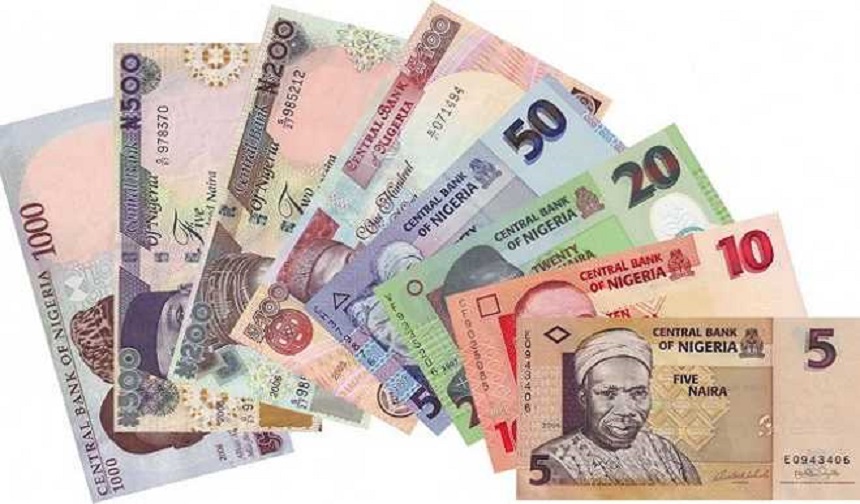
Naira Closes Mixed at Various FX Market Segments
By Adedapo Adesanya
The Naira moved in different ways against the United States Dollar at the foreign exchange (forex) market segments on Monday, appreciating in the Investors and Exporters (I&E) window, and losing in the Peer-to-Peer (P2P) and parallel market segments.
In the P2P forex window, the value of the Nigerian currency against its American counterpart went down by N4 to N742/$1 from N738/$1 and in the black market, it lost N2 to trade at N722/$1 in contrast to last Friday’s value of N720/$1.
But at the spot market, the local currency appreciated against the greenback by 33 Kobo or 0.08 per cent to settle at N436.00/$1 compared with the preceding session’s N436.33/$1.
Business Post reports that the turnover in the I&E segment, according to data from FMDQ Securities Exchange, was $78.10 million on Monday, $28.01 million or 26.4 per cent lower than the preceding session’s $106.11 million.
In the interbank segment, the Naira gained N24.03 against Pound Sterling yesterday to sell for N463.96/£1 compared with N487.99/£1. This happened as the British currency crashed to a record low against the US Dollar on Monday on growing fears about the stability of UK government finances.
The currency slump follows British Chancellor of the Exchequer, Mr Kwasi Kwarteng’s announcement on Friday that the United Kingdom would implement the biggest tax cuts in 50 years while boosting government borrowing and spending in the face of high inflation.
Equally, the local currency gained N9.51 against the Euro to settle at N416.15/€1 versus N425.66/€1 after it also hit a 20-year low after Giorgia Meloni claimed victory in a general election in Italy, raising worries about the future of the European Union (EU).
The cryptocurrency market recorded a northward movement as seven of the 10 tracked tokens were up as the market found solace in riskier assets, as the US Dollar performed at a 20-year best on Monday.
Solana (SOL) led the pack as it appreciated by 7.8 per cent to settle at $34.67, Ethereum (ETH) grew by 6.8 per cent to sell at $1,378.95, Bitcoin (BTC) jumped by 6.7 per cent to $20,044.45, Binance Coin (BNB) recorded a 4.7 per cent appreciation to trade at $284.48, Litecoin (LTC) moved higher by 3.8 per cent to $54.80, Cardano (ADA) went up by 3.4 per cent to $0.4568, while Dogecoin (DOGE) made a 2.0 per cent rise to trade at $0.0622.
However, Ripple (XRP) lost 0.3 per cent to trade at $0.4756, while Binance USD (BUSD) and the US Dollar Tether (USDT) closed flat at $1.00, respectively.
Economy
43 Insurance Firms Meet NAICOM’s New Capital Requirements
By Adedapo Adesanya
The National Insurance Commission (NAICOM) has officially announced the completion of Nigeria’s 12-month insurance sector recapitalisation exercise, describing the accomplishment as a pivotal step that “signals the beginning of a new era for insurance in the country.”
Undertaken pursuant to Section 15 and other relevant provisions of the Nigerian Insurance Industry Reform Act (NIIRA) 2025, signed into law by President Bola Tinubu on July 31, 2025, the exercise aligns directly with the administration’s economic agenda aimed at building a $1 trillion economy by 2030.
Following a rigorous process of review, verification, and validation, NAICOM said in a statement on Sunday that 43 insurance and reinsurance companies have successfully satisfied the new prescribed Minimum Capital Requirements.
The confirmed non-life insurers include Zenith General Insurance Company Limited, Custodian and Allied Insurance Limited, NEM Insurance Plc, Heirs General Insurance Limited, Fin Insurance Company Limited, Tangerine General Insurance Ltd, Capital Express Indemnity Insurance Limited, and Sanlam-Allianz General Insurance Nigeria Ltd.
Others include Consolidated Hallmark Insurance Limited, Sterling Assurance Nigeria Limited, Unitrust Insurance Co. Limited, NSIA Insurance Limited, Rex Insurance Limited, Linkage Assurance Plc, Anchor Insurance Company Ltd, Sunu Assurances Nigeria Plc, KBL Insurance Ltd, International Energy Insurance Plc, Veritas Kapital Assurance Plc, NPF Insurance Company Ltd, Coronation Insurance Plc, and Prestige Assurance Plc.
In the life insurance segment, the successful companies are Custodian Life Assurance Limited, CHI Life Assurance Limited, Heirs Life Assurance Limited, Prudential Zenith Life Insurance Ltd, Stanbic IBTC Insurance Limited, Sanlam-Allianz Life Insurance Nigeria Limited, Capital Express Life Assurance Limited, Mutual Benefits Life Assurance Ltd, Enterprise Life Assurance Company (Nigeria) Ltd, and Coronation Life Assurance Limited.
The composite insurers, operating across both life and non-life insurance that satisfied the requirements comprise Leadway Assurance Company Limited, AIICO Insurance Plc, Cornerstone Insurance Plc, AXA Mansard Insurance Plc, LASACO Assurance Plc, Fortis Global Insurance Plc, Industrial and General Insurance Plc, and Great Nigeria Insurance Plc. Additionally, Mutual Benefits Assurance Plc also met the non-life threshold. In the reinsurance category, Continental Reinsurance Plc and FBS Reinsurance Limited were confirmed compliant.
The regulator noted that an additional eight insurance operators, which submitted evidence of compliance shortly before the statutory deadline, are currently undergoing final verification and regulatory review, with outcomes expected within 14 days.
NAICOM stressed that the milestone “represents a major step towards building a stronger, more resilient, adequately capitalised, professionally governed, and policyholder-focused insurance sector that is better positioned to support national economic growth.”
The recapitalisation exercise was guided by explicit regulatory directives issued by NAICOM to guarantee an orderly, transparent, and verifiable transition. Through its Guidelines on the Implementation of Minimum Capital Requirements for Insurance and Reinsurance Companies in Nigeria, the Commission defined eligible capital instruments, admissible assets, verification procedures, and supervisory expectations throughout the implementation window.
According to the regulator, the action has successfully “enhanced the financial resilience of operators, attracted substantial domestic and foreign investment, and rekindled strong investor confidence” across the industry.
The commission highlighted that the recapitalised market boasts enhanced capacity to underwrite larger and more complex risks across strategic sectors of the national economy. The expanded capital base is set to improve insurers’ ability to settle policyholder obligations promptly, absorb emerging macroeconomic risks, support long-term national infrastructure projects, and boost the sector’s competitiveness within regional and global markets.
Furthermore, the exercise provides a solid baseline for NAICOM to deepen its risk-based supervisory framework, ensuring regulatory capital remains appropriately aligned with the nature, scale, complexity, and risk profile of each licensed operator.
The regulator reaffirmed its commitment to consumer protection, sound market conduct, and expanded financial inclusion as implementation of NIIRA 2025 continues alongside technological modernisation.
“Our unwavering commitment remains to build a fair, stable, innovative, inclusive, and globally competitive insurance market that inspires public confidence and delivers lasting value to policyholders and the Nigerian economy,” the statement read.
Economy
Nigeria’s Textile Industry Needs Structural Reforms, Not Bailouts—MAN
By Adedapo Adesanya
The Manufacturers Association of Nigeria (MAN) has urged the federal government to shift its focus from periodic bailout packages to comprehensive structural reforms, warning that financial interventions alone will not revive Nigeria’s struggling textile industry.
The association argued that years of intervention funds have failed to restore the industry’s competitiveness because the core challenges confronting manufacturers remain unresolved.
The Director-General of MAN, Mr Segun Ajayi-Kadir, said the textile sector’s long-term recovery depends on tackling persistent structural constraints, including unreliable electricity supply, inadequate local cotton production, smuggling, obsolete machinery and limited access to affordable long-term financing.
According to him, while intervention programmes such as the Central Bank of Nigeria’s Cotton, Textile and Garment (CTG) Policy and the N100 billion Real Sector Support Facility have provided temporary relief, they have not addressed the underlying factors driving high production costs and weakening the industry’s competitiveness.
“Key challenges that need attention include the high costs and inadequacies of energy supply, rampant smuggling and counterfeiting, a lack of quality raw cotton, outdated machinery and inefficient loan structures. While aid funds may help with immediate needs like fuel and debt repayments, they do not resolve the core issues of energy supply, cotton availability or market access,” Mr Ajayi-Kadir said.
He outlined a package of reforms that, according to him, would rebuild the textile value chain and improve manufacturers’ competitiveness.
Among the recommendations is the development of gas-powered Independent Power Plants (IPPs) in key textile hubs such as Kano, Kaduna, Aba and Ogun, as well as the creation of industrial parks with shared infrastructure, including Effluent Treatment Plants (ETPs), steam utilities and machinery maintenance workshops to lower production costs.
Mr Ajayi-Kadir also called for measures to revive domestic cotton production through the introduction of high-yield, pest-resistant seed varieties and contract farming arrangements between textile mills and farmers to ensure a reliable supply of raw materials while reducing dependence on imports and exposure to foreign exchange volatility.
On financing, he urged the government to restructure industry loans by extending repayment tenures to between 10 and 15 years and permitting duty-free importation of modern spinning, weaving and printing equipment to boost productivity.
To protect local manufacturers from unfair competition, he advocated stronger anti-smuggling measures, including digital cargo tracking systems, border scanners and stricter enforcement of Executive Order 003 to prioritise locally produced uniforms and other government procurement.
The MAN chief further stressed the need to revive technical and vocational institutions to train textile engineers, weavers and computer-aided design (CAD) specialists capable of supporting a modern manufacturing industry.
He added that improving compliance with international quality and environmental standards would better position Nigerian textile manufacturers to benefit from export opportunities under the African Continental Free Trade Area (AfCFTA) and the African Growth and Opportunity Act (AGOA).
Mr Ajayi-Kadir pointed to Bangladesh, Vietnam and India as examples of countries that transformed their textile industries through sustained structural reforms rather than repeated financial bailouts.
According to him, Bangladesh emerged as the world’s second-largest garment exporter by providing duty-free access to production inputs and establishing special economic zones, while Vietnam built a globally competitive textile industry through reliable electricity, foreign direct investment and trade agreements.
India, he noted, strengthened its sector with PM MITRA textile parks, Production-Linked Incentive (PLI) schemes and investments in cotton production.
He maintained that Nigeria should concentrate on building a sustainable textile ecosystem instead of relying on temporary financial support for struggling manufacturers.
“With stable energy, reliable local cotton supply and protected markets, Nigeria’s textile industry has the potential to create millions of jobs and generate substantial foreign exchange earnings, just as Bangladesh and Vietnam have done,” he said.
Economy
Dangote Allots $800m to Expand Itori Cement Plant Capacity to 12 MTA
By Aduragbemi Omiyale
Dangote Cement Plc has commenced the process of expanding the capacity of its Itori Cement Plant in Ogun State to 12 million metric tonnes per annum (12MTA).
Already, the cement firm has signed a memorandum of understanding of $800 million with Sinoma International Engineering Company Limited for the exercise.
The expansion project will enable Dangote Cement to further meet growing domestic demand while substantially strengthening its export capabilities. The investment is expected to reinforce Nigeria’s position as a leading cement-producing nation and expand the country’s footprint in regional and international cement markets.
The chairman of Dangote Cement, Mr Aliko Dangote, said the decision to embark on the project was driven by Nigeria’s new drive towards using concrete for its road construction and also the to export to needy African countries, all in line with the company’s vision 2030 of producing 90 to 100 metric tons per annum.
According to him, the expansion will not only boost production capacity but also enhance the company’s ability to serve key export markets, generate foreign exchange earnings, create employment opportunities, and contribute to economic growth across the continent.
Dangote noted that the partnership with Sinoma has been instrumental in the successful delivery of several world-class cement manufacturing facilities and that the new investment further demonstrates confidence in Nigeria’s economic potential and the future of Africa’s manufacturing sector.
“This $800 million investment represents another bold step in our commitment to strengthening Nigeria’s industrial base and reinforcing our leadership in Africa’s cement industry.
“The expansion of our Itori plant to 12 million from 6 million metric tons per annum will not only enhance our ability to meet growing domestic demand but also significantly increase our export capacity, thereby generating valuable foreign exchange for the country.
“This project reflects our unwavering confidence in the Nigerian economy and our determination to contribute meaningfully to economic growth, job creation, and regional trade across Africa,” the businessman said.
On his part, the chairman of Sinoma, Mr Lin Zhong, said his organisation remains committed to deploying its engineering expertise and cutting-edge technology to ensure the successful execution of the project, stressing that the expansion will strengthen the competitiveness of Dangote Cement and support the development of sustainable industrial infrastructure.
Upon completion, the expanded facility will serve as a major production and export hub, supplying high-quality cement to both domestic and international markets while further advancing Nigeria’s ambitions as an industrial and manufacturing powerhouse.
“We are honoured to deepen our collaboration with Dangote Group through this landmark expansion project. Over the years, our partnership has produced some of the most modern and efficient cement manufacturing facilities in Africa, and this new investment further demonstrates our shared commitment to industrial excellence.
“The expansion of the Itori plant will not only increase production capacity but also enhance Nigeria’s position as a strategic manufacturing and export hub for the African continent.
“Sinoma will deploy its world-class engineering expertise, advanced technology, and global experience to ensure the successful delivery of this project to the highest standards,” Mr Zhong stated.