Economy
Naira Crashes at Forex Market as Cash Scarcity Worsens
By Adedapo Adesanya
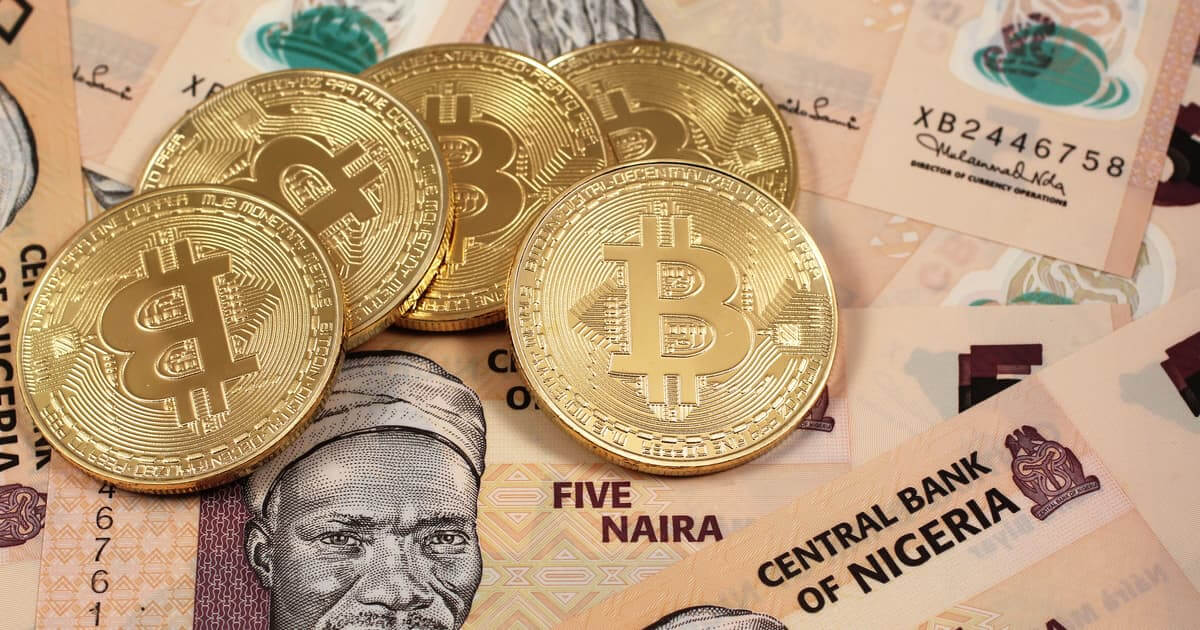
The Naira suffered losses against the United States Dollar in the parallel market and the Peer-to-Peer (P2P) windows of the foreign exchange (forex) market on Wednesday as the scarcity of the local currency worsened, sparking violent protests across the country.
In the black market, the exchange rate of the Naira to the Dollar in the midweek session was N757/$1 compared with the previous day’s N754/$1, indicating a decline of N3.
Also, in the P2P segment, the Nigerian Naira depreciated against the greenback yesterday by N3 to settle at N768/$1, in contrast to the preceding session’s rate of N765/$1.
But at the Investors and Exporters (I&E) arm of the FX market, the domestic currency appreciated by 17 Kobo or 0.04 per cent to trade at N461.50/$1 compared with the preceding day’s N461.67/$1.
This happened as there was an $89.54 million turnover, $20.69 million or 30.1 per cent higher than the $68.85 million recorded a day earlier.
In the interbank segment, the Naira appreciated against the Pound Sterling by 15 Kobo on Wednesday to close at N555.98/£1 versus its previous rate of N556.13/£1, ut against the Euro, it lost N1.84 to finish at N494.02/€1 compared with Tuesday’s exchange rate of N492.18/€1.
Meanwhile, in the cryptocurrency market, Bitcoin (BTC) traded above $24,000 as markets continue to react to the latest US inflation report. The consumer price index rose 0.5 per cent in January, following a gain of 0.1 per cent the month prior. Overall, the annual rate of inflation came in at 6.4 per cent.
At the close of business yesterday, BTC jumped by 11.1 per cent to sell at $24,643.17, and Ethereum (ETH) rose by 8.9 per cent to $1,690.66, while Solana (SOL) appreciated by 9.7 per cent to $23.73.
Further, Binance Coin (BNB) added 9.0 per cent to sell for $323.26, Dogecoin (DOGE) grew by 7.5 per cent to $0.0895, Litecoin (LTC) went up by 7.4 per cent to $102.60, Cardano (ADA) rose by 7.2 per cent to trade at $0.4128, and Ripple (XRP) recorded a 5.6 per cent gain to settle at $0.4007, while the US Dollar Tether (USDT) and Binance USD (BUSD) traded flat at $1.00 each.
Economy
Nigerian Exchange Loses Momentum, Drops to N155trn
By Dipo Olowookere
The Nigerian Exchange (NGX) Limited has recently struggled to regain its spark due to continued selling pressure from investors reducing their exposure to equities in favour of fixed-income investment instruments.
Yesterday, the stock market further shed 0.35 per cent on the back of profit-taking in the banking sector, which closed lower by 1.83 per cent. The consumer goods space lost 0.13 per cent, and the energy counter depreciated by 0.01 per cent, while the insurance index gained 0.04 per cent, with the industrial goods segment closing flat.
Business Post reports that the All-Share Index (ASI) decreased on Tuesday by 843.42 points to 241,611.23 points from 242,454.65 points, and the market capitalisation shrank by N545 billion to N155.973 trillion from N156.518 trillion.
Like the previous session, investor sentiment was weak after Customs Street ended with 22 price gainers and 37 price losers, indicating a negative market breadth index.
Red Star Express weakened by 10.00 per cent to N16.20, Trans-Nationwide Express crashed by 9.94 per cent to N2.81, Meyer depleted by 9.88 per cent to N15.05, Chellarams plunged by 9.77 per cent to N9.70, and Fortis Global Insurance moderated by 9.70 per cent to N2.14.
On the flip side, Haldane McCall surged by 9.97 per cent to N3.20, Veritas Kapital climbed by 7.09 per cent to N1.36, Tantalizers rose by 5.26 per cent to N4.00, RT Briscoe appreciated by 4.31 per cent to N10.90, and Regency Alliance grew by 3.66 per cent to 85 Kobo.
A look at the activity chart for the day showed the volume of transactions significantly retreated by 66.94 per cent as a result of the absence of big-ticket trades, and the number of deals dropped by 21.57 per cent, while the value of trades increased by 20.09 per cent.
Market participants traded 429.8 million stocks valued at N27.5 billion in 35,683 deals during the session compared with the 1.3 billion stocks worth N22.9 billion transacted in 45,494 deals on Monday.
Sterling Holdings led the activity chart with a turnover of 51.6 million units for N390.6 million. FCMB traded 50.0 million units worth N584.8 million, Chams sold 32.4 million units valued at N134.5 million, Veritas Kapital exchanged 180 million units for N24.3 million, and First Holdco transacted 17.0 million units worth N2.2 billion.
Economy
FAAC Disburses N3.007trn from July 2026 Earnings to FG, States, Councils
By Aduragbemi Omiyale
About N3.007 trillion of the N4.359 trillion revenue generated by Nigeria in July 2026 was disbursed in August 2026 to the three tiers of government by the Federation Account Allocation Committee (FAAC) at its meeting held in Owerri, Imo State, on the sidelines of the National Council of the Federation and Economic Development.
A statement issued on Tuesday by the Director of Press and Public Relations in the Office of the Accountant-General of the Federation, Mr Bawa Mokwa, disclosed that the gross statutory revenue jumped 17.8 per cent from N3.700 trillion in June due to improved collections from petroleum and non-oil revenue sources.
The statement noted that Petroleum Profit Tax, Hydrocarbon Tax, Companies Income Tax, Capital Gains Tax, Stamp Duty, petroleum royalties, mineral royalties, excise duty and gas-flaring penalties rose, while earnings from Value Added Tax (VAT), import duty, Common External Tariff levies, gas-flaring fee rentals and miscellaneous oil revenue declined.
“In its regular monthly business, FAAC approved the disbursement of a total of N3.007 trillion to the Federal Government, the 36 State Governments and the 774 Local Government Councils as revenue for July 2026,” a part of the statement disclosed.
Economy
Oil Prices Edge Higher as Iran Keeps Hormuz Strait Closed
By Adedapo Adesanya
Oil prices rose marginally as Iran said it would adopt a more offensive stance and the Strait of Hormuz would remain closed, while the United States ruled out extending a ceasefire.
Brent crude futures finished higher by 15 cents or 0.17 per cent at $91.02 a barrel, while the US West Texas Intermediate (WTI) crude futures chalked up 44 cents or 0.52 per cent to trade at $84.94 a barrel.
A top Iranian negotiator, Mr Mohammad Baqer Qalibaf, said that Iran will keep the strait closed until the United States meets the conditions of the interim deal signed in June.
Mr Qalibaf’s comments came after a senior Iranian official earlier said that Iran will shift to a “fully offensive” military posture as efforts have stalled toward a permanent end to the war.
Meanwhile, US President Donald Trump, who previously labelled that deal “over,” said on Tuesday that talks between the US and Iran were neither taking place nor scheduled, but the strait was open.
Iran has separately been negotiating with Oman on an agreement on managing the strait and says they are close to a deal. However, the American President threatened to bomb Oman, a longstanding US security partner.
Yemen’s Houthis launched missiles in an attack on vessels they described as a Saudi military ship and four escorts in the Red Sea while the United Kingdom Maritime Trade Operations (UKMTO) separately said it received a report on Tuesday that a vessel was struck by an unknown projectile while transiting out of the strait, causing engine room damage and a crew casualty.
Amid these developments, Saudi Aramco has resumed oil loadings from inside the strait, and is offering cargoes for loading via ship-to-ship transfers off Fujairah in the United Arab Emirates (UAE) while two Chinese shipping giants also have started collecting oil cargoes outside the Gulf.
Russia is reportedly rerouting Kazakhstan’s crude oil exports from the Baltic port of Ust-Luga to the Black Sea port of Novorossiysk, freeing up capacity for more Russian oil exports from the Baltic amid heightened Black Sea security risks. The move would allow Russia to replace Kazakh barrels at Ust-Luga with its own crude exports, while Ukrainian drone attacks make it more difficult for Russian exporters to secure tankers for Black Sea loadings.