
Economy
Naira Loses N2.33 at NAFEX to Trade N1,420 Per Dollar


By Adedapo Adesanya
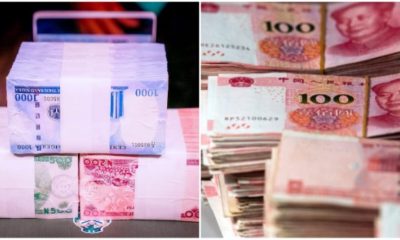
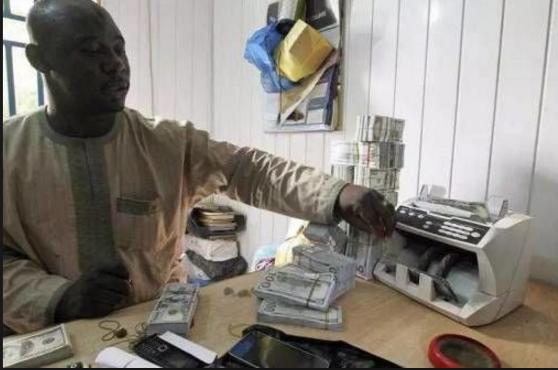
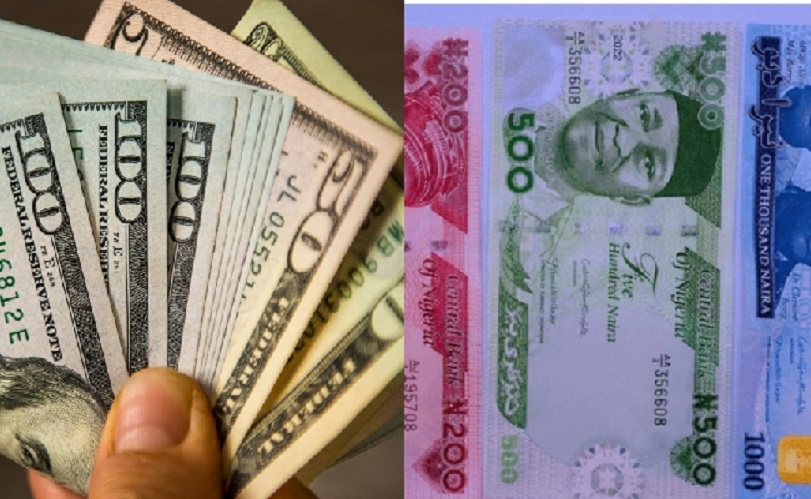
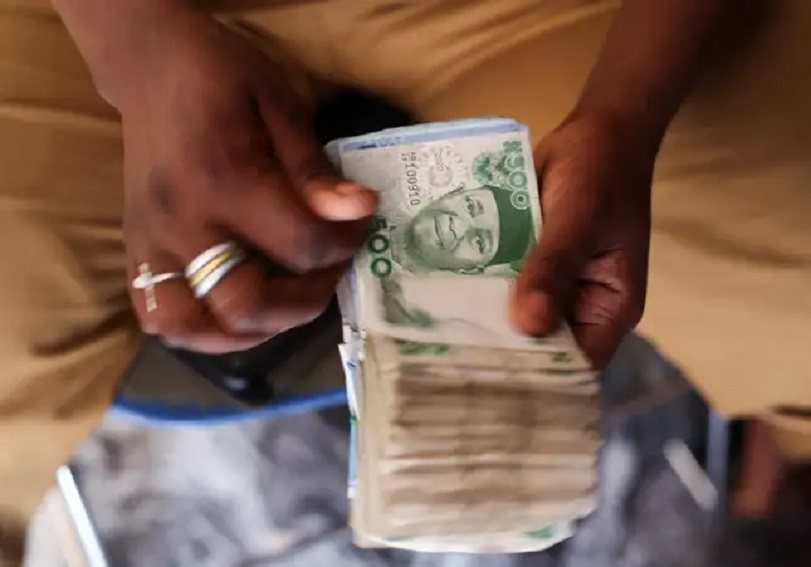
The Naira opened the week heading south against the US Dollar on Monday, January 19 in the Nigerian Autonomous Foreign Exchange Market (NAFEX) after it lost N2.33 or 0.16 per cent to sell for N1,420.28/$1 compared with the preceding trading day’s N1,417.95/$1.
Equally, the Nigerian Naira depleted against the Pound Sterling in the same market window during the session by N4.56 to close at N1,905.8/£1 compared with last Friday’s value of N1,901.32/£1 and depreciated against the Euro by N5.27 to quote at N1,652.78/€1 versus the preceding session’s N1,647.51/€1.
But at the GTBank FX desk, the domestic currency appreciated against the greenback yesterday by N3 to sell at N1,424/$1, in contrast to last Friday’s price of N1,427/$1, and at the black market, it remained unchanged at N1,485/$1.
The weakening of the Nigerian currency in the official market on Monday was driven by relatively higher demand than the available supply as the Central Bank of Nigeria (CBN) made no visible intervention.
Regardless, there are expectations that improved supply conditions from the apex bank will be readily available to keep the market within range supplemented by exporters’ and importers’ inflows in addition to non-bank corporate supply enhanced liquidity.
Nigeria has seen projections of a stronger economic or gross domestic product (GDP) growth and lower inflation in 2026, with these forecasts citing improved macroeconomic fundamentals and reform impacts.
The Chartered Institute of Bankers of Nigeria (CIBN) projected a single interest rate for the year, while it made further positive forecasts regarding the Nigerian economy.
Despite oil earnings fluctuations, Nigeria’s gross external reserves balance increased by $40.71 million to the previous day’s balance, bringing total reserves to $45.90 trillion.
In the cryptocurrency market, benchmarked tokens were largely down as renewed tariff threats between the US and Europe, tied to President Donald Trump’s comments on Greenland, have pushed investors back toward traditional safe havens. Gold and silver rallied, while cryptocurrencies underperformed.
Ethereum (ETH) declined by 2.3 per cent to $3,119.97, Bitcoin (BTC) slumped by 1.7 per cent to $90,940.76, Binance Coin (BNB) went down by 0.9 per cent to $915.39, Solana (SOL) dipped by 0.9 per cent to $131.81, Ripple (XRP) slipped by 0.2 per cent to $1.95, US Dollar Tether (USDT) slid by 0.1 per cent to $0.9990, and US Dollar Coin (USDC) lost 0.01 per cent to settle at $0.9997.
On the flip side, Cardano (ADA) jumped by 1.5 per cent to $0.3666, Litecoin (LTC) appreciated by 0.3 per cent to $70.17, and Dogecoin (DOGE) went up by 0.2 per cent to $0.1269.



By Adedapo Adesanya
Lafarge Africa Plc will change its corporate name to HBM Nigeria Plc, reflecting new majority ownership by China’s Huaxin Cement Co., subject to approval by shareholders of the 67-year old cement maker.
The company will ask shareholders to approve the change of its corporate identity to HBM Nigeria Plc at its 67th Annual General Meeting scheduled for April 30, 2026, in Lagos.
The proposed name change is part of a broader AGM agenda that also includes financial reporting, dividend approval, and board restructuring.
The rebrand marks a new chapter following Holcim’s exit and signals Huaxin’s intent to deepen its footprint in Nigeria’s construction materials sector.
The company highlighted the proposed name change as a key special resolution requiring shareholder approval at the meeting. Management noted that the amendment will formally alter Clause 1 of its Memorandum of Association, redefining its legal identity.
Lafarge Africa Plc reported strong financial performance for the 2025 financial year, underscoring the backdrop to its proposed strategic shift. The company recorded significant growth across key financial metrics.
Revenue rose to N1.1 trillion in 2025, up 53 per cent from N696.8 billion in 2024. Profit after tax increased from N100.1 billion to N273 billion, representing a 173 per cent growth. Operating profit climbed from N193 billion to N392 billion, driven by cost optimisation and operational efficiency.
Earnings per share surged from N6.22 to N17, reflecting improved profitability. The company has proposed a final dividend of N6.00 per share, subject to shareholder approval and applicable withholding tax.
Huaxin Cement acquired a controlling 83.81 per cent stake in Lafarge Africa Plc from the Holcim Group for roughly $1 billion. The deal, finalised in late 2025, marks Holcim’s complete exit from Nigeria to focus on other markets, with Huaxin aimed at expanding its footprint in Africa.
The chairman of Lafarge Africa, Mr Gbenga Oyebode, said Nigeria’s market holds vast potential with its positive growth indices, increasing urbanisation, and infrastructure demand.
“This development will further solidify Lafarge Africa’s position as a leading contributor to Nigeria’s infrastructure and economic growth. Nigeria’s market holds vast potential with its positive growth indices, increasing urbanisation, and infrastructure demand. We remain committed to leveraging these opportunities while maintaining our focus on sustainability and innovation.”
Lafarge expanded into Nigeria in 2001 through the acquisition of Blue Circle, thereby taking over its stake in West African Portland Cement Company (WAPCO), later rebranding it as Lafarge Cement WAPCO Plc and significantly increasing production capacity with new plants and infrastructure in Ogun State.
By Adedapo Adesanya
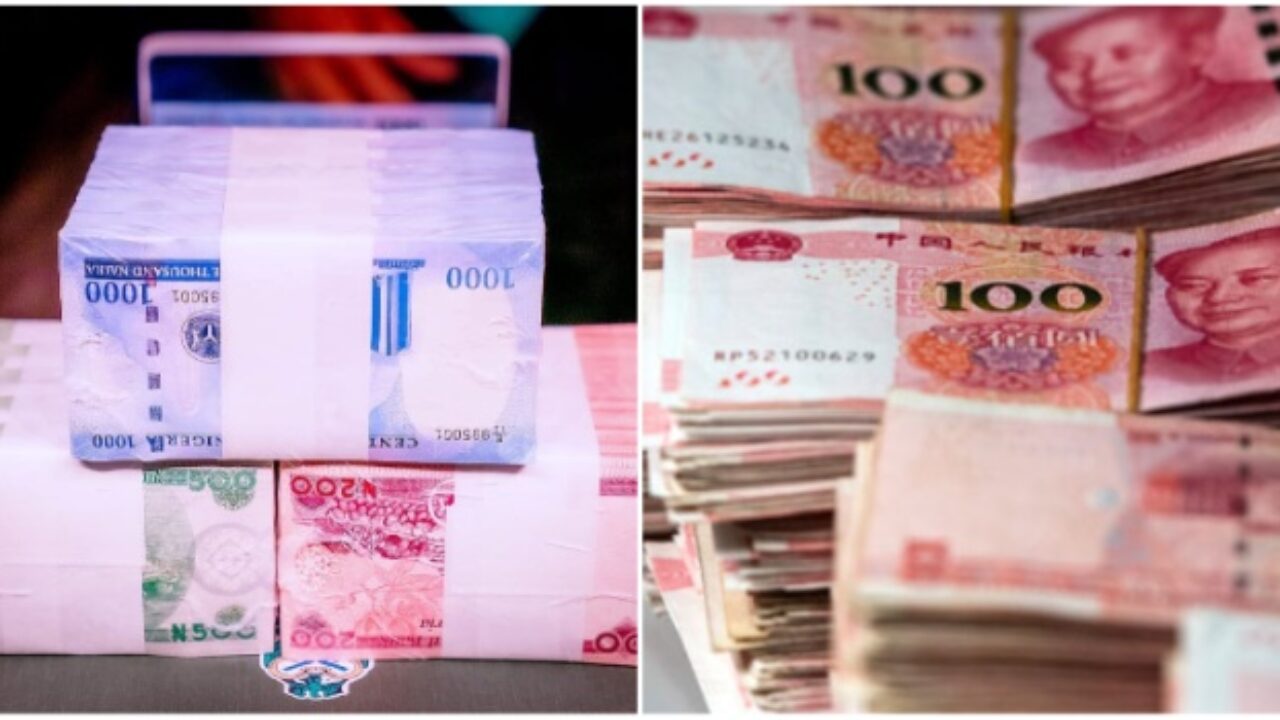
The Naira extended its gain on the Dollar in the Nigerian Autonomous Foreign Exchange Market (NAFEX) on Friday, April 10, by 0.18 per cent or N2.43 to trade at N1,356.89/$1 compared with the previous day’s N1,359.32/$1.
It also improved its value against the Pound Sterling in the same market window by N16.01 to close at N1,828.82/£1 versus N1,844.83/£1, but lost N3.40 against the Euro to sell at N1,592.58/€1 versus N1,589.18/€1.
In the parallel market, the Nigerian Naira further appreciated against the Dollar during the session by N5 to settle at N1,385/$1 compared with the previous day’s rate of N1,390/$1.
With the FX market operating with greater liquidity and efficiency, market participants now transact without extraordinary interventions from the Central Bank of Nigeria (CBN).
However, external reserves fell for 16 straight days through April 8, the longest declining run since July 2025. The central bank’s foreign exchange holdings declined by $1.1 billion in the period to $48.94 billion, the lowest level since February 19, the lender’s data show.
After initially weakening, as the Iran war broke out, the Nigerian currency has recovered losses and is one of only four of 23 African currencies still standing in the period.
The CBN had pledged to stabilise the Naira and has boosted sales of high-yield short-term debt to attract inflows of Dollars.
As for the cryptocurrency market, Bitcoin (BTC) and other major cryptocurrencies fell after US Vice President J.D. Vance announced that the country and Iranian negotiators had failed to agree to an extended ceasefire. BTC lost 1.9 per cent to sell at $71,549.08.
The parties met in Pakistan on Saturday to negotiate an agreement after the US’s nearly six-week-long campaign against Iran. VP Vance said at a press conference afterwards that the US had “not reached an agreement.”
Cardano (ADA) fell 4.3 per cent to $0.2398, Solana (SOL) depreciated by 2.7 per cent to $82.22, Binance Coin (BNB) slumped 2.2 per cent to $593.61, Dogecoin (DOGE) went down by 1.9 per cent to $0.0912, Ethereum (ETH) weakened by 1.4 per cent to $2,214.56, and Ripple (XRP) crashed by 1.3 per cent to $1.33.
However, TRON (TRX) appreciated by 0.9 per cent to $0.3217, while the US Dollar Tether (USDT) and the US Dollar Coin (USDC) closed flat at $1.00 each.


By Modupe Gbadeyanka
The deadline for filing individual annual income tax returns for residents of Lagos State has again been extended to April 21, 2026.
This information was revealed via a statement signed by the Head of Corporate Communications of the Lagos State Internal Revenue Service (LIRS), Mrs Monsurat Amasa-Oyelude, on Saturday.
The agency thanked some taxpayers for their continued compliance and commitment to the filing of their individual annual income tax returns, but charged those who have yet to file theirs to do so before the new deadline.
LIRS had earlier moved the deadline from its statutory period of March 31, 2026, to April 14, 2026, but due to “the overwhelming response and to enhance taxpayer convenience, while maintaining the integrity and accuracy of submissions,” the date was moved forward to April 26.
The tax-collecting organisation said it “observed a significant increase in traffic on its eTax platform as more taxpayers endeavour to meet the filing deadline.”
“In view of this development, and to ensure that all taxpayers are provided with adequate opportunity to successfully complete their filings, LIRS hereby announces a further extension of the deadline, now set for April 21, 2026,” it stated.
The agency reiterated that all filings must be completed electronically via the LIRS eTax platform: https://etax.lirs.net, which remains the only approved channel for submission.
Taxpayers were reminded that the filing of annual income tax returns remains a statutory obligation and were encouraged to take advantage of this final extension to fulfil their civic responsibility.
-
 Feature/OPED6 years ago
Davos was Different this year
-
Travel/Tourism10 years ago
Lagos Seals Western Lodge Hotel In Ikorodu
-

 Showbiz3 years ago
Estranged Lover Releases Videos of Empress Njamah Bathing
-
 Banking8 years ago
Sort Codes of GTBank Branches in Nigeria
-

 Economy3 years ago
Subsidy Removal: CNG at N130 Per Litre Cheaper Than Petrol—IPMAN
-

 Banking3 years ago
Sort Codes of UBA Branches in Nigeria
-

 Banking3 years ago
First Bank Announces Planned Downtime
-

 Sports3 years ago
Highest Paid Nigerian Footballer – How Much Do Nigerian Footballers Earn