Connect with us

Economy

CPPE Projects Naira Stability in Q2, Flags Volatility Risks

Published

on

naira street value

By Adedapo Adesanya

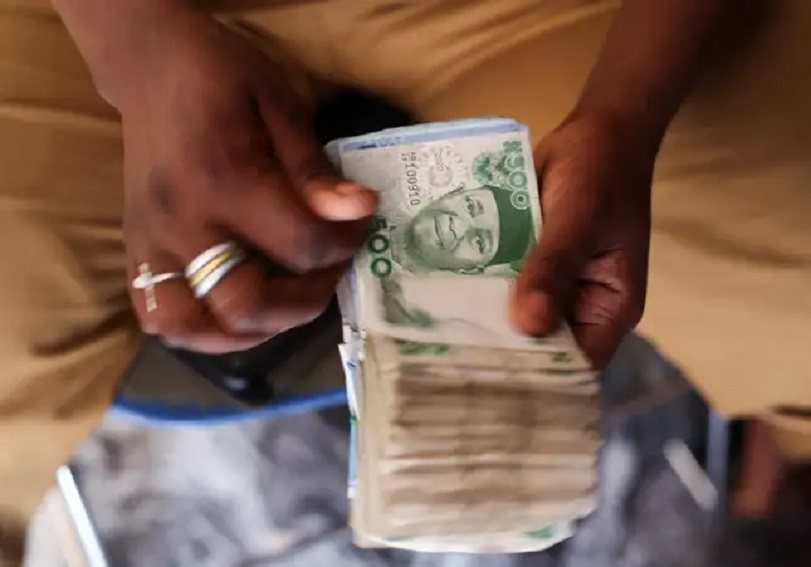
The Centre for the Promotion of Private Enterprise (CPPE) has projected relative stability for the Naira exchange rate in the second quarter of the year, supported by improved foreign reserves and liquidity, but cautioned that volatility risks remain.

In its Q1 2026 Economic Review and Q2 Outlook: Macro Stability Gains Amid Persistent Cost Pressures and Rising Geopolitical Risks report released on Sunday, the think-tank’s chief executive, Mr Muda Yusuf, said exchange rate conditions also improved significantly as the Naira, which experienced substantial volatility during the reform transition period, stabilised within a relatively narrow band of about N1,340–N1,430 per Dollar in the official market during Q1 2026.

“This stability has helped to moderate imported inflation and restore a measure of business confidence. External reserves strengthened considerably, rising above $50 billion in early 2026,” he stated.

The group said that the Nigerian economy in the first quarter of 2026 reflected a blend of improving macroeconomic stability and persistent structural constraints.

It said that proof of a more stable macroeconomic environment is increasingly evident, underpinned by the cumulative gains from foreign exchange reforms, a sustained period of monetary tightening, and the gradual normalisation of key economic indicators.

However, it noted that these improvements continue to coexist with significant headwinds, adding that the country’s economic growth will remain positive in the next three months, but the pace of expansion may slow due to mounting downside risk

The report also warned of a growing risk of stagflation, as persistent cost pressures combine with fragile growth conditions. It added that rising political activities ahead of the 2027 general elections could weaken reform momentum and distract from economic management.

The CPPE noted that rising global crude oil prices, triggered by the ongoing Middle East conflict, pose a major threat to Nigeria’s fragile disinflation process. While higher oil prices could boost export earnings and government revenue, the think tank stressed that the domestic impact would be adverse.

“The cost pass-through effect poses a significant threat to the fragile disinflation process, potentially reversing recent gains in price stability, weakening real incomes, and further exacerbating the cost-of-living pressures facing households and businesses,” the organisation said.

Highlighting monetary policy concerns, CPPE said the current inflationary trend is largely driven by structural and cost-related factors rather than excess demand, observing that, “Additional monetary tightening would have limited effectiveness in addressing the underlying drivers of inflation, while potentially exacerbating constraints on investment, credit expansion, and overall economic growth.”

The CPPE further raised concerns over the implementation of the proposed N68 trillion 2026 budget, citing weak revenue performance, delays in capital releases, and growing political influence on spending priorities.

“As political pressures intensify, there is a risk of weakening fiscal discipline, with greater emphasis on recurrent and politically expedient spending,” the group stated, advising businesses to shift focus towards resilience and efficiency, urging firms to prioritise cost containment, adopt alternative energy sources, and strengthen foreign exchange risk management strategies.

It also called on policymakers to take urgent steps to safeguard economic stability and protect vulnerable groups.

“Policy priorities should therefore focus on consolidating macroeconomic stability, addressing structural bottlenecks, and implementing targeted measures to protect vulnerable populations,” it noted.

The CPPE concluded that while macroeconomic stability gains recorded in the first quarter of 2026 are notable, the outlook for the second quarter remains cautiously positive but increasingly uncertain due to geopolitical tensions, fiscal risks, and domestic political dynamics.


Adedapo Adesanya is a journalist, polymath, and connoisseur of everything art. When he is not writing, he has his nose buried in one of the many books or articles he has bookmarked or simply listening to good music with a bottle of beer or wine. He supports the greatest club in the world, Manchester United F.C.

Click to comment

Leave a Reply

Your email address will not be published. Required fields are marked *

Economy

Nigeria Accesses $1.5bn from UAE Lender’s $5bn Swap Deal

Published

on

First Abu Dhabi Bank

By Adedapo Adesanya

Nigeria has received the first tranche of its $5 billion derivatives financing arrangement with the First Abu Dhabi Bank (FAB), the United Arab Emirates’ largest lender.

According to a Bloomberg report published on Friday, the federal government drew about $1.5 billion over the past two weeks through a Total Return Swap (TRS) transaction with the lender.

The report stated that Nigeria will provide naira-denominated securities valued at 133.3 per cent of the loan amount as collateral for the transaction, while international financial institutions continue to express concerns about the risks associated with such derivative-based financing structures.

The financing is expected to support the government’s debt management strategy by replacing more expensive borrowings while helping finance the country’s fiscal deficit.

The first tranche is priced at 395 basis points above the Secured Overnight Financing Rate (SOFR), rising to SOFR plus 400 basis points thereafter.

The transaction further expands Nigeria’s financial relationship with First Abu Dhabi Bank, which had earlier provided about $1.2 billion to support the construction of a section of the ongoing Lagos-Calabar Coastal Highway.

The swap deal has come with much scrutiny from critics and international organisations. Recall that the International Monetary Fund (IMF), after a consultation visit, warned Nigeria against the deal, noting that such transactions are ‌often opaque and complex.

“Our view is that the transactions in these types of structures carry risks. Usually they are opaque, so the terms are not always ⁠very transparent when we reviewed these instruments across countries,” according to the IMF’s mission chief in Nigeria, Mr Christian Ebeke.

Mr Ebeke said Nigeria could instead issue eurobonds to finance its deficits or other means to raise funding, including on concessional terms.

The Senate in April gave its approval to the agreement put forward by President Bola Tinubu, who said his administration intends to use proceeds from the total return swap to refinance expensive debt and pay for infrastructure.

Continue Reading

Economy

Nigeria Needs More Taxpayers, Not Higher Taxes—Oyedele

Published

on

FIRS taxes

By Adedapo Adesanya

The Minister of Finance and Coordinating Minister of the Economy, Mr Taiwo Oyedele, yesterday clarified that the federal government is not increasing taxes but making efforts to raise the tax net.

Mr Oyedele made this remark on Thursday while receiving a delegation from the Chartered Institute of Taxation of Nigeria (CITN) at his office in Abuja.

He hailed the institute for introducing a National Tax Awareness Day and for supporting the current tax reforms of the federal government.

The minister charged the institute to double its effort in public enlightenment, stressing that many Nigerians still view taxation as a means for the government to take money from citizens.

He reiterated that the priority of the government is not to increase tax rates but to broaden the tax base by ensuring that all eligible taxpayers meet their obligations.

“We are still not getting enough revenue from taxes.

“It is not about increasing taxes but making sure that those who are supposed to pay taxes. We want to promote fairness in tax administration,” he said.

Nigeria is challenged by the inability to generate adequate revenue from taxation despite ongoing reforms, stressing that a significant number of eligible taxpayers have yet to fulfil their civic obligations.

He said the challenge facing the country was not necessarily about raising tax rates but ensuring that individuals and businesses that ought to pay taxes do so in a fair and transparent system.

The minister also commended the institute for supporting the federal government’s tax reform agenda and promoting public understanding of taxation, but urged it to intensify its advocacy efforts, noting that many Nigerians still harbour misconceptions about taxation.

According to him, many citizens continue to view taxation merely as a tool for the government to take money from the people rather than as a critical instrument for national development.

“We are still not getting enough revenue from taxes. It is not about increasing taxes, but making sure that those who are supposed to pay taxes. We want to promote fairness in tax administration,” he added.

Mr Oyedele stressed that if Nigeria succeeds in building an efficient and equitable tax system, the impact on infrastructure, public services and economic development would be transformative, challenging the institute to introduce annual awards for the country’s most tax-compliant individuals and organisations as a means of encouraging voluntary compliance and recognising responsible taxpayers.

Continue Reading

Economy

Akara, Kulikuli, Roasted Corn Business Not Capital Intensive—Remi Tinubu

Published

on

remi tinubu

​By Modupe Gbadeyanka

Nigeria’s First Lady, Mrs Oluremi Tinubu, has given Nigerians business advice that may not involve a lot of money to start.

Speaking with newsmen recently, the wife of President Bola Tinubu said businesses like akara (fried bean cake), kulikuli (a crunchy snack from roasted peanuts or groundnuts) and roasted corn can be set up without breaking the bank.

She disclosed that to support her husband’s Renewed Hope agenda, she has provided funding packages to traders and others to the tune of N3.5 billion.

“To start akara business doesn’t take a lot of money. To start roasting corn and kuli-kuli doesn’t take much. We didn’t give them a loan; we gave it to them as a grant,” she stated.

She further said, “We’ve encouraged Nigerians as best as we could, what is within our hands, I have given, and I keep giving. Those are the things we’ve done.”

“I remember giving for TB (tuberculosis) when I heard of many TB cases; I gave N2 billion, to breast cancer, I gave N1 billion, and to [tackle] malnutrition, I gave N500 million.

“These are the things we’ve been doing to assist the government. So, we’ve had impact in agriculture, social investment, education (as scholarship and ICT training) and others. We are still open to doing more,” she disclosed.

Continue Reading

Trending