Economy
Naira Plunges Amid FX Supply Constraints
By Adedapo Adesanya
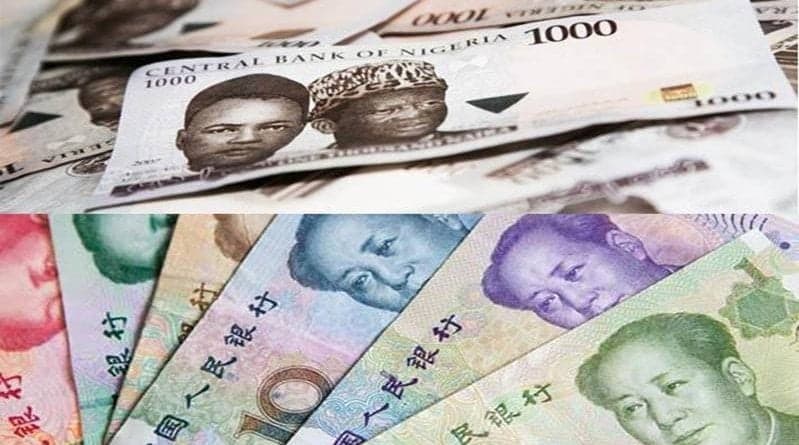
The Naira depreciated against the United States Dollar in the opening session of the week across the foreign exchange (FX) market segments on Monday, January 22 amid worsening forex supply constraints.
The local currency depleted against the greenback yesterday by N23.09 or 2.5 per cent in the Nigerian Autonomous Foreign Exchange Market (NAFEM) window to sell at N925.54/$1 compared with the preceding day’s N902.45/$1.
However, the Nigerian currency traded flat against the British Pound Sterling and the Euro during the trading session at N1,129.27/£1 and N969.69/€1, respectively.
The value of FX trades in the spot market decreased by 49.7 per cent or $72.56 million to $73.33 million from the $145.89 million achieved last Friday, according to data from the FMDQ Securities Exchange.
In the parallel market, the domestic currency lost N5 against the US Dollar on Monday to quote at N1,360$1 versus the preceding session’s exchange rate of N1,355/$1.
Also, in the peer-to-peer (P2P) section of the forex market, the Naira plunged against the Dollar during the session by N20 to trade at N1,357/$1 versus the preceding session’s N1,337/$1.
All indications point that the weakening of the Naira will continue depreciation in 2024, analysts at Standard and Poor’s (S&P) Global Ratings said.
This will be triggered by Nigeria’s broadly flat reserves which limit the supply of the much-needed foreign exchange (FX), adding that higher import costs, backlogs of FX transactions, and lower FX receipts stemming from oil exports will constrain growth in the country’s reserves.
In the digital currency market, Bitcoin’s price fell below $40,000, continuing a decline that began after the recent launch of spot Bitcoin exchange-traded funds (ETFs) in the US.
The outflows from Grayscale’s GBTC Bitcoin Trust have been notably large as investors exit positions to take profits after having been locked into the fund.
Yesterday, BTC slumped by 2.7 per cent to $39,991.38 and Ethereum (ETH) weakened by 3.3 per cent to $2,344.04, with Solana (SOL) falling by 5.3 per cent to $85.15.
Litecoin (LTC) went down by 4.8 per cent to $68.22, Dogecoin (DOGE) crashed by 3.4 per cent to $0.0808, and Cardano (ADA) slid by 3.3 per cent to trade at $0.4829.
In addition, Binance Coin (BNB) dropped 2.1 per cent to sell at $310.49, Ripple (XRP) depreciated by 1.9 per cent to trade at $0.5287, and US Dollar Tether (USDT) lost 0.02 per cent to settle at $0.999, while Binance USD (BUSD) remained unchanged at $1.00.
Economy
Value of Nigerian Stocks Soars Above N152trn, as YtD Return Hits 52.53%
By Dipo Olowookere
The Nigerian Exchange (NGX) Limited rallied by 3.77 per cent on Wednesday on the back of sustained bargain-hunting in equities with sound fundamentals.
The growth reported by Nigerian stocks at midweek raised the year-to-date return above 50 per cent, precisely at 52.43 per cent.
According to data, only the insurance sector ended in red after it shed 1.01 per cent at the close of business.
The industrial goods index appreciated by 6.14 per cent, the energy segment grew by 4.54 per cent, the banking counter expanded by 1.92 per cent, and the consumer goods industry rose by 1.01 per cent.
Consequently, the All-Share Index (ASI) went up by 8,465.40 points to 237,205.59 points from 228,740.19 points, and the market capitalisation increased by N5.450 trillion to N152.728 trillion from N147.278 trillion.
The quartet of UAC Nigeria, Zichis, CAP, and Airtel Africa gained 10.00 per cent each to sell for N165.00, N19.80, N132.00, and N3,021.30, respectively, and Jaiz Bank surged by 9.99 per cent to N8.81.
On the flip side, the duo of John Holt and Cadbury Nigeria lost 10.00 per cent each to trade at N12.60 and N66.15, respectively, as eTranzact shed 9.97 per cent to close at N15.80, Morison Industries slipped by 9.92 per cent to N10.62, and Haldane McCall shrank by 9.74 per cent to N3.43.
The busiest stock for the day was Access Holdings with 281.3 million units worth N7.3 billion, UBA transacted 160.6 million units valued at N7.0 billion, Lasaco Assurance traded 78.6 million units for N153.6 million, Wema Bank sold 65.7 million units worth N2.3 billion, and Morison Industries exchanged 65.0 million units valued at N690.3 million.
At the close of trades, investors bought and sold 1.3 billion equities for N69.1 billion in 83,445 deals versus the 908.0 million units worth N68.2 billion in 72,886 deals on Tuesday.
This showed that the trading volume, value, and number of deals increased yesterday by 43.17 per cent, 1.32 per cent, and 14.49 per cent, respectively.
Economy
Oil Prices Jump Over 6% as US-Iran Talks Stall, Supply Fears Deepen
By Adedapo Adesanya
Oil prices surged over 6 per cent on Wednesday as deadlocked US-Iran negotiations made investors more concerned about prolonged disruptions to Middle Eastern supply.
Brent crude settled at $118.03 per barrel after gaining $6.77 or 6.1 per cent, and the US West Texas Intermediate (WTI) crude rose by $6.95 or 7 per cent to $106.88 a barrel, the highest since April 7.
A White House official said that President Donald Trump had asked US oil companies about ways to mitigate the impact of a potentially months-long US blockade of Iranian ports
This added fresh concerns that disruptions to Middle Eastern oil supply could be prolonged.
Estimates show that over $50 billion worth of crude oil supply has been lost since the start of the Iran war.
Market analysts warned that if President Trump extends the blockade, supply disruptions would worsen further and continue to push oil prices higher.
Elsewhere, the Abu Dhabi National Oil Company (ADNOC), which is the state oil company of the United Arab Emirates (UAE), has notified some customers that they could load two crude grades outside of the Gulf next month because the Strait of Hormuz remains closed.
This comes after it decided to quit the Organisation of the Petroleum Exporting Countries (OPEC) years after Angola made the same decision.
Investors were also assessing the ramifications of the Middle East producer’s decision to quit the oil cartel.
Analysts do not expect any major near-term impact on the market. Over the near term, Middle Eastern producers will bring whatever they can to market.
Wood Mackenzie said the UAE’s exit is the most significant fracture in OPEC’s history, and it increases the risk of oversupply that could cause oil prices to decline from 2027.
Signs of tightening supply have started to show in the US as Energy Information Administration (EIA) data showed crude stocks fell over 6 million barrels last week.
Meanwhile, Reuters reported that OPEC+ will likely agree on a small oil output quota hike on Sunday despite the loss of the lion’s share of its exports due to the US-Israeli war with Iran.
The oil producer group will likely agree on an increase of around 188,000 barrels per day in oil output targets, the sources said. The increase is similar to last month’s hike of 206,000 barrels per day, minus the share of the UAE, which leaves the group from May 1.
The seven members meeting on Sunday are Saudi Arabia, Iraq, Kuwait, Algeria, Kazakhstan, Russia, and Oman. With the UAE leaving, OPEC+ includes 21 members, including Iran, but in recent years, only the seven nations plus the UAE have been involved in monthly production decisions.
Economy
Champion Breweries Posts N14.36bn Revenue in Q1 2026 After Group Structure Transition
By Aduragbemi Omiyale
Champion Breweries Plc has released its first consolidated financial results as an expanded organisation following its recent strategic expansion.
The company transitioned to a group structure after the acquisition of an 80 per cent equity interest in enJOYbev BV, whose performance is now consolidated into the group accounts for the first time.
In the results for the first quarter of 2026 released to the Nigerian Exchange (NGX) Limited, Champion Breweries posted a revenue of N14.36 billion, representing a strong increase compared to the prior year, driven by the consolidation of its newly acquired subsidiary.
Operating performance remained resilient, with operating profit rising to approximately N3.02 billion at the group level, reflecting continued discipline in cost management and operational efficiency.
Despite a softer consumer environment and lower volumes in the core domestic market, the company maintained a solid gross profit margin of 48 per cent, supported by improved cost efficiencies and disciplined commercial execution, underscoring the strength of its underlying business fundamentals.
This strategic expansion has already begun to contribute positively to earnings, with the subsidiary delivering operating profitability within the reporting period. While the company recorded a net loss at the standalone level, primarily driven by financing costs associated with its recent strategic investments, group-level profitability remained positive, with profit after tax of approximately N881 million, reflecting the early benefits of diversification and the strengthening of the brewer’s earnings base through its expanded portfolio.
Importantly, the firm continues to generate finance income from invested funds, reflecting prudent treasury management and supporting overall liquidity. This provides additional stability as the group advances its strategic initiatives.
Looking ahead, Champion Breweries says it remains confident in its outlook, noting that with the group structure now in place, improved earnings contributions from its expanded operations, and a clear focus on market execution, it expects a progressively stronger performance trajectory in the coming quarters.
Management reiterated its commitment to delivering sustainable value to shareholders, strengthening market positioning, and navigating prevailing economic conditions with discipline and resilience.
-
Feature/OPED6 years agoDavos was Different this year
-
Travel/Tourism10 years ago
Lagos Seals Western Lodge Hotel In Ikorodu
-
Showbiz3 years agoEstranged Lover Releases Videos of Empress Njamah Bathing
-
Banking8 years agoSort Codes of GTBank Branches in Nigeria
-
Economy3 years agoSubsidy Removal: CNG at N130 Per Litre Cheaper Than Petrol—IPMAN
-
Banking3 years agoSort Codes of UBA Branches in Nigeria
-
Banking3 years agoFirst Bank Announces Planned Downtime
-
Sports3 years agoHighest Paid Nigerian Footballer – How Much Do Nigerian Footballers Earn