Connect with us

Economy

NASD OTC Stocks Grow 2.75% in Week 2 of 2024

Published

on

Nigerian OTC securities exchange

By Adedapo Adesanya

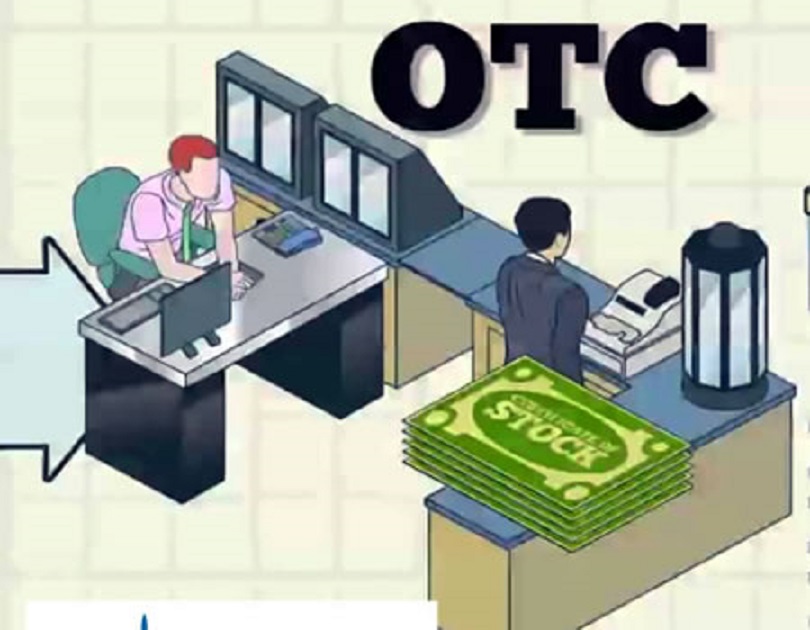
The second trading week of 2024 at the NASD Over-the-Counter (OTC) Securities Exchange ended on a positive note after it improved by 2.75 per cent.

According to the weekly NASD market review and analysis, the market capitalisation of the bourse increased by N35 billion in the five-day trading week to N1.294 trillion from the N1.259 trillion it ended in Week 1.

In the same vein, the NASD Unlisted Security Index appreciated by 25.56 points to close the week at 954.55 points, in contrast to the 928.99 points it finished in the preceding week.

Four companies admitted to the platform were responsible for the growth recorded in the trading week, overpowering the losses posted by three firms.

Central Securities Clearing System (CSCS) Plc led the gainers after it gained 15.3 per cent to settle at N19.95 per unit compared with the previous close of N17.31 per unit, Aradel Holdings Plc soared by 10.3 per cent to close at N1,230.10 per share compared with the preceding week’s N1,115.10 per share, Industrial and General Insurance (IGI) Plc improved by 3.7 per cent to end at 28 Kobo per share versus 27 Kobo per share, and Capital Bancorp Plc jumped by 2.3 per cent to finish the week at N2.20 per unit, in contrast to N2.15 per unit of the previous week.

On the losers’ chart, UBN Property saw its stocks fall by 2.6 per cent to close at N1.90 per share versus N1.85 per share of the previous week. FrieslandCampina Wamco Nigeria Plc lost 2.0 per cent to sell at N80.33 per unit as against the earlier week’s N82.00 per unit, and Geo-Fluids Plc went down by 1.9 per cent to N2.50 per share from N2.55 per share.

In the week, the value of transactions rose by 270.6 per cent to N273.1 million from N73.7 million, the volume trades went up by 257.2 per cent to 36.9 million units from 10.3 million units, and the number of deals grew by 252.9 per cent to 120 deals from 34 deals.

UBN Property Plc was the most traded stock by volume with 2.08 million units, Geo-Fluids Plc transacted 1.5 million units, IGI Plc posted 365,000 units, CSCS Plc recorded 240,376 units, and Capital Bancorp Plc sold 200,000 units.

However, Aradel was the most traded stock by value with N188.6 million, Geo-Fluids Plc recorded N36.5 million, UBN Property Plc traded N36.4 million, FrieslandCampina Wamco recorded N6.1 million and CSCS Plc exchanged N4.6 million.


Adedapo Adesanya is a journalist, polymath, and connoisseur of everything art. When he is not writing, he has his nose buried in one of the many books or articles he has bookmarked or simply listening to good music with a bottle of beer or wine. He supports the greatest club in the world, Manchester United F.C.

Economy

Naira Appreciates to N1,374/$ at NAFEX

Published

on

Naira-Dollar exchange rate gap

By Adedapo Adesanya

The Naira, in the Nigerian Autonomous Foreign Exchange Market (NAFEX) on Thursday, April 3, further appreciated against the United States Dollar by N4.52 or 0.33 per cent to N1,374.94/$1 from N1,379.46/$1.

Equally, the domestic currency gained against the Pound Sterling in the official market by N3.34 during the session to close at N1,858.24/£1 compared to the previous rate of N1,861.58/£1, and against the Euro, it improved by N5.29 to sell at N1,607.58/€1 versus N1,612.87/€1.

At the GTBank FX counter, the Nigerian Naira gained N4 against the Dollar to settle at N1,384/$1 versus Wednesday’s closing price of N1,389/$1, and at the parallel market, it improved by N5 to trade at N1,385/$1 compared with the N1,390/$1 it was transacted a day earlier.

Nigeria’s external reserves, which provide the Central Bank of Nigeria (CBN) with a buffer to support the Naira, continued their downward trend, declining to $48.36 billion as of April 29, 2026, according to data.

Market activity weakened sharply, with the NAFEM recording zero deals on Thursday, down from 393 deals on Wednesday. Total turnover in the official window also dropped from $802.44 million to zero, underscoring a severe liquidity squeeze.

Thursday’s price formation was driven entirely by the interbank segment, where turnover also fell significantly to $58.03 million from $249.91 million, suggesting that liquidity pressures extended across the broader FX market.

As for the cryptocurrency market, prices were up amid looming US inflation data, while high oil prices and rising bond yields weigh on risk assets.

The appreciation faces headwinds in the form of US March PCE inflation, which lands as oil prices keep pressure on risk assets, as well as reduced traffic through the Strait of Hormuz, which has kept energy markets fragile.

Dogecoin (DOGE) rose by 1.8 per cent to trade at $0.1082, Bitcoin (BTC) appreciated to $76,987.59, Ethereum (ETH) grew by 1.2 per cent to $2,276.11, Cardano (ADA) added 1.1 per cent to close at $0.2484, and Solana (SOL) soared by 1.1 per cent to $83.89.

Further, TRON (TRX) increased by 0.7 per cent to $0.3224, Ripple (XRP) jumped 0.4 per cent to $1.37, and Binance Coin (BNB) expanded by 0.2 per cent to $616.67, while the US Dollar Tether (USDT) and the US Dollar Coin (USDC) closed flat at $1.00 each.

Continue Reading

Economy

Customs Street Climbs 2.14% as BUA Cement, FTN Cocoa Top Gainers’ Log

Published

on

Customs Street

By Dipo Olowookere

A further 2.14 per cent leap was recorded by the Nigerian Exchange (NGX) Limited on Thursday, the last trading session of April 2026.

This was supported by strong buying pressure despite selling pressure in the consumer goods and insurance sectors, which lost 0.14 per cent and 0.07 per cent, respectively.

It was observed that the energy index went up by 4.78 per cent, the industrial goods space appreciated by 4.13 per cent, and the banking segment rose by 0.52 per cent.

As a result, the All-Share Index (ASI) gained 5,072.22 points to settle at 242,277.81 points versus the 237,205.59 points on Wednesday, and the market capitalisation jumped N3.266 trillion to N155.994 trillion from N152.728 trillion.

FTN Cocoa, BUA Cement, CAP, UAC Nigeria, and Zichis soared by 10.00 per cent each to quote at N5.50, N418.00, N145.20, N181.50, and N21.78, respectively.

On the flip side, Aluminium Extrusion lost 9.95 per cent to trade at N9.50, Royal Exchange declined by 9.93 per cent to N1.36, Legend Internet slipped by 9.32 per cent to N5.35, Austin Laz dropped 9.12 per cent to N3.39, and Neimeth went down by 7.26 per cent to N8.30.

Business Post reports that there were 46 price gainers and 41 price losers on Customs Street during the session, implying a positive market breadth index and strong investor sentiment.

A total of 1.9 billion shares valued at N104.3 billion were traded in 92,353 deals yesterday compared with the 1.3 billion shares worth N69.1 billion transacted in 83,445 deals at midweek, indicating a surge in the trading volume, value, and number of deals by 46.15 per cent, 50.94 per cent, and 10.68 per cent, respectively.

At the close of business, Access Holdings led the activity chart with 935.0 million units sold for N24.3 billion, Lasaco Assurance traded 90.2 million units valued at N175.2 million, UBA exchanged 89.0 million units worth N3.9 billion, Wema Bank transacted 68.4 million units worth N2.4 billion, and GTCO sold 54.7 million units valued at N7.4 billion.

Continue Reading

Economy

Crude Oil Slips Below $115 After Hitting Four-Year High on US-Iran Fears

Published

on

crude oil exports

By Adedapo Adesanya

Crude oil fell below $115 after hitting a four-year high of more than $126 a barrel earlier on Thursday ​on concerns the US-Iran war could disrupt the wider global economy.

Data showed that Brent crude futures lost $4.02 or 3.41 per cent to trade at $114.01 per barrel, and the US West Texas Intermediate (WTI) crude futures gave up $1.81 or 1.69 per cent to trade at $105.07 per barrel.

According to market analysts, the drop in prices from intraday highs did not have an obvious catalyst and did not look related to a specific development, but reflected the heightened volatility in the market since the Iran war started.

Others noted the retreat in US Dollar strength on Thursday also put downward pressure on oil.

Japan’s Yen surged 3 per cent, the most in a day in over three years, on Thursday, following stark warnings from Japanese officials that intervention to prop up the currency, as well as action in other markets, including ​energy, could be imminent.

The jump in the Japanese currency puts the US currency down, on track for its biggest one-day drop against the Yen since last August.

US President Donald Trump is slated to receive a ​briefing on plans for a series of fresh military strikes on Iran to compel it to negotiate an end to the conflict.

Iran said it would respond with “long and painful strikes” on US ‌positions if ⁠the US renewed attacks, and also reasserted its control over the Strait of Hormuz.

This complicates US plans for a coalition to reopen the waterway, which accounts for about 20 per cent of crude and Liquified Natural Gas (LNG) flows.

Since the US-Israeli attack on Iran began on February 28, the price of Brent and WTI has risen by around 90 per cent due to the effective closure of the strait.

The oil price gains risk a renewed spike in global inflation and higher pump prices across the world. Oil, gas, and their refined byproducts are critical for fuelling cars, ​trucks and planes, powering homes and industry and ​producing plastics and fertilisers.

President Trump called a ceasefire in ⁠the war earlier this month, but also imposed a US blockade on Iranian ports.

Talks to resolve the conflict, which has killed thousands and caused what the International Energy Agency (EIA) says is the world’s biggest oil disruption ever, have deadlocked.

Traders worry as the US insists on discussing Iran’s alleged nuclear weapons programme and Iran demands ​some control over the strait and reparations for damage from the war.

The United Arab Emirates (UAE) said on Tuesday it would exit the Organisation of Petroleum Exporting Countries (OPEC) after nearly 60 years as a member.

Continue Reading

Trending