Economy
Nat’l Sugar Development Council Completes $2.1m WASD Project

By Modupe Gbadeyanka
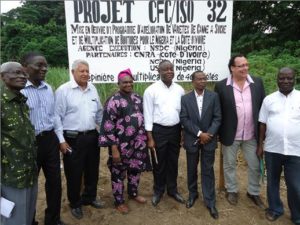
The $2.1 million West Africa Sugar Development (WASD) project embarked upon by the National Sugar Development Council (NSDC) has finally been completed.
NSDC, in its efforts to reposition the Nigerian sugar sub-sector and reinvigorate the productive capacities of the industry to enable it compete effectively with other highly developed sugar industries of the world, secured a grant of $2.1 million from an intergovernmental finance agency of the United Nations, the Common Fund for Commodities (CFC) out of which the CFC was to provide the sum of $1.6 million, while the participating institutions, the CNRA Abidjan, NCRI, Badeggi and USRI, Ilorin, were to provide $500,000 as counterpart contribution to finance a regional project titled ‘Development of Sugarcane Variety Improvement and Seed Multiplication Programme for Nigeria and Ivory Coast, which was approved in 2010 for a period of six years.
The WASD project was supervised by the International Sugar Organization (ISO), another UN body, which has global mandate of promoting the efficient production, marketing and utilization of sugar and its derivatives.
Information gathered by our correspondent revealed that the project execution was monitored and evaluated by various technical experts such as the Project Technical Consultant (PTC), the Project Supervisory Body, ISO represented by its Senior Economist Mr Lindsay Jolly and the funding agency, the CFC.
It was gathered that the NSDC identified the development of new, high yielding, disease and pest-free sugarcane varieties adaptable to the various sugarcane growing regions of the country as the foundation of higher productivity.
According to what Business Post learnt, the agency acquired 40 sugarcane varieties from some of the world best sugarcane breeding institutes like International Sugarcane Breeding Station, Combatoire, India; SBW do Brazil, Brazil; Mauritius Sugar Industry Research Institute, Mauritius, West Indies Sugarcane Breeding Station, Barbados; South Africa Sugar Research Institute, South Africa; USDA-ARS Sugarcane Breeding Station, Canal Point, USA and Kenana Regional Sugarcane Research Institute, Sudan.
The imported varieties were quarantined and screened for diseases at the point of entry into the country at the Nigeria Agricultural Quarantine Service, Ibadan as required by Nigerian law and were evaluated in four sites in Nigeria (Agenebode, Ikenne, Tsaragi and Numan) and two sites in Cote d’Ivoire (Zuenoula and Ferke) for selection of best varieties to replace the old poor performing ones.
At the end of the project, it was adjudged to have largely met its objectives of providing higher yielding sugarcane varieties that will replace the old poorly performing varieties that are currently under cultivation by cane growers in the sub-region.
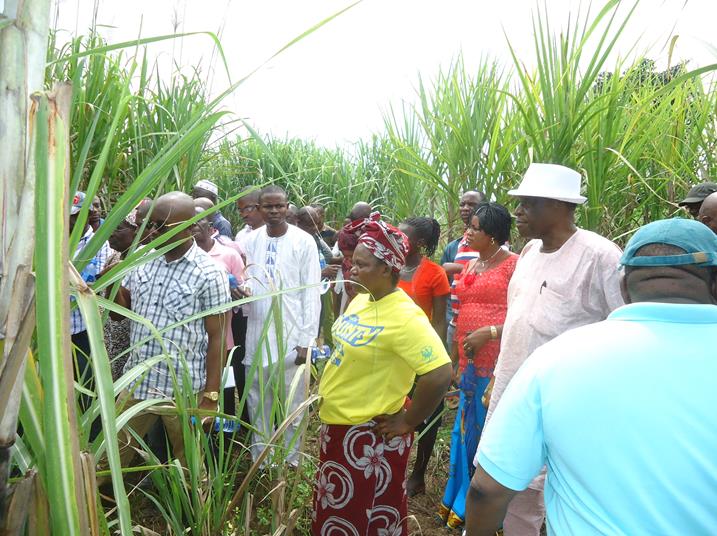
This assertion was made at the recent Project Completion Mission and Project Completion/Dissemination Workshop held in Abuja on October 9 and 10, 2016 to mark the end of the project.
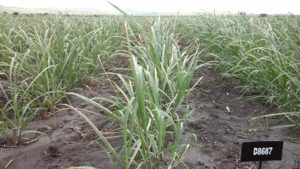
At the end of the evaluation across the six trial sites, five best performing varieties were selected. All selected varieties generally out-performed the commonly grown varieties. Four of the test varieties; B80689 and M1176/77, Kn 93063 and D8687 were good enough to be selected across two or three test locations at Numan, Agenebode, Ikenne and Zuenoula.
Economy
Brent Crude Jumps Nearly 4% on Iran’s Strait of Hormuz Bill
By Adedapo Adesanya
Brent crude rose by 3.83 per cent or $3.04 to $82.29 per barrel on Thursday after an information that an Iranian parliament committee was reviewing a bill that would ban US and Israeli vessels from the Strait of Hormuz.
Also, the price of the US West Texas Intermediate (WTI) crude futures went up by 81 cents or 1.05 per cent to $77.29 per barrel during the session.
Under the apparent draft, Iran would ban American and Israeli ships from transiting the strait. Other nations that have harmed Iran would not be allowed to transit until compensation is paid, according to the draft. Iran would impose penalties on violators equivalent to 20 per cent of the value of cargo aboard a ship.
Market analysts noted that crude traders remain focused on the US-Iran agreements, and the longer the delays, the more prices will fade back to the upside.
Iran has warned Gulf states that any new US attack on its territory would trigger attacks on critical energy infrastructure across the region.
Before the Iran conflict began in late February, about one-fifth of global daily oil and liquefied natural gas supplies flowed through the Strait of Hormuz.
Meanwhile, Yemen’s Houthis said they carried out missile and drone attacks on “Saudi deployments” in Marib and Hadramout in Yemen on Thursday. This has led to elimination of Saudi-aligned fighters as well as destruction of military camps, weapons depots and vehicles.’
Also, Iran and Oman appear to be close to agreeing on joint management of the Strait of Hormuz with Iran’s foreign ministry spokesman, Esmaeil Baghaei, saying the deal with Oman was “in the final stages.”
Saudi Arabia has slightly lowered the official selling price for its flagship Arab Light crude oil to Asia in September.
Elsewhere, a major oil refinery in Russia’s Yaroslavl region was on fire after a big Ukrainian drone attack. The President of Ukraine Volodymyr Zelenskiy said the country’s military had hit two Russian oil refineries – the Bashneft-Novoil refinery in the republic of Bashkortostan, and the Slavneft-Yanos refinery in the Yaroslavl region.
Economy
Unlisted Securities Close Flat at Midweek
By Adedapo Adesanya
The NASD Over-the-Counter (OTC) Securities Exchange closed flat on Wednesday, August 5, as the market witnessed weaker trading activity with only two deals executed.
In the midweek session, the volume of securities exchanged by investors dropped 99.9 per cent to 802 units from the 1.6 million units recorded on Tuesday. The value of securities further decreased by 99.6 per cent to N208,240 from the preceding session’s N47.6 million, and the number of deals significantly went down by 93.9 per cent to two deals from the 33 deals recorded a day earlier.
Great Nigeria Insurance (GNI) Plc remained the most traded stock by value on a year-to-date basis, with 3.4 billion units worth N8.4 billion, followed by Infrastructure Credit Guarantee (Infracredit) Plc with 2.3 billion units sold for N6.5 billion, and Central Securities Clearing System (CSCS) Plc with 76.9 million units transacted for N5.5 billion.
GNI Plc was also the most active stock by volume on a year-to-date basis, with 3.4 billion units exchanged for N8.4 billion, followed by Infracredit Plc with 2.3 billion units traded for N6.5 billion, and Resourcery Plc with 1.1 billion units valued at N415.7 million.
There were no price gainers or losers yesterday.
As a result, the market capitalisation stood unmoving at N2.739 trillion, while the NASD Security Index (NSI) remained unchanged at 4,563.96 points.
Economy
Naira Crashes to N1,363/$1 at Official Market
By Adedapo Adesanya
The Naira slid against the US Dollar by N2.28 or 0.17 per cent in the Nigerian Autonomous Foreign Exchange Market (NAFEX) on Wednesday, August 5, to N1,363.85/$1 from N1,362.55/$1.
The local currency also declined against the Pound Sterling in the official market during the session by N5.97 to close at N1,837.38/£1 compared with Tuesday’s closing rate of N1,831.41/£1, and against the Euro, it crashed by N6.54 to quote at N1,575.25/€1 versus the preceding session’s N1,568.71/€1.
But at the black market, the Nigerian Naira traded flat against the greenback yesterday at N1,400/$1, and also remained unchanged at the GTBank FX desk at N1,373/$1.
The Central Bank of Nigeria (CBN) says rates have narrowed to below two per cent, while the country’s external reserves have risen above $52.5 billion, reflecting the impact of its ongoing monetary and foreign exchange reforms.
CBN Governor Yemi Cardoso, represented by the Acting Director of Corporate Communications and Investor Relations, Mrs Hakama Sidi-Ali, disclosed this on Tuesday during the CBN Fair in Gombe. He noted that reforms introduced since 2023 had significantly reduced the disparity between the official FX market and the parallel market.
“The Naira continues to strengthen, with the spread between official and Bureau de Change rates now below two per cent,” he said, adding that reserves at $52.5 billion were supported by sustained inflows and renewed investor confidence in the economy.
Interbank FX transactions slid as weaker market activities dropped total Dollar volume exchanged to $75.35 million, a 51.8 per cent decline from $156.23 million in turnover quoted at the previous close.
The deals at the NFEM window also fell as data from the central bank put Wednesday’s quote at 82 from 139.
In the cryptocurrency market, major were down as global risk sentiment softened as a key world equity index slipped and chipmakers fell.
The MSCI All Country World Index snapped a five-day run to fall 0.2 per cent as chipmakers retreated on both sides of the Pacific. South Korea’s Kospi, a bellwether for the AI trade, dropped 4.4 per cent.
Ripple (XRP) depleted by 1.7 per cent to $1.05, Binance Coin (BNB) decreased by 1.0 per cent to $594.87, Cardano (ADA) depreciated by 0.9 per cent to $0.1884, TRON (TRX) shrank by 0.2 per cent to $0.3261, Solana (SOL) crumbled by 0.1 per cent to $74.00, and Dogecoin (DOGE) went down by 0.1 per cent to $0.0697.
On the flip side, Ethereum (ETH) gained 2.3 per cent to trade at $1,911.41, and Bitcoin (BTC) rose by 0.8 per cent to $64,759.28, while the US Dollar Tether (USDT) and the US Dollar Coin (USDC) remained unchanged at $1.00 apiece.