
Economy
NCDMB, IOCs laud Yulong Steel Pipe Mill

By Modupe Gbadeyanka
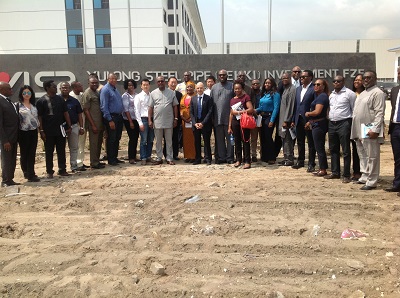
The Nigerian Content Development and Monitoring Board (NCDMB), major operating companies and other stakeholders of the industry have commended Yulong Steel Pipe Mill for the speed and quality of their investment, describing the factory as comparable to similar facilities in China and India.
The Executive Secretary of the Board, Mr Simbi Kesiye Wabote recently led top executives of the oil and gas industry on a pre-commissioning visit to Yulong facility located at Lekki Free Trade Zone in Lagos.
He stated that the Board will work with the oil companies under the aegis of the Oil Producers Trade Section and Yulong to invite international certifying bodies to certify the new pipe mill.
Mr Wabote pledged the Board’s commitment to support companies that invest in the Nigerian economy so as to create employment for Nigerians and challenged multinationals and indigenous service companies to emulate Yulong by investing in manufacturing facilities in Nigeria.
He indicated that the Board had clear guidelines for implementing Nigerian Content requirements in Free Zones through collaborations with the Oil and Gas Free Zones Authority (OGFZA) and the Nigerian Export Processing Zones Authority (NEPZA).
The Executive Secretary stressed that Yulong and other Oil and Gas companies operating in the Free Trade Zones were bound by the provisions of the Nigerian Content Act especially as it pertains to Expatriate Quota Utilization and employment of Nigerians. According to him, “this facility provides a good opportunity for Yulong to gradually build the skills of Nigerians to eventually operate the facility. The Board is interested in seeing the laid out plans by Yulong to ensure that Nigerians are gradually trained to take over those responsibilities especially in the skilled areas.”
Speaking after inspecting the factory, the Nigerian Content chieftain recalled that “the case for the establishment of pipe mill was reinforced following a gap analysis conducted in 2011 which established an annual demand of about 83,000mt per annum compared to the capacity at the time of 100,000 metric tonne per annum in SCC pipe mill.”
He further said that, “ramp-up local capacity policy inventions were introduced to stimulate investment in the establishment of at least four pipe mills. The interventions include direct investment in Polaku Pipe Mill by NCDMB along with investors with an exit plan and support to third party investors by granting first consideration in procurement of line pipes for oil and gas projects.”
The Executive Secretary disclosed that the interventions were working as SCC had since expanded its capacity to 207,000mt per annum Helical Submerged Arc Welding (HSAW) line pipes. This capacity growth is about 30 per cent of industry demand with Yulong about to add 400,000mt of HSAW pipes and is targeting industry needs in Nigeria and other West African countries.
He reiterated that the Board will rely on the provisions of the Act that give first consideration to services provided within Nigeria and to goods manufactured in Nigeria to ensure that operators in the industry patronise the facility and other laudable investments.
The Executive Secretary commended the speed with which the factory was built, noting, “from what I am told, the factory actually started construction work in February 2016 and nine months later manufacturing has actually started. This is commendable.”
He also tasked the company to consider introducing another production line that will be dedicated to other types of line pipes required in the industry. He noted that there was excess capacity of HSAW pipes in Nigeria with a huge demand gap for Longitudinal Submerged Arc Welding (LSAW) pipes, High Frequency Welded (HFW) pipes and Seamless pipes. He added that investment in these mills will help address the remaining 70 per cent of industry demand that is still sourced abroad and ensure huge impact in spend retention, job creation and technology acquisition.
Earlier in his presentation, the Chief Marketing Officer of Yulong Steel Pipe Company Limited, Mr A. Abbas stated that the intention of the company was to build the steel pipe complex in three phases. He noted that the first is to produce Spiral Submerged Arc Welding (SSAW) pipes, the second will be for Longitudinal Submerged Arc Welding (LSAW) pipes and the third will be the ER Welding pipes.
“What you see today is only the first phase of the Spiral Submerged Arc Welding Pipe. The production capacity will be 250,000mt per annum as well as a coating facility which can cover all types of coating reaching almost 3 million square metres per year,” Mr Abbas affirmed.
He acknowledged the plant is integrated with a pipe coating facility which during peak construction will employ about 600 Nigerians for the project. Abbas also hinted that Yulong Lekki investment owns 51 per cent stake in Jiangsu Yulong Steel Company of China while in future, 49% equity of Yulong Lekki will be dedicated to Nigerian investors operating inside the Lekki Free Zone.
He also asserted that with the ground breaking ceremony in December 2015, the first pipe was produced in Nigeria in November 2016.
In his good will messages, the Managing Director of the Lekki Free Zone Development Company, Mr Yonghua Ding stated that Yulong successfully passed the factory test-run at the FTZ and declared the mill fit and ready for production.
While commending Yulong Steel, Mr Ding extolled the company for keeping to its commitment with the Nigerian government with an investment of good quality and fast speed.
The Managing Director of the Zone also said that the company made a great decision to comply with the policy of Nigerian government on Local Content and local industrialization as part of their contribution to the Nigerian society, economy, youth employment and for technical transfer.
Also delivering a message of good will on behalf of the Coordinators of the Zone, the Assistant General Manager (Zone Technical Services), NEPZA, Mrs Pwash Eldon opined that the agency was impressed with the state of work done within the short period. She further commended Yulong for their commitment to ensuring that they deliver as they promised.
The NEPZA official informed that the agency’s management is a strong advocate of the NOGICD Act which is a rallying point for both the Board and NEPZA to collaborate for the overall good of the Nigerian economy and for the investor confidence.






By Adedapo Adesanya
Three stocks further weakened the NASD Over-the-Counter (OTC) Securities Exchange by 1.12 per cent on Wednesday, April 8, with the Unlisted Security Index (NSI) down by 44.43 points to 3,930.91 points from the previous day’s 3,975.34 points, and the market capitalisation went down by N26.59 to N2.351 trillion from N2.378 trillion.
MRS Oil lost N11.00 during the session to close at N161.00 per share compared with Tuesday’s closing price of N172.00 per share, Central Securities Clearing System (CSCS) Plc dipped by N3.74 to N67.95 per unit from N71.69 per unit, and Afriland Properties Plc fell by N1.10 to sell at N15.95 per share versus N17.05 per share.
There were two gainers at the midweek trading session, led by IPWA Plc, which appreciated by 55 Kobo to N6.61 per unit from N6.06 per unit, and First Trust Mortgage Bank Plc improved its value by 4 Kobo to N2.32 per share from N2.28 per share.
Yesterday, the volume of securities rose by 620.4 per cent to 5.7 million units from 797,264 units, the value of securities increased by 25.1 per cent to N32.7 million from N26.1 million, and the number of deals climbed by 12.1 per cent to 37 deals from the preceding session’s 33 deals.
Great Nigeria Insurance (GNI) Plc ended the day as the most traded stock by value on a year-to-date basis with 3.4 billion units sold for N8.4 billion, trailed by CSCS Plc with 57.2 million units exchanged for N3.9 billion, and Okitipupa Plc with 27.5 million units traded for N1.8 billion.
GNI Plc also finished the session as the most traded stock by volume on a year-to-date basis with 3.4 billion units valued at N8.4 billion, followed by Resourcery Plc with 1.1 billion units worth N415.7 million, and Infrastructure Guarantee Credit Plc with 400 million units transacted for N1.2 billion.
By Adedapo Adesanya
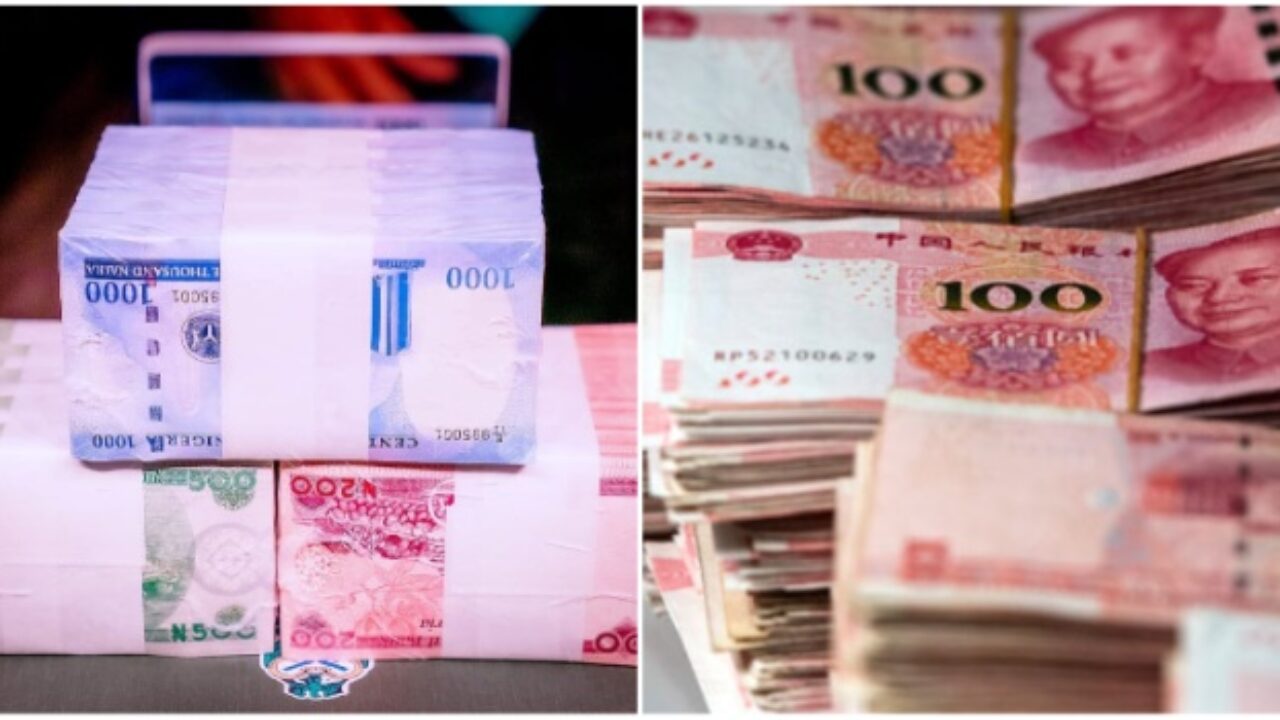
Foreign Exchange (FX) demand pressure eased on the Naira on Wednesday, April 8, in the Nigerian Autonomous Foreign Exchange Market (NAFEX) after gaining N14.84 or 1.07 per cent against the greenback to quote at N1,371.82/$1 compared with the previous day’s N1,386.66/$1.
Also, the local currency appreciated against the Euro in the same market window at midweek by N1.54 to close at N1,604.07/€1 versus Tuesday’s closing rate of N1,605.61/€1, but lost N6.26 against the Pound Sterling to trade at N1,844.83/£1 versus N1,838.57/£1.
In the parallel market, the exchange rate of the Naira to the US Dollar remained unchanged yesterday at N1,410/$1, according to data sourced by Business Post.
There were indicators that the official FX market experienced a liquidity surge, which eased worries around the dominant US Dollar on Wednesday, as the Central Bank of Nigeria (CBN) revealed interbank deals rose to 220 from 71 reported the previous day.
The domestic currency has been in strong demand from foreign portfolio investors seeking to purchase OMO bills and other fixed-income instruments.
Forecasts also show that the local currency will remain relatively stable during the second quarter of the year, trading within the N1,340 to N1,430 per Dollar band on improved FX liquidity, stronger oil earnings, and rising external reserves, which have climbed above 50 billion dollars.
As for the cryptocurrency market, it fell after an initial ceasefire-fueled rally, with markets retracing Wednesday’s “ceasefire euphoria” as cracks emerge in the US-Iran truce while the Strait of Hormuz remains effectively closed.
Global risk assets face renewed pressure as geopolitical uncertainty combines with what analysts call “uncoordinated tightening” by major central banks, reinforcing higher-for-longer interest-rate expectations.
The price of Cardano (ADA) fell by 4.7 per cent to $0.2500, Ripple (XRP) slumped 3.7 per cent to $1.33, Dogecoin (DOGE) shrank by 3.5 per cent to $0.0915, Binance Coin (BNB) slipped 2.6 per cent to $600.02, Ethereum (ETH) went down by 2.5 per cent to $2,183.82, Solana (SOL) dipped 2.5 per cent to $82.24, and Bitcoin (BTC) depreciated by 1.1 per cent to $70,995.20.
However, TRON (TRX) appreciated by 0.4 per cent to $0.3173, while the US Dollar Tether (USDT) and the US Dollar Coin (USDC) remained unchanged at $1.00 apiece.

By Dipo Olowookere
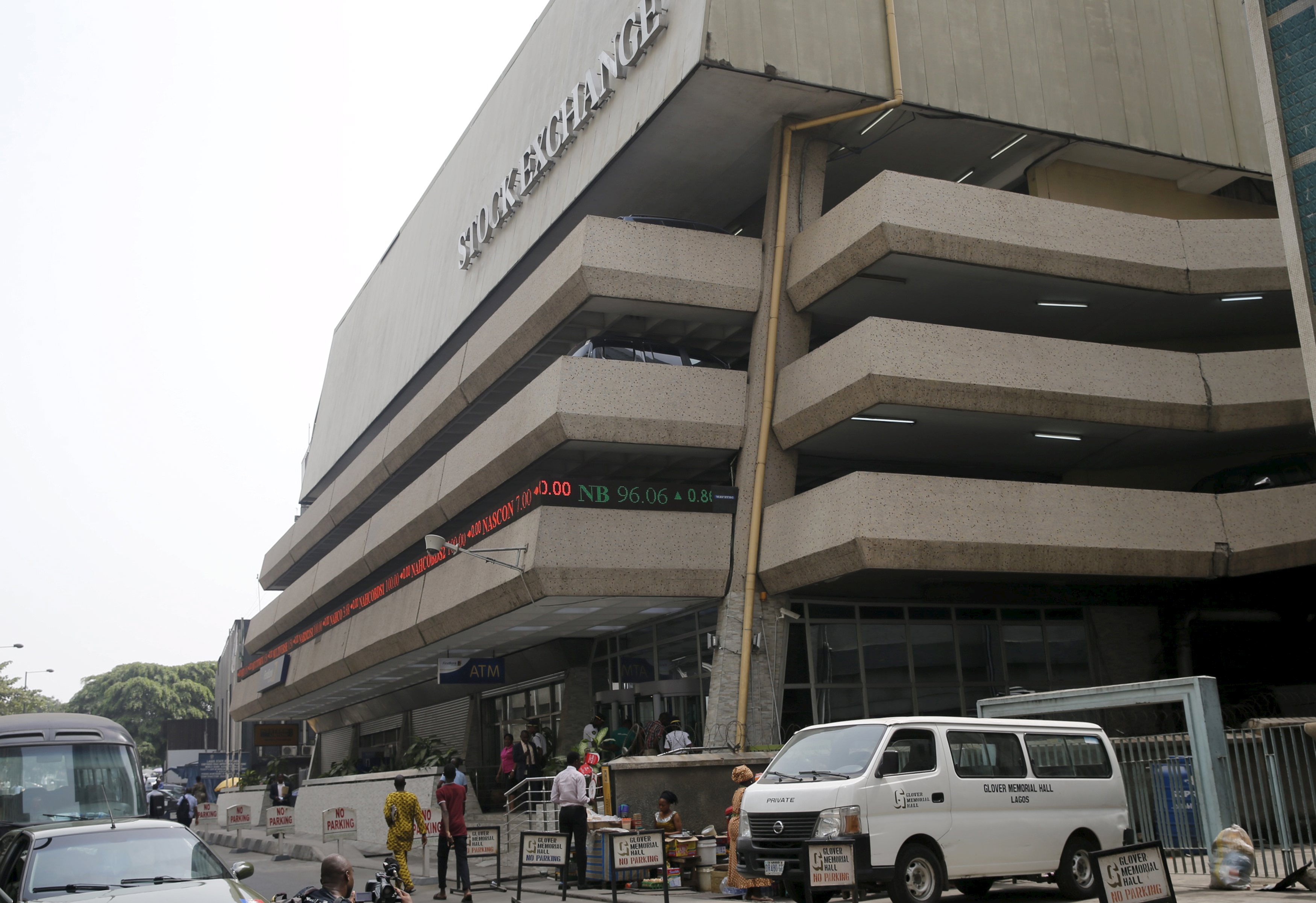
The Nigerian Exchange (NGX) Limited rallied by 0.28 per cent on Wednesday despite weak investor sentiment, as the bourse ended with 18 price gainers and 38 price losers, implying a negative market breadth index.
The growth recorded yesterday by Customs Street was influenced by the 2.11 per cent rise posted by the energy index, and the 1.79 per cent jump achieved by the banking sector.
The other sectors experienced profit-taking, with the consumer goods losing 1.07 per cent, the insurance counter down by 0.36 per cent, and the industrial goods space down by 0.19 per cent.
Universal Insurance chalked up 10.00 per cent to sell for N1.21, Omatek improved by 9.78 per cent to N2.47, VFD Group expanded by 9.71 per cent to N11.30, CWG appreciated by 9.64 per cent to N21.05, and Livestock Feeds gained 9.56 per cent to close at N7.45.
On the flip side, UPDC REIT lost 10.00 per cent to settle at N6.75, Fortis Global Insurance shed 9.92 per cent to quote at N1.18, Deap Capital depreciated by 9.85 per cent to N5.40, Chams went down by 9.47 per cent to N3.06, and Japaul declined by 8.82 per cent to N3.10.
Yesterday, the All-Share Index (ASI) went up by 562.43 points to 202,585.53 points from 202,023.10 points, and the market capitalisation advanced by N389 billion to N130.404 trillion from N130.015 trillion.
During the session, 1.0 billion stocks worth N40.6 billion exchanged hands in 52,723 deals compared with the 1.1 billion stocks valued at N40.3 billion executed in 78,006 deals a day earlier, indicating an uptick in the trading value by 0.74 per cent, and a shortfall in the trading volume and number of deals by 9.09 per cent and 32.41 per cent apiece.
The activity chart was led by Access Holdings, which sold 233.0 million units valued at N6.1 billion, Fidelity Bank exchanged 113.1 million units worth N2.2 billion, Wema Bank recorded a turnover of 103.3 million units valued at N2.7 billion, Zenith Bank transacted 60.6 million units for N6.5 billion, and Chams traded 47.5 million units worth N154.6 million.
-
 Feature/OPED6 years ago
Davos was Different this year
-
Travel/Tourism10 years ago
Lagos Seals Western Lodge Hotel In Ikorodu
-

 Showbiz3 years ago
Estranged Lover Releases Videos of Empress Njamah Bathing
-
 Banking8 years ago
Sort Codes of GTBank Branches in Nigeria
-

 Economy3 years ago
Subsidy Removal: CNG at N130 Per Litre Cheaper Than Petrol—IPMAN
-

 Banking3 years ago
Sort Codes of UBA Branches in Nigeria
-

 Banking3 years ago
First Bank Announces Planned Downtime
-

 Sports3 years ago
Highest Paid Nigerian Footballer – How Much Do Nigerian Footballers Earn