

Economy
NEM Insurance Seeks Regulatory Approval for Share Reconstruction


By Dipo Olowookere
The board of NEM Insurance Plc is seeking regulatory approval for its proposed share reconstruction, a notice from the Nigerian Exchange (NGX) Plc has confirmed.
Ms Lilian Dako, who signed the disclosure on behalf of the Head of Listings Regulation Department at the NGX, said the underwriting firm filed its application through its stockbroker, Apel Asset Limited.
NEM Insurance intends to redenominate the nominal value of its stocks from 50 kobo to N1 and then turn every two shares of 50 kobo into one share of N1.00 each.
At the moment, the total authorised shares of the company stand at 10,400,000,000 units of 50 kobo each but this will change to 5,200,000,000 units of N1.00 after the exercise.
However, the authorized share capital will remain at N5.2 billion both before and after the share reconstruction, according to the statement.
“Following the resolutions passed at the Annual General Meeting (AGM) of NEM Insurance Plc on June 24, 2021, trading license holders are hereby notified that Nigerian Exchange Limited has received an application from Apel Asset Limited for a proposed share reconstruction of NEM Insurance Plc.
“The share reconstruction involves redenomination of the nominal value of the company’s shares from N0.50 to N1.00, resulting in the consolidation of every 2 shares of N.50 each held in NEM Insurance Plc into one share of N1.00 each.
Analysis of the Company?s share capital, pre and post share reconstruction, is provided in the table below:
Details Pre Share Reconstruction Post Share Reconstruction
Authorized share capital (N) 5,200,000,000 5,200,000,000
Issued Share Capital (N) 5,016,477,989 5,016,477,989
Nominal Value per share (N) 0.50 1.00
Total Authorized (Units) 10,400,000,000 5,200,000,000
Total Issued Issues (Units) 10,032,955,535 5,016,477,989
“Further information regarding the share reconstruction will be communicated in due course,” the notice from the exchange today stated.







By Adedapo Adesanya
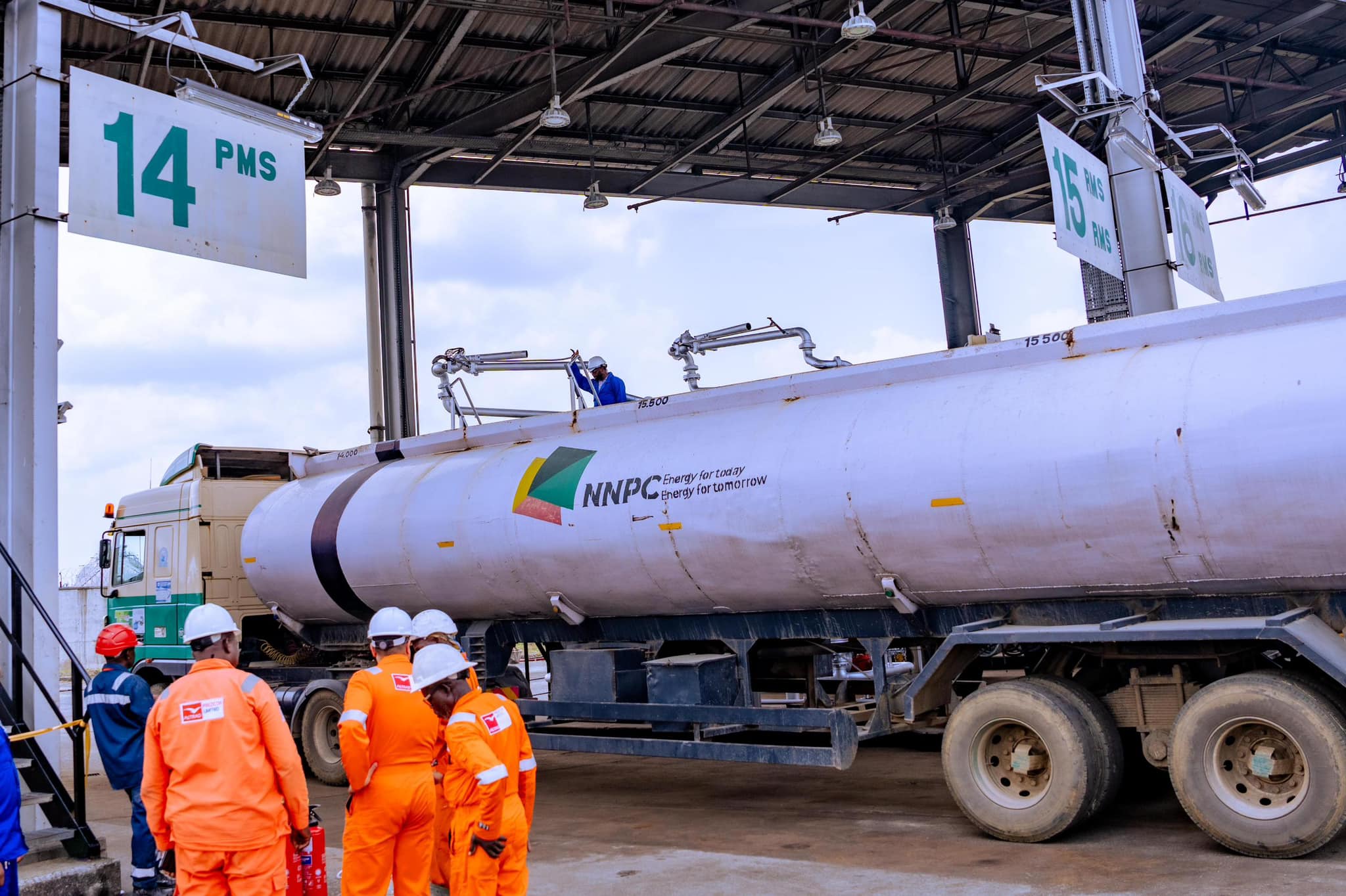
The Petroleum and Natural Gas Senior Staff Association of Nigeria (PENGASSAN) has warned against the full privatisation of the country’s government-owned refineries.
Recall that the Nigerian National Petroleum Company (NNPC) is putting in place mechanisms to sell the moribund refineries in Port Harcourt, Warri, and Kaduna.
However, this has met fresh resistance, with the President of PENGASSAN, Mr Festus Osifo, saying selling a 100 per cent stake would mean the government losing total control of the refineries, a situation he warned would be detrimental to Nigeria’s energy security.
Mr Osifo said the union was advocating the sale of about 51 per cent of the government’s stake while retaining 49 per cent, which he described as being more beneficial to Nigerians.
“PENGASSAN, even before the time of Comrade Peter Esele, had been advocating that government should sell its shares. The reason why we don’t want government to sell it 100 per cent to private investors is because of the issue bordering on energy security,” he said on Channels Television, late on Sunday.
“So, what we have advocated is what I have said earlier. If government sells 51 per cent stake in the refinery, what is going to happen? They will lose control, so that is actually selling. But for the benefit of Nigerians, retain 49 per cent of it.“
The PENGASSAN leader maintained that if the government had heeded the union’s advice in the past, the oil industry would be in a better state than it is today.
He addressed concerns in some quarters over whether investors would be willing to buy stakes in government-owned refineries, insisting that there are investors who would be interested.
“Yes, there are investors who surely will be willing to buy a stake in the refinery because our population in Nigeria is quite huge, and those refineries, when well maintained without political pressures and political interference, will work,” he said.
However, Mr Osifo warned that even if the government decides to sell a 51 per cent stake, it must ensure that a complete valuation is carried out to avoid selling the refineries cheaply.

By Aduragbemi Omiyale
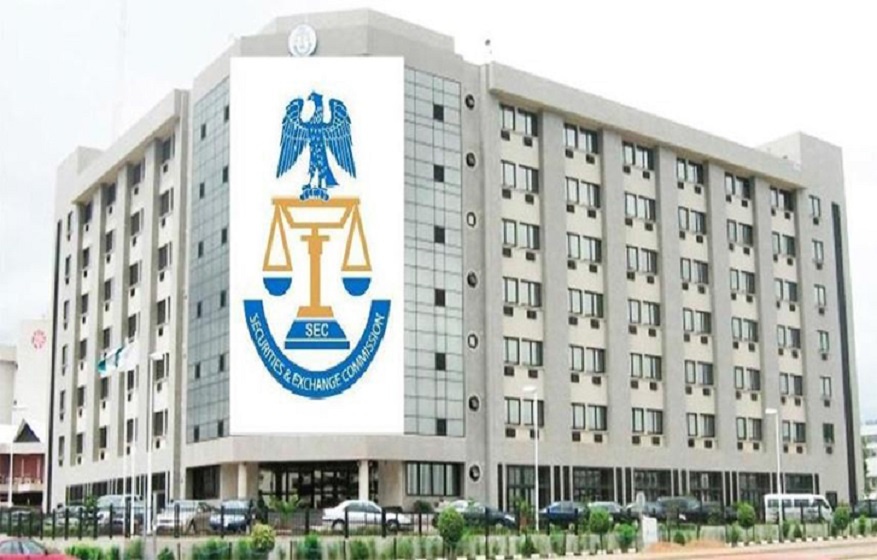
Capital market operators have been given a deadline by the Securities and Exchange Commission (SEC) for the renewal of their registration.
A statement from the regulator said CMOs have till Saturday, January 31, 2026, to renew their registration, and to make the process seamless, an electronic receipt and processing of applications would commence in the first quarter of 2026.
“These initiatives reflect our commitment to leveraging technology for faster, more transparent, and efficient regulatory processes.
“The commission is taking deliberate steps to make regulatory processes faster, more transparent, and technology-driven. We are investing in automation, database-supervision, and secure infrastructure to improve how we interact with the market,” the Director General of SEC, Mr Emomotimi Agama, was quoted as saying in the statement during an interview in Abuja over the weekend.
He noted that through the digital transformation portal, the organisation has automated registration and licensing end-to-end as operators can now submit applications, upload documents, and track approvals online, cutting down manual processing time and reducing the need for physical visits.
According to him, the agency has also rolled out the Commercial Paper issuance module, which allows operators to file documents, monitor progress, and receive approvals electronically while feedback from early users shows a clear improvement in turnaround time.
“Work is ongoing to automate quarterly and annual returns submissions, with structured templates and system checks to ensure accuracy. A returns analytics dashboard is also in development to support risk based supervision and exception reporting.
“To back these changes, we have started upgrading our IT infrastructure, servers, storage, networks, and security layers, to boost speed and reliability.
“Selective cloud migration is underway for platforms that need scalability and external access, while core internal systems remain on premisev5p for now as we assess security and cost implications.
“At the same time, we are strengthening data integrity and cybersecurity with vulnerability assessments and planned penetration testing once automation and migration phases are stable.
“These efforts show our commitment to building a modern, resilient regulatory environment that supports efficiency, investor confidence, and market stability,” he stated.
Mr Agama affirmed that the nation’s capital market was clearly on a path toward digital transformation adding that there is an urgent need for regulatory clarity on advanced technologies, targeted support for smaller firms, and capacity-building initiatives.
“A phased and proportionate approach to regulating emerging technologies such as AI is essential, complemented by internal readiness through supervisory technology tools.
“Furthermore, investor education, particularly among younger demographics, will be critical to future-proof participation and drive fintech adoption.
“Innovation is vital, but it must be accompanied by responsibility. As operators embrace automation, artificial intelligence, and data-driven tools, they bear a duty to ensure ethical, secure, and compliant deployment. Safeguarding investor data, preventing market abuse, and maintaining operational resilience are non-negotiable,” he declared.
The SEC DG said that ultimately, responsible technology adoption is about building trust, the cornerstone of our markets saying that trust thrives on fairness, transparency, accountability, and regulatory compliance.
He, therefore, urged operators to uphold these principles adding that it will not only protect investors and systemic stability but also strengthen the long-term credibility and competitiveness of the Nigerian capital market.

By Adedapo Adesanya
The Chairman of the Presidential Fiscal Policy and Tax Reforms Committee, Mr Taiwo Oyedele, has said there are no discrepancies in the tax laws passed by the National Assembly and the gazetted versions made available to the public.
Last week, a member of the House of Representatives, Mr Abdussamad Dasuki, raised worries about the differences between its version and that gazetted by the presidency.
However, speaking on Channels Television’s Morning Brief on Monday, Mr Oyedele claimed what has been circulating in the media was fake.
“Before you can say there is a difference between what was gazetted and what was passed, we have what has not been gazetted. We don’t have what was passed,” he said.
“The official harmonised bills certified by the clerk, which the National Assembly sent to the President, we don’t have a copy to compare. Only the lawmakers can say authoritatively what we sent.
“It should be the House of Representatives or Senate version. It should be the harmonised version certified by the clerk. Even me, I cannot say that I have it. I only have what was presented to Mr President to sign.”
Mr Oyedele stated that he reached out to the House of Representatives Committee regarding a particular Section 41 (8), which states, “You have to pay a deposit of 20 per cent.”
He noted that the response given by the committee was that its members had not met on the issue.
“I know that particular provision is not in the final gazette, but it was in the draft gazette. Some people decided that they should write the report of the committee before the committee had met, and it had circulated everywhere.
“What is out there in the media did not come from the committee set up by the House of Representatives. I think we should allow them do the investigation,” Mr Oyedele added.
In June, President Bola Tinubu signed the four tax reform bills into law, marking what the government has described as the most significant overhaul of the country’s tax system in decades.
The tax reform laws, which faced stiff opposition from federal lawmakers from the northern part of the country before their passage, are scheduled to take effect on January 1, 2026.
The laws include the Nigeria Tax Act, the Nigeria Tax Administration Act, the Nigeria Revenue Service (Establishment) Act, and the Joint Revenue Board (Establishment) Act, all operating under a single authority, the Nigeria Revenue Service.










-
 Feature/OPED6 years ago
Davos was Different this year
-
Travel/Tourism9 years ago
Lagos Seals Western Lodge Hotel In Ikorodu
-

 Showbiz3 years ago
Estranged Lover Releases Videos of Empress Njamah Bathing
-
 Banking7 years ago
Sort Codes of GTBank Branches in Nigeria
-

 Economy3 years ago
Subsidy Removal: CNG at N130 Per Litre Cheaper Than Petrol—IPMAN
-

 Banking3 years ago
First Bank Announces Planned Downtime
-

 Banking3 years ago
Sort Codes of UBA Branches in Nigeria
-

 Sports3 years ago
Highest Paid Nigerian Footballer – How Much Do Nigerian Footballers Earn