Economy
Nembe Spill: FG Recovers 16,200 Barrels of Crude, Water Sediments
By Adedapo Adesanya
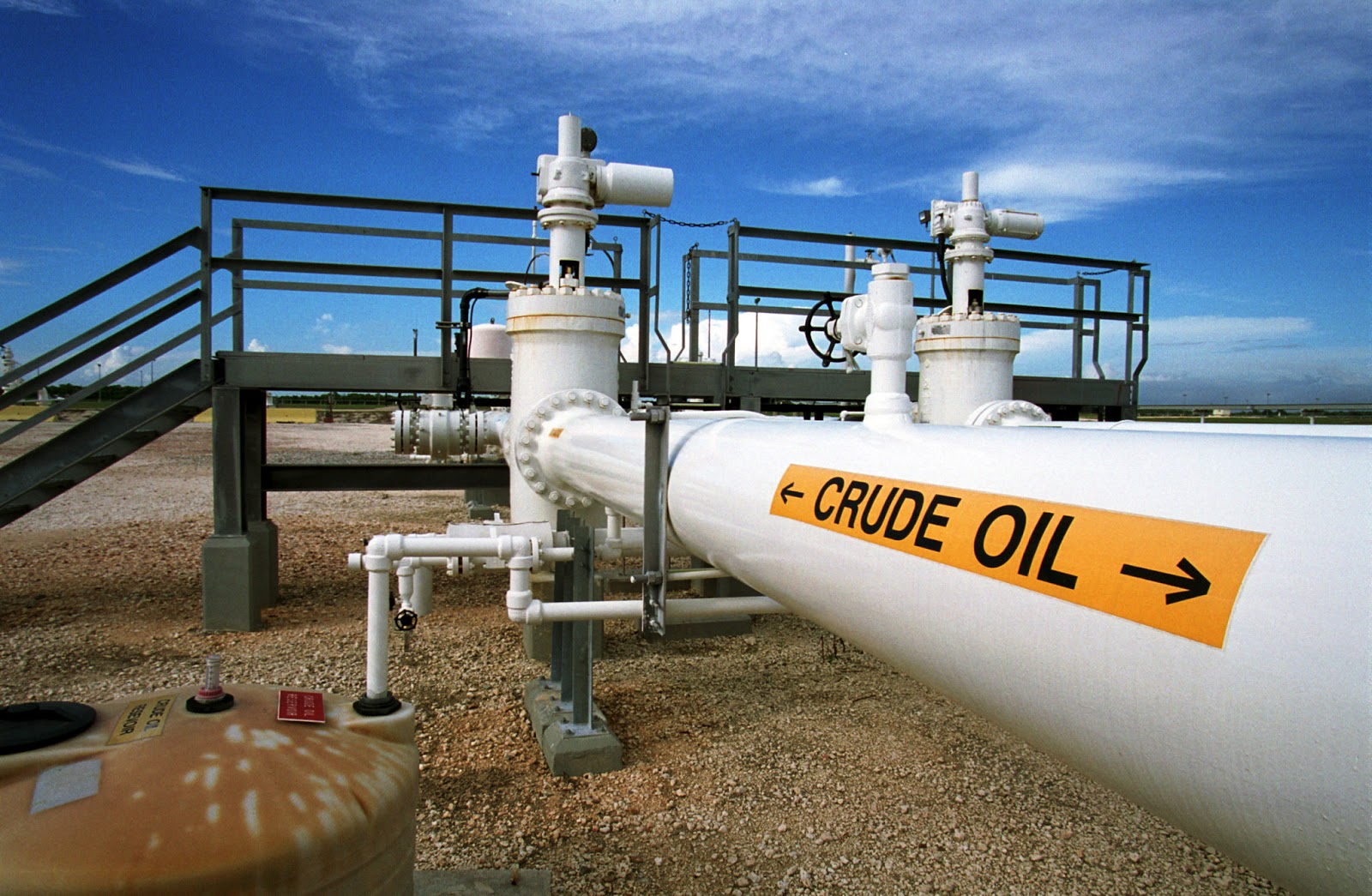
The federal government has disclosed that so far, 16,200 barrels of crude oil and water sediments have been recovered from the Oil Mining Lease (OML) 29 in Nembe Local Government Area of Bayelsa State.
This was disclosed ahead of investigations which are set to return today, to further understand the cause of the spill which commenced on November 5.
The Minister of State for Environment, Mrs Sharon Ikeazor, while speaking on Tuesday after visiting the leak site at the oilfield operated by an indigenous oil firm, Aiteo Eastern Exploration and Exploration Company, said efforts would be made to uncover the cause of the unfortunate incident.
The National Oil Spills Detection and Response Agency (NOSDRA) had on November 6 visited the leak site to ascertain the cause of the leak from a non-producing well.
The pressure and intensity of the gas and crude leak reportedly hampered the process.
The agency subsequently directed the operator of the oilfield to shut the leak, but it persisted until December 8 when the leak was plugged.
Mrs Ikeazor gave the assurance that the Joint Investigation Visit (JIV) would be conducted in a transparent manner, noting that the federal government ensured prompt response from the first day of the incident.
The JIV is a statutory probe that follows every reported leak incident.
“It is done by representatives of the oil firm, affected communities, regulators and state ministry of environment to ascertain the cause and estimated volume of spilt crude oil,” she said.
Mrs Ikeazor noted that NOSDRA had been on the incident site to ensure that the oil leak was contained within the locality to avert further damage to the environment.
According to her, the response to the incident reduced the impact on the environment, adding that the JIV report would determine the next course of action.
According to her, if the leak is traced to equipment failure, the victims will be compensated but if it is found to be caused by sabotage, there will be no compensation.
On his part, Mr Idris Musa, Director-General of NOSDRA, who accompanied the minister alongside officials of Aiteo, said that the agency was doing its best to mitigate the resultant pollution.
He said that the site had suffered several pollution incidents, adding that the devastation observed was not only caused by the latest incident.
He said that the calm nature of the Santa Barbra River was responsible for the high recovery rate of spilt crude which was largely trapped by booms deployed to reduce the spread of leaked crude.
Aiteo had in 2015 acquired OML 29 for about $2.4 billion following Shell’s divestment.
The asset consists of the 97km Nembe Creek Trunk Line which evacuates crude from onshore oil wells within the oil bloc and other operators to Bonny Export Terminal.
Economy
Brent Futures Climb $1 on US-Iran War Uncertainty
By Adedapo Adesanya
Brent futures climbed $1.06 or 1.3 per cent to $83.55 a barrel on Friday amid ongoing uncertainty about the negotiations in progress that determine control of and reopening of the key shipping artery of the Strait of Hormuz.
In the same vein, the US West Texas Intermediate (WTI) futures finished at $78.18 a barrel after it chalked up 89 cents or 1.15 per cent.
Iran is reviewing a bill to ban American and Israeli vessels from the Strait of Hormuz, through which roughly a fifth of the world’s oil and liquefied natural gas normally passed before the war began at the end of February.
Market analysts noted that while this week’s signals on a potential deal have sent a roller-coaster ride in market sentiment, the market remains in the dark as to what needs to happen for the agreement to be clinched.
Part of the question being asked is whether the Iran-Oman agreement would allow a US-flagged vessel to transit the Strait of Hormuz or allow a vessel headed for an American port to go through.
Shipping through Hormuz remains heavily constrained as Middle East oil production is still well below pre-war levels while attacks on commercial vessels have continued even as negotiators discuss possible arrangements for the waterway.
Some also said that this week’s developments have signalled that hostilities between Iran and the US are not yet over. This is because the proposed deal is not easily workable because of sanctions and restrictive insurance clauses on any payments by the US government.
Iran is seeking fees of between 5 per cent and 7 per cent of the price of cargoes from ships using the strait, while Oman is discussing fees of about 3 per cent, while the Donald Trump administration wants no fees at all.
Citi has raised its third-quarter Brent crude forecast to $80 per barrel from $75 as the war drags on and repeated attempts at a deal fail to restore normal oil flows through the strait.
The bank still expects the conflict to be resolved, but the five-month war has lasted longer than Citi anticipated and kept more geopolitical risk in crude prices. Citi left its fourth-quarter Brent forecast unchanged at $70 per barrel and still sees the benchmark averaging $65 in 2027.
Economy
Dangote Eyes New Investments, Acquisitions as Goldman Sachs Tours Refinery
By Adedapo Adesanya
Nigerian businessman and chief executive of Dangote Industries Limited, Mr Aliko Dangote, has unveiled plans for a new phase of investments and acquisitions as the conglomerate pushes towards its target of generating $100 billion in annual revenue by 2030.
Mr Dangote disclosed this while receiving a delegation of senior executives from global investment banking and financial services firm Goldman Sachs, led by co-chief executive of Goldman Sachs International and Global Co-Head of Investment Banking, Mr Anthony Gutman, during a tour of the Dangote Petroleum Refinery & Petrochemicals and Dangote Fertiliser Limited complex in Lagos.
Speaking after the visit, Mr Dangote said the refinery and associated industrial facilities underscore the transformative impact of long-term investment in Africa, stressing that the group’s ambitions extend beyond its current strategic plan.
“No matter how we try to explain what we have built, you cannot fully appreciate it until you see it. But this is only the beginning. We need to look beyond 2030.
“The next phase of our journey will include new investments and acquisitions as we continue to scale the business,” he said.
He added that detailed internal modelling had reinforced management’s confidence that the Group’s target of generating $100 billion in annual revenue by 2030 was achievable.
According to him, the projections were based on conservative assumptions and had strengthened the company’s conviction to pursue an even more ambitious long-term growth strategy.
Mr Dangote also revealed that the strong participation of employees in the refinery’s recent private placement reflected growing internal confidence in the company’s long-term strategy and future prospects.
The Goldman Sachs delegation, after an extensive tour of the 700,000 barrels-per-day refinery, described the project as an extraordinary achievement.
“It is extraordinary what Mr Dangote and the whole organisation have achieved. The ambition, the scale of the project, the quality of the project and the culture of the people is very impressive,” the executives said.
According to a statement issued by Dangote Group on Friday, the delegation was led by Mr Anthony Gutman and included Mr Adib N. Zouein, Co-Head of EMEA Emerging Markets Regional Sales and Head of the Middle East and North Africa region for Global Banking & Markets Public; Mr Ryad Yousuf, Global Head of FICC Sales Strats and Structuring; and Mr Jimi Adesanya, Head of Sub-Saharan Africa Sales (excluding South Africa).
The visitors were received by Dangote; Group Vice President, Oil & Gas, Mr Devakumar Edwin; Managing Director and Chief Executive Officer of Dangote Petroleum Refinery & Petrochemicals, Mr David Bird; Group Executive Director, Oil & Gas, Ms Fatima Aliko Dangote; Chief of Staff to the President/CEO, Ibrahim Dikko; Group Chief Branding and Communication Officer, Mr Anthony Chiejina; Group Chief Economist, Mr Hassan Mahmud; Group Chief Strategy Officer, Mr Aliyu Suleiman; and Head of Administration, Dangote Petroleum Refinery & Petrochemicals, Mr Musa Bala, among other senior executives.
Economy
Senate Probes N1.2trn Fuel Subsidy Deductions as NEITI Claims N1.16tn Spent in 2021
By Adedapo Adesanya
The Senate Public Accounts Committee has heard that Nigeria spent N1.16 trillion on fuel subsidy in 2021, while N1.20 trillion was deducted from federation crude oil sales proceeds during the same period.
The disclosure came from the Chairman of the Revenue Mobilisation Allocation and Fiscal Commission (RMAFC), Mr Mohammed Bello Shehu, during the committee’s ongoing investigation into the 2021 to 2023 Nigeria Extractive Industries Transparency Initiative (NEITI) audit reports on the oil and gas sector.
According to the commission, crude and petroleum product losses cost N16.2 billion, pipeline repairs accounted for N22.05 billion, while strategic stock holding attracted N6.75 billion.
The revelations come against the backdrop of Nigeria’s long-running fuel subsidy regime, which successive governments maintained to keep the pump price of petrol artificially low despite mounting fiscal pressures.
Over the years, subsidy payments consumed trillions of Naira, significantly reducing revenues available to the three tiers of government and contributing to widening budget deficits.
The issue reached a turning point in May 2023 when President Bola Tinubu announced the removal of fuel subsidy during his inauguration speech, declaring that “fuel subsidy is gone.” The decision followed years of concerns over the rising cost of the programme, allegations of fraud, and repeated recommendations by fiscal authorities and international financial institutions that the subsidy had become unsustainable.
The removal triggered a sharp increase in the pump price of Premium Motor Spirit (petrol), leading to higher transportation and living costs across the country. In response, the federal government introduced a series of palliative measures, including cash transfers, support for mass transit, and wage-related interventions, while arguing that savings from the subsidy would be redirected to infrastructure, education, healthcare, and other critical sectors of the economy.
The commission also argued that the current method of calculating the 13 per cent derivation fund undermines the constitutional intention of the policy.
Meanwhile, the committee stood down the Niger Delta Development Commission’s presentation until next Wednesday to allow lawmakers review its submission.
The committee also expressed displeasure over the absence of the Auditor-General of the Federation, warning that he must appear before lawmakers next Tuesday or face compulsory appearance through the constitutional powers of the National Assembly.