
Economy
NGX All-Share Index Rises 0.18% to 65,325.37 points

By Dipo Olowookere
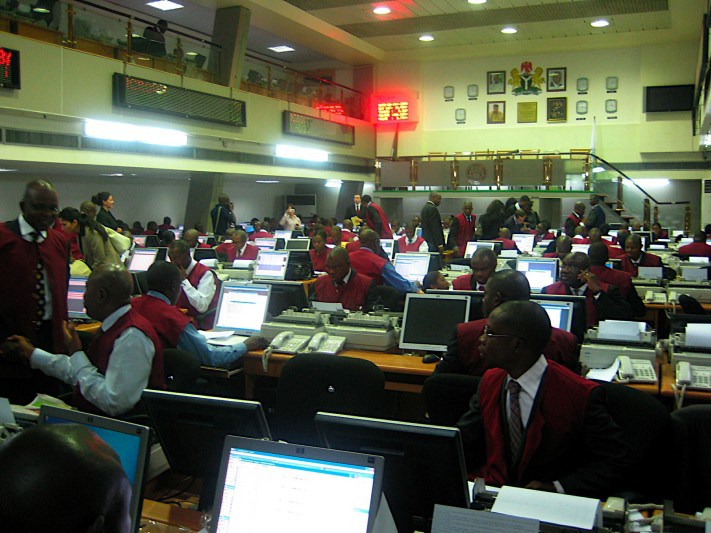
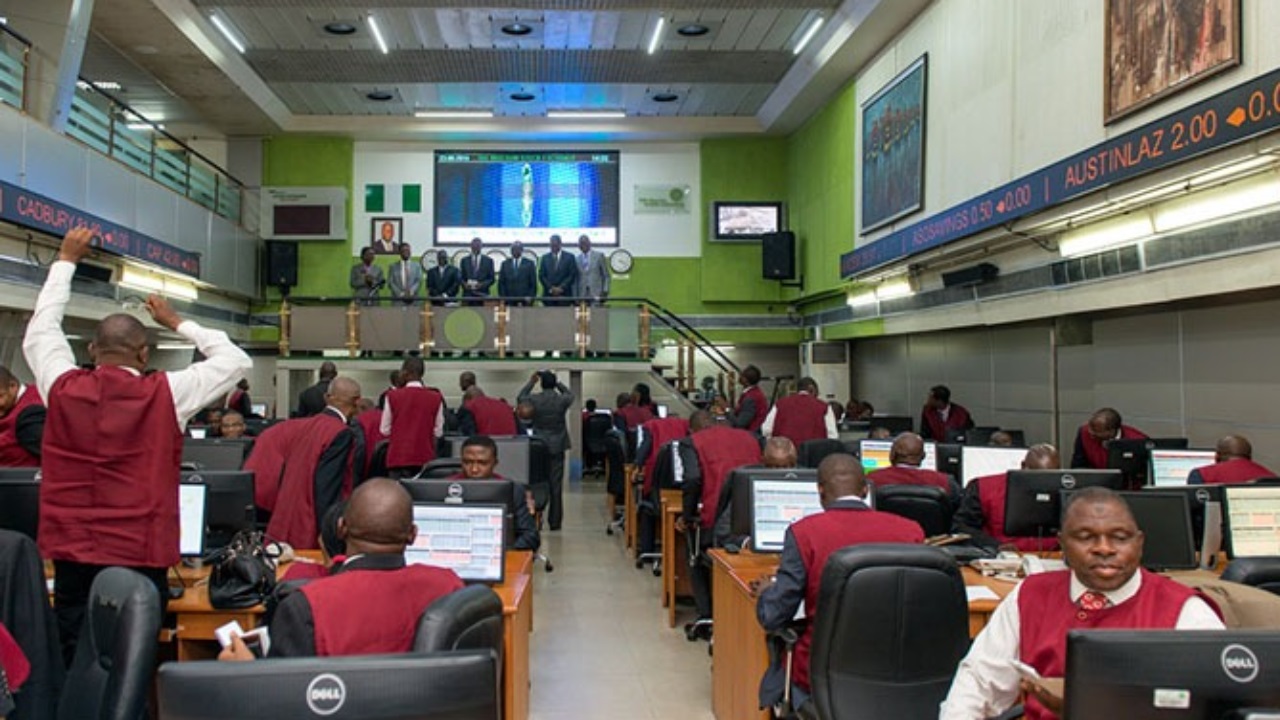
Trading activities on the floor of the Nigerian Exchange (NGX) Limited closed bullish on Friday, with investor sentiment remaining strong as a result of sustained bargain-hunting.
This pushed the local stock market higher by 0.18 per cent at the close of transactions as investors mop up some mid and large-cap equities across the sectors.
It was observed that the industrial goods space lost 0.05 per cent due to profit-taking in Lafarge Africa, as the consumer goods and the energy indices closed flat, while the insurance sector appreciated by 0.37 per cent and the banking counter gained 0.01 per cent.
The All-Share Index (ASI) went up by 120.55 points during the session to 65,325.37 points from 65,204.82 points, and the market capitalisation increased by N89 billion to N35.573 trillion from N35.484 trillion.
The NGX ended the last trading day of the week with 29 price gainers and 25 price losers, representing a positive market breadth index.
SFS REIT chalked up 9.96 per cent to close at N76.20, CWG rose by 9.82 per cent to N3.02, GlaxoSmithKline improved by 9.78 per cent to N10.10, The Initiates jumped by 9.30 per cent to 94 Kobo, and Cornerstone Insurance grew by 9.26 per cent to N1.18.
On the flip side, the duo of Nigerian Enamelware and Veritas Kapital lost 10.00 per cent each to trade at N17.55, and 27 Kobo, respectively. Prestige Assurance declined by 9.80 per cent to 46 Kobo, RT Briscoe shed 8.51 per cent to 43 Kobo, and Mutual Benefits depreciated by 7.84 per cent to 47 Kobo.
Yesterday, investors transacted 489.7 million equities valued at N8.4 billion in 5,804 deals compared with the 361.2 million equities valued at N5.7 billion traded in 5,531 deals on Thursday, implying an improvement in the trading volume, value and the number of deals by 35.58 per cent, 47.37 per cent, and 4.94 per cent apiece.
Sterling Holdings finished the day as the most traded stock with the sale of 86.1 million units worth N298.9 million, Transcorp transacted 66.6 million units valued at N251.0 million, Universal Insurance exchanged 54.9 million units worth N12.1 million, Living Trust Mortgage Bank sold 24.8 million units valued at N67.2 million, and Fidelity Bank recorded the sale of 21.5 million units worth N163.3 million.








By Adedapo Adesanya
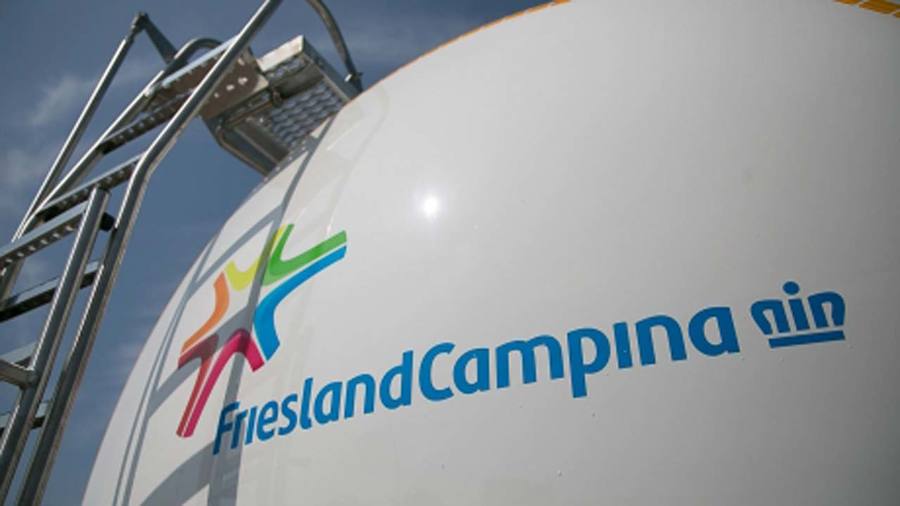
Four stocks weakened the NASD Over-the-Counter (OTC) Securities Exchange by 0.22 per cent on Tuesday, March 24, with Friesland Campina Wamco Nigeria Plc leading the pack after shedding N7.83 to trade at N108.73 per share compared with the previous day’s N116.00 per share.
Further, Food Concepts Plc lost 37 Kobo to close at N3.00 per unit versus Monday’s closing price of N3.37 per unit, Riggs Ventures Plc depreciated by 10 Kobo to 90 Kobo per share from N1.00 per share, and Industrial and General Insurance (IGI) Plc dipped by 4 Kobo to 53 Kobo per unit from 57 Kobo per unit.
Consequently, the market capitalisation of the NASD bourse went down by N5.40 billion to N2.477 trillion from the previous session’s N2.482 trillion, and the NASD Unlisted Security Index (NSI) fell by 9.08 points to 4,140.30 points from 4,149.38 points.
Business Post reports that despite the loss, the trading platform witnessed the rise in the share prices of four securities, led by Okitipupa Plc, which gained N13.50 to sell at N250.00 per share compared with the previous day’s N236.50 per share. Central Securities Clearing System (CSCS) Plc added N2.61 to close at N78.94 per unit versus N76.33 per unit, First Trust Mortgage Bank Plc appreciated by 19 Kobo to N2.08 per share from N1.89 per share, and Impresit Bakalori Plc improved by 18 Kobo to N2.01 per unit from N1.83 per unit.
Tuesday’s trading data showed that the value of transactions increased by 518.9 per cent to N45.6 million from N7.37 million, and the volume of trades increased by securities rose by 126.34 per cent to 933,125 units from 412,260 units, while the number of deals went down by 9.4 per cent to 29 deals from 32 deals.
CSCS Plc remained the most traded stock by value (year-to-date) with 39.1 million units worth N2.4 billion, trailed by Infrastructure Guarantee Credit Plc with 400 million units valued at N1.2 billion, and Okitipupa Plc with 6.4 million units traded for N1.2 billion.
Resourcery Plc maintained its position as the most traded stock by volume (year-to-date) with 1.1 billion units exchanged for N415.7 million, followed by Infrastructure Credit Plc with 400 million units sold for N1.2 billion, and Geo-Fluids Plc with 131.2 million units transacted for N505.8 million.

By Adedapo Adesanya
Pressure on the Naira against the Dollar eased on Tuesday, March 24, by 0.41 per cent or N5.75 in the Nigerian Autonomous Foreign Exchange Market (NAFEX) to N1,382.63/$1 from the previous day’s N1,388.38/$1.
Also, the Nigerian currency gained N11.43 against the Pound Sterling in the official market during the session to sell for N1,848.86/£1 versus Monday’s closing rate of N1,860.29/£1, and improved its value against the Euro by N9.43 to settle at N1,599.98/€1 versus the preceding session’s price of N1,609.41/€1.
However, the Naira lost N17 against the Dollar at the GTBank forex desk to close at N1,388/$1, in contrast to the previous N1,371/$1, and closed flat against the US Dollar in the parallel market at N1,400/$1.
Analysts at Quest Merchant Bank said global factors are shaping investor sentiment, giving the local currency the needed strength to maintain stability in the currency market. The prolonged conflict in the Middle East has heightened risk aversion, reducing appetite for emerging-market assets.
The bank noted that de-escalation in geopolitical tensions, alongside Nigeria’s attractive yield environment, could help sustain offshore inflows and support the currency in the near term, though structural challenges remain.
As for the cryptocurrency market, profit-taking erased gains made by some tokens after it was reported that a one-month ceasefire in the Iran war could be announced soon as part of a wider deal, easing worries that gripped the markets.
Other terms of the deal reportedly include a dismantling of Iran’s existing nuclear capabilities and that country’s vow to “never seek” nuclear weapons.
The news was felt most immediately in the oil market, with Brent Crude dropping from $104 to below $100 in a few minutes.
Previously, US President Donald Trump announced a five-day pause on strikes against Iranian energy infrastructure.
Solana (SOL) depreciated by 1.4 per cent to $90.21, Ripple (XRP) slumped by 1.3 per cent to $1.40, Bitcoin dipped 0.6 per cent to $70,235.96, Ethereum (ETH) declined by 0.4 per cent to $2,143.38, and Binance Coin (BNB) dropped 0.3 per cent to sell for $636.19.
On the flip side, Cardano (ADA) rose 1.4 per cent to $0.2652, TRON (TRX) added 0.7 per cent to close at $0.3077, and Dogecoin (DOGE) appreciated by 0.3 per cent to $0.095, while the US Dollar Tether (USDT) and the US Dollar Coin (USDC) remained unchanged at $1.00 each.

By Adedapo Adesanya
Oil prices were mixed on Tuesday after reports that the United States had sent Iran a 15-point plan to end the war in the Middle East.
Brent futures went down by $0.83 or 0.9 per cent to $99.11 a barrel, while the US West Texas Intermediate climbed $4.22 or 4.79 per cent to $92.35 per barrel.
President Donald Trump said on Tuesday that the US and Iran were “in negotiations right now” and suggested Tehran was eager to make a peace deal, even as the Islamic Republic denied it’s in direct talks with America.
President Trump, speaking in the Oval Office, said he decided to back off from his recent threat to order strikes on Iranian energy infrastructure
According to reports, the plan includes a one-month ceasefire to be announced, according to a mechanism that US Middle East envoys Steve Witkoff and Jared Kushner are working on.
The Strait of Hormuz was handling about 20 per cent of global seaborne oil supplies until the war broke out, before Iran virtually stopped flows via the critical waterway. With around a fifth of the world’s daily oil supply cut off by the Middle East war, prices are still more than 40 per cent higher than they were when the conflict erupted in late February.
The United Arab Emirates (UAE), which has seen its liquified natural gas (LNG) and most oil supply choked at the vital chokepoint, said Iran’s weaponisation of the energy and trade flows amounts to economic terrorism against every nation in the world.
Since the US-Israel strikes on Iran began on February 28, the daily traffic of over 100 vessels, including tankers, through the Strait of Hormuz, has slowed to a trickle of a handful of passages per week, all cargoes apparently approved for transit by Iran.
Iranian state media said that Iran would permit safe transit through the strait, except for ships associated with its “enemies.”
Amid the messaging clash between the US and Iran on negotiations, multiple outlets have reported that regional leaders are engaged in behind-the-scenes diplomatic efforts to help broker an end to the war.
The American Petroleum Institute (API) estimated that crude oil inventories in the US rose by 2.3 million barrels in the week ending March 20. Official data from the Energy Information Administration (EIA) will be released later on Wednesday.













-
 Feature/OPED6 years ago
Davos was Different this year
-
Travel/Tourism10 years ago
Lagos Seals Western Lodge Hotel In Ikorodu
-

 Showbiz3 years ago
Estranged Lover Releases Videos of Empress Njamah Bathing
-
 Banking8 years ago
Sort Codes of GTBank Branches in Nigeria
-

 Economy3 years ago
Subsidy Removal: CNG at N130 Per Litre Cheaper Than Petrol—IPMAN
-

 Banking3 years ago
Sort Codes of UBA Branches in Nigeria
-

 Banking3 years ago
First Bank Announces Planned Downtime
-

 Sports3 years ago
Highest Paid Nigerian Footballer – How Much Do Nigerian Footballers Earn
Pingback: Daily Business Headlines – AUGUST 14 2023 – Alpha Morgan Capital Managers Limited
Pingback: NGX All-Share Index Rises 0.18% to 65,325.37 points – African Budget Bureau