
Economy
Nigeria Declares Better Performance for Oil in 2020

By Adedapo Adesanya
The Minister of State for Petroleum Resources, Mr Timipre Sylva, has declared that the Nigerian oil and gas industry performed better in 2020, attributing it to collaboration among various federal government agencies in the sector.
The Minister said this in Bayelsa at a review meeting with the Permanent Secretary, Directors and chief executives of agencies in the Ministry of Petroleum Resources.
He also expressed optimism that more outstanding results would be recorded in the sector in 2021.
He listed some key achievements of the Nigeria petroleum industry to include the signing of the Final Investment Decision for Nigerian Liquefied Natural Gas, NLNG, Train 7 project, the commencement of the Ajaokuta-Kaduna-Kano, AKK, pipeline project, championed by the Nigerian National Petroleum Corporation, NNPC, and implementation of the deregulation of the downstream sector of the petroleum industry, among others.
Other notable accomplishments, the minister stated, included the completion and commissioning of the 17-storey headquarters building of the NCDMB and commissioning of the Waltersmith modular refinery, developed with 30 per cent equity from the NCDMB.
He applauded the performance of the Ministry and its agencies over the past 12 months, stating that they delivered creditably on their respective mandates, despite the challenges imposed by the COVID-19 pandemic.
Also speaking, the Executive Secretary of Nigerian Content Development and Monitoring Board (NCDMB), Mr Simbi Kesiye Wabote, commended Mr Sylva for instituting a review meeting for all agencies under the ministry, where they would also plan for the future of the sector.
Giving a scorecard of his agency, Mr Wabote noted that the board had delivered on several initiatives in support of the Ministry of Petroleum Resources’ priorities, one of them being the launch of the NOGTECH Hackathon and Science Technology Innovation Challenge (STIC) as a strategy of developing innovation to address pilferage, sabotage and losses of petroleum products.
Mr Wabote stated that the NCDMB was supporting the goal of the Federal Government to build partnerships on gas flare commercialization programme and Liquefied Petroleum Gas (LPG) penetration.
To this end, he noted that the NCDMB was catalysing local manufacturing of 1.2 million composite LPG cylinders per annum in Bayelsa and Lagos State.
He said: “The board is also supporting flare-out projects through Duport Midstream Company’s 300 million standard cubic feet per day (MMscfd) gas gathering hub in Edo and NEDO 110 MMscfd gas processing project in Delta State.
“The board is also supporting the establishment of LPG storage/filling plants in five states and as well as LPG distribution depots in six states.”
On the Ministry’s target to increase crude oil production to three million barrels per day, the Executive Secretary confirmed that NCDMB signed Service Level Agreements, SLA, with the Oil Producers Trade Section, Independent Petroleum Producers Group, IPPG, and Nigeria LNG as a strategy of fast-tracking projects approvals and ease of doing business.
He added that the NCDMB earlier in the year launched the $50 million Nigerian Content Research and Development Fund and Oloibiri Museum and Research Centre in support of enhanced oil recovery.
On the goal of Supporting and Enhancing Cost Reduction, Mr Wabote said: “NCDMB automated its business process and upgraded its NOGICJQS and initiated collaborative interfaces with the Nigerian Immigration Service (NIS) Customs and Department of Petroleum Resources (DPR).
“Towards increasing domestic refining capacity, NCDMB has so far enabled a combined capacity of 80,000 barrels per day (bpd) modular refining capacity through its investments in Waltermith in Imo, Azikel Refinery in Bayelsa and Duport in Edo States, with other proposals under review.
“NCDMB is also working to achieve the Ministry’s target on job creation and poverty alleviation. On that plane, the board is currently developing three oil and gas parks for manufacturing of oil and gas components, with each expected to create 2,000 jobs opportunities at full operation.
“He added that the board also increased the size of the Nigerian Content Intervention Fund (NCI Fund) from $200 million to $350 million, with additional products on Working Capital and Business Support for Women in Oil & Gas.
“Other initiatives included the Board’s Human Capacity Development programmes to increase employability and incubate entrepreneurs, interventions in vocational education, ICT laboratory among others.”
Also speaking, Group Managing Director of the NNPC, Mr Mele Kyari noted that Nigeria is currently one of the most expensive territories in the world for upstream projection, adding, however, that part of the corporation’s mandate was to reduce cost by at least five per cent.
He said: “We have reduced costs substantially and there are a number of interventions. We have set a target for the industry and our partners to bring down the cost of production to at least $10 to a barrel.”



By Adedapo Adesanya
The National Insurance Commission has issued new guidelines for the collection, management, and administration of the Insurance Policyholders’ Protection Fund.
In a circular issued to all insurance institutions on Tuesday, the regulator also set May 31, 2026, as the deadline for insurers to submit their assessment returns for the 2025 financial year.
Recall that on August 5, 2025, President Bola Tinubu signed into law the Nigerian Insurance Industry Reform Act ( NIIRA 2025).
This landmark legislation repeals the Insurance Act 2003, and consolidates related provisions, ushering in a modern regulatory framework. It lays a strong foundation for sustainable growth and increased investment in the country’s insurance sector.
The commission said the guidelines were issued in exercise of its powers under the 2025 Act and other existing insurance laws and regulations to provide regulatory clarity, improve guidance, and ensure ease of compliance across the industry.
According to NAICOM, the guidelines establish a comprehensive structure for the operation of the IPPF, which serves as a statutory safety net to protect insurance policyholders in the event of distress or insolvency of a licensed insurer or reinsurer. The framework also provides direction on the reimbursement of loans by insurers and reinsurers.
NAICOM stated, “The guidelines ensure regulatory clarity, guidance and ease of compliance, as it provides a comprehensive regulatory framework for the collection, management, and administration of the Fund, which serves as a statutory safety net designed to protect insurance policyholders against distress and insolvency of a licensed insurer or reinsurer, including guidance for the reimbursement of loans by an insurer or reinsurer.
“Please be informed that the IPPF Assessment Returns in respect of the year 2025 shall be submitted to the Commission not later than 31st May 2026, while subsequent submissions shall be in line with Section 4.3 of the Guideline on Insurance Policyholders Protection Fund.”
By Adedapo Adesanya
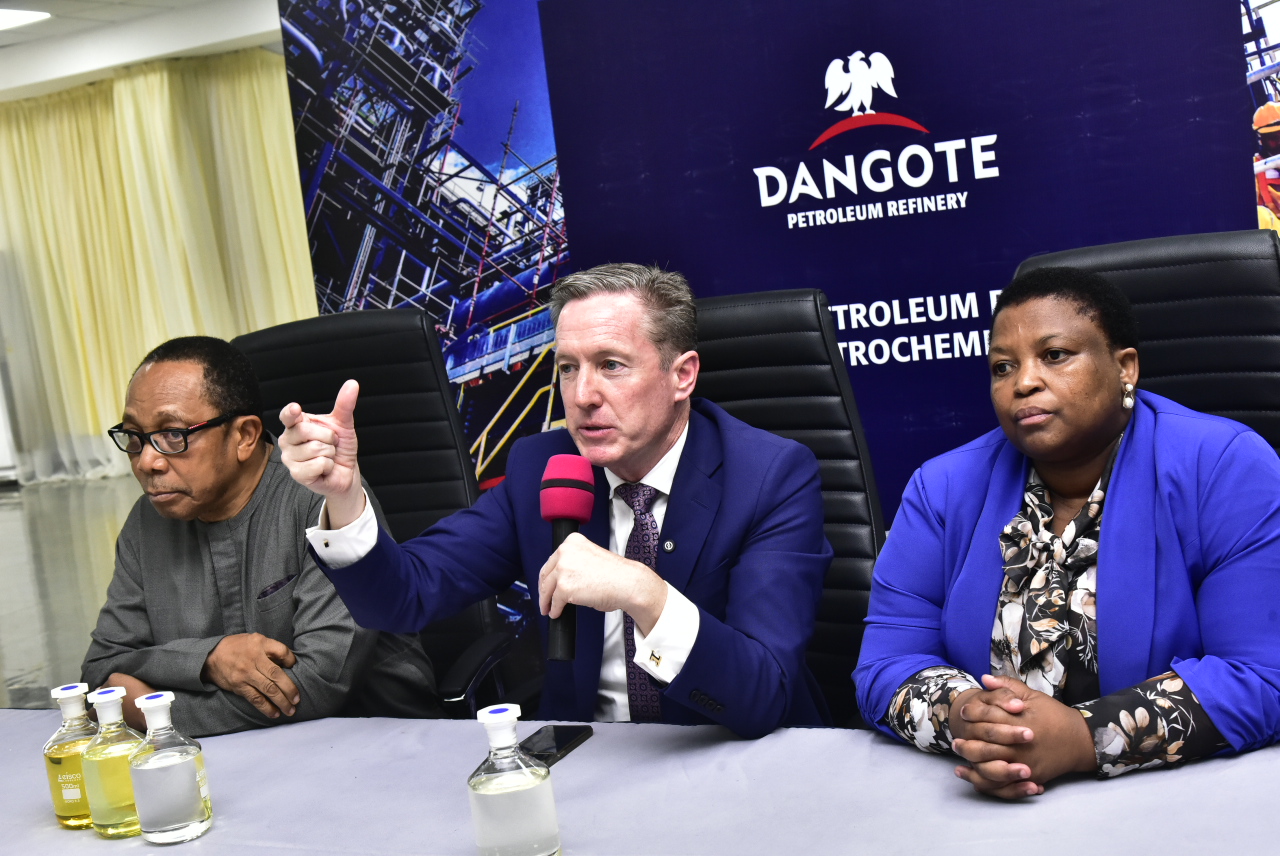
The Dangote Refinery on Wednesday returned the petrol price to N1,200 per litre, less than 24 hours after it increased it by 5 per cent.
The private refinery had raised the ex-depot price by N75 on Tuesday, citing pressure from volatile global oil markets, but quickly brought it back to N1,200 per litre from N1,275 per litre.
The swift downward review is directly linked to a sharp drop in international crude prices. Brent crude has plunged to $95.05 per barrel, after a 13 per cent decline, while the US West Texas Intermediate (WTI) crude closed at $97.18, recording nearly a 14 per cent drop.
This development comes after US President Donald Trump announced a conditional two-week ceasefire with Iran, which eased fears of immediate supply disruptions in the global oil market.
“This will be a double-sided CEASEFIRE!” Trump said on social media, marking a sharp reversal from his earlier warning that “a whole civilisation will die tonight” if Iran failed to comply with US demands.
Iran’s Foreign Minister, Mr Abbas Araqchi, confirmed that the country would halt attacks provided strikes against Iran cease and transit through the Strait of Hormuz is coordinated by Iranian forces.
Despite the breakthrough, tensions remain elevated across the region, with several Gulf states reporting missile launches, drone activity, or issuing civil defence warnings.
While oil prices have fallen back below $100, they remain significantly elevated after surging by a record amount in March. Market analysts noted that regardless of how successful the ceasefire is, geopolitical risk related to the Strait of Hormuz is likely to remain elevated for the foreseeable future under the control of Iran.
By Adedapo Adesanya
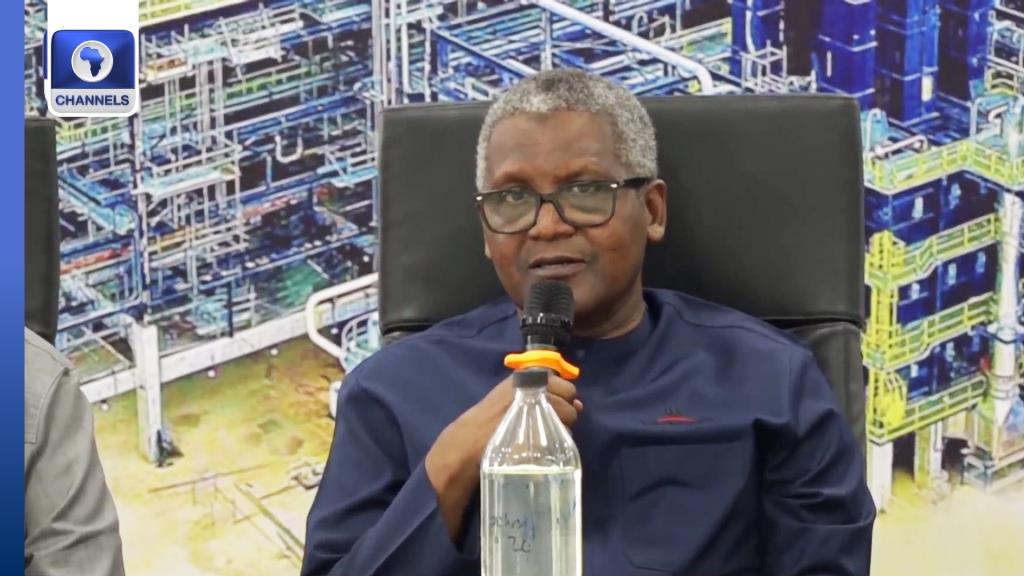
Crude oil deliveries from the Nigerian National Petroleum Company (NNPC) Limited to the Dangote Petroleum Refinery doubled in March, boosting prospects for improved fuel availability.
This was revealed by the chief executive of Dangote Industries Limited, Mr Aliko Dangote, on Tuesday, when he received the Deputy Secretary-General of the United Nations, Mrs Amina Mohammed, at the industrial complex in Ibeju-Lekki, Lagos.
While speaking on feedstock supply, Mr Dangote commended the NNPC for increasing crude deliveries to the refinery in March, noting that volumes rose to 10 cargoes—six supplied in Naira and four in Dollars—to support domestic fuel availability, according to a statement by the Refinery.
“Last month, they gave us six cargoes for Naira and four cargoes for Dollars,” he said.
Despite the improvement, Mr Dangote noted that the supply remains below the 19 cargoes required for optimal operations, with the refinery continuing to bridge the gap through imports from the United States and other African producers.
He also expressed concern over the unwillingness of international oil companies operating in Nigeria to sell to the refinery, stating that their preference for selling crude to traders forces it to repurchase at higher costs, with broader implications for the economy.
Mr Dangote added that the refinery is seeking increased access to domestically priced crude under local currency arrangements as part of efforts to moderate fuel costs and enhance long-term energy and food security across the continent.
On her part, Mrs Mohammed underscored the strategic importance of Dangote Industries Limited -particularly Dangote Fertiliser Limited—in addressing Africa’s mounting food security challenges, while calling for stronger global partnerships to scale its impact.
Mrs Mohammed said the United Nations would prioritise amplifying scalable solutions capable of mitigating the continent’s food crisis, describing Dangote’s integrated industrial model as a critical pathway.
“I think the UN’s job here is to amplify and to put visibility on the possibilities of mitigating a food security crisis, and this is one of them,” she said. “I hope that when we go back, we can continue to engage partners and countries that should collaborate with Dangote Industries.”
-
 Feature/OPED6 years ago
Davos was Different this year
-
Travel/Tourism10 years ago
Lagos Seals Western Lodge Hotel In Ikorodu
-

 Showbiz3 years ago
Estranged Lover Releases Videos of Empress Njamah Bathing
-
 Banking8 years ago
Sort Codes of GTBank Branches in Nigeria
-

 Economy3 years ago
Subsidy Removal: CNG at N130 Per Litre Cheaper Than Petrol—IPMAN
-

 Banking3 years ago
Sort Codes of UBA Branches in Nigeria
-

 Banking3 years ago
First Bank Announces Planned Downtime
-

 Sports3 years ago
Highest Paid Nigerian Footballer – How Much Do Nigerian Footballers Earn