Connect with us

Economy

Nigeria Imports 61,884.3MT of Cooking Gas in One Month 

Published

on

Price of Cooking Gas

By Adedapo Adesanya

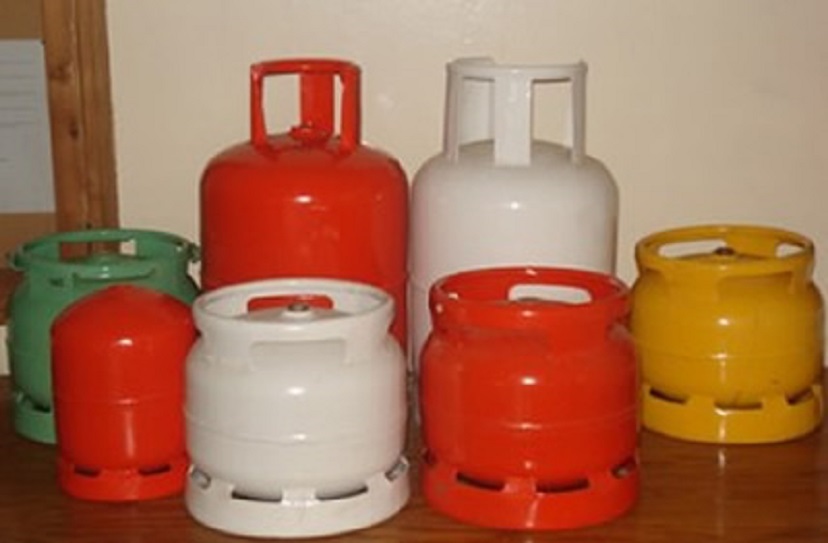
Nigeria imported a total of 61,884.291 metric tonnes (MT) of Liquefied Petroleum Gas (LPG), also known as cooking gas, in March 2022.

This was disclosed by the Nigerian Midstream and Downstream Petroleum Regulatory Authority (NMDPRA) in its latest gas report, which covers the third month of the year.

This indicated that the total gas import rose by 107.61 per cent from the 29,807.591 MT imported in February.

According to the NMDPRA, the totality of Nigeria’s 61,884.291 MT cooking gas import, represented 47.9 per cent of the total cooking gas supplied in the country in the month under review.

In terms of destinations, there were no changes as the United States of America and Argentina topped the suppliers of the commodity to Nigeria. They also topped in the previous month.

Furthermore, NMDPRA noted that five companies — Algasco LPG Services Limited, Prudent Energy and Services Limited, Rainoil Limited, NIPCO and Techno Oil Limited — were responsible for Nigeria’s total cooking gas import in March 2022.

According to the report, in the month under review, Algasco imported 22,389.781 MT of LPG from the US; Prudent Energy imported two consignments of LPG from the US, comprising 4,020.031 MT and 4,177.380 MT, while Rainoil brought in 7,512.035 MT of the commodity from Argentina.

In addition, NIPCO and Techno imported 12,129.213 MT and 11,665.851 MT, respectively, from the USA.

The downstream and midstream regulator, also known as the authority, further stated that a total of 129,291.824 MT of LPG was supplied in Nigeria in March, appreciating by 67.57 per cent from 77,158.292 MT recorded in the previous month.

According to the organisation, of the total cooking gas supplied in March, 67,407.533 MT, representing 52.14 per cent of the total LPG supplied in Nigeria, was sourced locally; in comparison, 47,350.701 MT of the commodity was sourced locally in February 2022.

In the local category, the agency, formerly known as the Petroleum Products Pricing Regulatory Agency (PPPRA), reported that Matrix Energy sourced 8,060.224 MT and 6,056.868 MT of LPG from Bonny River Terminal, which it then supplied to the Nigerian market.

Algasco sourced 6,881.480 MT and 13,444.576 MT of cooking gas from the Nigerian Liquefied Natural Gas (NLNG), Bonny for supply to the local market; NIPCO and 11 Plc supplied 13,426.615 MT, sourced from NLNG, Bonny; while Stockgap also sourced 9,771.583 MT and 9,766.187 MT of LPG from NLNG.

Furthermore, the NMDPRA disclosed that Ashtavinayak Hydrocarbon Limited, Kwale, Delta State, supplied 9,681.650 MT of propane in March 2022; while Nigerian Petroleum Development Company, Oredo, Benin and Greenville Natural Gas Limited, Rumuji, Rivers State supplied 1,893.450 MT and 291.650 MT of propane, respectively.


Adedapo Adesanya is a journalist, polymath, and connoisseur of everything art. When he is not writing, he has his nose buried in one of the many books or articles he has bookmarked or simply listening to good music with a bottle of beer or wine. He supports the greatest club in the world, Manchester United F.C.

3 Comments

Leave a Reply

Your email address will not be published. Required fields are marked *

Economy

Coronation Projects July 2026 Inflation Rate at 15.80%

Published

on

inflation food prices

By Aduragbemi Omiyale

Analysts at Coronation Asset Management have predicted that the July 2026 inflation rate should come at 15.80 per cent, lower than the 15.91 per cent recorded in June 2026.

The National Bureau of Statistics (NBS) is expected to release the actual rate today, Monday, August 17.

Coronation explained that it projected a pullback in the rate because of “three primary forces: a fresh energy price shock stemming from renewed Strait of Hormuz hostilities and a domestic refinery pricing disruption, seasonal harvest-related relief on food prices, and continued relative exchange rate stability.”

The organisation noted that the disinflation trend in the first half of the year remained last month, with the fuel price shock denting the pace of improvement rather than reversing it.

Regarding energy prices, Coronation reported that prices were stable in July, although this coincided with Dangote Refinery’s brief switch to dollar-denominated PMS pricing between July 13 and 22, which sharply reset ex-depot prices higher before naira-based sales resumed at N1,215 per litre following government intervention.

As for the exchange rate, it was also stable last month between N1,362/$1 and N1,383/$1 at the official market.

However, Coronation stressed that the month-on-month inflation may stay marginally firmer into August as the fuel price shock continues to pass through transport, logistics and services pricing, before the year-on-year rate resumes a steadier easing bias in September–October, conditional on Hormuz tensions not escalating further and Dangote Refinery maintaining naira-based pricing.

But it warned that a renewed dollar-pricing episode or a sustained Brent move above $95 per barrel would risk pushing the year-on-year print back toward 16.5 per cent to 17.0 per cent, while a durable de-escalation could see it drift toward 15.0 per cent to 15.3 per cent by October.

“For policy determination, this reinforces our view that the resumption of MPC rate cuts is unlikely before Q4 2026 at the earliest. The MPR has held at 26.50 per cent since February, and we expect the committee to maintain that stance through its next meeting, with any easing conditional on both core inflation turning over and energy-driven cost pressures visibly fading.

“We continue to favour the front end of the curve (1Y T-Bills) over 5–10-year bond instruments, where investors positioning for an early start to a sustained easing cycle may need to defer that thesis further,” their analysts stated.

Continue Reading

Economy

Cameroon Wins 2026 Women’s African Cup of Nations

Published

on

cameroon wafcon

By Adedapo Adesanya

Cameroon have won their first CAF Women’s Africa Cup of Nations (WAFCON) with a 3-0 victory over tournament debutant Malawi on Sunday evening at the Moulay El Hassan Stadium in Rabat, Morocco.

A brace from Marie Ngah Manga and a goal from Naomi Eto, all scored in the first half, secured the Indomitable Lionesses of Cameroon’s first continental trophy. They previously made the WAFCON final in 2004, 2014 and 2016, but lost all three to Nigeria.

As a result of the win, Cameroon will receive $2 million in prize money from the Confederation of African Football (CAF), double the prize pot from the 2025 WAFCON. Malawi will receive $750,000 as finalists.

Cameroon becomes the fourth nation to win the tournament alongside Nigeria, which has won it a record 10 times, Equatorial Guinea twice, and South Africa once.

The final was a thumping victory for the Lionesses despite expectations of a dual Malawian threat of Chawinga sisters Temwa and Tabitha. The Scorchers were unable to match Cameroon’s technical precision in the midfield nor their tenacity in front of goal.

The victory is also inspiring as Cameroon did not initially qualify for the tournament but was admitted last November as the result of a spontaneous decision by CAF to expand the WAFCON format from 12 teams to 16 for the first time. Mali, Ivory Coast and Egypt were also admitted by the expansion due to their high rankings by the Federation of International Football Association (FIFA).

The tournament was a shining light for goalkeeper Michaely Bihina as the 22-year-old Benfica product proved instrumental in Cameroon’s eventual triumph in Morocco. In the quarter-finals against Nigeria, she denied the Super Falcons the chance to equalise, while against Morocco in the WAFCON semifinals, she was solid between the sticks — saving a penalty in full time and then going on to be superb in a shootout against host Morocco.

Cameroon will be joined by Malawi, Algeria, and Morocco as Africa’s representatives at the 2027 FIFA Women’s World Cup in Brazil. Ghana and South Africa have also qualified for the international play-offs.

Continue Reading

Economy

Five Price Decliners Weaken OTC Securities Exchange by 1.72%

Published

on

NASD OTC securities exchange

By Adedapo Adesanya

Five securities pulled down the NASD Over-the-Counter (OTC) Securities Exchange by 1.72 per cent on Friday, August 14, cutting the market capitalisation by N47.04 billion to N2.689 trillion from N2.727 trillion, and slicing the NASD Security Index (NSI) by 78.37 points to 4,465.83 from 4,532.03 points.

11 Plc led the price decliners yesterday after its price went down by N15.03 to N230.00 per share from N245.03 per share. MRS Oil Plc weakened by N13.20 to N118.80 per unit from N132.00 per unit, Central Securities Clearing System (CSCS) Plc slid by N10.30 to N99.46 per share from N109.76 per share, Okitipupa Plc fell by N6.99 to N270.01 per unit from N277.00 per unit, and Afriland Properties Plc dipped by N2.00 to N20.00 per share from N22.00 per share.

Business Post reports that the OTC securities exchange recorded four gainers during the session, led by FrieslandCampina Wamco Nigeria Plc, which appreciated by N9.85 to N169.85 per unit from N160.00 per unit. IPWA Plc gained 70 Kobo to close at N10.41 per share versus N9.71 per share, Industrial and General Insurance (IGI) Plc rose by 4 Kobo to 54 Kobo per unit from 50 Kobo per unit, and Geo-Fluids Plc improved by 1 Kobo to N2.06 per share from N2.05 per share.

The volume of trades soared by 64.8 per cent to 3.2 million units from the previous session’s 1.9 million units, the value of transactions jumped by 78.2 per cent to N375.7 million from N210.8 million, and the number of deals surged by 35.3 per cent to 46 deals from 34 deals.

Great Nigeria Insurance (GNI) Plc was the most traded stock by value on a year-to-date basis, with 3.4 billion units valued at N8.4 billion, followed by Infrastructure Credit Guarantee (Infracredit) Plc with 2.3 billion units sold for N6.5 billion, and CSCS Plc with 79.0 million units exchanged for N5.7 billion.

GNI Plc also closed the day as the most traded stock by volume on a year-to-date basis, with 3.4 billion units worth N8.4 billion, followed by Infracredit Plc with 2.3 billion units transacted for N6.5 billion, and Resourcery Plc with 1.1 billion units traded for N415.7 million.

Continue Reading