
Economy
Nigeria Loses 4% in Global Market Share of LNG Supply

By Adedapo Adesanya
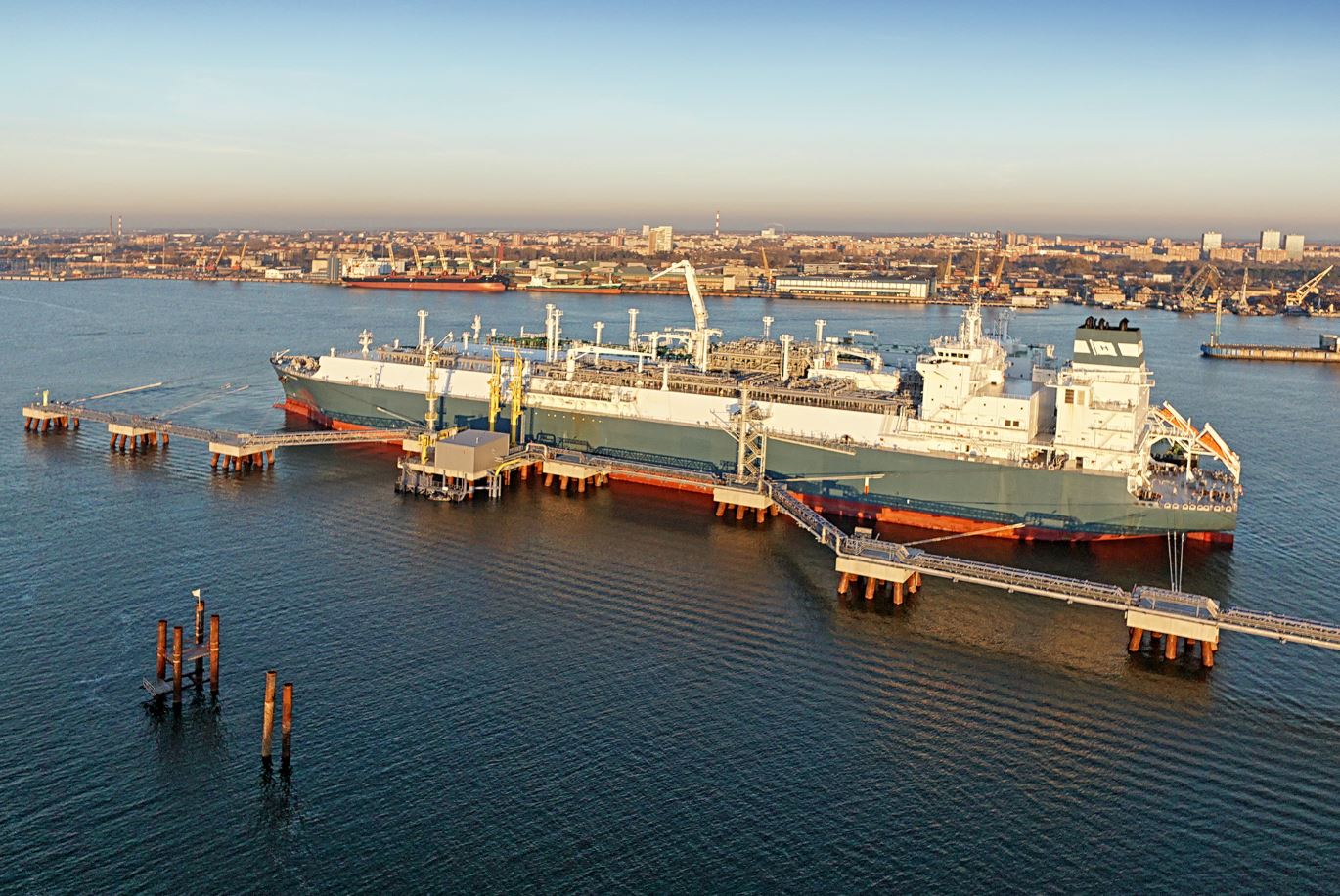
Nigeria’s plan to grab a profitable chunk in the Liquefied Natural Gas (LNG) market is suffering a setback as its global share dropped four per cent.
According to the Managing Director of Nigeria LNG Limited, Mr Tony Attah, Nigeria had around 10 per cent supply share 10 years ago but has now lost 4 per cent to 6 per cent.
Mr Attah, speaking at the just-concluded 5th International Conference of the Nigeria Society of Chemical Engineers, explained that the nation moved from the third position to the sixth position in the global supply chart.
“About 10 years ago, we controlled about 10 per cent of the market and number three in the world. But today with the emergence of the shale revolution in the United States and Australia, we have slipped quickly to number five, and again, further down to number six with less than six per cent market share. Nevertheless, I am hoping that train seven will bring us up,” Mr Attah noted.
“However, if you look at the data, we have 200 trillion cubic feet proven reserves (TCF); we have 22 million tonnes per annum capacity that’s less than point 5 per cent of results to capacity ratio analysis.
“Look at Australia, which has 88 million tonnes per annum capacity. This tells me that we can do much more to make a difference in Nigeria and reposition not only our company but also Nigeria and indeed Africa, on the global map,” he added.
“I just want to say a little bit about our performance. Today, we have delivered more than 5,000 LNG cargoes across the world. We have 23 dedicated ships that make the journey day in day out. Nigeria is enabling your economy. Nigeria is enabling your access to energy. Nigeria is enabling you to function.
“We have to date more than 11 billion in asset base and over $108 billion in revenues to our shareholders as expressed upfront with more than $35 billion in dividends delivered but at least $8 billion in taxes to the federal government since we became a taxpayer in 2009.
“Our customers, as I mentioned, proudly describe us as responsible, reliable, and trusted. They are not that many opportunities for Nigeria to be described as such, which is part of our delivering on the vision of helping to build a better Nigeria, starting from the reputation, but also from delivering very reliable energy to the rest of the world.
“Today, we produce about 7.5 billion cubic feet (BCF) of gas on a daily basis. Of that, we as Nigeria LNG take 3.5 BCF almost 40 per cent. The domestic market consumes about 1.5 BCF, which is really just 21 per cent. The industry reinjects about 2.3 BCF much more than is going into the domestic market, which is where the actual national development can happen,” he said further.
“We have said gas is many things to many people. Gas to power will make a big difference in the lives of Nigerians. Today, as we said more than 100 million people have no direct access to power.
“Gas is the bedrock of industrialisation worldwide. Gas to petrochemicals, more than half the things we import today, we can get from gas, gas to agriculture. From fertilizer, you have probably heard of the Dangote fertiliser plant that is being built in Lagos. We can do so much,” Mr Attah disclosed.
He stated further: “That is just too shocking for me to take. I mean, if you benchmark that against the national budget, which is barely $45 billion year-on-year, we are spending by far too much of our forex importing what we already have. But gas is the bedrock for that opportunity if we are to move to the next level of industrialisation.”



**Revokes Trading Licences of LMB, Platinum Stockbrokers
By Aduragbemi Omiyale
A stockbroking company, Premium Capital and Stockbrokers Limited, has been fined N5 million for engaging in “unauthorised sale of its clients’ securities.”
A circular issued by the Nigerian Exchange (NGX) Regulation Limited disclosed that the trading licence of the organisation has also been revoked.
In the notice signed by the Head of Market Regulation for NGX RegCo, Chinedu Akamaka, Premium Capital violated Rule 11.9 of the Rulebook of The Exchange, 2015 (Dealing Members’ Rules), which focuses on the Prohibition of Unauthorised Sale of Securities.
Business Post reports that Premium Capital was not the only stockbroker that had its trading licence withdrawn, as it also affected others.
The licence of LMB Stockbrokers Limited was revoked by NGX RegCo for prolonged inactivity, which falls contrary to Rule 6.4: Revocation of Inactive Dealing Members’ Licences, Rulebook of The Exchange, 2015 (Dealing Members’ Rules), as amended.
The same also affected Platinum Stockbrokers Limited, which has not witnessed activity on the floor of the NGX Limited for a while.
Similarly, the authorised dealing clerkship of Mr Bernard Oluwole Ilori, was taken back with immediate effect in alignment with an earlier determination by the Securities and Exchange Commission’s (SEC) Administrative Proceedings Committee (APC), which arose from his involvement in regulatory infractions connected to Mutual Alliance Investment and Securities Limited and resulted in his 10-year ban from the Nigerian capital market since March 25, 2021.
Investors have been “strongly advised not to engage in any activity with the firms” whose trading licenses have been revoked.

By Aduragbemi Omiyale
The securities of DN Tyre and Rubber Plc, and Greif Nigeria Plc have been delisted by the regulatory arm of the Nigerian Exchange (NGX) Group Plc, NGX Regulation Limited.
A statement signed by the Head of the Issuer Regulation Department of NGX RegCo, Mr Godstime Iwenekhai, said the delisting became effective on Thursday, April 9, 2026.
In the notice issued yesterday, it was further disclosed that the action complied with the provisions of Clause 14 of the Amended Form of General Undertaking, for Listing on Nigerian Exchange Limited General Undertaking.
According to this clause, “The exchange reserves the right to, at its sole and absolute discretion, suspend trading in any listed securities of the Issuer, delist such securities, or remove the name of the issuer (listed company) from the daily official list of the exchange with or without prior notice to the issuer, upon failure of the issuer to comply with any one or more of the provisions of this General Undertaking, or when in its sole discretion, the exchange determines that such suspension of trading or delisting is in the public interest, or otherwise warranted.”
It was explained that the shares of the two firms were delisted because they fell below the listing standards.
“The securities of DN Tyre and Rubber Plc and Greif Nigeria have been delisted from the facilities of Nigerian Exchange Limited (NGX) effective Thursday, April 9, 2026, on the grounds that the companies are operating below the listing standards of NGX and their securities are no longer considered suitable for continued listing and trading in the market,” the disclosure noted.
By Adedapo Adesanya
The NASD Over-the-Counter (OTC) Securities Exchange declined by 0.95 per cent on Thursday, April 9, plunging the Unlisted Security Index (NSI) by 37.41 points to 3,893.50 points from 3,930.91 points.
In the same vein, the market capitalisation lost N22.38 billion during the session to N2.329 trillion from the N2.351 trillion it ended at midweek.
The OTC securities exchange was under selling pressure yesterday, resulting in a negative market breadth index after three securities lost weight and one gained weight.
Central Securities Clearing System (CSCS) Plc led the losers’ table after it shed N3.74 to sell at N64.21 per unit versus N67.95 per unit. Food Concepts Plc went down by 19 Kobo to N2.68 per share from N2.87 per share, and Free Range Farms Plc dropped 10 Kobo to settle at 90 Kobo per unit versus N1.00 per unit.
On the flip side, MRS Oil gained N5 to close at N165.00 per share compared with the preceding day’s N160.00 per share.
At the trading session, there was a 23.5 per cent jump in the value of securities to N40.4 million from N32.7 million, but the volume of securities fell by 81.9 per cent to 1.04 million units from 5.7 million units, and the number of deals went down by 29.7 per cent to 26 deals from the preceding session’s 37 deals.
At the close of transactions, Great Nigeria Insurance (GNI) Plc remained the most active stock by value on a year-to-date basis with 3.4 billion units valued at N8.4 billion, followed by CSCS Plc with 57.5 million units exchanged for N3.9 billion, and Okitipupa Plc with 27.5 million units traded for N1.8 billion.
Also, GNI Plc ended the trading day as the most traded stock by volume on a year-to-date basis with the sale of 3.4 billion units worth N8.4 billion, trailed by Resourcery Plc with 1.1 billion units worth N415.7 million, and Infrastructure Guarantee Credit Plc with 400 million units sold for N1.2 billion.
-
 Feature/OPED6 years ago
Davos was Different this year
-
Travel/Tourism10 years ago
Lagos Seals Western Lodge Hotel In Ikorodu
-

 Showbiz3 years ago
Estranged Lover Releases Videos of Empress Njamah Bathing
-
 Banking8 years ago
Sort Codes of GTBank Branches in Nigeria
-

 Economy3 years ago
Subsidy Removal: CNG at N130 Per Litre Cheaper Than Petrol—IPMAN
-

 Banking3 years ago
Sort Codes of UBA Branches in Nigeria
-

 Banking3 years ago
First Bank Announces Planned Downtime
-

 Sports3 years ago
Highest Paid Nigerian Footballer – How Much Do Nigerian Footballers Earn