Economy
Nigeria Now Compelling Investment Destination for Value Creation—Tinubu
By Aduragbemi Omiyale
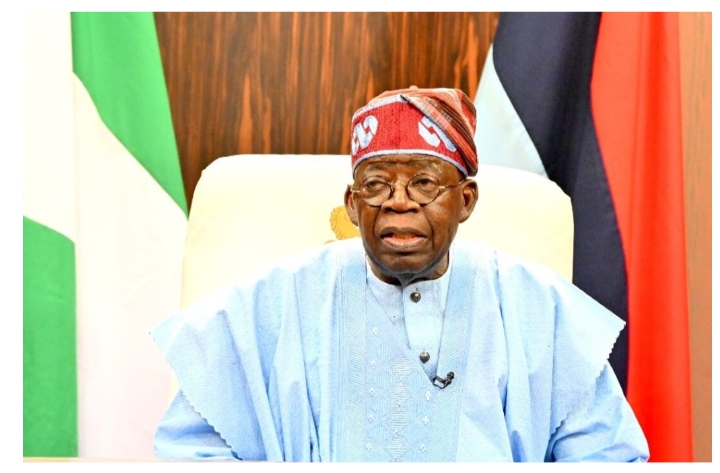
Nigerians have been urged to invest more locally because the country has now become a compelling investment destination, where value is being created and discovered.
This is the view of President Bola Tinubu, who expressed confidence that 2026 would deliver even stronger returns as the impact of his administration’s economic reforms continues to materialise.
He was reacting to the historic N100 trillion market capitalisation mark of the Nigerian Exchange (NGX) Limited achieved on Monday, describing the feat as a powerful signal of renewed investor confidence and economic rejuvenation.
In a statement, the President said, “With Nigerian Exchange crossing the historic N100 trillion market capitalisation mark, the country is witnessing the birth of a new economic reality and rejuvenation,” noting that the All-Share Index (ASI) closed 2025 with a 51.19 epr cent return, up from 37.65 per cent in 2024, ranking among the strongest performances globally and outperforming major indices including the S&P 500, FTSE 100, and several emerging-market peers.
“Nigeria is no longer a frontier market to be overlooked, it is now a compelling investment destination where value is being created and discovered,” he declared.
Mr Tinubu emphasised that robust stock market performance reflects broader economic health and rising investor confidence, highlighting several factors behind the market’s strong performance: impressive results across listed companies, a growing pipeline of new listings spanning energy, technology, telecommunications, and infrastructure, as well as broader macroeconomic improvements including easing inflation, a stabilising naira, rising foreign reserves, and expanding exports.
He reiterated his administration’s commitment to building an inclusive, transparent, and high-growth economy, stressing that the N100 trillion milestone sends a powerful message to the global investment community.
“Nation-building is a process, not a destination. The N100 trillion market capitalisation is a signal to the world that the Nigerian economy is robust, productive, and open for business,” Mr Tinubn affirmed.
In his remarks, the Director-General of the Securities and Exchange Commission (SEC), Mr Emomotimi Agama, credited President Tinubu’s leadership for driving the market to historic heights.
“The N100 trillion milestone is a direct result of the administration’s decisive reforms and unwavering commitment to transparency and fiscal discipline.
“These policies have renewed investor trust and solidified the credibility of Nigeria’s capital market,” Mr Agama stated, reaffirming the agency’s alignment with the President’s economic vision, pledging to strengthen oversight, protect investors, and uphold governance standards to ensure sustained growth and resilience.
On his part, the chief executive of NGX Group Plc, Mr Temi Popoola, commended President Tinubu for providing the policy clarity and reform momentum that have bolstered investor confidence.
“This milestone underscores the success of ongoing reforms and the exchange’s commitment to market depth, transparency, and inclusive growth. The capital market has responded positively to improved macroeconomic coordination and clear reform direction, creating an enabling environment for sustainable investment. It validates our focus on market development, innovation, and creating an environment where both local and global investors can deploy capital with confidence,” Mr Popoola noted.
He added that NGX Group would continue collaborating with regulators and stakeholders to attract quality listings, deepen liquidity, and expand retail participation, reinforcing our position as a catalyst for sustainable economic growth.
Economy
Why Africa’s Investment Market May Look Very Different Soon
Africa’s investment market is entering a phase of visible transition, driven not by a single shock but by the gradual accumulation of structural changes. For years, the continent was often discussed through simplified narratives — either as an untapped frontier or as a high-risk environment requiring exceptional tolerance. That framing is beginning to lose relevance as investors reassess how and where capital actually performs under evolving global conditions.
What is changing first is not the volume of interest, but its direction. Capital is becoming more selective, less patient with inefficiency, and more focused on how investments interact with trade, logistics, and regional demand rather than isolated national stories. This shift is subtle, but it alters the underlying logic of how Africa is evaluated as an investment destination.
In this context, the growing attention around platforms and ecosystems such as westafricatradehub reflects a broader reorientation toward connectivity and execution. Investment discussions increasingly revolve around trade flows, supply chains, and integration mechanisms instead of abstract growth potential. The emphasis is moving from “where growth exists” to “where growth can realistically be accessed.”
Several forces are converging to accelerate this change. Global capital is operating under tighter constraints, with higher financing costs and stronger pressure to demonstrate resilience. At the same time, African markets are becoming more internally differentiated. Some regions benefit from improved infrastructure, digital adoption, and regulatory clarity, while others struggle to convert opportunity into consistent returns. This divergence makes generalized strategies less effective.
As a result, investors are adjusting their approach in practical ways, including:
- Prioritizing regions with established trade corridors rather than standalone markets
- Favoring business models tied to everyday demand instead of long-term speculation
- Structuring investments in stages rather than committing large amounts upfront
- Placing greater value on operational partners with local execution capacity
These adjustments do not signal reduced confidence, but a more disciplined allocation mindset.
Another factor reshaping the market is the changing perception of risk. Traditional concerns such as political stability and currency volatility remain relevant, but they are now weighed alongside newer considerations. Execution risk, infrastructure reliability, and regulatory consistency often matter more than macroeconomic projections. In some cases, smaller but better-connected markets outperform larger economies where friction remains high.
This evolution also affects which sectors attract attention. Instead of broad category enthusiasm, interest clusters around areas where investment aligns with trade and consumption realities. Logistics, processing, digital services, and trade-enabling infrastructure increasingly define where capital feels comfortable operating. Growth still exists elsewhere, but it is approached more cautiously.
Importantly, this transformation is not uniform or immediate. Africa’s investment market will not change overnight, nor will it move in a single direction. What makes the current moment distinct is the fading dominance of legacy assumptions. Investors are no longer satisfied with potential alone; they want visibility, access, and durability, mentioned the editorial team of https://westafricatradehub.com/.
In the near future, Africa’s investment landscape may look very different not because opportunities disappear, but because the criteria for recognizing them have changed. The market is becoming less about promise and more about precision — and that shift is quietly redefining where growth is expected to emerge next.
Economy
Naira Appreciates to N1,419/$1 as FX Pressure Eases Across Market Windows
By Adedapo Adesanya
The Naira appreciated on the US Dollar on Thursday, January 15 by 76 Kobo or 0.05 per cent in the Nigerian Autonomous Foreign Exchange Market (NAFEX) to N1,419.28/$1 from the N1,420.04/$1 it was traded in the previous session.
The Naira rallied against the Pound Sterling by N17.74 in the official market during the session to N1,893.35/£1 from N1,911.09/£1 and gained N5.56 on the Euro to close at N1,649.92/€1 versus Wednesday’s closing price of N1,655.48/€1.
At the GTBank forex desk, the Nigerian Naira appreciated against the greenback yesterday by N2 to sell at N1,425/$1 compared with the preceding day’s rate of N1,427/$1, and maintained stability against the Dollar in the parallel market at N1,490/$1.
Thursday’s appreciation was supported by relatively improved supply conditions, which helped to moderate demand pressures, across several FX segments.
Market analysts noted that further intervention from policies and supply from the Central Bank of Nigeria (CBN) will continue to keep the FX market afloat while others including stronger external inflows from foreign portfolio investors (FPIs) and improving current account dynamics, will act as pillars.
Nigeria’s headline inflation rate declined to 15.15 per cent in December 2025 after a tweak to the data following the projection of a temporary “artificial spike” in the country’s December 2025 inflation rate.
The artificial spike is as a result of the base effect of December 2024, which is equated to 100, following the rebasing exercise which changed the base year from 2024 from 2009.
Meanwhile, the cryptocurrency market was down after a US Senate committee postponed a key market structure bill, further cooling sentiment after a recent rally.
The US Senate Banking Committee postponed markup on the market structure bill after opposition from parts of the industry.
Litecoin (LTC) declined by 3.5 per cent to $72.03, Cardano (ADA) slumped by 2.4 per cent to $0.3931, Dogecoin (DOGE) weakened by 2.1 per cent to $0.1401, and Ripple (XRP) slipped by 1.1 per cent to $2.07.
Further, Solana (SOL) depreciated by 0.9 per cent to $143.04, Bitcoin (BTC) slipped by 0.6 per cent to $95,624.34, Binance Coin (BNB) went down by 0.2 per cent to $933.51, and Ethereum (ETH) shrank by 0.1 per cent to $3,310.08, while the US Dollar Tether (USDT) and the US Dollar Coin (USDC) were flat at $1.00 each.
Economy
Nigerian Stocks Suffer First Loss in 23 Trading Sessions, Down 0.43%
By Dipo Olowookere
The upward trajectory seen at the Nigerian Exchange (NGX) Limited in the past sessions was halted on Thursday as a result of profit-taking in Aradel Holdings, MTN Nigeria, GTCO, and others.
Nigerian stocks were down by 0.43 per cent because of the selling pressure. It was the first loss in 2026 and also the first in 23 trading session. The last time Customs Street ended in red was December 10, 2025.
The decision of investors to trim their exposure to equities contracted the All-Share Index (ASI) by 714.66 points during the session to 166,057.29 points from 166,771.95 points and brought down the market capitalisation by N458 billion to N106.323 trillion from N106.781 trillion.
A look at the sectorial performance indicated that the energy, commodity, and insurance indices were down by 2.21 per cent, 1.14 per cent, and 0.24 per cent, respectively, while the banking, consumer goods, and industrial goods sectors were up by 0.78 per cent, 0.33 per cent, and 0.01 per cent apiece.
Yesterday, investor sentiment was weak after the bourse ended with 26 price gainers and 41 price losers, showing a negative market breadth index.
McNichols declined by 9.99 per cent to trade at N6.58, Caverton crashed by 9.47 per cent to N7.65, Ikeja Hotel collapsed by 9.43 per cent to N35.05, FTN Cocoa dropped 9.38 per cent to sell for N7.05, and Neimeth went down by 8.91 per cent to N9.20.
On the flip side, Nestle Nigeria gained 10.00 per cent to quote at N2,153.80, NCR Nigeria appreciated by 9.97 per cent to N116.90, Jaiz Bank improved by 9.92 per cent to N8.20, Morison Industries rose by 9.90 per cent to N5.66, and Mecure Industries grew by 9.84 per cent to N97.70.
During the session, market participants traded 1.0 billion stocks worth N31.6 billion in 51,227 deals compared with the 761.9 million stocks valued at N29.9 billion transacted in 55,751 deals at midweek, representing a drop in the number of deals by 8.12 per cent, and a surge in the trading volume and value by 31.25 per cent, and 5.69 per cent, respectively.
Sovereign Trust Insurance returned on top of the activity chart with 245.2 million units sold for N798.5 million, Access Holdings traded 78.4 million units worth N1.8 billion, Zenith Bank transacted 72.4 million units for N5.0 billion, Jaiz Bank exchanged 53.7 million units valued at N433.9 million, and Lasaco Assurance traded 53.4 million units worth N135.1 million.
-
Feature/OPED6 years agoDavos was Different this year
-
Travel/Tourism9 years ago
Lagos Seals Western Lodge Hotel In Ikorodu
-
Showbiz3 years agoEstranged Lover Releases Videos of Empress Njamah Bathing
-
Banking8 years agoSort Codes of GTBank Branches in Nigeria
-
Economy3 years agoSubsidy Removal: CNG at N130 Per Litre Cheaper Than Petrol—IPMAN
-
Banking3 years agoFirst Bank Announces Planned Downtime
-
Banking3 years agoSort Codes of UBA Branches in Nigeria
-
Sports3 years agoHighest Paid Nigerian Footballer – How Much Do Nigerian Footballers Earn