
Economy
Nigerian Equities Grow 31.87% in 9 Months


By Modupe Gbadeyanka
In the first nine months of 2017, the Nigerian Stock Exchange All Share Index (NSE ASI) appreciated by 31.87 percent.
According to the latest report released by FSDH Research, this was attributed to improvements in the country’s economy since the beginning of this year.
FSDH Research’s historical analysis shows that there is a strong correlation between the movement in crude oil price and the Nigerian equity market.
The consensus on the short-term outlook for crude oil (Bonny Light) price is that it will remain above $50 per barrel.
The sustained high crude oil price coupled with improved oil production has led to a sustained accretion to the external reserves, which stood at $32.74 billion as at October 3, 2017.
The firm said it expects a continued boost to the external reserves in the short-to-medium term as oil price and production continue to strengthen because it is positive for the equity market.
Additionally, the introduction of the Investors’ and Exporters’ Foreign Exchange (FX) Window (I&E Window) has increased the supply of foreign exchange into the Nigerian economy and led to relative stability in the FX market. The I&E Window has also attracted more foreign investments into Nigeria. FSDH Research’s analysis of the capital importation data from the Central Bank of Nigeria (CBN) between January and July 2017 shows that there was a growth in capital importation in 2017, compared with 2016.
The total capital importation between January and July 2017 stood at $3.76 billion, representing a growth of 85.32 percent over $2.03 billion recorded in the corresponding period of 2016.
Other Investments (OI) – Loans attracted the highest capital of $1.69 billion between January and July 2017, closely followed by Foreign Portfolio Investment (FPI) – Equity of $1.15 billion, and Foreign Direct Investment (FDI) – Equity of $513.23 million.
FSDH Research said it expects continued foreign inflow into the equity market as the FX market remains stable.
It pointed out that this improved liquidity will boost the expected rally in the equity market. The drop in the yields on the fixed income securities should lead to portfolio realignments in favour of the equity market to take advantage of higher returns.
At the last auction on October 4, 2017, the yield on the 364-Day NTB stood at 18.65 percent, lower than the average yield of 22.71 percent recorded between January and September 2017.
Similarly, the yield on the 16.39 percent FGN January 2022 Bond stood at 15.83 percent as at the close of trading on October 4, 2017, lower than the average yield of 16.08 percent recorded between January and September 2017.
FSDH Research notes increased economic activities in most of the sectors of the Nigerian economy in September 2017.
A review of the latest Purchasing Managers’ Index (PMI) report that the CBN published for the month of September 2017 shows that economic activities in the manufacturing and non-manufacturing sectors continue to strengthen.
The Composite Manufacturing Index (CMI) expanded for the sixth consecutive month in 2017 to stand at 55.3 points in September 2017, from 53.6 points in August 2017.
The Composite Non-Manufacturing Index (CNMI) also expanded for the fifth consecutive month to 54.9 points in September 2017 from 54.1 points in August 2017.
The report is an indication that the Q3 2017 earnings of quoted companies will be an improvement over previous quarters.
According to FSDH Research, its forecasts for the Gross Domestic Product (GDP) in Q3 and Q4 2017 show that the GDP should grow in excess of 2 percent.
The firm says it expects the equity market to respond positively to the strong Q3 2017 GDP figures that the National Bureau of Statistics (NBS) will release on 22 November 2017.







By Adedapo Adesanya
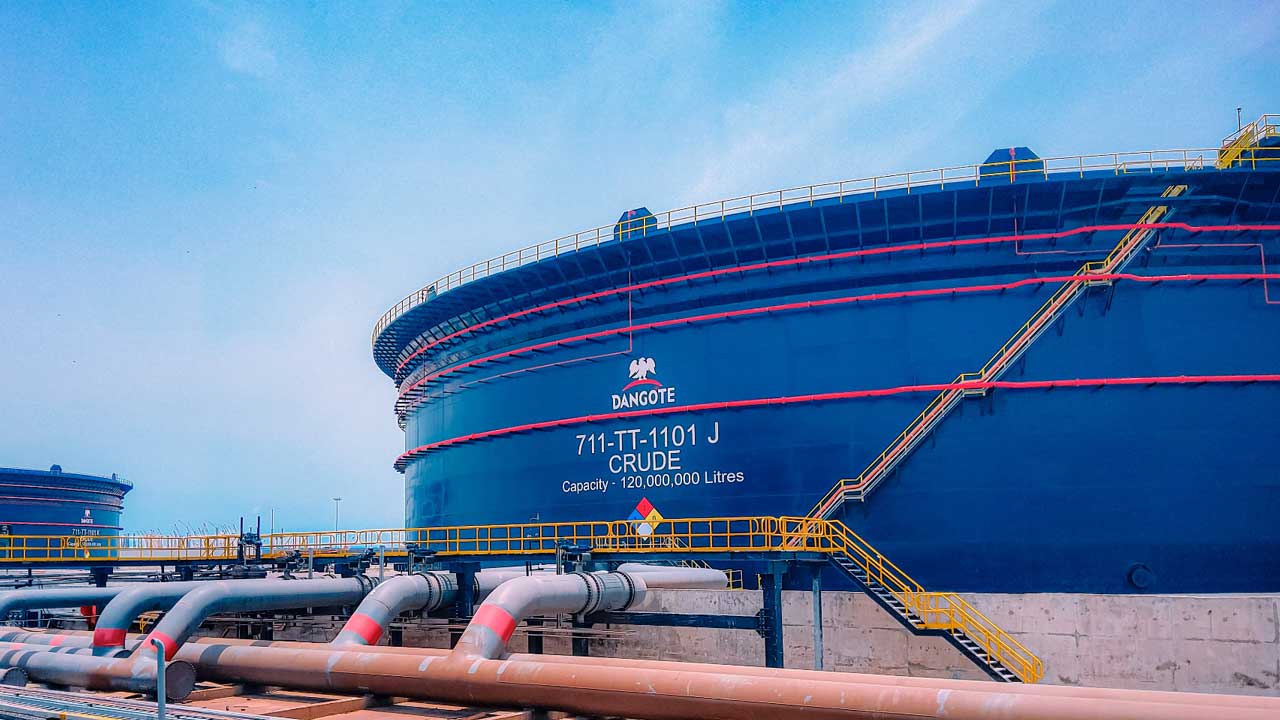
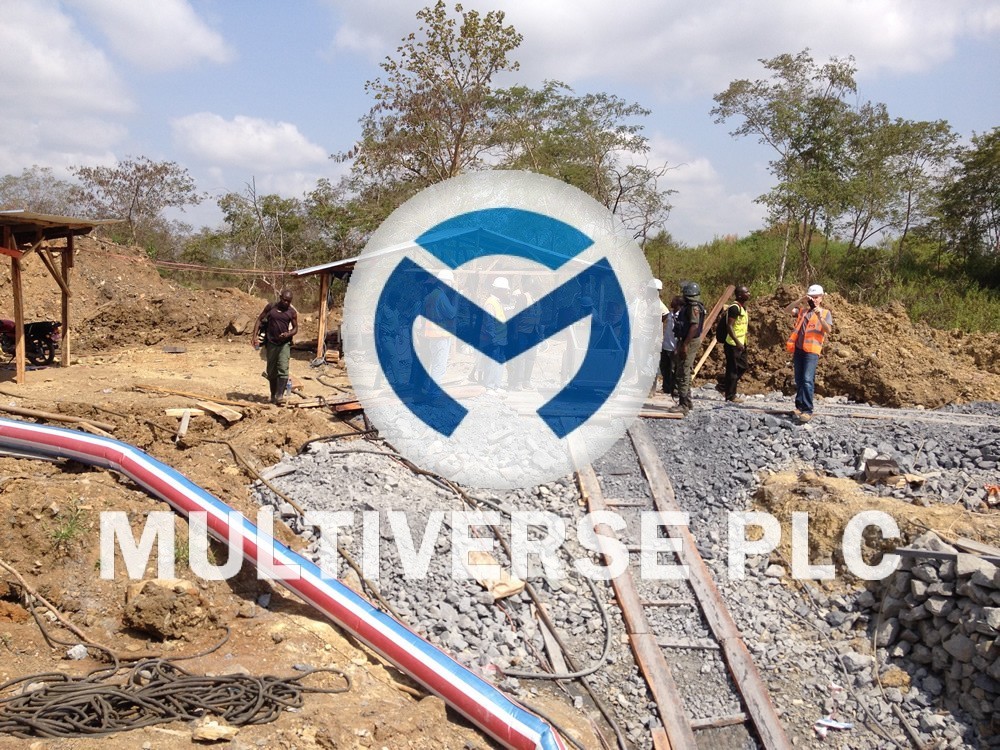
The African Export-Import Bank (Afreximbank) has underwritten $2.5 billion out of a $4 billion senior syndicated term loan for Dangote Petroleum Refinery and Petrochemicals.
In a statement issued on Tuesday, the African lender said the move was aimed at strengthening the refinery’s financial position and long-term growth.
“Afreximbank is pleased to announce that it has underwritten $2.5 billion in the $4-billion senior syndicated term loan in favour of Dangote Petroleum Refinery and Petrochemicals FZE (DPRP),” the statement said.
Afreximbank and Access Bank served as co-Mandated Lead Arrangers for the five-year facility, which is designed to consolidate existing debt, optimise the refinery’s capital structure, and align financing with its operational phase.
The transaction marks a significant milestone for the Dangote Refinery, Africa’s largest refinery and petrochemical complex, with a capacity of 650,000 barrels per day.
The facility is expected to improve balance sheet flexibility and reinforce the refinery’s role as a key supplier of refined petroleum products across Africa and global markets.
Afreximbank’s $2.5 billion contribution represents the largest share of the syndicate, the statement noted, underscoring its role in mobilising capital for Africa’s industrialisation, promoting intra-African trade, and supporting energy security.
Since the refinery began operations in February 2024, the bank said it has provided additional support, including a $1 billion working capital facility and advisory services on the Naira-for-Crude initiative, which enables crude purchases and product sales in local currency.
Speaking during a strategy session in Cairo, Egypt, Afreximbank President, Mr George Elombi, reaffirmed the bank’s commitment to African enterprises.
He said the bank takes immense pride in being the single largest provider of financing to the Dangote Group and that it does so primarily because Dangote is African.
“When we invest in ourselves, we do more than create jobs and wealth or expand government revenues; we build a secure and resilient future for our continent. This is why we are pleased to have invested about $15 billion in the Dangote Group since 2015,” he said.
He explained that “Afreximbank and its Board of Directors stand ready to support the realisation of Dangote Group’s aspirations because when we build our institutions and provide the requisite support to grow, we will no longer have to look elsewhere for benevolence or salvation in difficult times.”
In his remarks, the chief executive of Dangote Industries Limited, Mr Aliko Dangote, said the deal strengthens the refinery’s financial base.
“This financing marks an important step in strengthening the financial foundation of Dangote Petroleum Refinery & Petrochemicals and positions the business for the next phase of its growth,” Mr Dangote was quoted as saying.
He appreciated Afreximbank’s continued support and confidence in his vision to build world-class industrial capacity that serves Nigeria, Africa and global markets.

By Dipo Olowookere
The domestic stock market rebounded by 0.40 per cent on Tuesday following renewed bargain-hunting by investors.
The Nigerian Exchange (NGX) Limited returned to winning ways after three of the five key sectors of the bourse pointed north.
The consumer goods index appreciated by 0.24 per cent, the industrial goods counter advanced by 0.20 per cent, and the energy sector grew by 0.08 per cent, overpowering the 3.64 per cent loss posted by the insurance segment, and the 1.76 per cent decline suffered by the banking space.
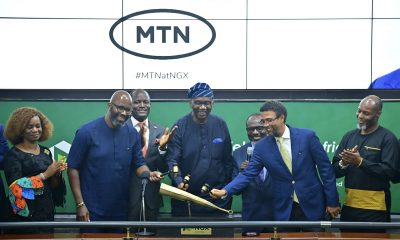
One of the major drivers of the growth achieved by Customs Street yesterday was MTN Nigeria.
The All-Share Index (ASI) went up by 803.35 points to 201,287.78 points from 200,484.43 points, and the market capitalisation increased by N516 billion to N129.210 trillion from N128.694 trillion.
Multiverse topped the gainers’ chart after it chalked up 9.88 per cent to close at N18.35, International Energy Insurance improved by 9.49 per cent to N3.23, Chams surged by 8.40 per cent to N4.39, MTN Nigeria appreciated by 5.85 per cent to N760.00, and PZ Cussons soared by 4.59 per cent to N82.00.
On the flip side, NPF Microfinance Bank led the losers’ group after it gave up 10.00 per cent to sell for N6.30, SAHCO tumbled by 9.97 per cent to N143.10, Zichis lost 9.96 per cent to quote at N13.65, Mutual Benefits declined by 9.91 per cent to N4.09, and RT Briscoe slipped by 9.90 per cent to N9.65.
Business Post reports that the market breadth index remained negative after Customs Street ended with 22 price gainers and 47 price losers, indicating weak investor sentiment.
The busiest stock for the day was Wema Bank with a turnover of 184.1 million units valued at N4.8 billion, VFD Group sold 103.6 million units for N1.2 billion, Secure Electronic Technology traded 59.3 million units worth N63.8 million, Chams exchanged 38.6 million units for N152.0 million, and Access Holdings transacted 27.8 million units worth N720.1 million.
At the close of trades, market participants bought and sold 887.7 million equities valued at N35.6 billion in 53,436 deals versus the 593.3 million equities worth N25.7 billion traded in 60,311 deals on Monday.
This implied that the number of deals receded by 11.40 per cent, and a rise in the trading volume and value by 49.62 per cent and 38.52 per cent, respectively.
By Adedapo Adesanya
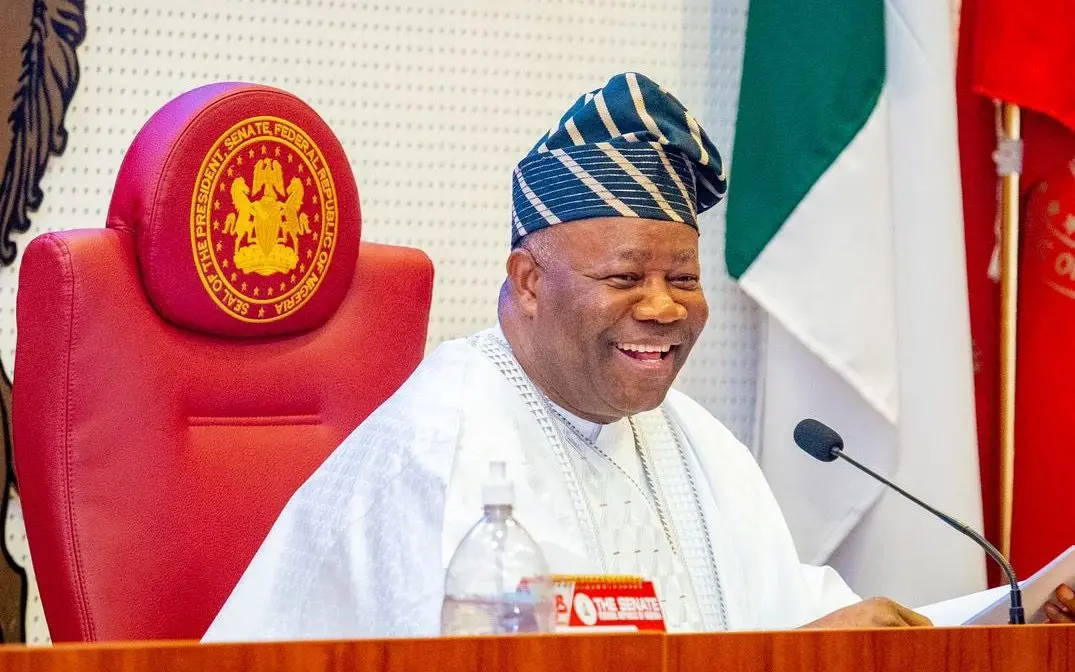
The Senate has approved President Bola Tinubu’s fresh request for a $6 billion external loan to support key national priorities.
The approval came on Tuesday, March 31, 2026, after the Senate considered a report presented by Senator Aliyu Wamakko, Chairman of the Senate Committee on Local and Foreign Debts.
The request was contained in two separate letters from the President, read during plenary.
According to Mr Tinubu, out of the $6 billion, the lion’s share of $5 billion is a Structured Total Return Swap (TRS) external financing programme offered by the First Abu Dhabi Bank, to be released in tranches.
The remaining $1 billion is an export finance facility from the United Kingdom, arranged by Citibank, specifically for the reconstruction and rehabilitation of the Lagos Port Complex and Tin Can Island Port.
The facilities are intended to support the implementation of the national budget, funding priority infrastructure projects, and refinancing existing domestic and external debts.
The President also said the loan will help the country to meet urgent financial obligations, noting that the phased drawdown of the borrowing will help ease pressure on debt servicing.
The Senate also approved the issuance of Naira-denominated federal government securities as collateral and the payment of margin obligations in US Dollars.
Earlier, it was reported that President Tinubu sought the red chamber’s approval for a significant upward review of the 2026 budget, proposing an additional N9 trillion to the Appropriation Bill.
The request, conveyed in a letter read on the Senate floor during Tuesday’s plenary by the Senate President, Mr Godswill Akpabio, would increase the budget size from the initial N58.47 trillion to N67.47 trillion.
According to the President, the proposed adjustment is aimed at strengthening fiscal transparency and ensuring more effective implementation of priority national programmes.
The development raises fresh worries about Nigeria’s debt portfolio, which has risen considerably within the three years of the Tinubu-led administration.






-
 Feature/OPED6 years ago
Davos was Different this year
-
Travel/Tourism10 years ago
Lagos Seals Western Lodge Hotel In Ikorodu
-

 Showbiz3 years ago
Estranged Lover Releases Videos of Empress Njamah Bathing
-
 Banking8 years ago
Sort Codes of GTBank Branches in Nigeria
-

 Economy3 years ago
Subsidy Removal: CNG at N130 Per Litre Cheaper Than Petrol—IPMAN
-

 Banking3 years ago
Sort Codes of UBA Branches in Nigeria
-

 Banking3 years ago
First Bank Announces Planned Downtime
-

 Sports3 years ago
Highest Paid Nigerian Footballer – How Much Do Nigerian Footballers Earn