Economy
Nigeria’s Crude Oil Output Sinks Further to 1.18 million barrels
By Adedapo Adesanya
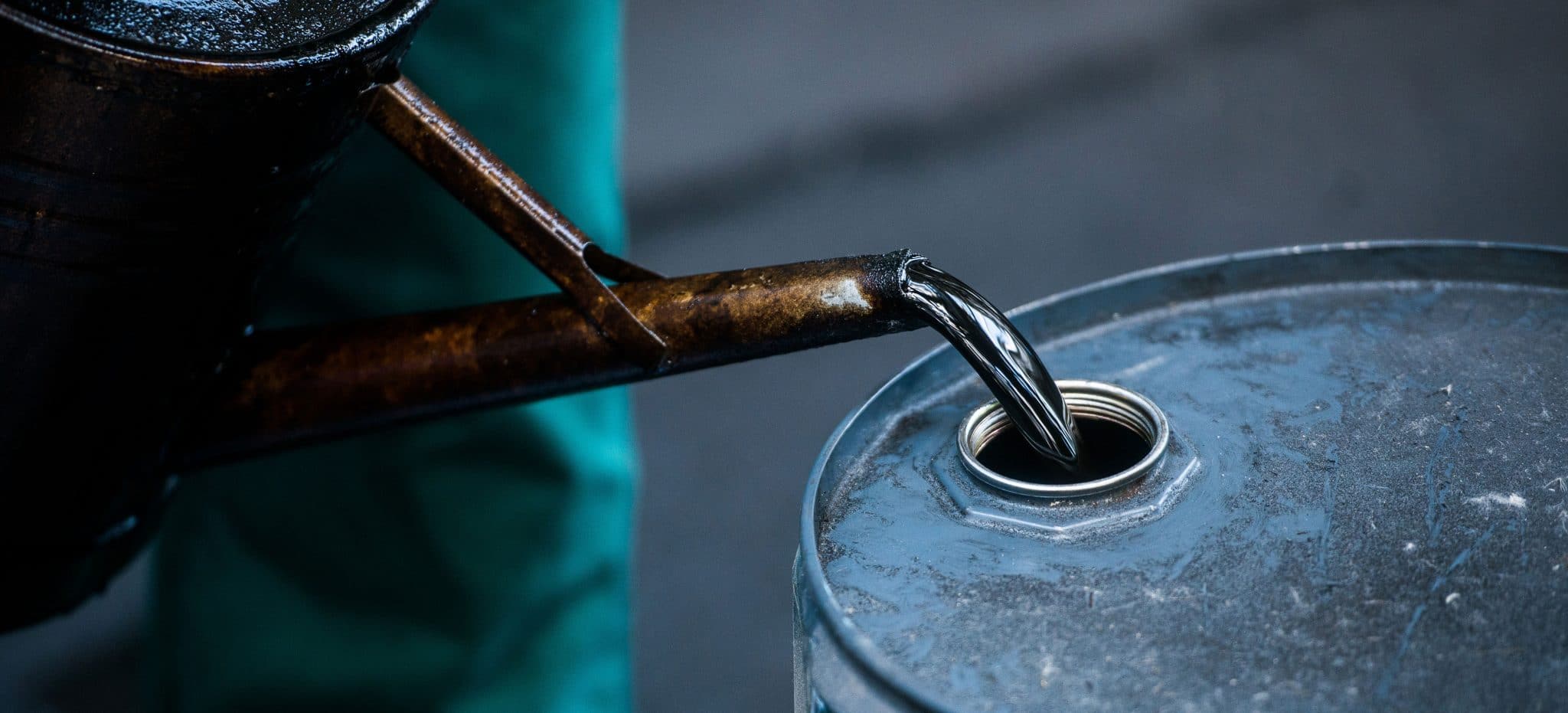
Nigeria’s crude oil output sank yet again in April 2024 to around 1.18 million barrels per day, according to secondary data from Reuters.
The platform said Nigerian production declined with exports falling more sharply according to some ship trackers as the Dangote refinery took in more cargoes.
Also, an outage briefly affected the Bonny production stream.
This means Nigeria’s hope of substantially meeting its Organisation of Petroleum Exporting Countries (OPEC) quota has once again been dashed.
Nigeria’s crude production in January stood at 1.42 million barrels per day but fell to 1.32 million barrels per day in February and then to 1.23 million barrels per day in March 2024.
In all, OPEC pumped 26.49 million barrels per day during the month that just ended, down 100,000 barrels per day from March’s revised total, with the biggest output reductions coming from Nigeria and Iran.
As a result, supply curbs agreed by the group and its allies at the start of the year to avert a surplus were still unfinished. Iraq and the United Arab Emirates continued to pump several hundred thousand barrels a day above their agreed limits.
Nonetheless, output restraints by others in the alliance, such as Saudi Arabia, Kuwait and Algeria helped buoy oil prices against a fragile economic backdrop, bolstering revenue for its members.
The biggest change last month was in Libya, which increased by 60,000 barrels a day to 1.19 million a day while it restored output halted earlier this year by protests at its largest oil field.
Several members of OPEC+, which include OPEC, Russia and other allies, made new cuts in January to counter economic weakness and increase supply outside the group. Producers agreed in March to keep the cuts in place until the end of June.
The 22-nation OPEC+ alliance, which spans other producers, such as Russia is due to meet on June 1 to decide whether to extend its current output curbs into the second half of the year.
Economy
Crude Oil Market Climbs as Jitters Persist amid US-Iran Stalemate
By Adedapo Adesanya
The crude oil market climbed on Friday, as investors worried that the US and Iran would be unable to reach a peace agreement that would allow shipping traffic to return to normal in the Strait of Hormuz.
Brent crude futures settled at $103.54 a barrel, up 96 cents, or 0.94 per cent, while the US West Texas Intermediate (WTI) futures finished at $96.60 a barrel, up 25 cents or 0.26 per cent. For the week, Brent was 5.48 per cent lower, and WTI was down by 8.37 per cent.
Prices were volatile as expectations for a peace deal between Iran and the US shifted, with the story now that Iran will deliver the uranium for the lifting of sanctions.
It was also reported that Pakistan’s army chief had left for Iran after talks, while a senior Iranian source told Reuters earlier that gaps with the US have narrowed.
Meanwhile, the US Secretary of State Marco Rubio spoke of “some good signs” in talks. Mr Rubio said the US was in constant communication with the Pakistanis, who are facilitating the talks with Iran, adding that also said the US had not requested the assistance of NATO allies in reopening the strait after a meeting.
The countries remained divided on Iran’s uranium stockpile and controls on the Strait of Hormuz.
Separately, a Qatari negotiating team arrived in Tehran on Friday in coordination with the US to help secure a deal. This comes as six weeks into the fragile ceasefire in the US-Israeli war with Iran, elevated oil prices have investors worried about inflation and the outlook for the global economy.
Around 20 per cent of global energy supplies transited the strait before the war, which has removed 14 million barrels per day of oil – or 14% of global supply – from the market, including exports from Saudi Arabia, Iraq, the UAE and Kuwait.
The head of the United Arab Emirates (UAE) state oil firm ADNOC said that full oil flows through the strait will not return before the first or second quarter of 2027, even if the conflict ends now.
Seven sub-group members of oil-producing countries under the Organisation of the Petroleum Exporting Countries (OPEC) will likely agree to a modest hike to July output when they meet on June 7, though delivery for several remains disrupted by the war.
Economy
MTN Nigeria 2025 Tax Remittance to FG, States Rises 15% to N878.7bn
By Aduragbemi Omiyale
About N878.7 billion was remitted to federal and state authorities in taxes, levies and duties by MTN Nigeria Communications Plc in the 2025 financial year.
According to details of the company’s 2025 Sustainability Report, this amount was 15 per higher than the previous year, helping the country achieve its target of expanding non-oil revenue and improving tax collection under its fiscal reform agenda, corporate tax contributions from major private-sector operators.
In 2023, MTN Nigeria paid N543.9 billion in taxes and levies, and a year later, it moved higher by about 62 per cent to N764 billion.
The N878.7 billion remitted to the government in 2025 covered corporation tax, value-added tax, spectrum fees, import duties, NCC levies and contributions under the Rural and Urban Terrestrial Infrastructure (RUTI) tax credit scheme, an initiative with deep roots in MTN Nigeria’s public-private partnership playbook.
The company has long embraced such mechanisms: it participated in the Road Infrastructure Tax Credit Scheme, under which it committed N202.8 billion towards reconstructing the 110-kilometre Enugu-Onitsha Expressway.
In 2025, the RUTI scheme reached 50% completion after securing approval for an additional N23 billion tax credit aimed at expanding fibre and telecoms infrastructure in underserved communities, a model the company argues supports infrastructure development without requiring direct public expenditure.
The report also highlighted the firm’s growing domestic economic footprint, with 62 per cent of procurement spending directed to Nigerian suppliers in 2025. This was up from 59.6 per cent a year earlier.
MTN Nigeria said the policy aligns with the federal government’s local-content objectives and supports sectors including civil construction, logistics, software services and power infrastructure.
The organisation’s operational footprint expanded to 2,087 active base stations nationwide, while active mobile subscribers stood at 85.4 million by the third quarter of 2025. Active data users rose to 51.1 million, supported by smartphone penetration of 65.1 per cent.
During the year, MTN Nigeria renewed its 800MHz spectrum licence for another 10 years, to December 2034, and secured regulatory approval to lease additional spectrum from T2 Mobile, formerly 9Mobile, across 17 states and the Federal Capital Territory.
Economy
NNPC Weighs Giving Chinese Investors 51% Stake in Port Harcourt, Warri Refineries
By Adedapo Adesanya
The Nigerian National Petroleum Company (NNPC) Limited is considering a new partnership model that could give Chinese investors a majority 51 per cent stake in the Port Harcourt and Warri refineries as part of efforts to revive and commercially reposition the struggling national assets.
Details of the proposed arrangement emerged after NNPC signed a Memorandum of Understanding with China’s Sanjiang Chemical Company Limited and Xinganchen (Fuzhou) Industrial Park Operation and Management Co. Ltd. for what the national oil company described as a “potential technical equity partnership”.
The agreement, signed on April 30 in Jiaxing City, China, involved NNPC’s chief executive, Mr Bayo Ojulari, Sanjiang Chemical Chairman, Mr Guan Jianzhong, and Xinganchen Chairman, Mr Bill Bi.
According to reports, the framework is modelled after the Nigeria LNG structure, where investors hold majority equity, participate in governance and remain actively involved in operations over the long term.
Under the proposed arrangement, the Chinese firms are expected to help complete outstanding engineering and rehabilitation work at the Port Harcourt and Warri facilities while also providing operations and maintenance services aimed at delivering sustainable, world-class refinery performance.
Beyond restarting the plants, the partnership is expected to target capacity expansion, improved refining yields, cleaner fuel production and stronger profitability.
The agreement also opens the door to broader industrial ambitions, including petrochemical integration and gas-based industrial projects built around the refinery corridors.
Recall that Mr Ojulari, at the signing ceremony in April, described the deal as a major breakthrough following more than six months of negotiations.
“All parties recognise mutually beneficial opportunities for the development and long-term sustainable profitability of NNPC’s refining assets in Nigeria and the collective weight required for success,” he said.
He added that the MoU marked an important step towards identifying technical equity partners capable of restarting and expanding Nigeria’s state-owned refineries.
“The MoU is a significant step on the journey towards identifying potential technical equity partner(s) to restart and expand NNPC’s refineries and to explore opportunities in co-located petrochemical and gas-based industries,” Mr Ojulari stated.
Reports indicate that the arrangement remains non-binding and subject to technical, financial, legal and regulatory reviews before any final commercial agreements can be executed. Due diligence will cover engineering performance, operational viability, financial structure, commercial feasibility and legal compliance.
The Port Harcourt refinery rehabilitation contract had earlier been awarded to Italian engineering giant Maire Tecnimont, while separate repair efforts were also launched at the Warri refinery.
-
Feature/OPED6 years agoDavos was Different this year
-
Travel/Tourism10 years ago
Lagos Seals Western Lodge Hotel In Ikorodu
-
Showbiz3 years agoEstranged Lover Releases Videos of Empress Njamah Bathing
-
Banking8 years agoSort Codes of GTBank Branches in Nigeria
-
Economy3 years agoSubsidy Removal: CNG at N130 Per Litre Cheaper Than Petrol—IPMAN
-
Banking3 years agoSort Codes of UBA Branches in Nigeria
-
Banking3 years agoFirst Bank Announces Planned Downtime
-
Sports3 years agoHighest Paid Nigerian Footballer – How Much Do Nigerian Footballers Earn