Economy
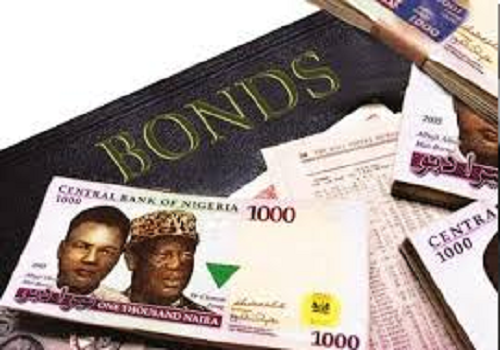
Nigeria’s First Diaspora Bond Yields $300m with 130% Oversubscription

By Dipo Olowookere
Director General of the Debt Management Office (DMO), Dr Abraham Nwankwo, has disclosed that the first diaspora bond issued by the Federal Government was oversubscribed by 130 percent, yielding $300 million from the exercise.
Dr Nwankwo, in a statement on Monday, stated that Nigeria raised the $300 million at the international capital market at 5.625 percent for a tenor of five years.
According to him, the exercise was mainly for Nigerians living outside the country and it is to give them the opportunity to contribute their quota to national development.
He noted that this has “opened a new source of financing for the Federal Government to raise funds for critical projects in the country.”
Dr Nwankwo added that, “This new window further enhances funding liquidity and flexibility of the Nigerian economy, which are necessary characteristics as the country gathers momentum towards the attainment of advanced economy status.”
Nigeria is the first African country to issue a bond targeted at retail investors in the United States, a market highly regulated by the United States Securities and Exchange Commission (US SEC).
The only previous US SEC registration for an African country was targeted at institutional investors.
The issuance of a bond registered by the US SEC provides an opportunity to access a wide range of investors.
Explaining the structure of the bond, the DMO boss said it is like a retail instrument to appeal to a wide range of investors, offered through private banks and wealth managers rather than institutional investors, which normally deal in large volume transactions.
He revealed that there was considerable interest from investors from all over the world, with the issue attracting initial orders of about 190 percent of the offered amount.
Final subscriptions were about 130 percent of offer at the final price for the transaction.
Economy
Naira Trades N1,366/$ at Official Market, N1,380/$1 at Black Market
By Adedapo Adesanya
The Naira weakened against the United States Dollar by N1.33 or 0.1 per cent in the Nigerian Autonomous Foreign Exchange Market (NAFEX) on Tuesday, May 5, to N1,366.56/$1 from Monday’s N1,365.23/$1.
In the same market segment, the Nigerian currency also depreciated against the Pound Sterling during the session by N1.53 to sell for N1,851.25/£1 compared with the previous day’s N1,852.78/£1, but against the Euro, it appreciated by 22 Kobo to close at N1,598.74/€1 versus N1,598.96/€1.
For the second consecutive trading session, the Naira maintained stability against the Dollar at the GTBank forex counter at N1,384/$1 on Tuesday, and also at the parallel market at N1,380/$1.
Data from the Central Bank of Nigeria (CBN) revealed a sharp increase in interbank foreign exchange activity, driving today’s liquidity level in the official window.
Interbank FX turnover surged to $71.587 million across 99 deals, from $59.933 million reported the previous day. Elsewhere, Nigeria’s foreign reserves continue to decline, falling to $48.34 billion amid elevated global oil prices.
Global oil prices fell on Tuesday, a day after the US launched an operation aimed at reopening the Strait of Hormuz to shipping traffic, but exchanges of fire between the United States and Iran slowed the decline.
The Naira remained within the expected trading range as the CBN last month defended the Naira with $150 million, around 83 per cent below the equivalent amount injected into the official window in March.
Meanwhile, easing Iran tensions and renewed AI optimism fueled a broad risk-on rally in the cryptocurrency market, with Cardano (ADA) up by 4.3 per cent to $0.2634.
Further, Dogecoin (DOGE) gained 3.6 per cent to settle at $0.1154, Solana (SOL) improved by 3.1 per cent to $87.22, Ripple (XRP) increased by 1.5 per cent to $1.42, Binance Coin (BNB) added 1.3 per cent to sell for $634.67, TRON (TRX) expanded by 1.3 per cent to $0.3436, and Bitcoin (BTC) soared by 0.6 per cent to $81,323.62.
However, Ethereum (ETH) declined by 0.3 per cent to $2,363.37, while the US Dollar Tether (USDT) and the US Dollar Coin (USDC) traded flat flat at $1.00 each.
Economy
Crude Oil Prices Drop 4% on Resumption of Hormuz Strait Transit
By Adedapo Adesanya
Crude oil prices fell about 4 per cent on Tuesday, as two vessels passed through the Strait of Hormuz and the United States said the ceasefire with Iran remained in place despite both sides trading fire.
Brent futures fell by $4.57 or 4 per cent to $109.87 a barrel, while the US West Texas Intermediate (WTI) crude declined by $4.15 or 3.9 per cent to $102.27 per barrel.
The Pentagon on Tuesday insisted the ceasefire with Iran was holding after the countries clashed in the waterway; US President Donald Trump characterised the attacks as a “skirmish.”
He promised to start freeing up some of the 2,000 ships stranded in the Persian Gulf, saying the effort would be a humanitarian gesture for tankers from countries not involved in the US-Iran war, prompting a threat from Tehran to stay away from the Strait of Hormuz.
Defence Secretary Pete Hegseth said the country had secured a path through the waterway, saying hundreds of ships were lining up to pass through the critical waterway. Before the US and Israel attacked Iran on February 28, about 20 per cent of global oil supplies passed through the strait daily.
The US military also said two American merchant ships made it through the strait, without saying when, with the support of Navy guided-missile destroyers.
However, Iran denied any crossings had taken place, though shipping company Maersk said the Alliance Fairfax, a US-flagged ship, passed under US military escort on Monday.
Meanwhile, the United Arab Emirates (UAE) said it was under attack from Iranian missiles and drones on Tuesday. Iran denied that it attacked the UAE in recent days.
If Iran fails to halt attacks and threats to commercial shipping in the Strait of Hormuz, the UN Security Council members could support a US- and Bahrain‑backed draft resolution that could lead to sanctions against Iran, and potentially authorise force.
Led by Saudi Arabia and Russia, the core seven members of the Organisation of the Petroleum Exporting Countries and its allies (OPEC+) agreed on a 188,000 barrels per day production increase for June 2026, slightly lower than the 206,000 barrels per day hikes announced for April and May, reflecting the May 1 departure of the UAE from both OPEC and OPEC+.
The American Petroleum Institute (API) estimated that crude oil inventories in the US fell by 8.1 million barrels in the week ending May 1. In the week prior, US crude oil inventories fell by 1.79 million barrels. US crude inventories are up 37 million barrels so far this year.
Official data from the US Energy Information Administration (EIA) will be released later on Wednesday.
Economy
FG Rules Out Return of Fuel Subsidy, Price Control Introduction
By Aduragbemi Omiyale
The federal government has stressed that it does not plan to bring back the payment of subsidies on premium motor spirit (PMS), otherwise known as petrol
This disclosure was made by the Minister of Finance and Coordinating Minister of the Economy, Mr Taiwo Oyedele, during a meeting with some global investors in France.
Some of the investors were from Citibank and France’s Amundi, led by Valerie Baudson. There were also BlueCrest, the Britain- and South Africa-based Ninety One, Kirkoswald Capital, Principal Finisterre, US groups Prudential Global Investment Management (PGIM) and Mesarete Capital.
There had been calls for the return of petrol subsidy in Nigeria as a result of higher energy costs triggered by the Middle East crisis. The price of crude oil on the global market has surpassed $115 per barrel, and this is making Nigerians pay more for petroleum products, despite being an oil-producing nation.
A few days ago, the federal government, to calm the nerves of airline operators who threatened to shut down operations due to the high cost of aviation fuel, had 30 per cent of their debt written off, and also got a deal to buy Jet fuel at a steady price, indicating a subsidy.
“We will not bring back fuel subsidy because it creates distortions for the economy, and we won’t introduce price control because we believe in the market… the situation in Iran presents new opportunities for us as the world looks to diversify sources of energy and invest in new markets,” Mr Oyedele said in Paris, the French capital.
“Nigeria recorded a strong GDP growth rate of 11.2 per cent in US dollar terms in 2025, reinforcing the country’s ambition to achieve a $1 trillion economy by 2030,” he added.
The Finance Minister emphasised the government’s near-term priorities of translating reforms into results for the Nigerian people. He also pledged to publish quarterly financial data.
Mr Oyedele is in France with President Bola Tinubu, who departed Nigeria on Sunday for a three-nation trip to France, Kenya, and Uganda.
The President said the economic reform programme of his administration includes measures to remove economic distortions and stabilise macroeconomic indicators, laying the foundation for sustained inclusive growth.
He assured that his government was committed to deepening reforms, enhancing transparency across the oil value chain, and implementing a multi-pronged security strategy, including police decentralisation and disrupting terrorist financing.
“The focus remains on policy stability and diligent execution to ensure these strategic shifts translate into concrete benefits for all Nigerians,” Mr Tinubu said.
-
Feature/OPED6 years agoDavos was Different this year
-
Travel/Tourism10 years ago
Lagos Seals Western Lodge Hotel In Ikorodu
-
Showbiz3 years agoEstranged Lover Releases Videos of Empress Njamah Bathing
-
Banking8 years agoSort Codes of GTBank Branches in Nigeria
-
Economy3 years agoSubsidy Removal: CNG at N130 Per Litre Cheaper Than Petrol—IPMAN
-
Banking3 years agoSort Codes of UBA Branches in Nigeria
-
Banking3 years agoFirst Bank Announces Planned Downtime
-
Sports3 years agoHighest Paid Nigerian Footballer – How Much Do Nigerian Footballers Earn