Connect with us

Economy

Nigeria’s Fiscal Terrain Challenging—FG

Published

on

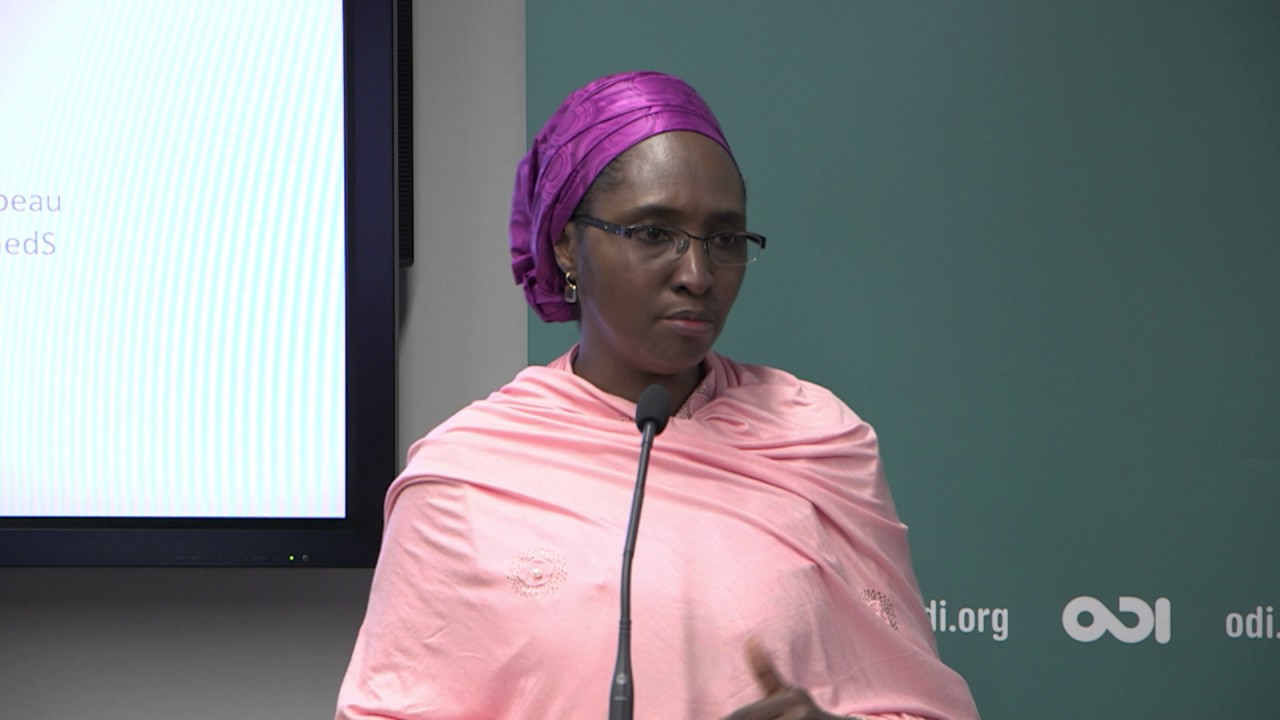
zainab ahmed finance minister

By Dipo Olowookere

Federal government has disclosed that though the nation’s fiscal terrain remains challenging, there has been an improved revenue generation by 40 percent in third quarter of 2018.

Speaking recently at the quarterly world press conference in Abuja, Minister of Finance, Mrs Zainab Ahmed, said this performance was unsatisfactory to government’s revenue targets of 53 percent set for 2018.

“I have directed that action on all our revenue initiatives be expedited,” the Minister told newsmen at the event.

During the press conference, Mrs Ahmed addressed the challenges posed by the global market trends, Nigeria’s macro-economic landscape.

She said inflation rate has improved from a high of 18.7 percent in 2017 to 11.28 percent in 2018, with the foreign reserves increasing to $42.49 billion from $28.3 billion.

She further said eight tax tribunals that will accelerate the resolution of 209 pending cases relating to tax revenues.

According to her, through this tax dispute resolution mechanism, government hopes to reduce incidences of tax evasion and improve payers’ confidence.

“By automating many of our revenue collection agencies including the Nigerian Customs Service and the Federal Inland Revenue Service, Federal Government was able to shore up revenue,” she said.

Mrs Ahmed said, “I intend to continue championing digitalization transformation initiatives and President Muhammadu Buhari’s administration has implemented several initiatives targeted at recovery, like the whistleblower unit that recovered N8.5 billion and $465 million, VAIDs that recovered N35 billion amongst others.”

“In support of healthcare, the federal government has initiated three projects like the two modern medical diagnostic centers in Kano and Umuahia respectively, and one outpatient cancer treatment center in Lagos State.

“To support SMEs, agriculture, mortgage on homes and aviation, the President Buhari’s administration has released funds for Government Enterprise and Empowerment Programme (GEEP), and CBN Anchor Borrowers Programme for agricultural inputs.

“President Buhari’s administration has provided budget support to states and has provided funding for the execution of critical infrastructure through Presidential Infrastructure Development Fund (PIDF),” she added.


Dipo Olowookere is a journalist based in Nigeria that has passion for reporting business news stories. At his leisure time, he watches football and supports 3SC of Ibadan. Mr Olowookere can be reached via [email protected]

Click to comment

Leave a Reply

Your email address will not be published. Required fields are marked *

Economy

Renewed Buying Interest Advances Nigerian Exchange by 0.05%

Published

on

Nigerian Exchange

By Dipo Olowookere

The Nigerian Exchange (NGX) Limited rebounded by 0.05 per cent on Thursday following renewed buying interest in Unilever Nigeria, International Breweries, Wema Bank, and others.

The upliftment recorded yesterday happened amid weak investor sentiment as the bourse ended with 18 appreciating equities and 45 declining equities, implying a negative market breadth index.

According to data from Customs Street, International Energy Insurance gained 10.00 per cent to trade at N3.41, ABC Transport grew by 9.93 per cent to N9.08, Unilever Nigeria appreciated by 9.80 per cent to N168.00, Academy Press soared by 9.74 per cent to N8.45, and Eunisell chalked up 9.41 per cent to sell for N209.95.

On the other side, Berger Paints depreciated by 10.00 per cent to finish at N147.60, Learn Africa moderated by 9.96 per cent to N11.75, DAAR Communications eased by 9.95 per cent to N1.90, RT Briscoe retreated by 9.93 per cent to N12.79, and May and Baker lost 9.61 per cent to settle at N46.55.

Yesterday, the consumer goods and the banking indices were up by 0.52 per cent and 0.03 per cent, respectively, while the insurance sector went down by 0.55 per cent, the energy index decreased by 0.10 per cent, and the industrial goods segment crumbled by 0.01 per cent.

When trading activities ended for the session, the All-Share Index (ASI) increased by 113.02 points to 249,175.39 points from 249,062.37 points, and the market capitalisation expanded by N72 billion to N159.733 trillion from N159.661 trillion.

A total of 1.1 billion stocks valued at N31.0 billion exchanged hands in 62,448 deals during the session versus the 600.2 million stocks worth N32.7 billion traded in 58,958 deals at midweek, indicating a shortfall in the trading value by 5.20 per cent, and a surge in the trading volume and number of deals by 83.27 per cent and 5.92 per cent, respectively.

Sterling Holdings led the activity chart with 322.7 million units valued at N2.6 billion, Japaul exchanged 96.4 million units worth N416.2 million, Fidelity Bank traded 57.0 million units for N1.3 billion, Access Holdings sold 52.2 million units worth N1.3 billion, and Lasaco Assurance transacted 42.5 million units valued at N86.7 million.

Continue Reading

Economy

Meta Contributes $820m Annually to Nigerian Economy—Research

Published

on

Meta $820m Nigerian Economy

By Aduragbemi Omiyale

New independent research has revealed that the parent company of Facebook, WhatsApp, and Instagram, Meta, contributes about $820 million to the Nigerian economy every year.

In the new report titled Nigeria’s Digital Economy, conducted by Public First, it was discovered that about 14 million Nigerian small and medium enterprises (SMEs) used Meta’s apps like Facebook, Instagram, WhatsApp, Messenger, Meta AI, and Threads, to start and grow their businesses in 2025, contributing $2 billion to the country’s gross domestic product (GDP) and delivering an estimated $640 million in productivity gains through more efficient instant messaging.

Business Post gathered from the study released in Abuja on Thursday that the adoption of artificial intelligence (AI) is set to add about $22 billion to Nigeria’s DGP by 2035.

It was observed that virtually all Nigerian businesses surveyed confessed that Meta’s platforms have expanded their customer reach, with the company’s platforms functioning as essential digital infrastructure connecting Nigerian entrepreneurs to customers, markets, and new economic opportunities.

WhatsApp is Nigeria’s gateway to AI

WhatsApp is playing a central role in connecting Nigerians to AI and new economic opportunities across the region. The platform serves as Nigerians’ primary AI surface — reflecting the wider regional pattern where 93 per cent of Meta AI prompts in Sub-Saharan Africa are made via WhatsApp — demonstrating how AI adoption in Nigeria is happening through the tools people already use every day.

“Nigeria is one of the most dynamic, entrepreneurial and digitally engaged markets in the world — and this research makes clear the scale of what is possible when Nigerian ambition meets the right digital tools.

“From a tailor in Lagos reaching customers across the country through Instagram, to a small business owner in Kano taking orders on WhatsApp, to a creator in Abuja building a global audience on Facebook — Meta’s platforms are removing the traditional barriers to growth and unlocking real economic opportunity,” the Director of Public Policy for Sub-Saharan Africa at Meta, Balkissa Ide Siddo, said.

The fact that 80 per cent of Nigerians say access to reliable internet has improved compared to a decade ago speaks to the progress already made, and with continued investment in connectivity, smart policy that supports innovation, and the rise of open-source AI built for and by Africans, Nigeria is exceptionally well positioned to lead the continent’s next decade of digital growth. We are proud to be a long-term partner in that journey,” Ide Siddo added.

AI and Nigeria’s next growth frontier

The research highlights the transformative potential of artificial intelligence for Nigeria’s economy and innovation ecosystem.

SMEs are reaching new customers across Nigeria

For Nigerian small businesses, Meta’s platforms have become a primary sales and discovery channel. 81 per cent of online businesses surveyed said Facebook, Instagram, and WhatsApp have expanded their customer base beyond their local geography — reducing customer acquisition costs and giving a business in Kano access to the same advertising and commerce tools available to businesses in Lagos, London or New York.

“Nigeria’s digital transformation is creating new opportunities for businesses, creators and consumers alike. The findings show that Meta’s platforms are helping Nigerian firms grow across formal and informal sectors, supporting entrepreneurship and strengthening participation in one of the world’s most rapidly expanding digital economies.

“With the right combination of infrastructure, platform access and open-source AI, the upside for Nigeria is significant,” a Director at Public First, Alison Neyle, stated.

Continue Reading

Economy

Oando Reports Windfall as Buyers Shift from Middle East Oil

Published

on

oando stocks

By Adedapo Adesanya

Nigerian energy giant, Oando Plc, says it is reporting rising revenues as global crude buyers increasingly turn away from the volatile Middle East in search of safer supply sources.

According to the chief executive of Oando, Mr Wale Tinubu, the crisis around the Strait of Hormuz has damaged the Gulf region’s long-standing reputation as the world’s safest and most reliable oil-producing hub, leading to demand elsewhere.

Speaking in a recent interview on the sidelines of the Africa CEO Forum in Kigali, Rwanda, Mr Tinubu disclosed that Oando is already benefiting financially from the geopolitical tensions.

“We are certainly getting a windfall increase in our revenues,” Mr Tinubu said.

According to him, mounting security concerns around the Strait of Hormuz have forced buyers to reconsider their dependence on Middle Eastern crude. The waterway accounts for around 20 per cent of global crude and liquified natural gas (LNG) flows, mostly to Asian markets.

“The Middle Eastern premium you got from being a stable environment to produce hydrocarbons has been shattered,” he added.

The conflict is rapidly reshaping global energy trade flows, with African producers, particularly Nigeria, emerging as alternative suppliers at a time of heightened uncertainty in the Gulf.

Indonesia recently took in some Nigeria crude to cushion against the impact that disruptions are having on fuel supplies.

Mr Tinubu said Oando is rolling out a seven-well drilling campaign aiming to add 10,000 barrels per day by the end of the year.

Oando is also looking to raise up to $750 million to execute a 100-well onshore drilling campaign, aiming to triple its oil and gas output from 32,000 barrels of oil equivalent per day to nearly 100,000 barrels of oil equivalent per day.

According to Mr Tinubu, global supply shocks have created highly favourable conditions for securing financing and expanding operations to meet supply gaps.

Continue Reading

Trending