Connect with us

Economy

Nigeria’s Oil Production Rises 152,000b/d in November 2024—OPEC

Published

on

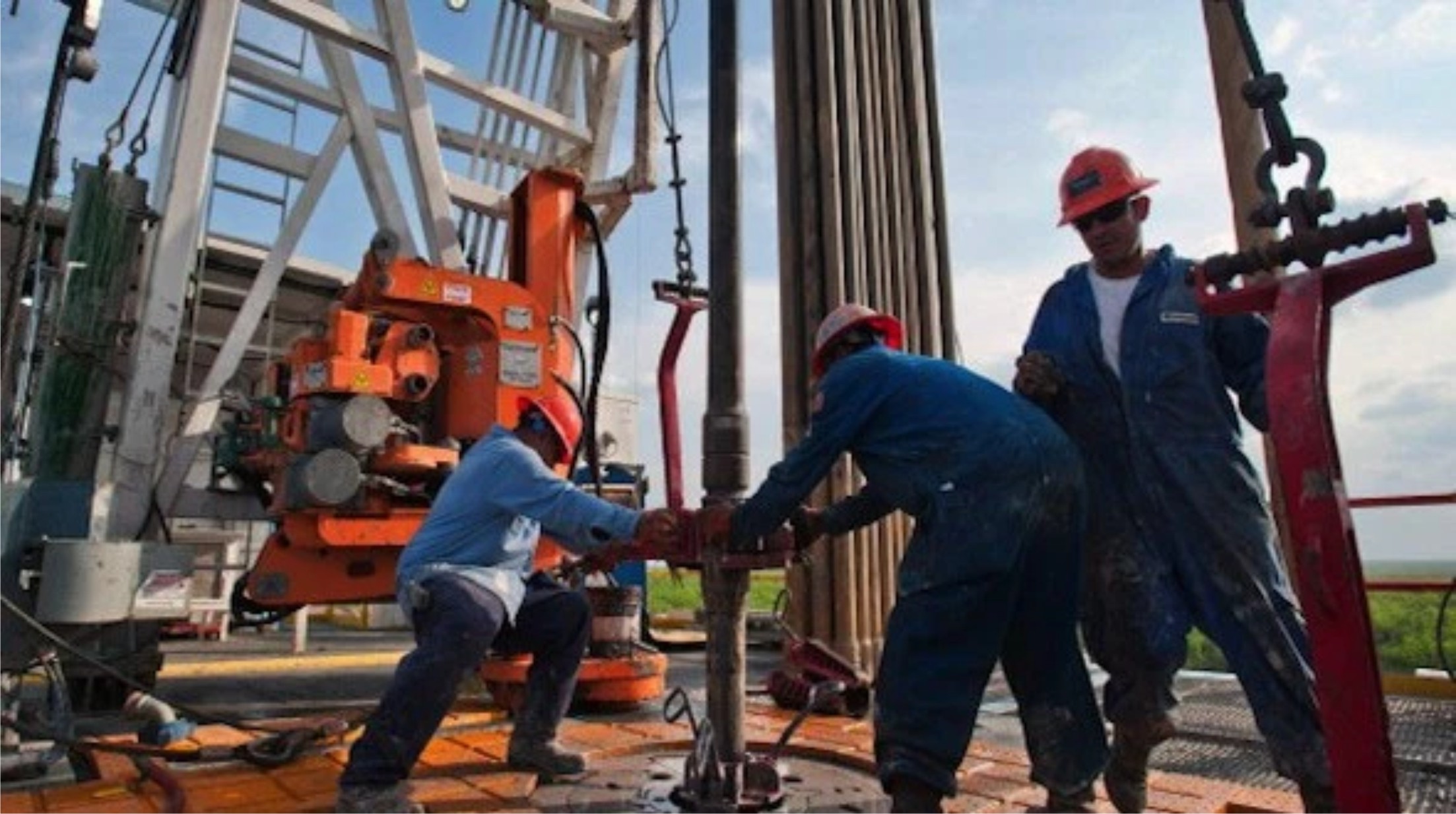
Nigeria's oil production

By Adedapo Adesanya

Daily average oil production in Nigeria rose by 152, 000 barrels per day in November 2024, according to the latest data by the Organization of the Petroleum Exporting Countries (OPEC).

According to the OPEC Monthly Oil Market Report (MOMR) for December 2024, the country’s production, including condensates rose by 11 per cent from 1.333 million barrels in October to 1.486 million in November 2024.

The analysis puts the daily increase to 152,000 barrels per day and about one million barrels increase between October and November last year.

This is as the Nigerian Upstream Petroleum Regulatory Commission (NUPRC) in its latest oil production data indicated that on a month-on-month basis, daily average oil output in December 2024 declined by 1.35 per cent from 1.690 million barrels per day recorded in November 2024 to 1.667 million barrels per day.

Data from the commission also indicated that daily peak oil production in December 2024 was 1.79 million barrels per day while the lowest daily production was 1.57 million barrels per day

Cumulatively, oil output in December 2024, was 51.69 million barrels, a marginal increase of 1.9 per cent when compared to 50.71 million barrels produced in November 2024.

Further analysis of the data showed that the highest oil output in December 2024 was recorded at Forcados Terminal at 8.49 million barrels followed by Bonny Terminal, 7.78 million barrels and Qua Iboe, 4.15 million barrels.

The data showed without condensate, daily oil production was 1.484 million, indicating that Nigeria, again, failed to meet its oil production quota of 1.5 million barrels per day allotted to it by OPEC.

A recent survey by Reuters, however, shows that Nigeria crossed the 1.5 million barrels per day target in December.

The December 2024 average daily oil output also means that Nigeria failed to meet the 1.7 million barrels per day benchmark set for the 2024 budget all through the year.

NUPRC data on daily average production showed that oil production including condensate in January 2024 was 1.64 million barrels per day; February, 1.53 million barrels per day; March, 1.44 million barrels per day; April, 1.45 million barrels per day; May, 1.47 million barrels per day; June, 1.50 million barrels per day; July, 1.53 million barrels per day; August, 1.57 million barrels per day; September, 1.54 million barrels per day, October, 1.54 million barrels per day November, 1.69 million barrels per day and December, 1.67 million barrels per day.


Adedapo Adesanya is a journalist, polymath, and connoisseur of everything art. When he is not writing, he has his nose buried in one of the many books or articles he has bookmarked or simply listening to good music with a bottle of beer or wine. He supports the greatest club in the world, Manchester United F.C.

Economy

Unlisted Securities Market Rises 0.59% Week-on-Week

Published

on

Nigeria's unlisted securities market

By Adedapo Adesanya

The NASD Over-the-Counter (OTC) Securities Exchange increased by 0.59 per cent in Trading Week 16 of 2026, with the market capitalisation adding N13.58 billion to settle at N2.329 trillion compared with the previous week’s N2.315 trillion, and the NASD Unlisted Securities Index (NSI) up by 22.70 points to 3,893.15 points from 3,870.45 points in week 15.

Over the course of five trading sessions of the week, the total volume of stocks transacted by market participants went down by 50.2 per cent to 3.87 million units from 7.77 million units, but the value increased by 20.9 per cent to N150.9 million from N124.9 million. These trades were carried out in 162 deals across 20 stocks.

The most traded stock by value for the week was Okitipupa Plc with N46.7 million, followed by Central Securities Clearing System (CSCS) Plc with N36.3 million. Friesland Campina Wamco Nigeria Plc recorded N31.9 million, MRS Oil Plc posted N14.6 million, and 11 Plc achieved N12.6 million.

The most active stock by volume was Geo-Fluids Plc with 1.5 million units, and trailed by UBN Property Plc with 0.828 million units. CSCS Plc traded 0.609 million units, Friesland Campina Wamco Nigeria Plc quoted 0.325 million units, and Okitipupa Plc sold 0.26 million units.

Last week, 11 securities recorded movements, with eight on the green side and three on the red side.

MRS Oil Plc gained N33.75 to close at N197.75 per unit versus N164.00 per unit, Nipco Plc which rose by N31 to N344.00 per share versus N313.00 per share, Okitipupa Plc appreciated by N20 to N280.00 per unit from N260.00 per unit, Friesland Campina Wamco Nigeria Plc improved by N5.21 addition to N97.21 per share from N92.00 per share, NASD Plc chalked up N1.14 to sell at N38.50 per unit versus N37.36 per unit, Food Concepts Plc appreciated by 26 Kobo to N2.94 per share from N2.68 per share, Industrial and General Insurance (IGI) Plc increased by 6 Kobo to 63 Kobo per unit from 57 Kobo per unit, and Lighthouse Financial Plc expanded by 6 Kobo to 72 Kobo per share from 66 Kobo per share.

Conversely, 11 Plc lost N10.22 to quote at N212.08 per unit versus N222.30 per unit, CSCS Plc declined by N5.50 to N58.00 per share from N63.50 per share, and First Trust Mortgage Bank Plc shrank by 2 Kobo to N2.30 per unit from N2.32 per unit.

Continue Reading

Economy

World Bank Report: FG Counters Claims of Diverted Federation Earnings

Published

on

dampen growth in Nigeria

By Aduragbemi Omiyale

The federal government has said there is no iota of truth in reports making the rounds that a significant portion of federation earnings is being “diverted”.

The claims came from a recent World Bank report, which the government said the media misinterpreted as “hidden spending.”

In a statement signed on Sunday by the Minister of State for Finance, Mr Taiwo Oyedele, the federal government emphasised that the characterisation of the Federation Account Allocation Committee (FAAC) deductions as “waste” or missing funds was “incorrect,” noting that the World Bank report presented the deductions as statutory transfers, savings and investments, security-related expenditures, cost-of-collection charges, refunds to Ministries, Departments and Agencies (MDAs), and transfers and interventions benefiting subnational governments.

“It is important to emphasise that refunds and transfers to states and other tiers of government are not leakages. They represent legitimate fiscal flows, including repayments of obligations and statutorily backed allocations,” the statement said.

It was further stressed that, “The World Bank explicitly notes that reforms implemented in early 2026, including the recently signed Executive Order to safeguard remittance of petroleum revenues, are already addressing concerns around deductions, and are expected to improve transparency while increasing revenues available to all tiers of government by about 0.4 per cent of GDP annually.”

“Misinterpreting one aspect of the analysis without acknowledging the progressive reforms and measures already introduced to enhance distributable federation revenues gives a distorted picture,” it submitted.

The Nigerian authorities averred that the broader message of the World Bank report is positive and forward-looking, as economic growth is becoming more broad-based across sectors, inflation is declining due to deliberate policy actions, Nigeria’s external position has strengthened, and debt indicators have improved.

The government declared that the World Bank did not say in the report that “Nigeria’s fiscal system is collapsing or that reforms have failed. Rather, it states that reforms are working, and they must be sustained and deepened to translate macroeconomic gains into inclusive growth.”

The statement appealed to “stakeholders, media organisations, and the public to engage constructively with fiscal information and avoid twisted interpretations that may undermine reform efforts and fuel public discord.”

Continue Reading

Economy

Nigerian Stocks Attract N195.3bn Investments in One Week

Published

on

Nigerian stocks

By Dipo Olowookere

On the floor of the Nigerian Exchange (NGX) Limited last week, 3.588 billion shares valued at N195.313 billion exchanged hands in 254,553 deals, higher than the 3.361 billion shares worth N151.948 billion traded in 229,442 deals a week earlier.

Over a quarter of these transactions were centred around the trio of Sterling Holdco, Access Holdings, and Zenith Bank, which specifically accounted for 1.038 billion stocks worth N46.081 billion in 33,067 deals, contributing 28.92 per cent and 23.59 per cent to the total equity turnover volume and value, respectively.

They helped the financial equities to lead the activity chart with 2.498 billion units sold for N94.005 billion in 111,052 deals, contributing 69.62 per cent and 48.13 per cent to the total trading volume and value, respectively.

Services stocks traded 329.034 million units valued at N3.452 billion in 14,050 deals, and energy shares transacted 152.472million units worth N42.511 billion in 19,022 deals.

In the week, 61 equities appreciated versus 25 equities in the previous week, as 36 stocks depreciated compared with 54 stocks of the preceding week, while 49 shares remained unchanged, in contrast to 67 shares of the previous trading week.

Trans-Nationwide Express gained 60.48 per cent to sell for N6.05, Ecobank appreciated by 46.30 per cent to N67.30, Stanbic IBTC rose by 36.63 per cent to N188.55, Royal Exchange improved by 29.37 per cent to N1,85, and Aradel grew by 28.93 per cent to N1,649.00.

On the flip side, Coronation Insurance lost 14.38 per cent to close at N2.50, Ikeja Hotel declined by 14.36 per cent to N33.40, International Energy Insurance shrank by 13.80 per cent to N3.06, Academy Press slumped by 12.57 per cent to N7.65, and Honeywell Flour crumbled by 11.01 per cent to N19.00.

Business Post reports that the All-Share Index (ASI) went up by 6.57 per cent to 217,167.57 points, and the market capitalisation advanced by 6.60 per cent to N139.827 trillion, as the demand for Nigerian stocks soared.

Also, all other indices finished higher apart from the insurance and growth indices, which fell by 0.04 per cent and 0.99 per cent, respectively.

Continue Reading

Trending